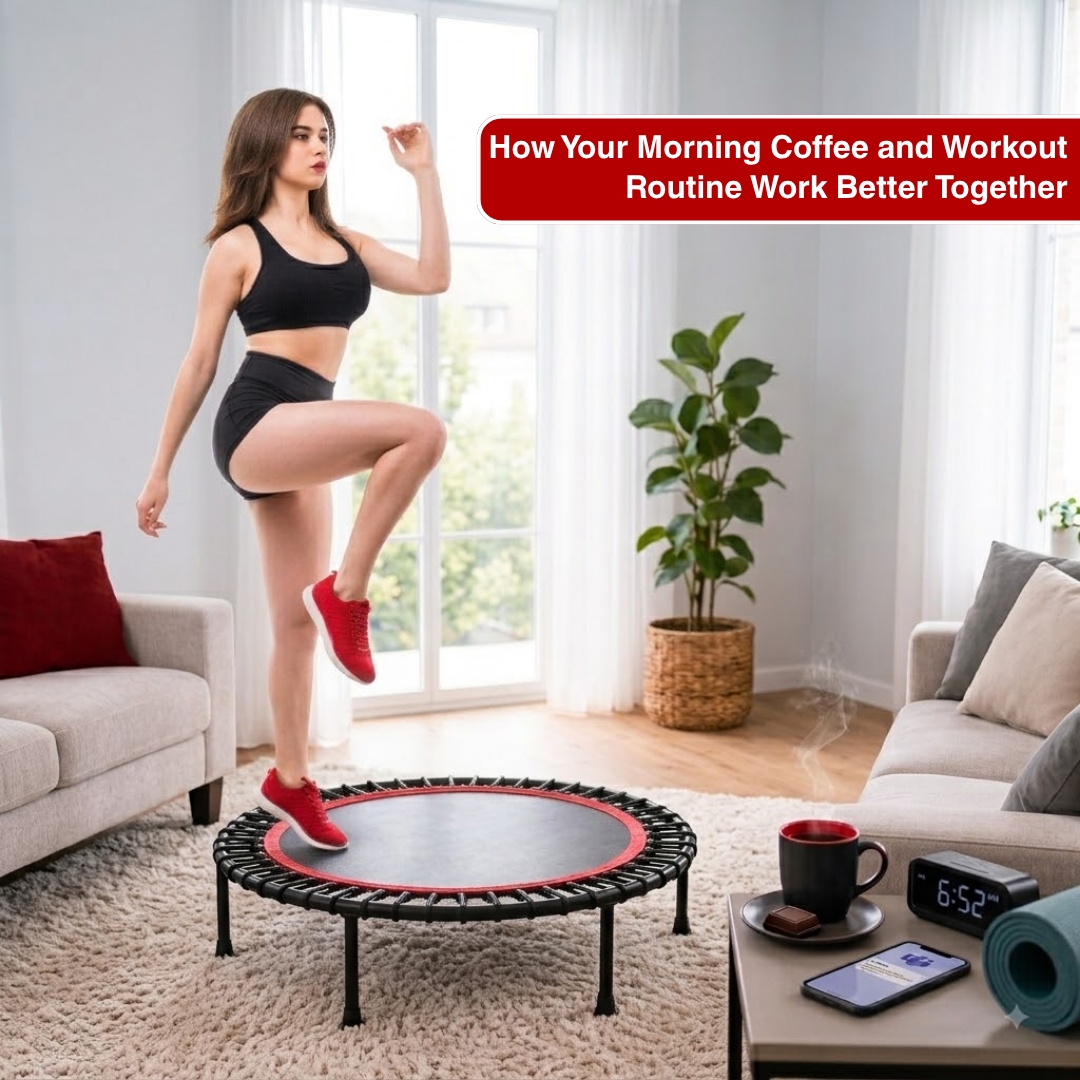
It’s 6:52 am. The alarm’s gone off twice already, there’s a Teams call at 9 am, the dog needs walking, and somewhere in the back of your mind, you’re fairly sure you forgot to reply to that email from yesterday. Sound familiar? Finding time for a morning coffee and workout routine might feel like another task on an already busy morning, but with the right approach, you can fit both in without throwing your whole schedule off.
Most of us don’t fail at mornings because we’re lazy. We fail because we’re trying to cram a wellness routine designed for people with two spare hours into a life that gives us about fifteen minutes, if we’re lucky. That’s the gap this article is trying to close.
The best morning routine for busy UK professionals combines hydration, well-timed coffee, a small portion of dark chocolate, and 10–15 minutes of low-impact exercise such as rebounding. The aim is to create a routine that’s realistic, repeatable, and easy to fit around a busy work schedule. By the end of this guide, you’ll have a realistic 15-20 minute routine that boosts energy, improves focus, and fits around real UK working life.

Why Mornings Matter More Than You Think
There is a good reason why so many athletes, surgeons, and pilots have strict routines for their morning hours. It is believed that the first hour after waking up is vital. Your body naturally shifts from sleep to wakefulness in the first part of the morning, which is why having a simple routine can help you start the day with purpose.
For office workers, this rarely gets the same attention. You’re not prepping for a match or an operation, so the temptation is to treat the morning as dead time to survive rather than a lever you can actually pull. That’s a mistake, and it’s one I’ve watched play out again and again with clients who assumed a “morning routine” meant either nothing at all or an hour-long ritual they’d abandon within a fortnight.
The trick isn’t doing more. It’s doing three or four things that actually earn their place, in an order that works with your body rather than against it.
Step One: Coffee or Espresso, Timed Properly
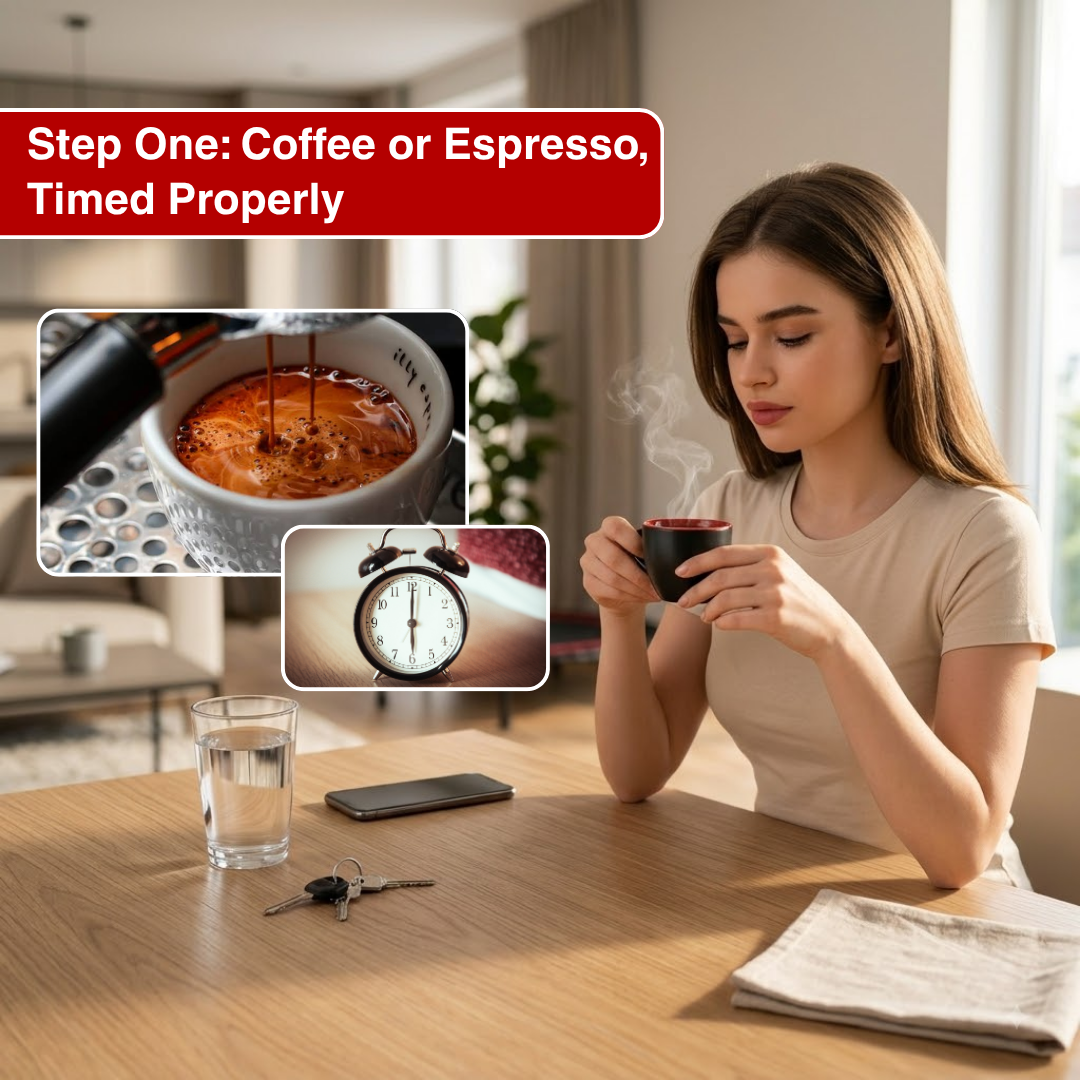
Coffee gets blamed for a lot of things it doesn’t actually do and credited for a few it doesn’t do either. Used well, though, it’s one of the simplest cognitive tools available to a busy professional.
Why Timing Beats Quantity
Some people prefer to wait a little before their first coffee rather than drinking it immediately after waking. If that suits your schedule, have some water first and enjoy your coffee once you’re properly awake.
A better approach, and one plenty of nutritionists and sleep researchers now recommend, is to wait 60–90 minutes after waking before that first cup. Have a glass of water first. Let your own hormones do some of the work, then let the espresso finish the job.
Black Coffee vs Milky Alternatives
Black coffee or a straight espresso contains no added sugar and very few calories, which matters if part of your goal is a cleaner, less bloated start to the day. It also hits faster, since there’s no fat or milk protein slowing absorption. If you genuinely can’t stand it black, that’s fine, a splash of milk isn’t going to undo your morning, but it’s worth knowing the difference isn’t just about taste.
Step Two: A Small Square of Dark Chocolate
Dark chocolate is perfectly fine for a healthy morning routine, provided that it is enjoyed in moderation. A bar of at least 70% cocoa contains flavanols, plant compounds that help improve blood flow and may help support mood. However, it is not a miracle cure for a sleepless night and will not keep you energised throughout the day. Dark chocolate is a healthier alternative to most junk food and is much better for your body than most sweet pastries.
You can have one or two squares of dark chocolate with your morning coffee instead of having cookies or other sweet desserts. Try to taste it instead of swallowing it down with your morning espresso in one bite so that you can appreciate the flavour of the healthy treat. Just make sure not to add too much sugar to your cup of coffee if you do not want to spoil your breakfast. If you want to enjoy dark chocolate in the morning, you should only take one or two squares of it.
Step Three: Rebounding for Mood and Circulation
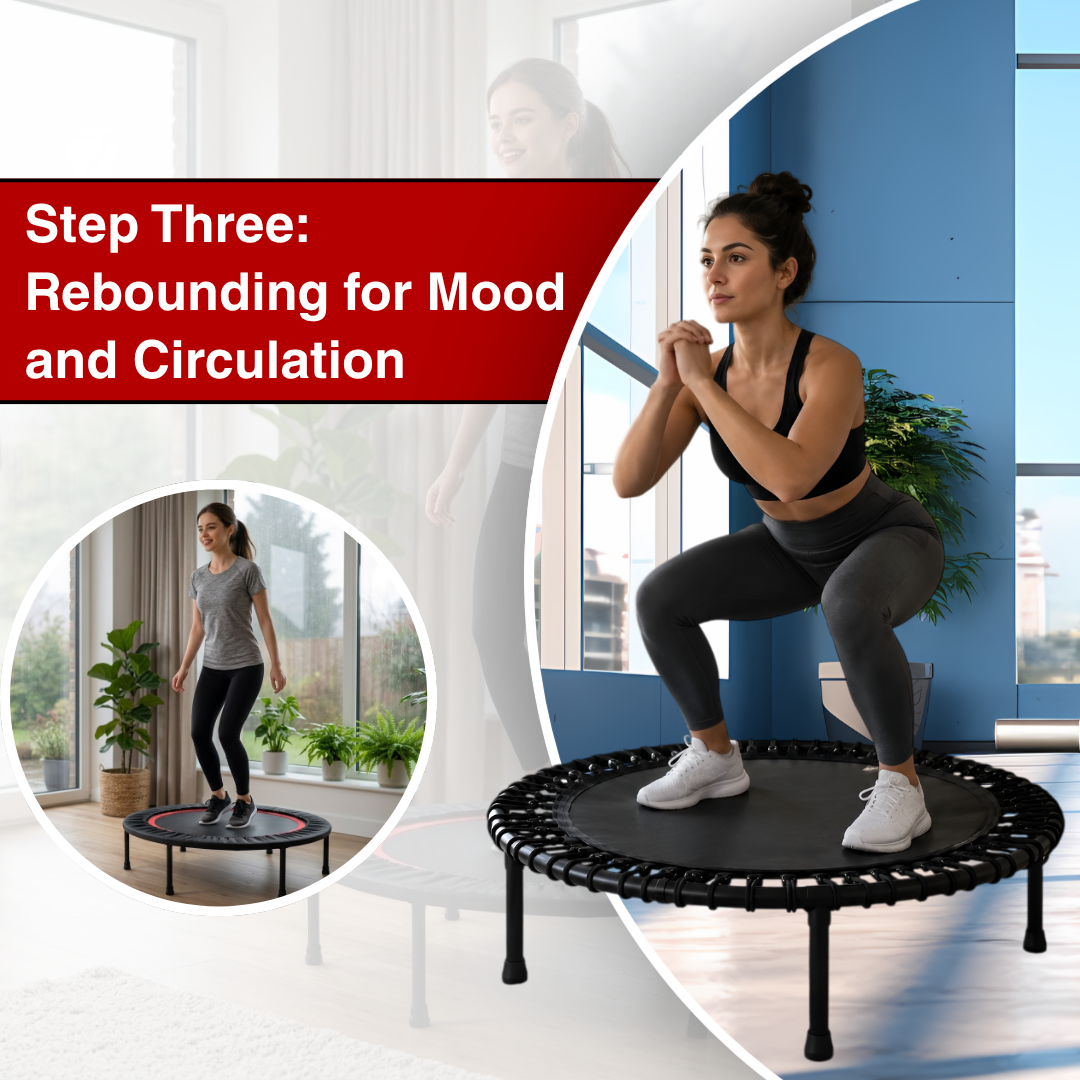
This is where most morning-routine articles stop at “get some movement in” and leave you to figure out what that actually means at 7 am in British weather. Rebounding, bouncing gently on a mini trampoline solves a specific problem: it’s low-impact, it works indoors, and it takes almost no setup.
What’s Actually Happening Physiologically
Supports Lymphatic Circulation
The up-and-down movement can help stimulate the lymphatic system, which relies on body movement rather than a pump like the heart to move lymph fluid.
Encourages Healthy Circulation
The gentle up-and-down movement can support circulation and normal lymphatic function.
Boosts Mood Naturally
Rhythmic aerobic movement encourages the release of endorphins, helping you feel happier and more energised.
Makes Exercise Enjoyable
Unlike some traditional workouts, rebounding feels playful and fun, making it easier to stay motivated.
Ideal for Busy Mornings
Even 10-15 minutes of gentle bouncing on an above-ground trampoline can be an easy way to start the day without feeling like a demanding workout.
Why It’s Perfect for UK Lifestyles
Whether you’re commuting into London, working from a Manchester flat, or logging on from your kitchen table in Bristol, finding time for exercise isn’t always easy. That’s where a rebounder stands out: it fits neatly into busy routines, takes up very little space, and lets you stay active without worrying about the weather.
Perfect for All Weather
You can use a rebounder indoors, so rain, cold mornings, or bad weather won’t interrupt your routine.
Great for Small Spaces
Most rebounders are compact enough to fit in a spare corner or under a desk or fold away for easy storage.
Ideal for Home Workouts
Whether you live in a flat or a house, a rebounder doesn’t require much space.
Gentle on Your Joints
The cushioned surface absorbs impact, reducing stress on your knees, ankles, and hips.
A Good Choice for Desk Workers
If you spend long hours sitting, rebounding provides a low-impact way to get moving before or during your day.
Easy to Fit Into Your Routine
You can enjoy a quick workout at home without needing to travel to a gym or park.
Why a Smart Morning Routine Matters for Hybrid and Remote Workers
Supporting a Sedentary Lifestyle With Daily Movement
Many UK professionals spend most of their day sitting, whether they’re working from home, in a hybrid role, or in a traditional office. That lack of movement can leave you feeling stiff and sluggish before the day has even properly begun. Starting your morning with just 15–20 minutes on a rebounder is a simple way to wake up your body, loosen tight muscles, boost circulation, and prepare yourself for a long day at your desk.
Improving Focus During the Working Day
A morning cup of black coffee can assist in improving concentration levels if one is working from home as a professional. Pairing the coffee with a couple of squares of dark chocolate (preferably with high percentages of cocoa) can help satisfy one’s sweet tooth and prevent cravings for unhealthy snacks throughout the morning hours.
Improving Mental Wellbeing
A simple morning routine consisting of light exercises followed by a cup of black coffee can help one start their day on a positive note. It may help you feel more relaxed and mentally prepared for the day ahead when emails, meetings, and deadlines start rolling in.
Improving Work-life Balance
The hybrid and remote working options have made it difficult for people to separate work from their personal life. However, having a morning routine allows a person to establish such a divide and helps them prepare themselves for the day ahead whilst tending to their health needs.
Rebounder Accessories Worth Having
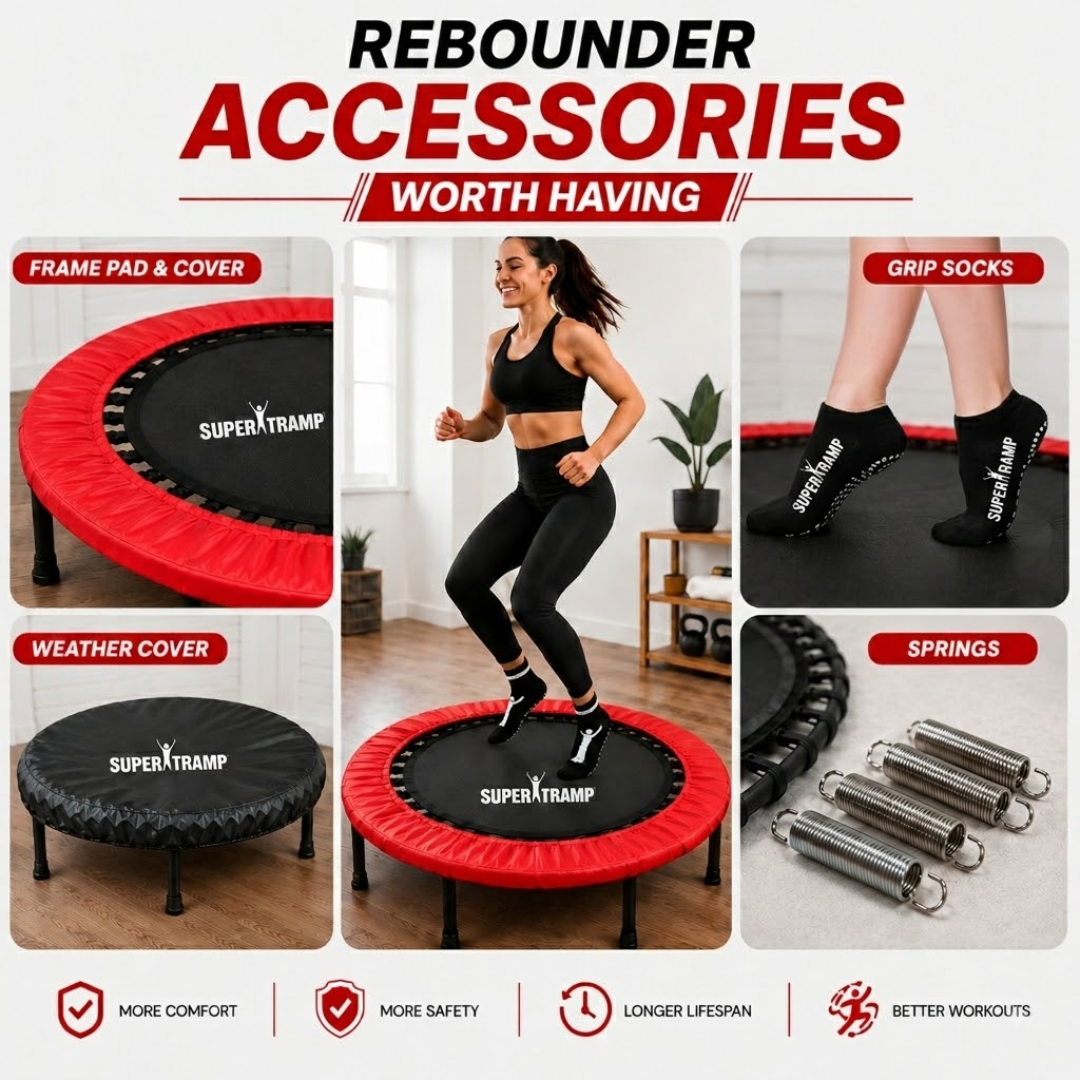
If you’re using your rebounder several times a week, a few simple accessories can improve comfort, safety, and longevity.
Frame Pad and Cover
A proper frame pad and cover keep the springs protected and the bounce consistent, especially if the rebounder lives somewhere it’ll pick up dust or damp.
Grip Socks
Trampoline socks may seem like a small thing, but they stop slipping on the mat and protect the bed surface, which is particularly useful if you’re bouncing in bare feet on a cold morning.
Weather Cover
A weather cover is useful if you’re keeping a fitness rebounder in a garage, conservatory, or anywhere it might get knocked or dusty between uses.