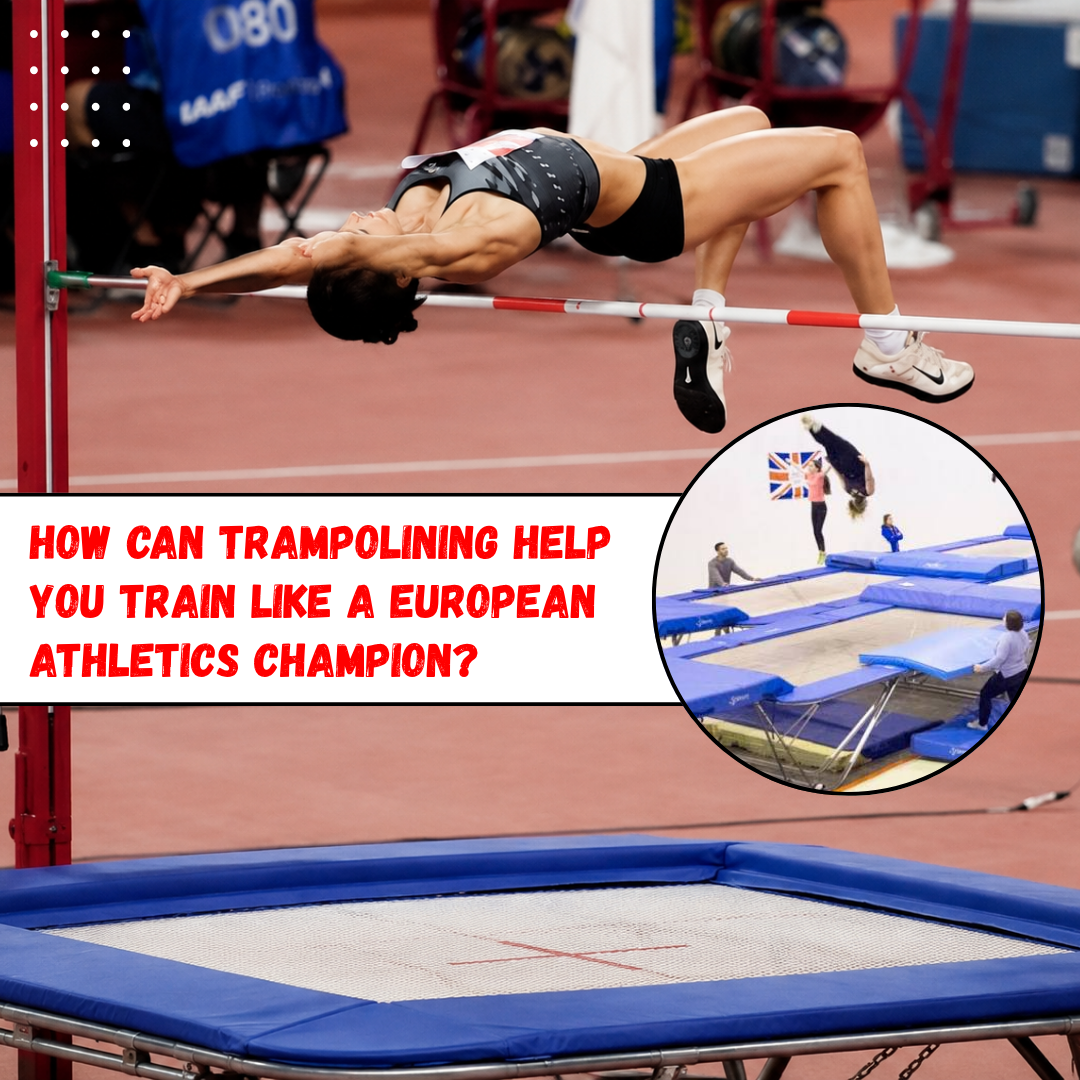
This week, Alexander Stadium in Birmingham hosts the European Athletics Championships for the first time, with sprinters, jumpers, and middle-distance runners from across Europe going head to head in a competition where the difference between victory and defeat can be measured in hundredths of a second. While the competitors may exhibit tremendous power and speed, watch closely, and you are likely to see one thing that sets them apart – namely, control. Take, for instance, the artistry of a long jumper or the precision of a hurdler as they find their rhythm on the track.
That kind of control doesn’t come from running alone.
Well, that kind of control is not going to come from just running, is it? So let’s discuss how trampoline training can contribute to building such qualities as balance, coordination, and awareness, as well as enhancing lower body power, which can give you a real edge over your rivals. While it will not replace traditional forms of training such as sprints or weightlifting, a trampoline is nevertheless a valuable addition to the arsenal of an ambitious European athletics competitor. In this article, you will learn how to use trampoline training to achieve better results in the sport.

Points to Remember:
- Trampolining can complement, but not replace, athletics training.
- It supports balance, coordination and body awareness in ways flat-ground running doesn’t.
- Controlled bouncing offers a genuine cardiovascular workout.
- Pair it with sport-specific running, strength and technical work for real benefit.
- Proper safety equipment and technique matter.
- Frequency should match your existing training load and recovery capacity.
What Can New Athletes Learn From European Athletics Training?
Elite athletics rewards more than one quality. Power gets you off the blocks, but coordination keeps your stride clean at full speed. Reaction time decides a false start. Fatigue management decides whether your technique holds up in the final 50 metres of a 400m race.
Sprinting and Acceleration
A sprinter’s power is only useful if the ground contact is precise, too long on the track and momentum bleeds away. That precision is built through repetition, rhythm, and a nervous system that’s learned to fire quickly and cleanly.
Jumping and Explosive Power
Long jumpers and high jumpers rely on controlled take-offs. Land awkwardly, even slightly, and the whole jump falls apart. This is where bouncing surfaces get interesting: they force constant micro-adjustments in landing mechanics.
Balance and Body Control
A garden trampoline mat never stays still. Every bounce shifts your centre of gravity a fraction, and your body has to correct for it instantly. Athletes who’ve spent time on a trampoline often say it sharpens that instinctive sense of where their body is in space, useful whether you’re clearing a hurdle or absorbing a tackle.
It’s not just athletes who’ve noticed. Fitness influencers love trampoline workouts too, and it’s worth seeing why the format has caught on so widely.
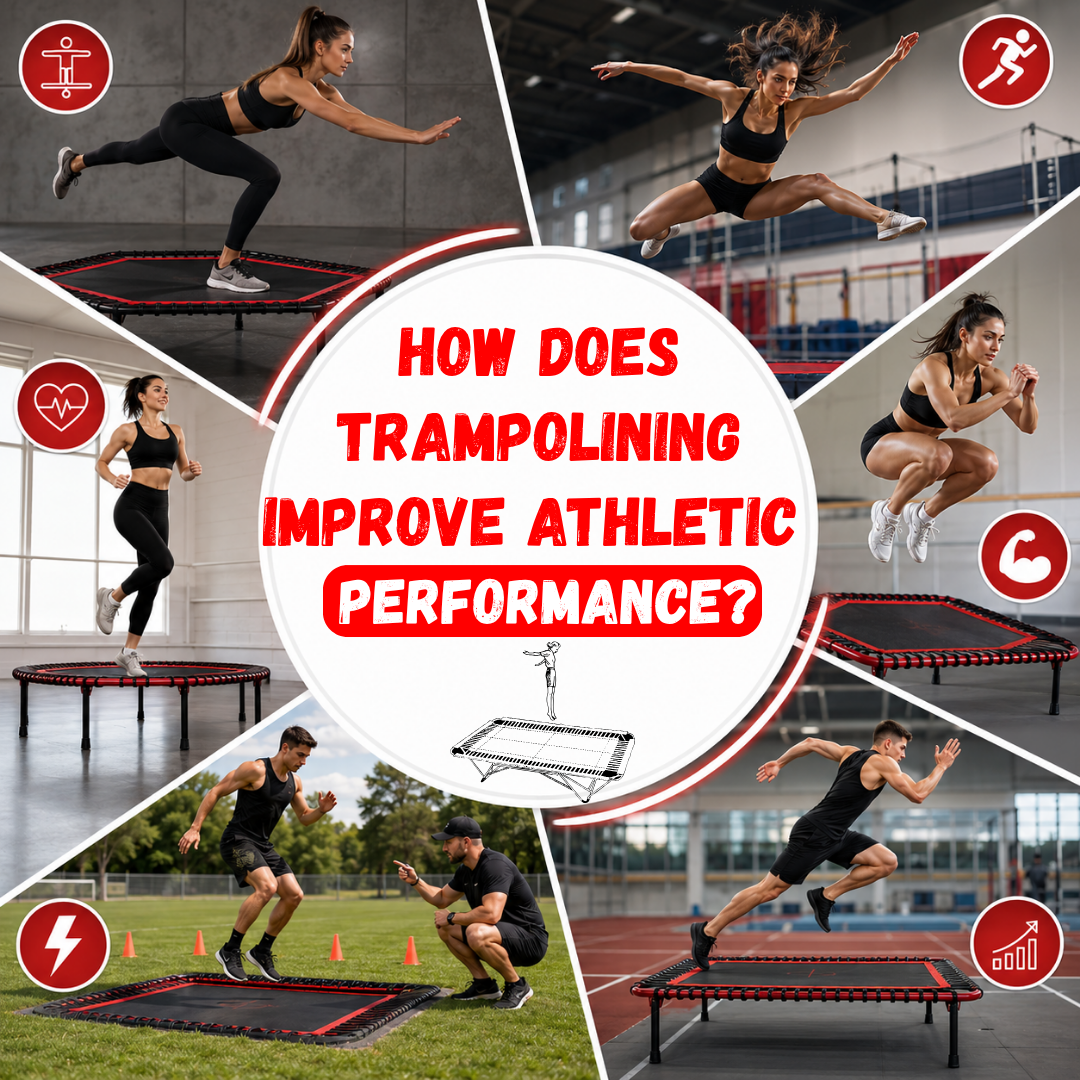
How Does Trampolining Improve Athletic Performance?
Improves Balance and Stability
Standing upright on a moving surface recruits stabiliser muscles that running on flat ground rarely touches. Over weeks, this can translate into steadier footing on uneven terrain, handy for cross-country runners and field athletes alike.
Develops Coordination and Body Awareness
Timing your arm swing with your leg drive mid-air isn’t intuitive. It takes practice. That practice builds what coaches sometimes call body awareness: knowing where your limbs are without having to look.
Supports Lower-body Strength and Power
Repeated bouncing loads the calves, quads and glutes in a rhythmic, springy pattern. It’s not the same stimulus as heavy squats, but it complements strength work by training the muscles to produce force quickly.
Builds Cardiovascular Fitness
A sustained bouncing session on a rebounder gets the heart rate up fast. Ten minutes of continuous, moderate-intensity bouncing isn’t far off a steady-state run in terms of effort, useful for athletes wanting variety without pounding pavement every session.

Trains Agility and Reaction
Add direction changes or unpredictable cues, a coach calling out movements, say, and an in-ground trampoline session starts to mimic the reactive demands of team sports and hurdling.
Supports Movement Efficiency
Athletes who train on unstable surfaces often report their movement on stable ground feels easier afterwards. There’s logic to that: if your body can control itself on a bouncing mat, flat ground asks less of it.
Which Athletics Skills Can Trampoline Training Support?
Athletics Demand | How Trampoline Training Can Support It |
Sprinting | Rhythm, coordination and conditioning |
Long jump | Take-off control and body awareness |
High jump | Aerial awareness and landing mechanics |
Hurdles | Coordination and controlled movement |
Middle-distance running | Cardiovascular conditioning |
Combined events | Balance, coordination and movement control |
Best Trampoline Exercises for Athletes
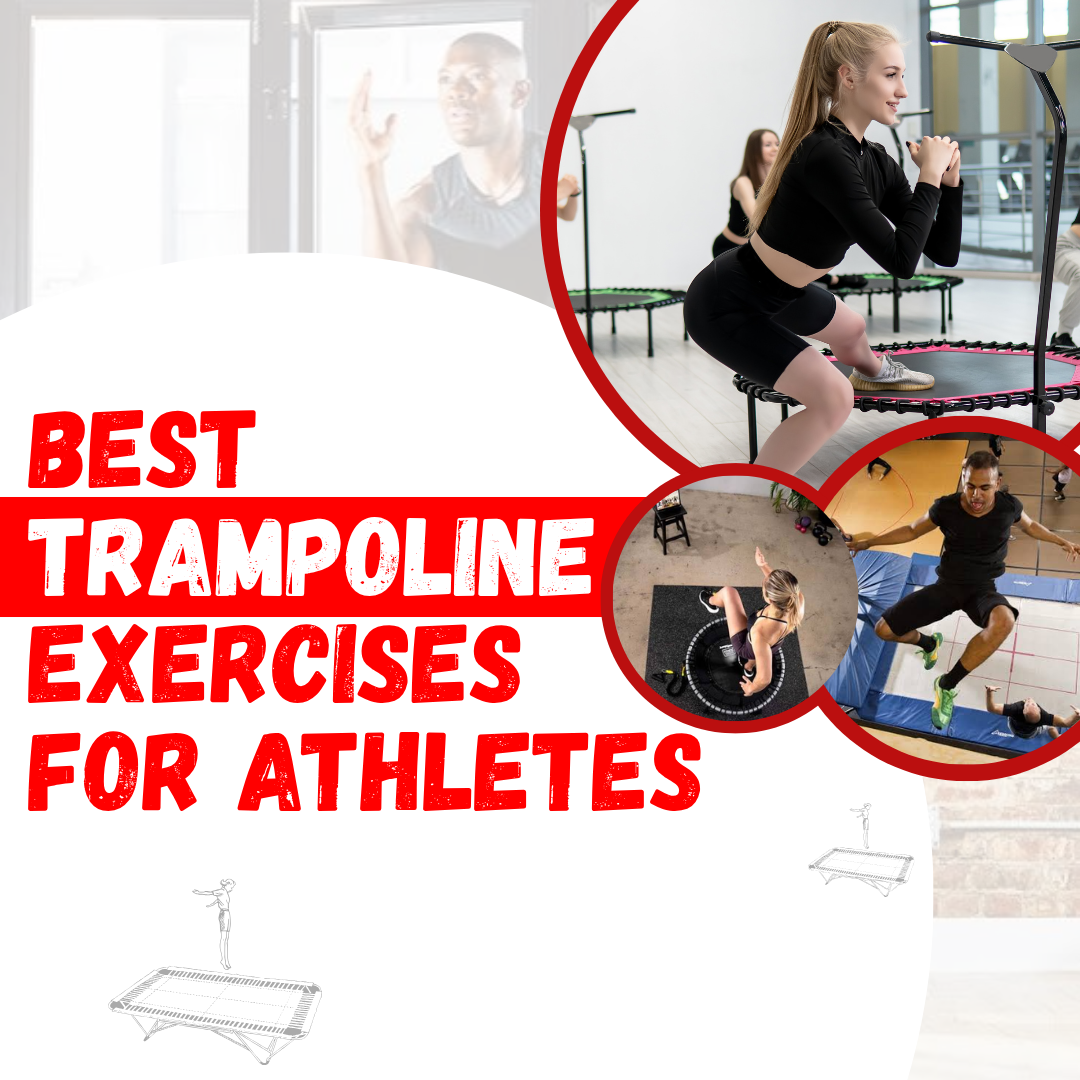
- Controlled basic bounces: posture, rhythm, soft landings.
- High-knee bounces: coordination and cardio, driven by the knees rather than height.
- Single-leg balance bounces are genuinely humbling the first few times. Stability improves fast with practice.
- Squat bounces bring the lower body further into the movement.
- Alternating-leg bounces improve rhythm and left-right coordination.
- Short sprint-style intervals are quick, controlled bursts for conditioning.
Advanced movements, anything involving twists, somersaults or seat drops, need proper coaching and supervision. This isn’t the section to freestyle in.
Adding Trampoline Training to a Weekly Routine
Beginner Session
- 5-minute warm-up
- 10 minutes of controlled bouncing
- 5–10 minutes of coordination drills, then a cool-down.
Intermediate Session
- Dynamic warm-up
- Technique-focused bouncing
- Power and coordination drills
- Short conditioning intervals and cool-down.
How Often Should Athletes Use a Trampoline?
There’s no universal number. It depends on your sport, your current training load, and how well you recover. Most athletes get value from one or two short sessions a week alongside their existing programme, rather than trying to make it a daily habit.
Can Trampolining Help With Recovery and Conditioning?
It’s often gentler on the joints than repeated running on hard surfaces, since the mat absorbs some impact. That’s not the same as saying it’s zero-impact. It isn’t, and treating it that way is how people get hurt through overuse. Used thoughtfully, though, light bouncing sessions can add movement variety to a training week without piling on additional pounding, which some athletes find useful during higher-volume phases.
What Trampoline Safety Equipment Do Athletes Need?
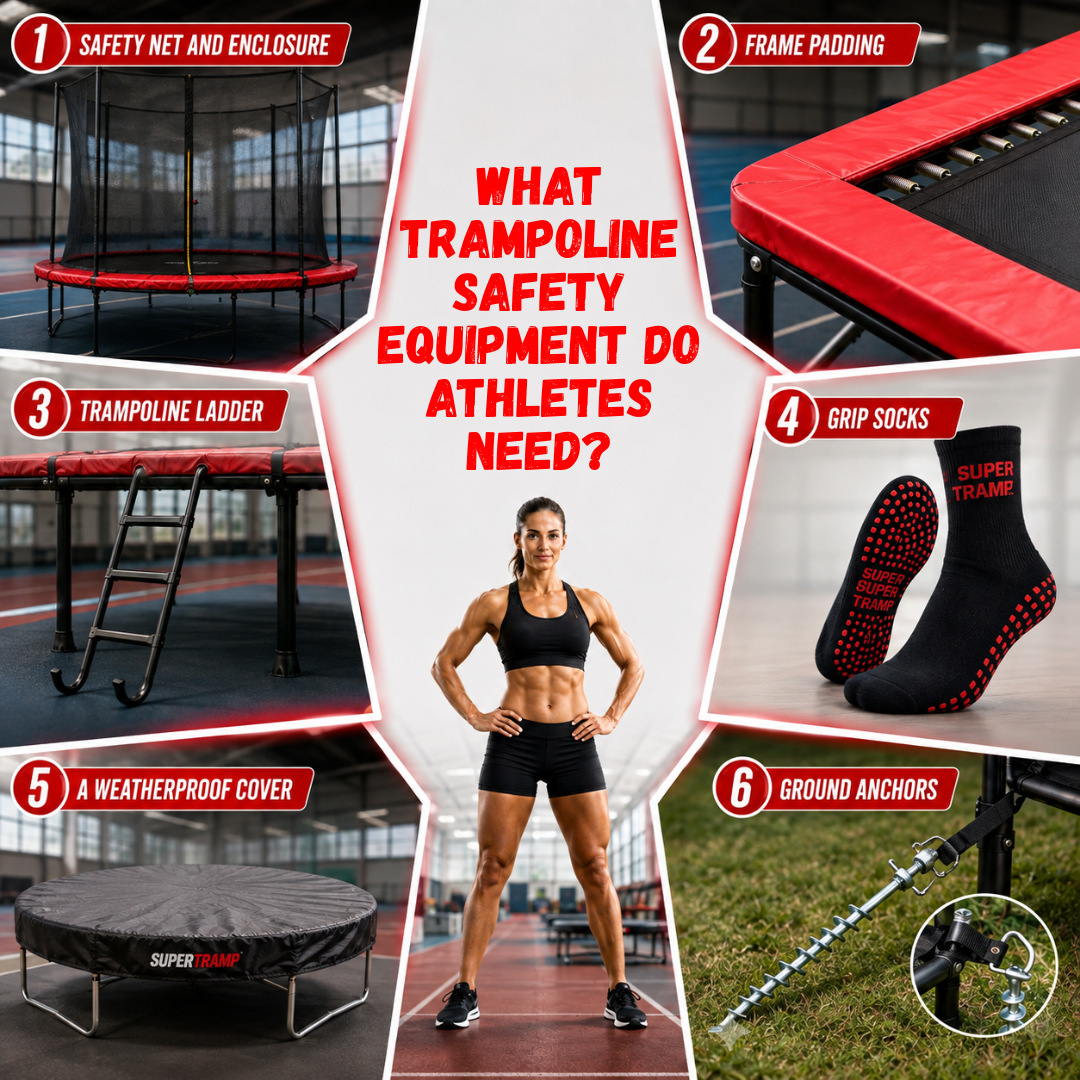
Athletic trampoline work pushes balance and speed harder than casual bouncing, so the equipment has to earn its keep.
Safety Net and Enclosure
The mesh barrier around the edge. Balance drills mean athletes occasionally land off-centre or get pushed towards the edge mid-bounce. The safety net enclosure turns that into a harmless bump back to the middle instead of a fall.
Frame Padding
Frame padding covers the springs and frame. Feet naturally drift towards the mat’s edge during faster drills, and padding stops that contact from turning into a graze or a trapped toe.
Trampoline Ladder
A sturdy trampoline ladder lets athletes step on and off under control, rather than clambering over the frame when tired, exactly when careless movements happen.
Grip Socks
Bare feet and ordinary socks can both slide on a damp mat. Trampoline grip socks keep foot placement predictable during drills like high-knee bounces, where precise contact matters.