Table of Contents
ToggleA trampoline is far from just a trampoline – or rather, just a bouncy mat suspended on springs. When you consider all of the potential issues, as well as those great bounces that are waiting to happen, then trampoline accessories don’t just offer safety, but they increase your performance. Proper accessories drastically decrease the likelihood of injuries, prolong the lifespan of the trampoline itself, and even allow for better bouncing consistency and make it more comfortable to get to – in many cases, the use of an appropriate accessory is not optional, but necessary. In this guide, we outline which are the most important trampoline accessories, what’s the point of each of them, and how to select them and keep them in good order – specifically with regards to what can be encountered in the UK.

Why Do Accessories Matter?
A trampoline’s basic design determines its potential, but accessories control real-world outcomes. An enclosure reduces fall risk. Quality springs and a well-made mat affect bounce quality and joint impact. Weatherproof covers and anchors protect against the UK’s changeable climate. However, a pair of appropriate accessories turns that hypothetical safety and comfort into real-life protection and enhanced performance.
Safety-focused Accessories
Enclosure Nets
What they do: Surround the jumping area to stop users from falling off the trampoline.
Why they matter: Because bouncing and having a good time often mean that the odd accident is going to happen, in fact, one of the most common causes of trampoline-related injuries is when people fall off the trampoline.
UK considerations: Ensure the safety enclosure net fixes securely to the frame and has no gaps around the entry zip or fastening. Look for nets tested for UV resistance to cope with sun exposure, and check fit with your trampoline model.
Safety Pads and Edge Covers
What they do: Cover springs and the frame with foam and weatherproof fabric.
Why they matter: Exposed springs cause pinch injuries, and metal frames can lead to impact injuries. A well-protected pad eases those areas and prevents limbs from slipping between springs.
Choosing tips: Waterproof closed-cell foam will also be more durable. Replace the mats when the foam is compressed, or when the fabric tears and frays.
Anchor Kits and Wind Straps
What they do: Secure the trampoline to the ground with straps, an anchor kit, or a sandbag.
Why they matter: Wind is capable of carrying an entire trampoline into another yard, resulting in property damage or personal injury.
UK guidance: In exposed gardens common across many UK regions — always use anchors. Remove or further secure trampolines during storm warnings.
Ladder and Step Options
What they do: Provide a safe, easy way to access a higher trampoline bed.
Why they matter: Climbing over frames or using chairs is unsafe. A proper ladder reduces slips when getting on and off. Use a ladder for extra protection and fun.
Safety note: Choose ladders that clip or lock to the frame. Remove the ladder when children are not supervised.
Performance and Comfort Accessories
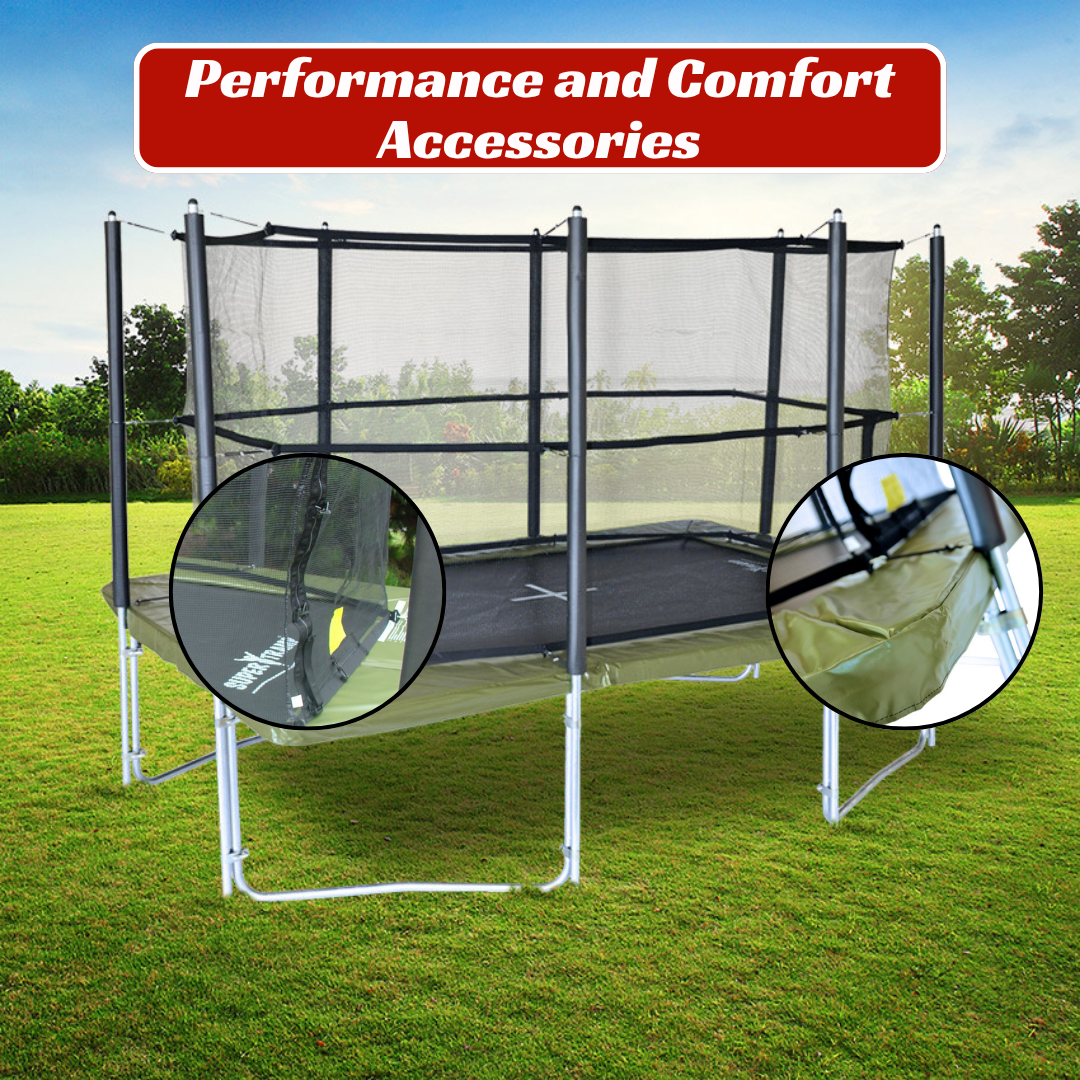
Springs and Spring Pulling Tool
What they do: Springs store and release energy. Replacements and covers affect bounce and safety.
Why they matter: Worn or mismatched springs produce inconsistent bounce and increase joint impact. Replacing springs in matched sets preserves performance. Spring pulling tool protect users and extends component life.
Technical point: Spring length and gauge change the trampoline’s responsiveness. When upgrading, match manufacturer specifications or consult an expert.
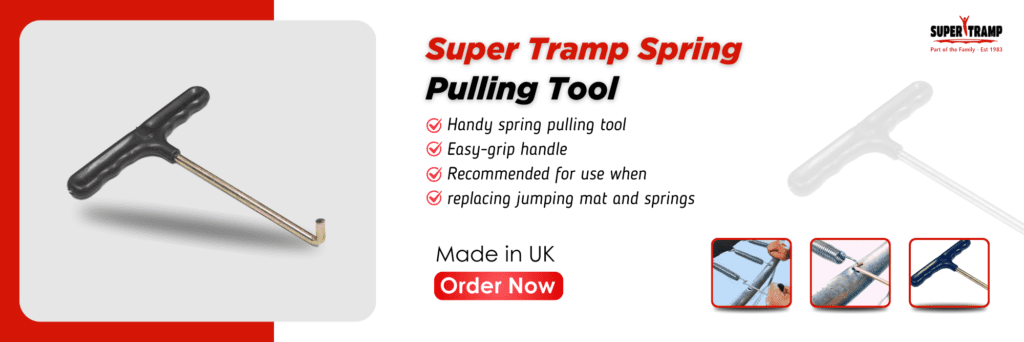
Jumping Mats
What they do: The mat is the platform you jump on. Superior mats use stronger woven fabrics and better stitching.
Why they matter: A good jumping mat ensures that the resistance is consistent and durability is good, thus enhancing workout experience for both fitness exercises and prolonged use.
UK focus: UV and mildew resistance are valuable aspects given the humidity and sun exposure over seasons.
Shock-absorbing Systems and Enclosures
What they do: Added suspension systems (e.g., bungee systems or additional padding) reduce impact forces.
Why they matter: Lower impact can be kinder to knees and spine — important for fitness users, older jumpers and regular trainers.
Consideration: These systems can change bounce characteristics. Test with realistic loads when possible.
Weather Covers and Storage
What they do: A weather cover protects the mat, frame and padding from rain, debris and UV.
Why they matter: Prevents rust, fabric damage and reduces maintenance costs.
Practical advice: During the winter, make sure to melt and discard snow and collected water. Also, store your smaller winter accessories inside.
Training and Specialist Accessories
Stakes, Frames and Ground-level Use
With these in-ground style models, you’ll need to opt for recessed frames, special mats and drainage solutions that provide better visibility, ease of use, and will change bounce characteristics. UK installers often recommend specific drainage adaptations because of wet soil in many regions. To learn more about what spares you need for an in-ground trampoline, read this.
Fitness Add-ons: Rebounder Handles and Resistance Kits
For those using trampolines for cardio or rebounding workouts, handles and resistance bands add stability and workout variety. Choose secure attachment systems rated for repeated dynamic loads.
Gymnastic and Parkour Attachments
Professional or semi-pro users sometimes add handles, rails or spotting frames. Such modifications should only be fitted to structural-grade frames and installed by experienced technicians.
How to Choose the Right Accessories?
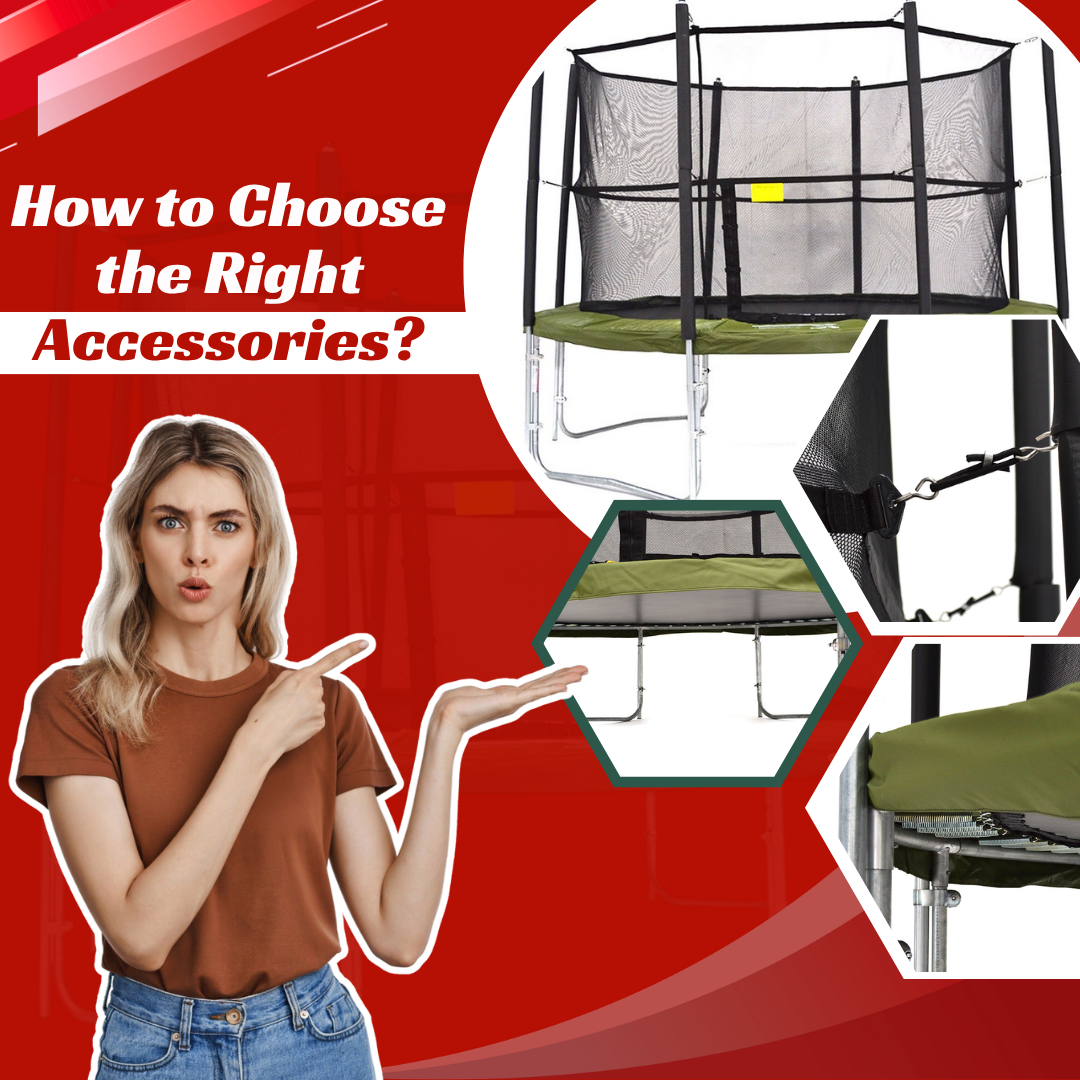
- Compatibility: Match accessory model and size to your trampoline brand and diameter. Universal parts sometimes fit poorly.
- Standards and testing: Look for items that mention EN safety standards (EN 71 toy safety, EN 913 playground equipment, if needed) as well as the manufacturer’s fitment guidance.
- Materials: Galvanised steel frames, UV-resistant polypropylene mats, closed-cell foam padding and waterproof covers are worth seeking out.
- Weather resilience: Think of the environment within the UK, where coastal salt air is quite different to inland humidity. You can opt for corrosion-resistant fittings if appropriate.
- Professional installation: For anchors, in-ground modifications, or large-frame changes, use a qualified installer to ensure safe fitment.
- Warranty and spare parts: Buy from suppliers that provide clear warranty terms and sell replacement parts.
Comparison: Common Accessories and Core Benefits
- Enclosure net: prevents falls, essential for family use.
- Safety pad: protects from springs and frame, reduces pinch/impact injuries.
- Anchor kit: secures trampoline, prevents wind lift.
- Ladder: safe access, remove when unsupervised.
- Replacement springs: restores bounce consistency, match specs.
- Jumping mat: improves performance and durability, choose UV-rated.
- Weather cover: protects components, extends lifespan.
- Handle/resistance kit: adds stability and fitness options.
- Ground-level frame kit: improves accessibility and aesthetics, needs drainage.
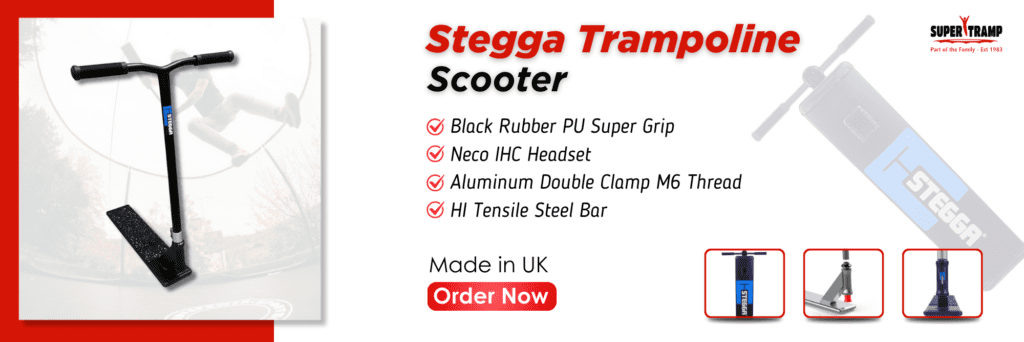
- Scooter: using a trampoline scooter improves balance.
Expert Tips
- Replace pads and nets every few years or sooner if damaged. Don’t patch foam repeatedly.
- When replacing springs, change the full set rather than individual springs to retain even tension.
- Inspect fixings and welds annually and after severe weather.
- Fit anchors with corrosion-resistant fittings and check them at the start of each season.
- For fitness use, prefer slightly firmer mats and matched springs for controlled, predictable rebound.
- Use trampoline socks for extra grip.
Common Mistakes
- Buying “universal” accessories without checking fit – leads to gaps or stress on fittings.
- Ignoring manufacturer load limits – extra users or heavier adults can exceed design limits.
- Leaving a ladder attached when children are unsupervised.
- Using indoor-only materials outdoors (e.g., non-UV foam) – leads to rapid deterioration.
- Failing to secure the enclosure’s base, leaving gaps where feet could slip under the net.
Conclusion
Trampoline accessories are not mere add-ons; they shape the safety, comfort and performance of the whole system. Prioritise enclosure nets, well-made pads, correct springs and anchors – especially in the UK where weather and garden layouts vary. Match parts to your trampoline, inspect and maintain them regularly, and consult professionals for structural or in-ground work. Taken together, sensible accessory choices reduce risk, improve enjoyment, and get better longevity from your trampoline investment. Looking for compatible accessories? Visit Super Tramp’s collection to compare replacement springs, pads and nets suited to UK gardens.
FAQ's
Do You Really Need an Enclosure Net?
Yes. Enclosure nets significantly reduce the most common cause of trampoline injury: falling off. For family trampolines, they are recommended and commonly required by insurance policies.
How Often Should You Replace the Safety Pad?
Replace pads when foam shows compression, the fabric is torn, or fastenings fail. For UK outdoor use, expect replacement every 2–4 years depending on exposure and quality.
Can You Fit New Springs Yourself?
Yes, if you follow manufacturer instructions and use the correct spring puller. Replace the entire spring set for consistent tension. If unsure, use a specialist installer.
Are Anchor Kits Necessary in the UK?
Strongly recommended. UK weather includes storms and high winds. Anchors reduce the risk of the trampoline becoming airborne and causing damage.
What’s the Difference Between Marine-grade and Standard Fittings?
Marine-grade (or higher corrosion resistance) fittings resist salt and moisture better, useful for coastal areas or very wet gardens.