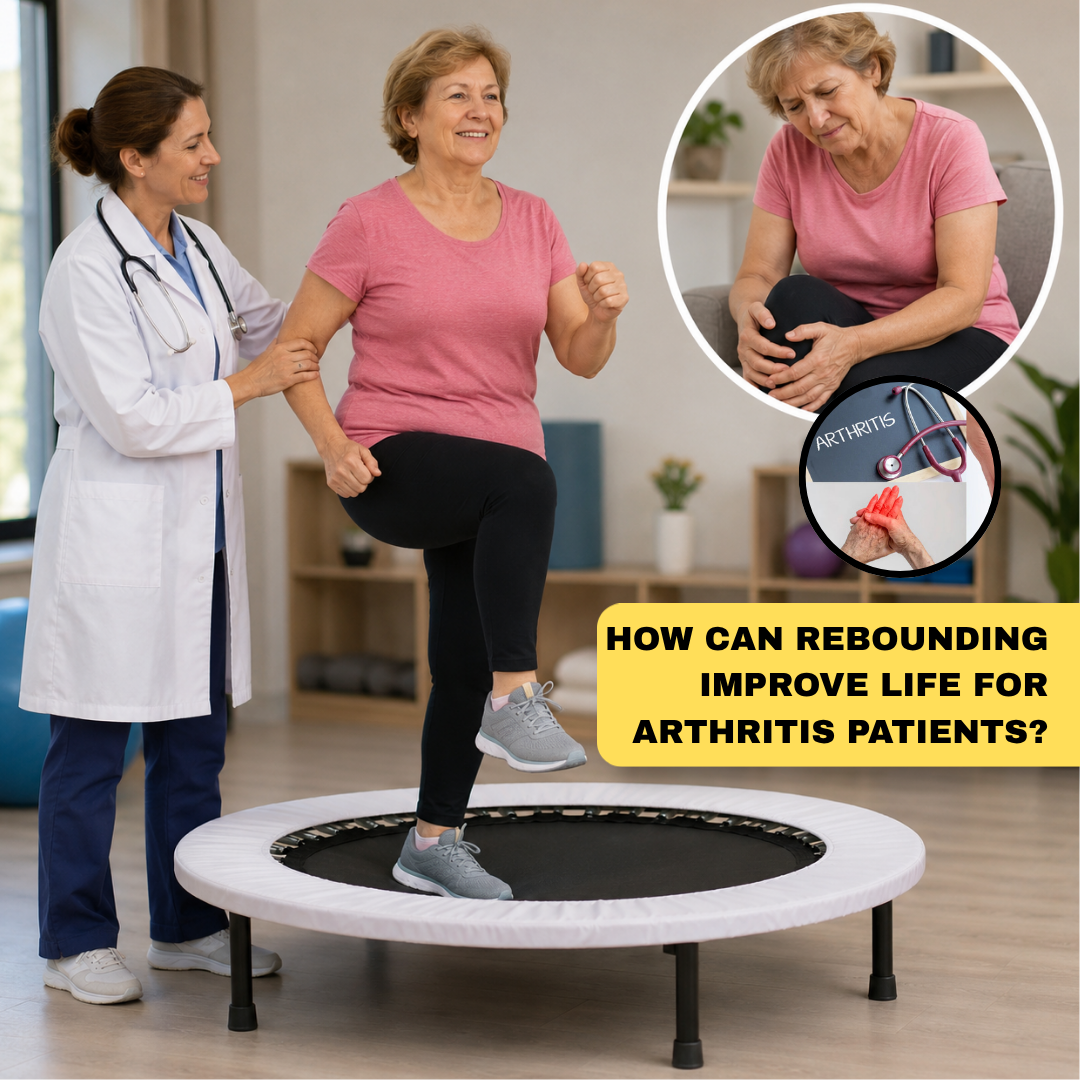

Living with arthritis means that many common activities such as walking and standing can become excruciating or very tiring. Many people with arthritis do not like to exercise because they feel that it can make their condition worse. However, a sedentary lifestyle can cause joints to stiffen up and muscles to weaken, decreasing one’s mobility. Physiotherapists can recommend light exercises which will allow one to move around and perform daily tasks with more ease.
One such type of exercise is known as rebounding, a form of aerobic activity which is performed on a small trampoline. Despite the apparent danger posed by such a low-impact activity, many researchers have found it to be surprisingly safe for those with arthritis. In this article, we will investigate what exactly rebounding is and how it affects the joints. We will also identify those who are most likely to benefit from the exercise, when it should not be used, and how to go about it if one is interested.


Why Does It Feel Easier on the Joints?
One of the main differences between rebounding and exercises such as running is the surface on which you perform it.
By landing on a bounce, you reduce the amount of force going up through your ankles, knees, hips and spine, compared to if you were to do it on a hard surface.
Rebounding vs Running
Rebounding
- Less stressful on the joints
- More gentle on the body
- Often done indoors
- Can be done very gently
Running
- More stressful on joints
- Harder impact on the ground
- Often depends on the weather
- Tends to be harder on knees
Can Rebounding Really Help Arthritis?
The short answer is yes, but for lots of people, it could be. Gentle rebounding may help mobility, circulation, balance, strength and confidence, and is less stressful to your joints than impact exercises, such as jogging. However, it is not a cure for arthritis.
Your doctor may suggest rebounding as part of a treatment program that can include medications, physiotherapy and a suitable exercise regime.
Still wondering if rebounding isn’t the exercise for you? Good to know that the low-impact exercise is very well known to aid those who may require different mobility ranges. There are countless healthcare providers recommending rebound therapy due to the gentle, controlled movement you’ll have, resulting in boosted confidence, balance and greater well-being. Read up on why health professionals recommend rebound therapy for all ages and why it is gaining trust as a kinder approach to exercise.
5 Ways Rebounding May Help People with Arthritis
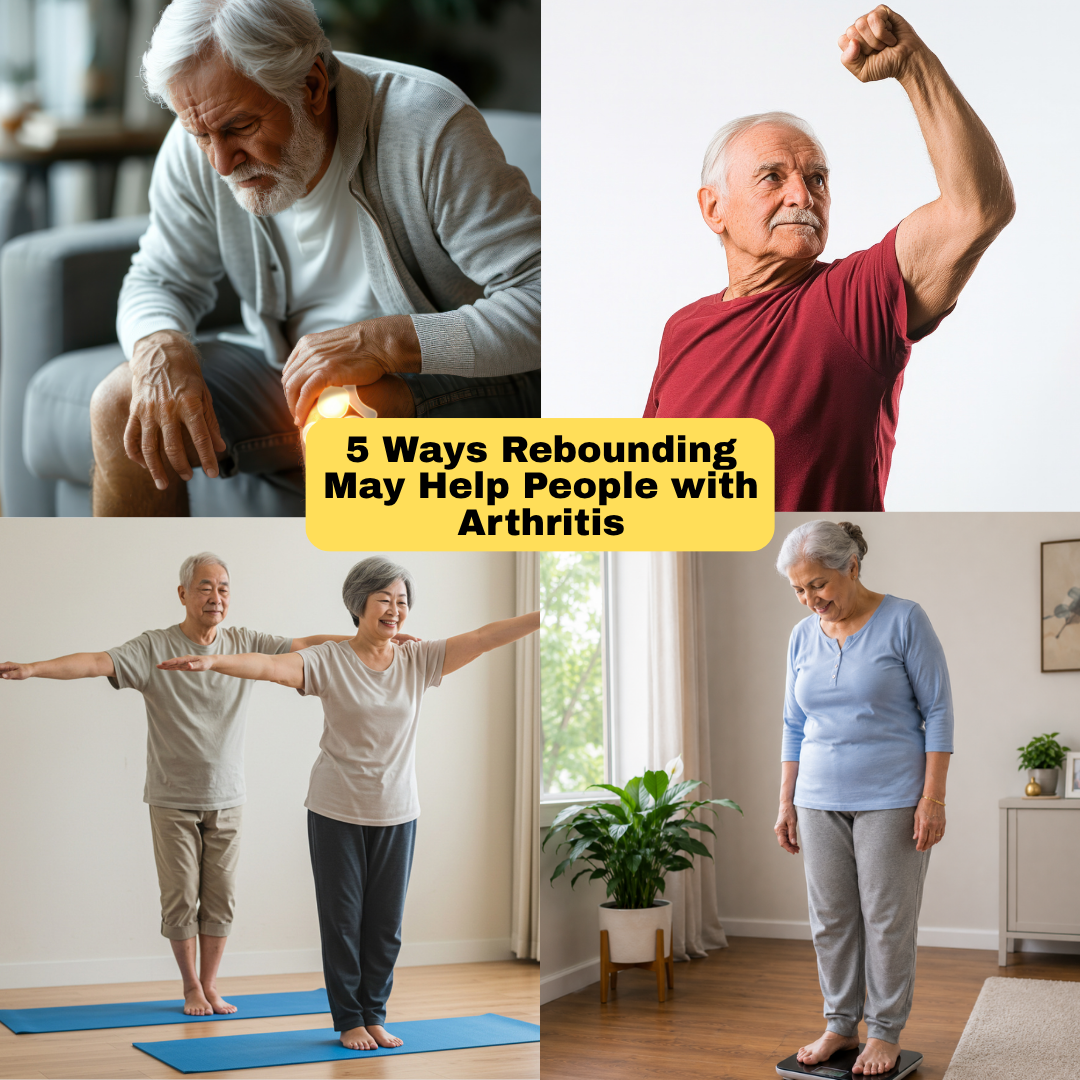
Staying active is a good way to keep your joints flexible and your muscles strong. The key is to start slower and work your way up.
Here’s how a rebounder may benefit people living with arthritis.
Reduces Pressure on Painful Joints
A rebounder works differently. Its flexible mat absorbs some of the force created when you move, so your joints don’t experience the same impact as they would on concrete or a treadmill.
Why This Matters
Gentle Rebounding May:
- Reduce the impact on weight-bearing joints.
- Make you feel more comfortable.
- Encourage regular physical activity.
- Help people who struggle with high-impact exercise.
Helps Reduce Joint Stiffness
One of the most frustrating symptoms of arthritis is stiffness. It often feels worse first thing in the morning or after sitting still for a long time.
Gentle bouncing encourages your joints to move through a comfortable range of motion. This movement increases the flow of synovial fluid—the natural lubricant inside your joints—which can help them move more freely.
Simple Ways to Ease Into Movement
If You’re Just Getting Started, Try:
- Gentle marching on the rebounder.
- Slow side-to-side weight shifts.
- Light heel raises.
- Small, controlled bounces.
Many physiotherapists suggest beginning with slow movements before attempting longer exercise sessions.
Improves Balance and Stability
Rebounding challenges your body to make small adjustments while you move. These tiny corrections engage your core, ankles, and legs, helping you develop better balance over time.
Everyday Benefits
Improved Balance May Make It Easier to:
- Walk on uneven ground.
- Climb stairs with confidence.
- Stand for longer periods.
- Reduce the risk of falls.
Beginners who feel unsteady can use a rebounder with a support handle and safety enclosure for extra reassurance.
Strengthens the Muscles Around the Joints
Strong muscles help protect your joints.
When the muscles around your knees, hips, and ankles become stronger, they absorb more of the load that would otherwise be placed on the joints themselves. This can make everyday movements feel easier.
Strength coaches often point out that building stability is just as valuable as building strength, especially for people managing long-term joint conditions.
Supports Weight Management
Extra body weight increases the load placed on your joints, particularly your knees and hips.
For someone living with arthritis, even a modest reduction in weight can ease pressure on painful joints. Staying active is one part of achieving that goal.
Because rebounding feels enjoyable for many people, they often find it easier to exercise consistently than with repetitive gym routines.
Consistency usually delivers better long-term results in maintaining a healthy weight than occasional intense workouts.
Is Rebounding Safe for Every Type of Arthritis?
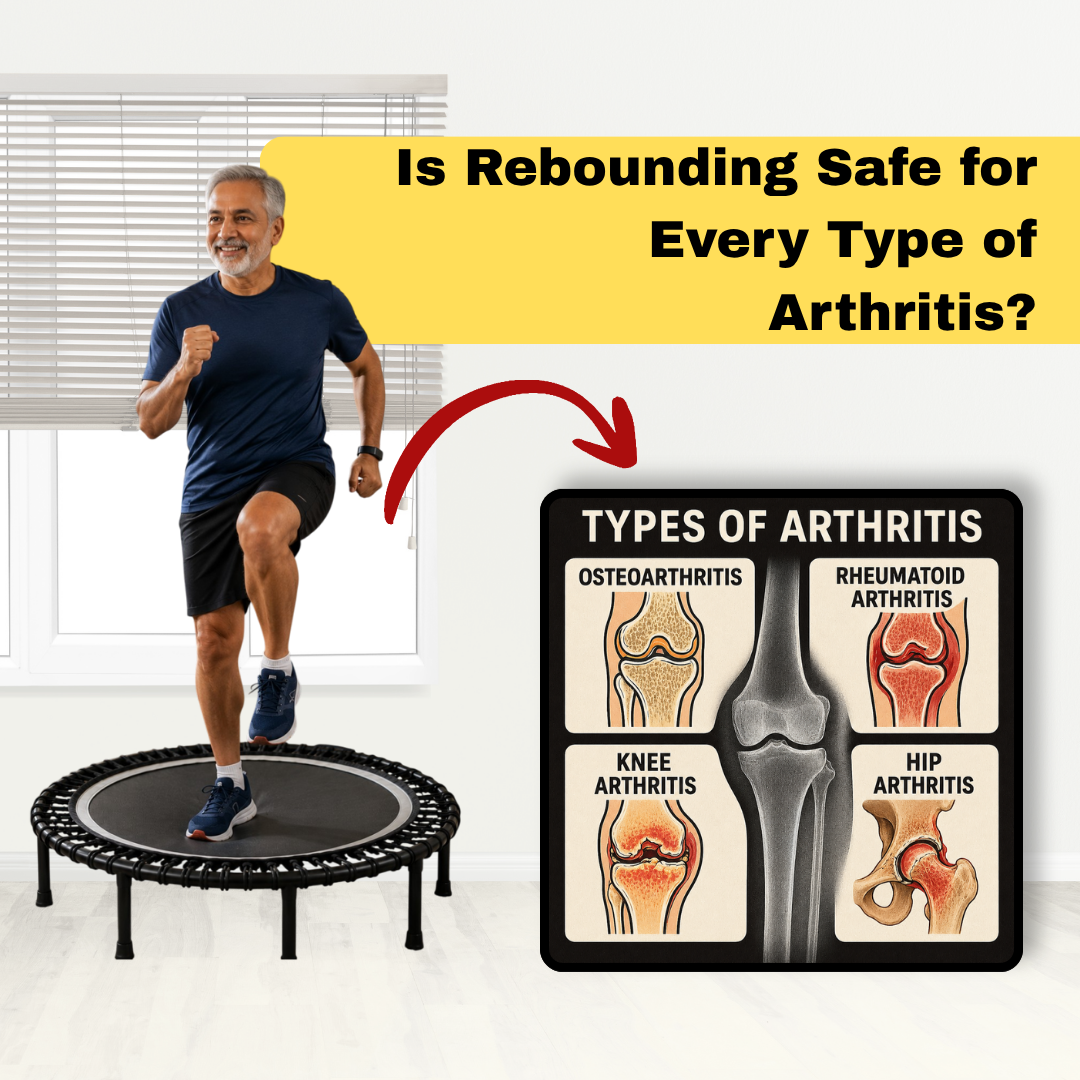
Before you start doing rebounding exercise, it is essential to learn how one’s condition might improve with such activity. The idea is not to push your body to test the limits, but rather to engage in a specific set of movements that are suitable for one’s arthritis.
Rebounding and Osteoarthritis
Osteoarthritis is one of the most common types of arthritis in the UK. It is due to the breakdown of cartilage in the joints. It usually happens in weight-bearing joints such as knees, hips and hands.
People diagnosed with osteoarthritis are encouraged to participate in low-impact exercises because such activities help joints stay flexible without putting too much pressure on them.
How Rebounding May Help Osteoarthritis
A Gentle Rebounder Routine May:
- Keep stiff joints moving.
- Strengthen muscles around affected areas.
- Support better balance.
- Make daily activities feel easier.
Rebounding and Rheumatoid Arthritis
People with rheumatoid arthritis may experience periods where symptoms are well controlled and times when they have flare-ups.
What to Consider Before Rebounding
During periods when symptoms are stable, gentle movement may help maintain flexibility and strength.
However, during a flare-up, when joints are swollen, hot, or particularly painful, it may be better to rest and seek advice from a healthcare professional.
A Suitable Approach May Include:
- Shorter exercise sessions.
- Lower intensity movements.
- Extra recovery time.
- Regular communication with your GP or rheumatology team.
Listening to your body matters more than following a strict workout schedule.
Rebounding and Knee Arthritis
Knee pain is one of the most common reasons people search for joint-friendly low-impact exercise options.
Tips for Protecting Your Knees
When Using a Rebounder:
- Keep your movements small and controlled.
- Avoid deep knee bends if they cause discomfort.
- Maintain good posture.
- Wear supportive footwear if recommended.
- Use a stability bar if you feel unsure.
Rebounding and Hip Arthritis
Gentle rebounding may encourage hip movement while strengthening the muscles that support the joint.
Focus on:
- Slow weight shifting.
- Controlled bouncing.
- Good posture.
- Comfortable movement ranges.
The goal is not to force extra flexibility. Smooth, regular movement is usually more beneficial than aggressive stretching or intense exercise.
Who Should Avoid Rebounding?
Although rebounding can be a gentle form of exercise, it is not suitable for everyone at all stages of their health and wellbeing journey.
Seeking advice from your GP, physiotherapist, or healthcare professional is essential if you have any concerns or special conditions.
You May Need Medical Advice Before Rebounding if You Have:
- Recent Joint Replacement Surgery
- Severe Arthritis Pain or Active Flare-Ups
- Balance Problems
- Severe dizziness
How to Start Rebounding Safely With Arthritis?
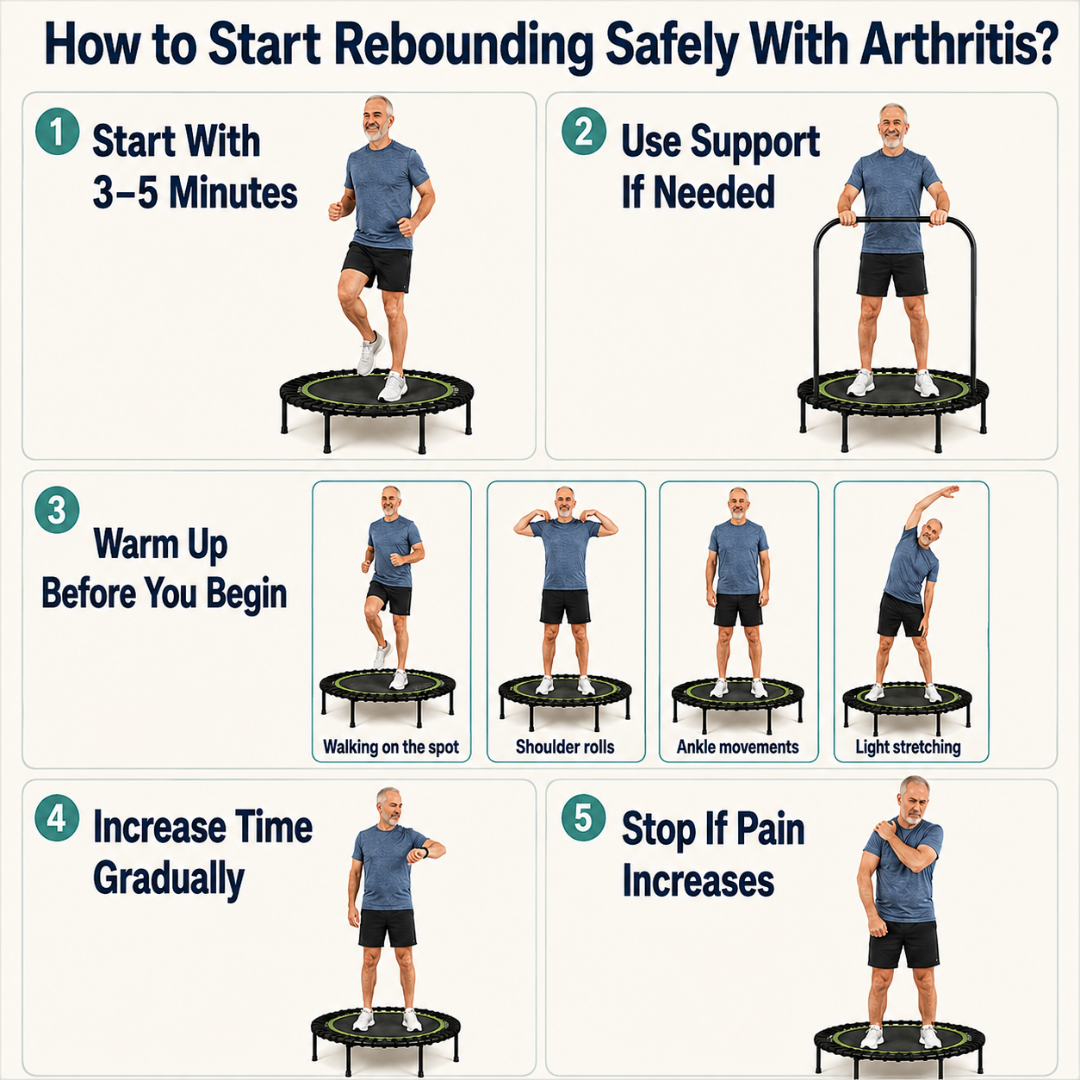
Starting slowly is one of the best ways to build confidence and avoid unnecessary discomfort.
Follow These Beginner Tips
Start With 3–5 Minutes
A short session is enough when you’re new.
Try gentle bouncing, marching, or simple weight shifts rather than intense movements.
Use Support If Needed
A rebounder with a stability bar can provide extra confidence, especially if balance is a concern.
Holding support doesn’t mean you’re doing it wrong. It allows you to focus on safe movement.
Warm Up Before You Begin
Spend a few minutes preparing your body with gentle movements such as:
- Walking on the spot
- Shoulder rolls
- Ankle movements
- Light stretching
Increase Time Gradually
Once your body feels comfortable, slowly add more time.
A Realistic Progression Might Look Like:
- Beginner: 3-5 Min
- Comfortable with movement: 10-15 Min
- Regular exerciser: 20 Min+
Once you become friendly with rebounding, you can move to a rectangle trampoline for fun exercises.
Stop If Pain Increases
Some muscle tiredness after exercise is normal.
Sharp pain, increased swelling, or joint discomfort that lasts afterwards is a sign to slow down and reassess.
Exercise should leave you feeling better—not worse.
Common Mistakes to Avoid When Rebounding with Arthritis
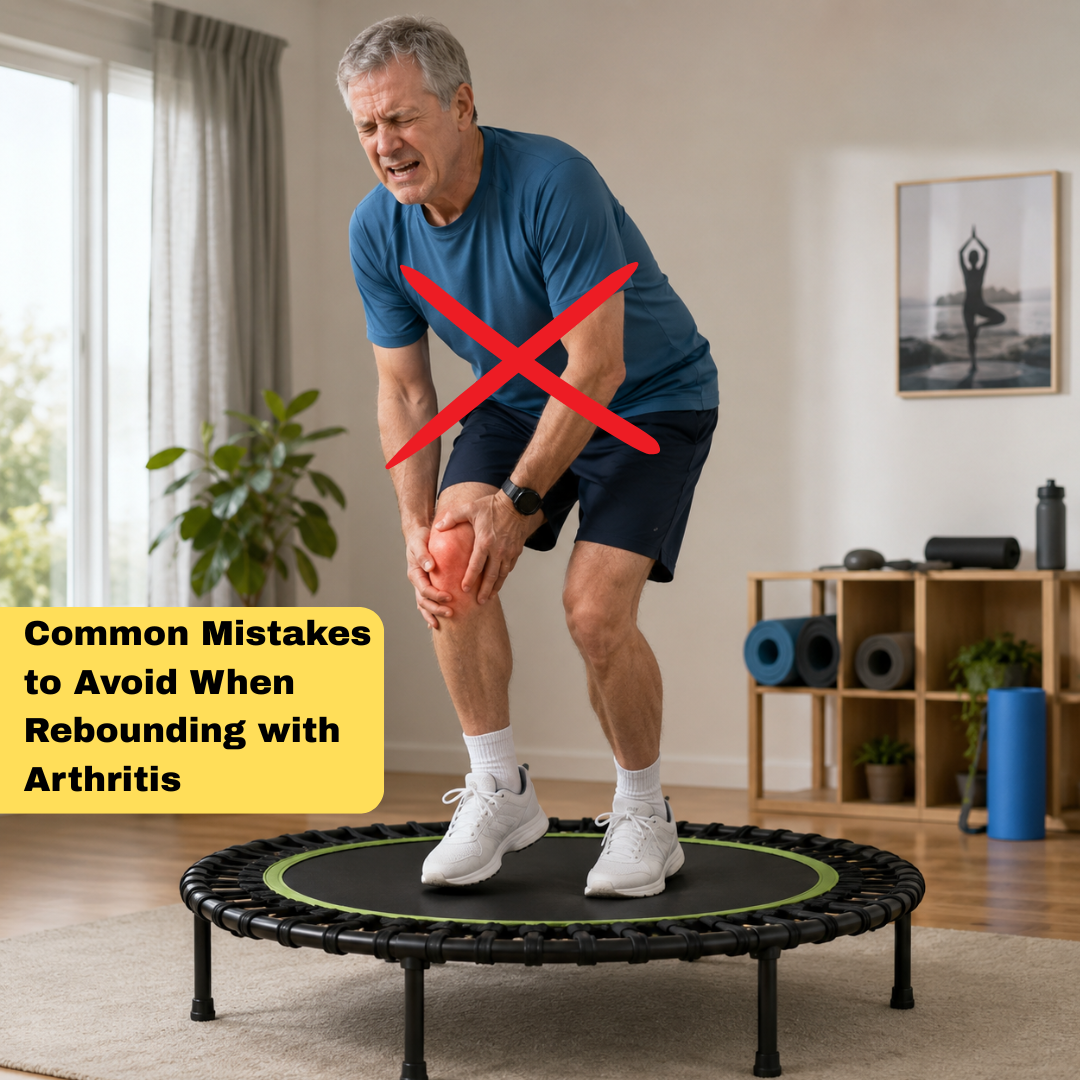
Beginning a new exercise routine is a good move for your overall health, but it’s also a sure bet that you’re bound to make a few rookie errors that may end up making your joints more, rather than less, uncomfortable. Fortunately, there are some obvious traps to recognize which are preventable. When beginning exercise, it’s not your goal to fly up as high as you potentially can. Rather, the purpose of the exercise is just moving in a comfortable, healthy, and sustainable manner.
- Jumping Too High Too Soon
- Skipping Your Warm-Up
- Exercising During a Flare-Up
- Doing Too Much Too Soon
- Ignoring Pain Signals
Maintaining your rebounder or trampoline is also important for more fun, and to achieve your desired results, you need to check its spare parts and change or repair them from time to time.
Conclusion
Living with arthritis does not require you to cease to be active-in many cases, the correct sort of movement can actually make everyday activities more manageable. Rebounding is a safe and low-impact method which can improve movement, strengthen support muscles around your joints, and increase confidence when performing activities. As most of the impact of exercise is lessened by the rebounding surface, many people enjoy using the rebounder over more high-impact forms of activity such as running.
Age, fitness level, type of arthritis and general health should influence whether rebounder use is appropriate. Slow, controlled movements and awareness of your body will ensure the safest activity. Speak to your GP or physiotherapist if you are not sure how to start.