Ever watched a trampoline take off across the garden? It’s funny for about two seconds. Then you notice the fence panel it’s heading for.
Most of us think a trampoline is too big and heavy to go anywhere. The wind disagrees. A trampoline is big and open, so the wind pushes on it like it pushes a sail, and British weather has plenty of gusts to throw at it. That’s the job of the trampoline anchor kit. It holds your trampoline where you put it, whatever the sky is doing.

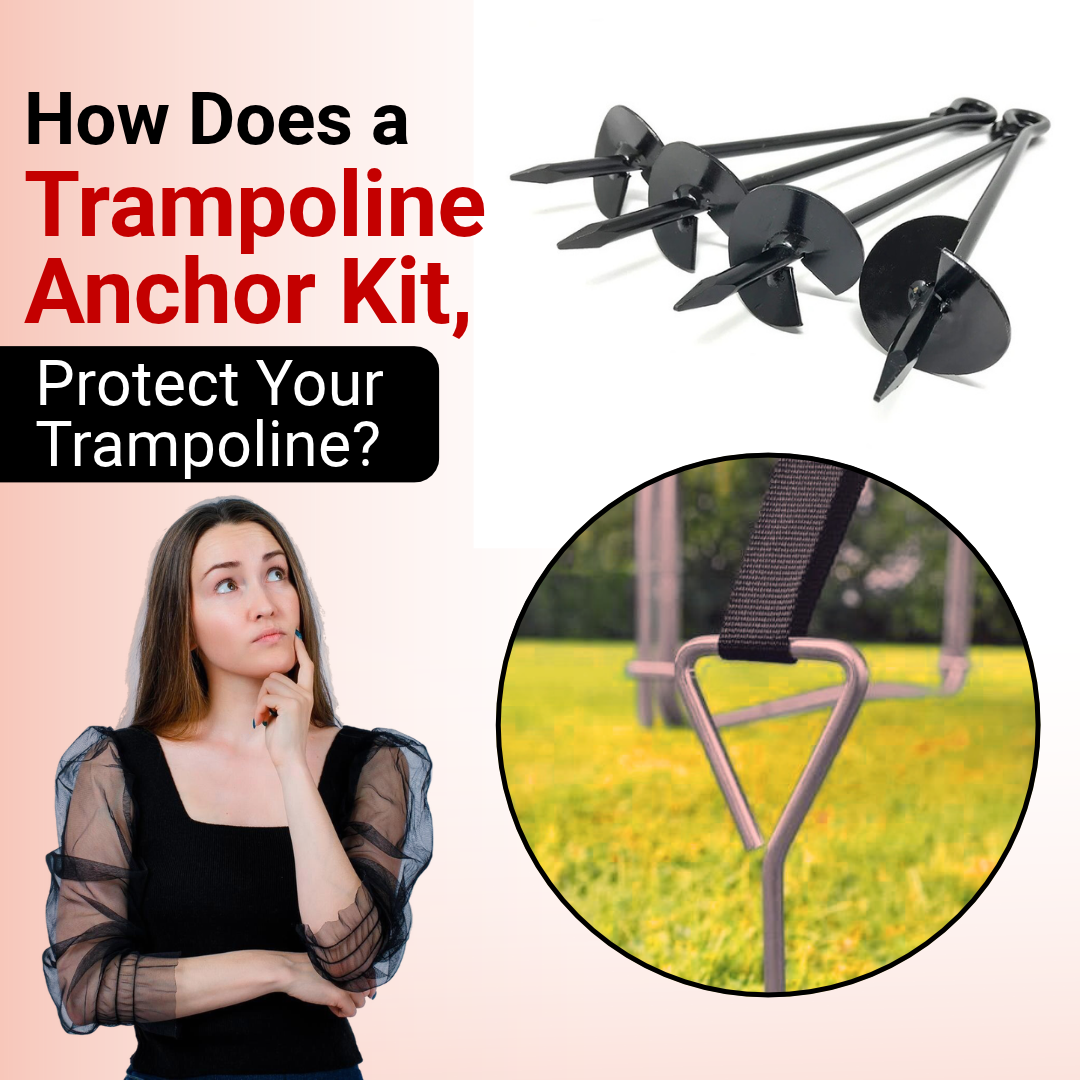
The anchors are made from heavy-duty steel with a spiral design that bites into the ground and resists being pulled out. Think of it as a proper grip rather than a hopeful one.
Fitting it doesn’t take long either. A few minutes with the kit, and you’ve dealt with a problem that could otherwise cost you a replacement trampoline, a neighbour’s repair bill, or both.
So before the next storm warning pops up on your phone, give your trampoline something solid to hold on to.
This guide covers how anchors work, what’s in a kit, how to pick one for your soil and how to fit it yourself. Ten minutes now could spare you a very bad morning later.
What is a Trampoline Anchor Kit, and Why Does It Matter?
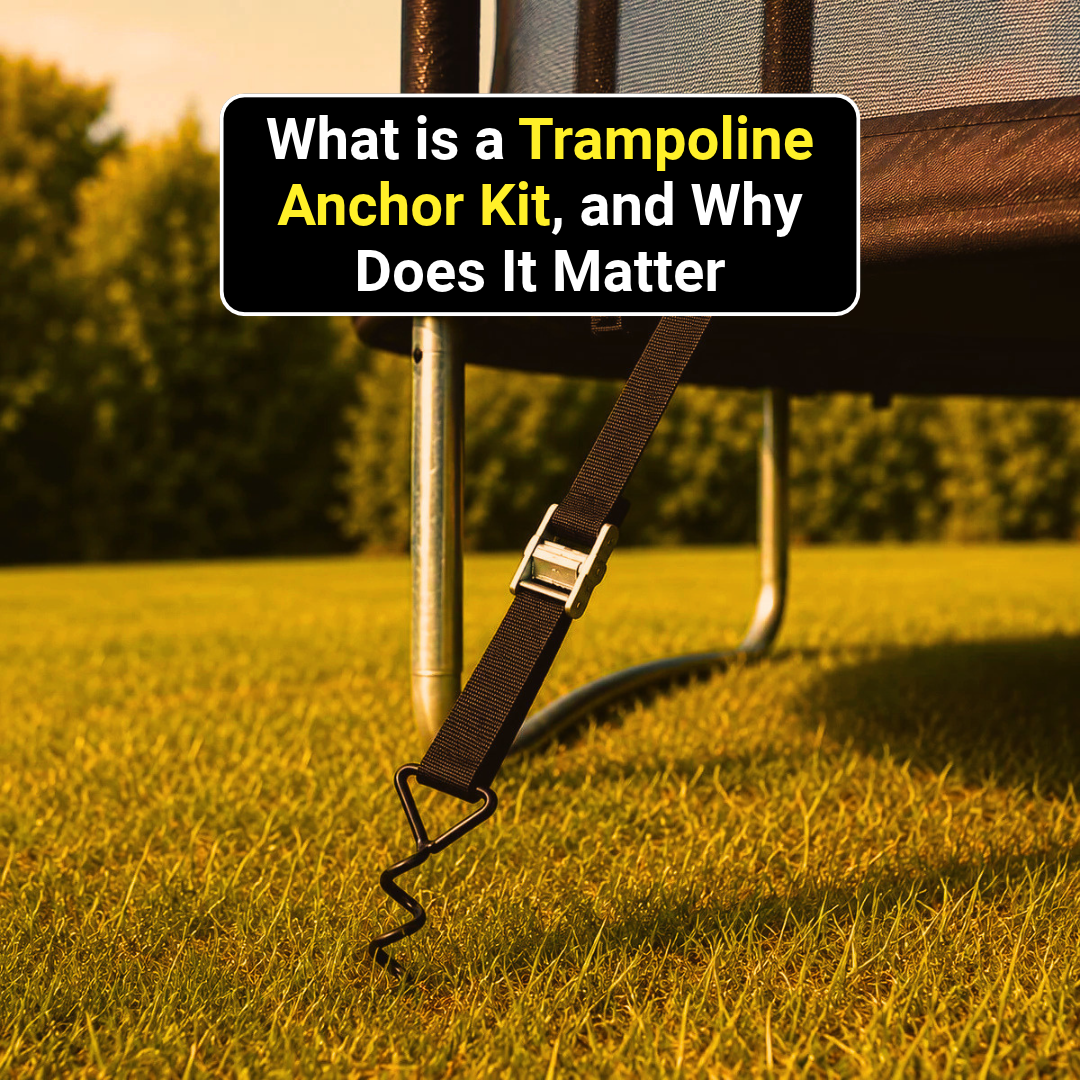
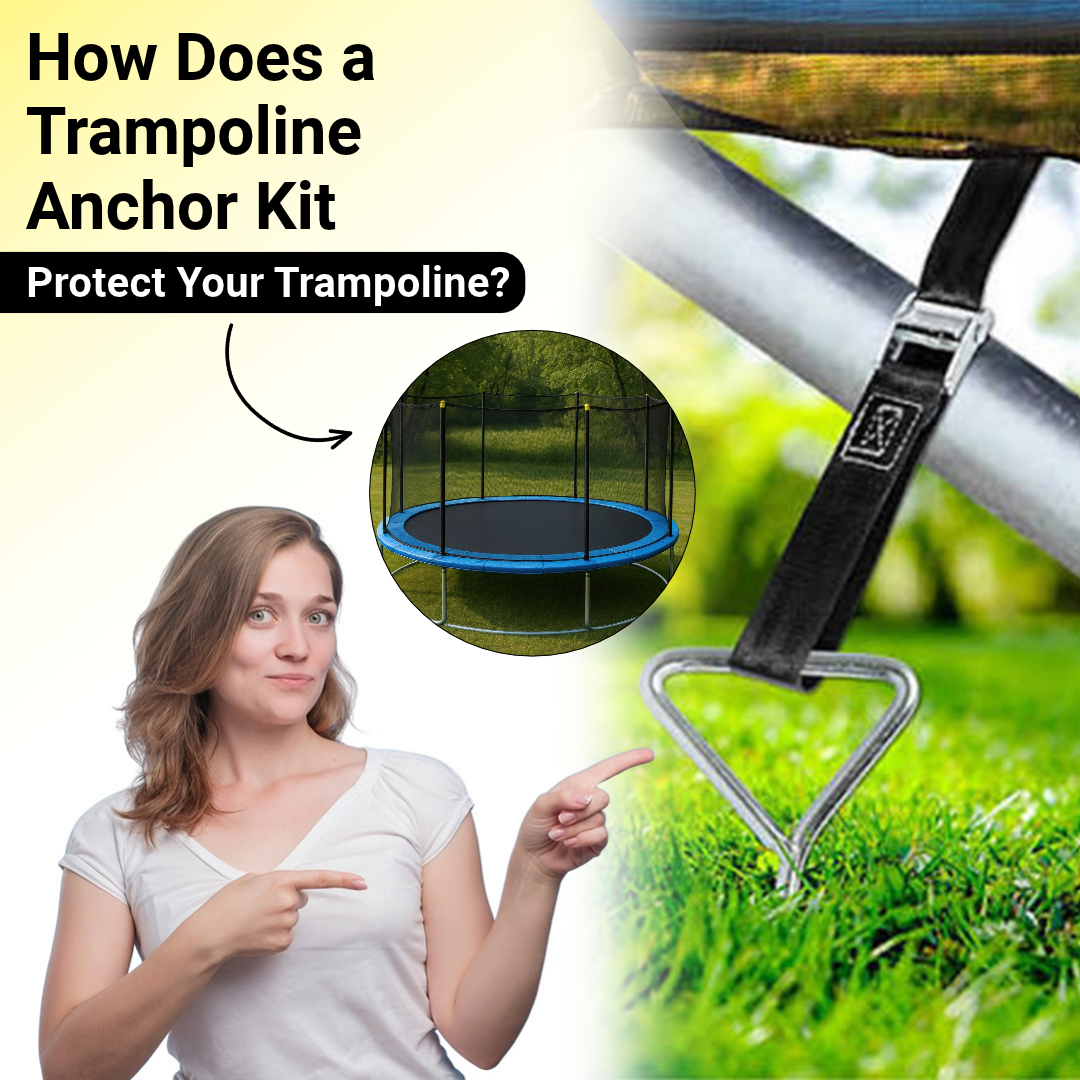
A trampoline anchor kit is a set of ground anchors and heavy-duty straps that fasten your trampoline frame to the earth. The anchors sit below the surface, the straps pull tight to the frame, and together they stop wind from lifting or sliding the garden trampoline across your garden.
Think of it as a tent peg for something the size of a small room. Every outdoor trampoline owner should have one, even with a compact model, because the mat and net give the wind plenty to push against.
So how bad can it get? Worse than most people expect.
What Wind Does to an Unanchored Trampoline
We judge an above-ground trampoline by how solid it feels underfoot. That’s the wrong test. Wind doesn’t care how sturdy the frame feels. It cares how much surface it can push on, and a trampoline offers a lot. Once air gets underneath, a slow slide can become a sudden lift.
Why Trampolines Behave Like Giant Kites
Surface Area vs Weight
Wind pushes on the surface area. Gravity holds things down with weight. A rectangular trampoline has plenty of the first and not much of the second. Air hitting the mat and net creates uplift, the same upward force that keeps a kite in the sky.
Why Even a “Heavy” Trampoline Isn’t Safe
“Mine’s too heavy to move” is the most common thing owners say. A steel frame is heavy, but that weight is spread thinly around a wide ring. A sharp gust can raise one side, and once one side is up, the rest tends to follow.
Wind Speeds That Can Lift a Standard Trampoline
There’s no single magic number. It depends on size, net, ground and how hard the gust hits. Rather than guessing, keep an eye on the weather forecast. If a yellow or amber wind warning covers your area, treat the trampoline as at risk, anchored or not.
The real bill isn’t just the trampoline. It’s the neighbour’s shed roof, a dented car, a child watching their favourite thing disappear over the hedge. Or someone standing in the wrong place.
Before setting up your trampoline, check that your garden has enough room around it for safe use. Our guide to trampoline spacing explains how to assess your available space and plan a safer setup.
How Does an Anchor Kit Protect Your Trampoline?
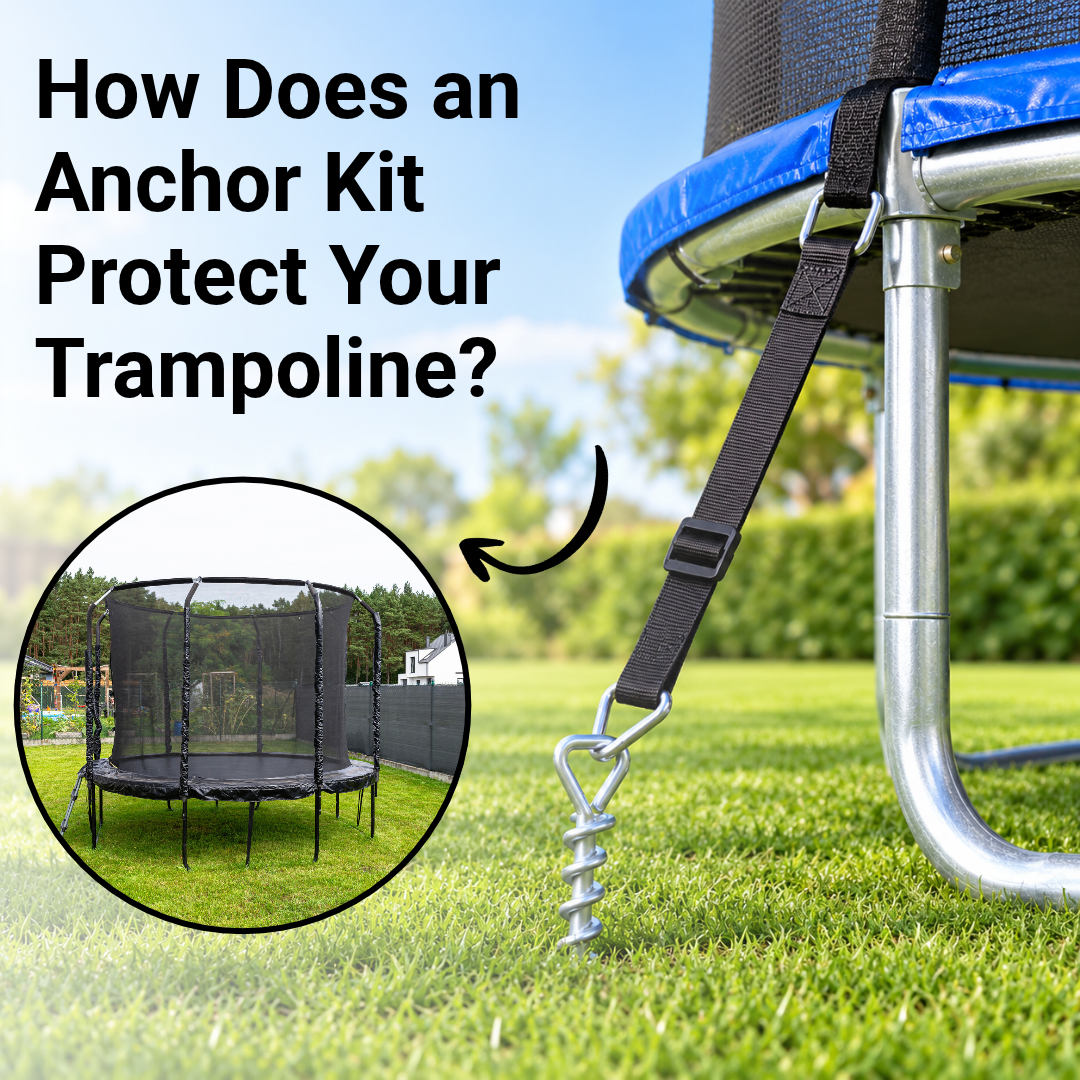
The fix is simple, costs far less than a replacement and takes an afternoon at most. A kit gives the wind something to argue with. Instead of a loose frame resting on grass, you’ve got a structure held down at every leg. It won’t turn your round trampoline into a bunker, and we’ll be straight about that later. What it does is tilt the odds firmly in your favour on the nights that count.
It Locks the Frame to the Ground
Anchors Go Below the Surface
Each anchor goes into the soil beside a leg. Underground, it grips a good lump of earth, which is much harder for wind to tear out than a leg sitting on top of the lawn.
Straps Create a Tension Barrier
A tight strap runs from anchor to frame and removes the slack the wind needs to build momentum. No slack, less sliding, and far less lifting.

It Protects More Than Just the Trampoline
Safety for Kids and Neighbours
A runaway trampoline is a heavy metal frame with nothing steering it. Trampoline anchors reduce the chance of it hurting anyone, including people on the other side of your fence.
Protection for Fences, Windows, and Cars
Garden damage is the first thing people count and the last thing they expect. Fence panels, greenhouse glass and parked cars all sit in the firing line.
Saving Money on Replacements and Insurance Claims
A new trampoline plus someone else’s repair bill adds up quickly. Home policies treat garden equipment differently, so check yours or ring your insurer. Compared with that, a kit is cheap.
Choosing a sturdy anchor kit can make a real difference to how well your trampoline stays secured outdoors. But what makes an anchor kit durable, and is it worth investing in one?
What’s Inside an Anchor Kit?
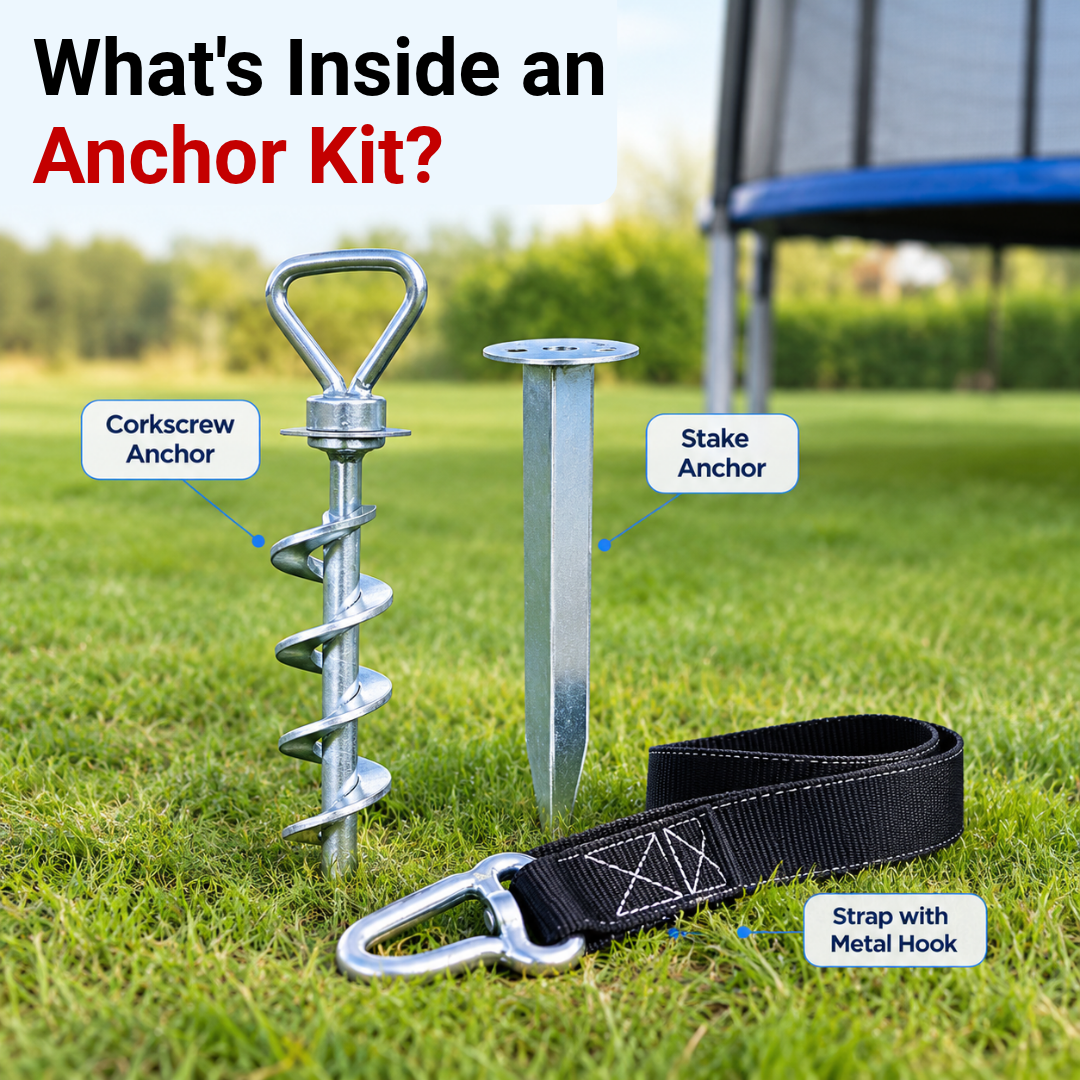
Open the box, and it looks simple. That’s the point. Each part has one job, and the kit is only as good as its weakest piece. Know what you’re looking at, and you’ll spot a poor one on the shelf.
Ground Anchors
Corkscrew (Auger) Anchors
These twist into the ground like a giant screw. The spiral grips well in most lawns and resists being pulled straight out.
Stake-style Anchors
Hammered in like oversized tent pegs. They’re quick to fit and suit firmer ground better than soft turf.
Straps, Hooks, and Connectors
Straps link the anchor to the frame, usually with a hook or buckle and a way to tighten them.
Why Strap Material and Stitching Matter
Cheap webbing frays in sun and rain, and thin stitching is usually where it gives way first. Look for thick, tightly stitched straps with sturdy metal hooks.
Installation Tools and Hardware
Many corkscrew kits include a driving bar or wrench, plus bolts and fixings. A mallet is handy for stakes and rarely in the box.
How Do You Choose the Right Anchor Kit?
Not every kit suits every garden. One that holds well in heavy clay can behave very differently in light, sandy soil. A little matching before you buy saves a return trip or a repeat of that kitchen-window moment.
Match the Kit to Your Soil Type
Soft or Sandy Soil
Soft ground needs more grip. Longer corkscrew anchors usually do better because they reach firmer soil lower down.
Hard or Clay Soil
Clay holds well once an anchor is in, but it’s tough to drive into, especially after a dry summer. Wet clay can soften, so re-check after heavy rain.
Match the Kit to Your Trampoline’s Size and Shape
Round models need an anchor near each leg. Rectangular and oval ones often have more legs and longer sides that catch more wind. Count your legs before you buy, then make sure the kit has at least that many anchors and straps.
Check Material Quality and Rust Resistance
Galvanised Steel vs Powder-coated Anchors
Galvanised steel has a zinc coating that usually copes better outdoors. Powder coating looks neat but can chip, and bare steel rusts.
What UK Weather Means for Durability
Damp winters and salty coastal air are hard on metal. A kit that lives outside all year needs a decent protective coating, plus a quick rust check every few months.
Compare Price, Anchor Count, and Warranty
Cheapest isn’t always best, and dearest isn’t either. Compare how many anchors you get, what they’re made of and how long the warranty runs. Check your trampoline’s manual too, as some makers have views on third-party fixings.
Anchor Type | Suits | Watch Out For |
Corkscrew | Most lawns are soft to medium soil | Hard work in dry clay |
Longer corkscrew | Sandy or loose soil | More effort to fit |
Stake | Firmer ground, quick jobs | Can pull out of soft or wet soil |
Choosing the right anchor kit is just one part of keeping your trampoline safe and enjoyable. The right trampoline accessories can also improve comfort, support safer use and help your trampoline perform at its best.
How to Install a Trampoline Tie Down Ground Anchor Kit?
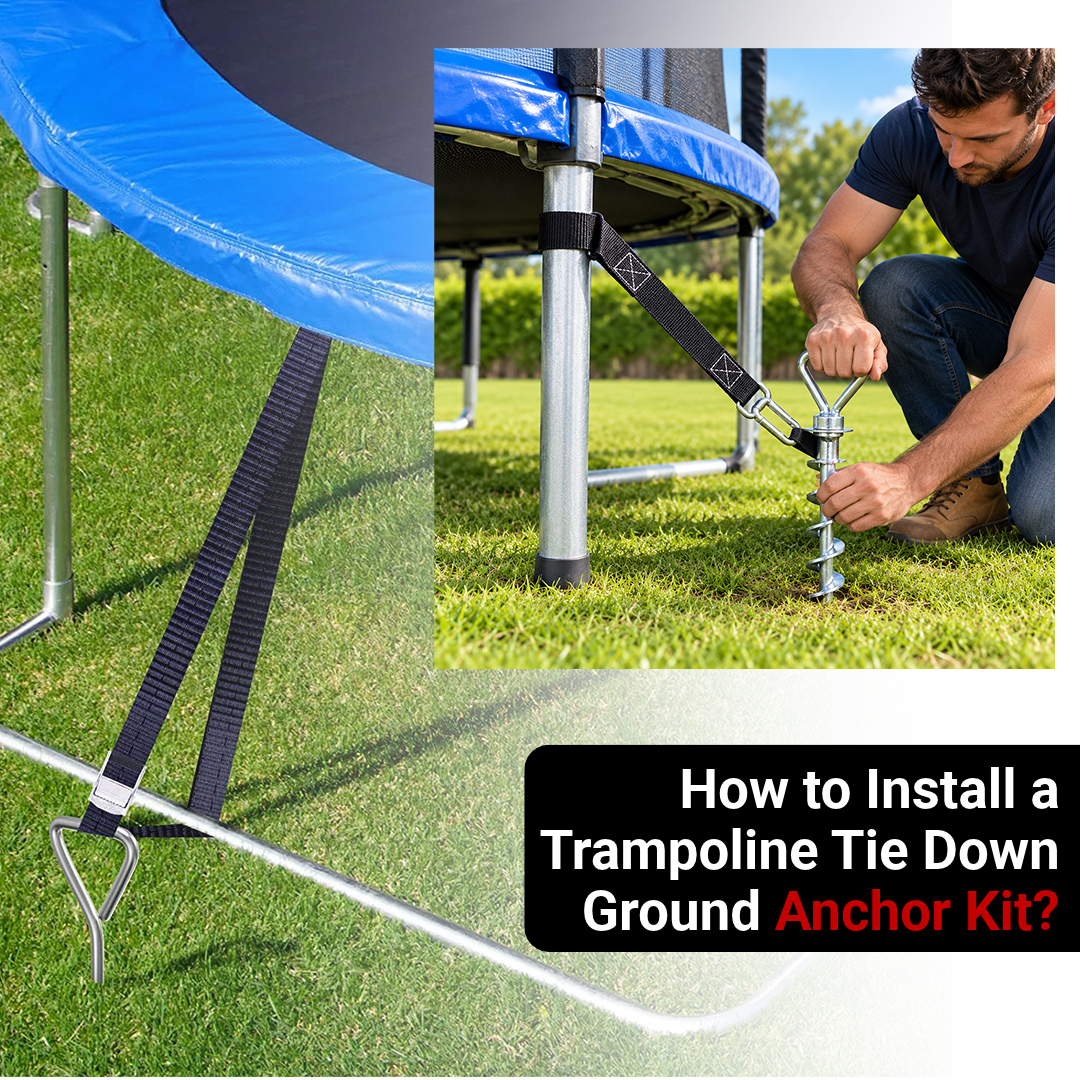
Worried you’ll get it wrong? Most people manage it in under an hour with basic tools and the instructions in the box. You don’t need to be handy. You need patience and a firm hand on the straps.
Step 1: Inspect the Area and Your Trampoline
Check the frame for rust or loose parts first. Then look at the ground. Find out where any cables, pipes or garden lighting run before anything goes in the soil. If you’re unsure, ask your utility provider.
Step 2: Position the Anchors Near Each Leg
Mark a spot beside every leg, close enough for the strap to reach comfortably. Follow your kit’s guide on spacing and angle.
Step 3: Screw or Drive the Anchors Into the Ground
How Deep Is Deep Enough?
Go by the instructions. Corkscrew types normally go in until only the loop sits above the grass. If one stops short, a stone is the likely culprit, so move it a few inches rather than forcing it.
Step 4: Attach and Tighten the Straps
Hook each strap to the frame and pull it snug.
Common Strap Mistakes to Avoid
- Leaving straps loose
- Clipping to springs or the mat instead of the frame
- Twisting the webbing
- Tightening one side far more than the others
Step 5: Test, Maintain, and Re-Check Regularly
Give every strap a firm tug. Anything that moves needs another turn.
Seasonal Checklist (After Storms, Before Winter)
- After any storm: look for loose straps and shifted anchors
- Before winter: check for rust and fraying
- Spring: retighten once the ground has dried out
Once you’ve chosen the right anchors for your garden, installation is straightforward with a little preparation. If you’re looking for a more detailed, simple walkthrough, our guide explains how to fit trampoline anchors securely and keep your trampoline stable outdoors.