
MMA is one of the toughest sports in the world. Fighters need stamina to keep going when they’re tired. They need quick feet and good balance. Their hands, eyes and feet also have to work together. It might sound like that takes a gym full of heavy machines, but it doesn’t have to. One of the best tools for the job is a simple skip rope, which needs nothing more than the rope and a bit of space.
That’s why many fighters skip rope for 10 to 30 minutes, either as a warm-up or as a proper workout. This guide looks at what skipping does for their bodies, how MMA gyms use it, and how a simple 10-minute routine can work for anyone who wants to try it.
Skipping looks easy, but every jump has a purpose.
Why Do MMA Fighters Skip Rope for 10-30 Minutes?
MMA fighters skip rope to improve cardiovascular endurance, footwork, timing, coordination and lower-body conditioning. A session of 10 to 30 minutes can work as a warm-up or a conditioning workout, depending on the fighter’s goals and schedule.
Treat that time range as an example, not a rule. Fighters train in different ways. Coaches plan sessions around the stage of a training camp, the fighter’s fitness and what else is on that day.
What Does a 10-30 Minute Skipping Session Achieve?
Here’s how the time often breaks down:
- About 10 minutes: A short warm-up before pad work, shadowboxing or technical drills.
- 15-20 minutes: Steady skipping with changes of pace.
- 20-30 minutes: A tougher conditioning session with intervals and rest periods.
These are examples only. They aren’t a routine that every professional follows.
Why Is Skipping More Than Just a Warm-Up?
Every jump asks for effort, rhythm, balance and control at the same time. That’s why a longer or harder session can add to a fighter’s conditioning, rather than just getting them ready for it.
So that’s how fighters fit skipping in. The bigger question is what it actually improves.
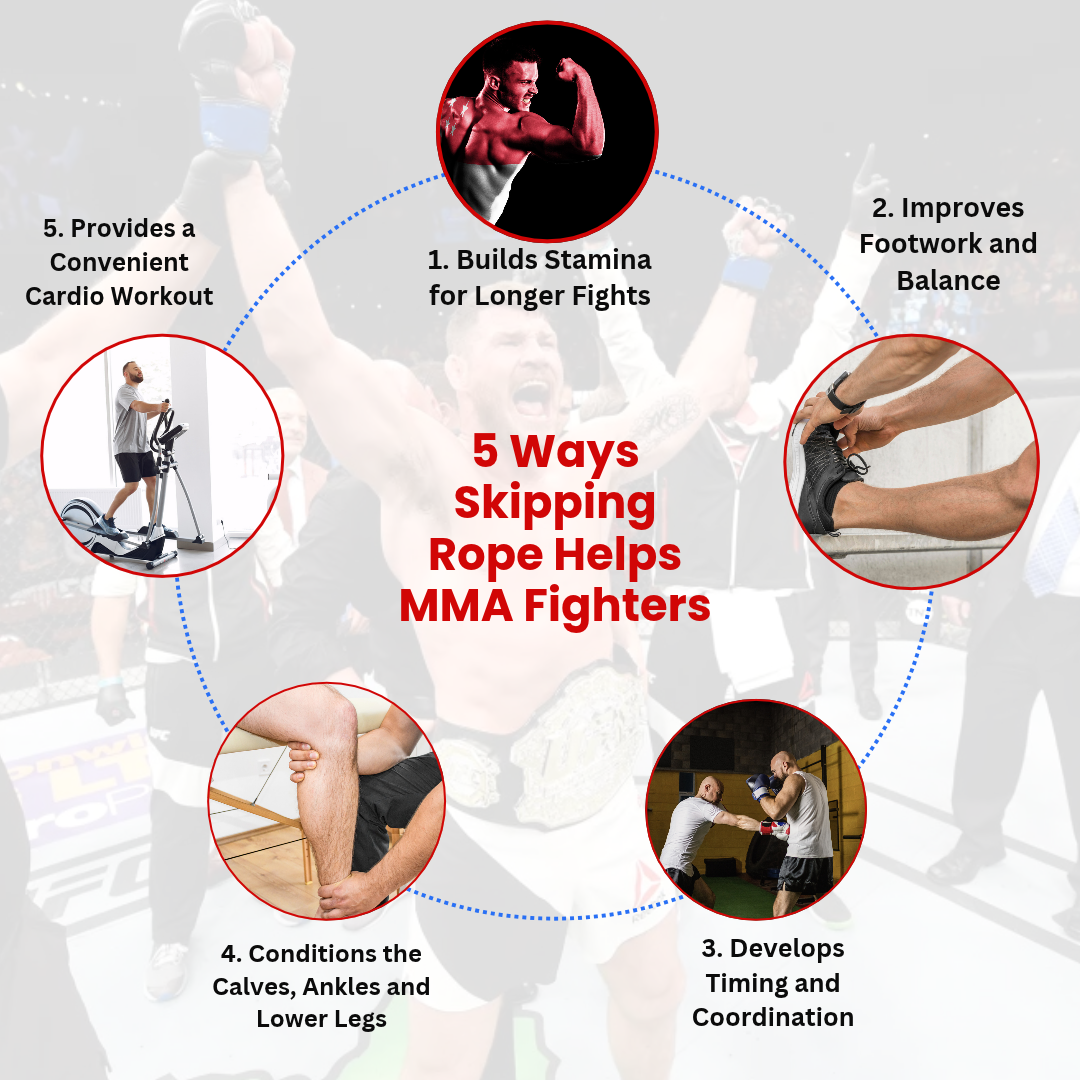
5 Ways Skipping Rope Helps MMA Fighters
A fight tests the whole body. Fighters must keep moving, stay balanced and stay sharp when they’re tired. Skipping trains several of those habits together, and it’s easy to repeat week after week.
1. Builds Stamina for Longer Fights
Skipping lifts a fighter’s heart rate and keeps it up. Done regularly, it helps their bodies get better at using oxygen, which is the basis of aerobic fitness. Many fighters also notice they recover faster between hard efforts.
Why Does Stamina Matter During a Fight?
- It helps fighters keep moving as they get tired.
- It helps them recover between hard exchanges.
- It helps them keep their technique steady late in a session.
2. Improves Footwork and Balance
Good skipping uses small, light jumps. Fighters stay on the balls of their feet and keep their weight under control. That builds the quick, quiet movement coaches often ask for.
How Does Footwork Help an MMA Fighter?
Footwork helps a fighter move in and out of range, change direction and stay balanced during striking drills. The rope won’t teach those skills on its own. It does build the light, springy base they rely on.
3. Develops Timing and Coordination
MMA fighters’ wrists turn the rope, their feet clear it, and their eyes keep watch. If their timing is off, the rope catches their feet straight away. That instant feedback makes skipping a smart coordination drill.
4. Conditions the Calves, Ankles and Lower Legs
Repeated jumping works their calves, ankles and feet. Over time, these areas get better at handling repetitive movement.
Can Too Much Skipping Cause Problems?
Yes, if they rush. A sudden jump in skipping time can strain a fighter’s calves, Achilles tendon or shins. Fighters should build up slowly, wear supportive footwear and leave days for recovery. If pain lingers, they should speak to a GP or a physiotherapist.
5. Provides a Convenient Cardio Workout
A rope is affordable, light and easy to pack. Fighters can skip in a gym, a garage or the garden. They can also match it to their level by changing the pace, the rest and the time.
These benefits explain why skipping has lasted in combat sports. Fighters don’t all skip the same way, though.

What Does Skip Rope Training Look Like in an MMA Gym?
Different MMA gyms take different approaches. Some coaches want their fighters to have a calm warm-up. Others use the rope for hard conditioning. Most use a mix of both.
Steady Skipping Before Technical Training
A comfortable pace raises a fighter’s heart rate and warms up their lower legs. It gets their bodies ready for pad work, drilling or sparring without tiring them out first.
Interval Skipping for Conditioning
Interval training swaps harder efforts with easier recovery. In skipping, that might mean a short burst of faster jumps, then steady skipping or a rest. It’s demanding, but far more manageable than going flat out the whole time.
Why Do Fighters Change Their Skipping Pace?
Different speeds train different things. An easy pace builds a fighter’s basic endurance. Faster bursts push their bodies harder. Mixing the two stops the session from turning into a sprint they can’t finish.
Beginners don’t need to compete to borrow these methods. A simple routine can build coordination and fitness for them too.
A Simple 10-Minute Jump Rope Routine for Beginners
This is an everyday workout with a skipping rope, not a professional fight camp programme. Keep the effort comfortable.
Time | Activity | Purpose |
0-2 minutes | Brisk walking and gentle mobility | Prepare the body |
2-4 minutes | Basic skipping | Build rhythm |
4-6 minutes | 30 seconds easy skipping, 30 seconds rest or marching | Practise pacing |
6-8 minutes | Gentle side steps or alternate-foot skipping | Develop coordination |
8-10 minutes | Slow walking and calf stretches | Cool down |
How to Make the Routine Easier or Harder
- Easier: They swap jumping for marching and take longer rests.
- Progress: They add 30 seconds of skipping each week if it feels comfortable.
- Harder: Once they’re confident, fighters can try small footwork variations, but they shouldn’t let their technique slip.
What Fighters Focus on During Each Jump
Keep Jumps Small and Controlled
Fighters land softly and turn the rope mainly with their wrists. Jumping higher than necessary just wastes energy and adds extra impact.
Choose the Right Space and Equipment
Pick a rope that reaches about armpit height when they stand in the middle. Wear supportive shoes and choose a clear, non-slip surface with enough headroom. A hard floor is tough on the shins, so a mat or gym floor is kinder.
A consistent routine is a good start. To get more from it, look beyond the rope itself.
How Fighters Can Maximise Their Skipping Results

Skipping works best as one part of a balanced plan. Think of the tips below as supporting acts. None of them guarantees better performance, and none replaces coached training.
Combine Skipping With Resistance Band Exercises
Resistance bands add tension to simple strength moves. They’re light, affordable and easy to use at home.
Which Resistance Band Exercises Can Support MMA Training?
- Band rows: Work the upper back and pulling muscles.
- Band-resisted squats: Add resistance to a basic lower-body movement.
- Lateral band walks: Challenge the muscles around the hips.
Bands support general strength and conditioning. They don’t replace coached MMA drills or a structured strength programme.
Training With a Balanced Diet
What a fighter eats affects their energy and recovery. A varied diet does more for them than any single performance food.
What Should Fighters Eat Before and After Training?
- Before: A familiar, easily digested carbohydrate snack, such as a banana or toast, if they need energy.
- After: A balanced meal with protein, carbohydrates and other nutrients.
- Day to day: A mix of fruit, vegetables, whole grains, protein and healthy fats.

Stay Hydrated Before, During and After Exercise
How much fluid a fighter needs depends on how long they train, how hard they work, the temperature and how much they sweat.
Use a Fitness Trampoline for Low-Impact Cardio Variety
A fitness trampoline, often called a rebounder, offers a different way to do cardio. Some people use one on days when they want a change from the rope.
How Can Rebounding Complement Skipping Rope?
- It’s another way for fighters to raise their heart rate.
- Controlled bouncing can help their rhythm and movement coordination.
- It can add variety to a week of training if the equipment and exercises suit their ability.
Which Exercises Work Well for Fighters Alongside Skipping?
A rounded plan covers more than cardio.
- Shadowboxing: Lets fighters practise movement, combinations and technique.
- Strength training: Builds general strength and resilience.
- Mobility work: Keeps their joints moving comfortably.
- Walking, cycling or running: Adds cardio variety.
- Rest and recovery: Gives their bodies time to adapt.
Fighters Should Build Their Training Around Their Current Fitness
Start small, then add one thing at a time. Trying to do everything at once is the quickest route to burnout.
The goal isn’t to squeeze everything into one workout. It’s for fighters to build a routine they can keep up while recovering well enough to improve.
What Can UK MMA Fighters Teach Us About Conditioning?

British fighters have shown just how demanding elite MMA is. We don’t have verified details of their skipping routines, so the focus here is on the bigger lesson. Conditioning, movement and recovery all matter.
Leon Edwards and the Demands of Elite MMA
Leon Edwards is a UFC fighter from the UK shores who grew up in Birmingham and went on to become UFC welterweight champion. Elite competition at that level demands skill, movement, conditioning and recovery working together.
Michael Bisping and the Importance of Endurance
Michael Bisping became the first British UFC champion. His long career is a good reminder of the endurance that high-level MMA requires.
Jimi Manuwa and the Athletic Demands of MMA
Jimi Manuwa is another well-known MMA fighter UK fans will recognise, famous for his power at light heavyweight. His career shows how athletic the sport is, from explosiveness to resilience.
How Often Should MMA Fighters Do Skipping Rope Training?
Beginners can start with two or three short sessions a week, if that feels comfortable. Experienced fighters may skip more often, depending on their plan.
Increase their time and effort slowly. Balance cardio with strength work, technical practice and rest.