You wake up after a night of heavy rain, glance out of the window, and there it is. Your sunken trampoline has turned into a paddling pool. It’s a common sight, and it happens because an in-ground trampoline sits in a hole, and holes collect water.
Putting an effective drainage system in place for an in-ground trampoline before the first storm saves a lot of mess, money, and muddy socks. Water left in the pit can rust the frame, spoil the mat, and leave the ground soft underfoot.

This guide explains why the water gathers, how to build a proper drainage setup step by step, and how to choose between a French drain, a sump pump, and a dry well.
Key Points
- A trampoline pit collects water by design, so plan drainage before you dig.
- Test your soil first. Clay, sand and loam all behave differently.
- A gravel base plus a sloping perforated pipe suits most gardens.
- Choose the outlet to match your land: French drain for slopes, dry well for free-draining soil, and sump pump for flat, wet sites.
- Check everything each autumn and after heavy rain.
Why is Drainage Important for an In-Ground Trampoline?
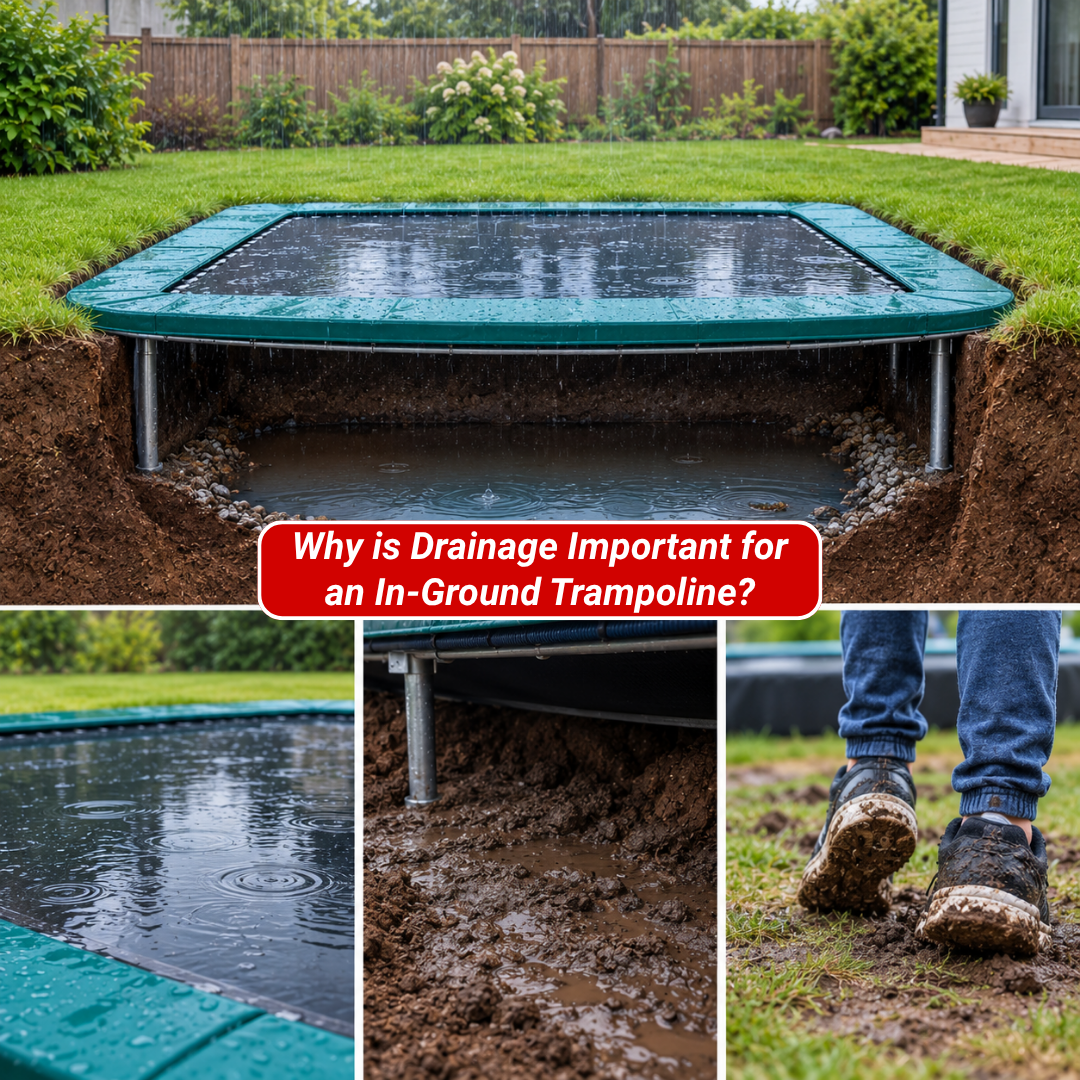
A trampoline pit is a hole, and rain runs into holes. With nowhere to go, the water sits at the bottom, soaks the soil, and stays put. Clay gardens, which are common across much of the UK, make this worse because clay drains slowly. That’s why drainage needs planning before the spade goes in.
What Happens When Water Collects in the Trampoline Pit?
First comes the puddle. Then the soil beneath turns to sludge, and the ground around the mat loses its firmness. You’ll notice it when a bounce feels odd, or your shoes come back caked in mud.
Then there’s the waiting. Kids can’t use the Akrobat Primus Flat Plus 17 x 10ft Rectangular Trampoline for days after a downpour, which rather defeats the point of buying one.
How Can Poor Drainage Damage Your Trampoline?
Metal and constant damp don’t mix. Trampoline springs and frame parts rust, mould creeps onto the trampoline mat and padding, and a soggy pit starts to smell.
After a few wet winters, that adds up to a much shorter life for the whole in-ground trampoline. Owners often blame the product when the real issue is the pit.
So how do you stop it? Start with the ground itself.
Steps to Build a Drainage System for an In-Ground Trampoline
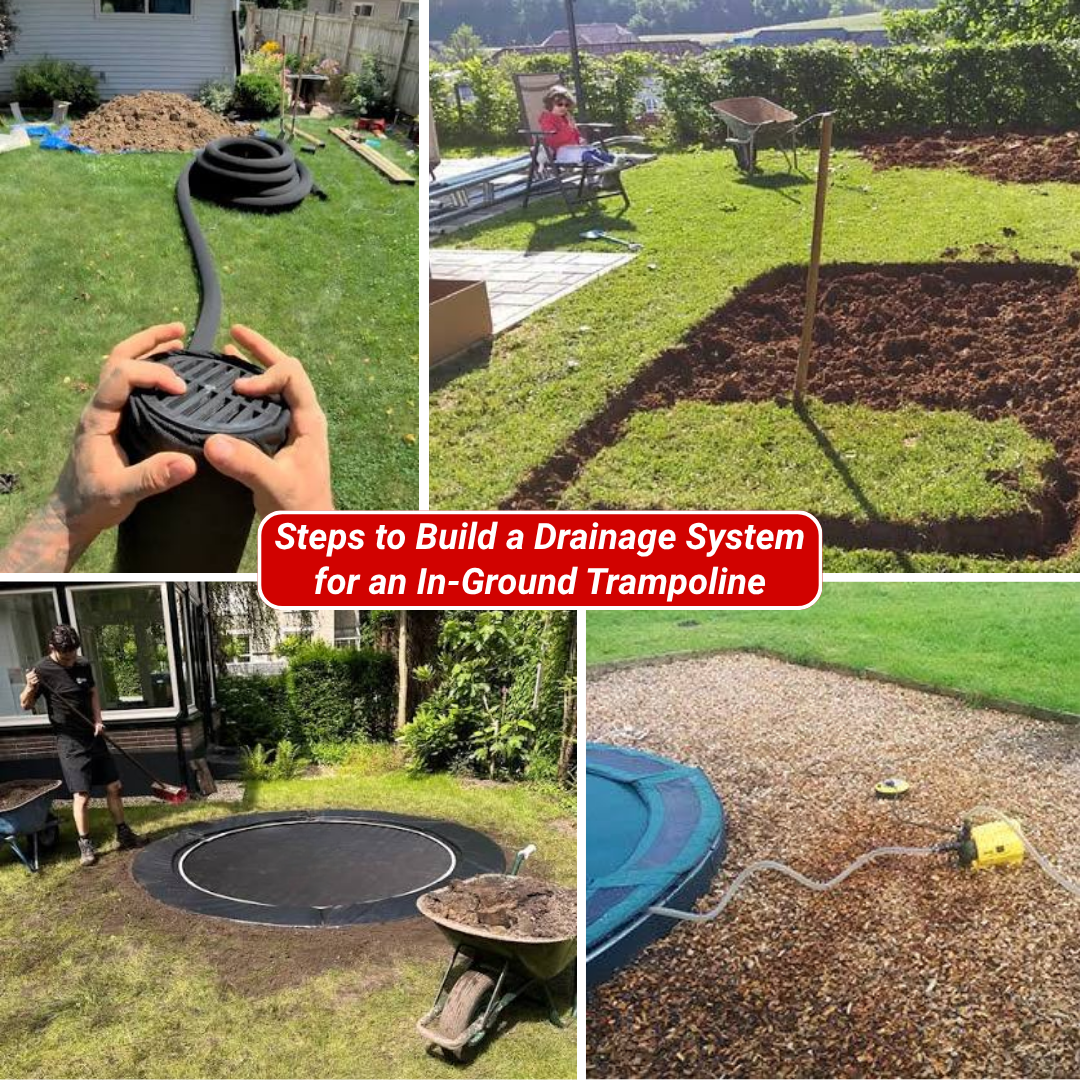
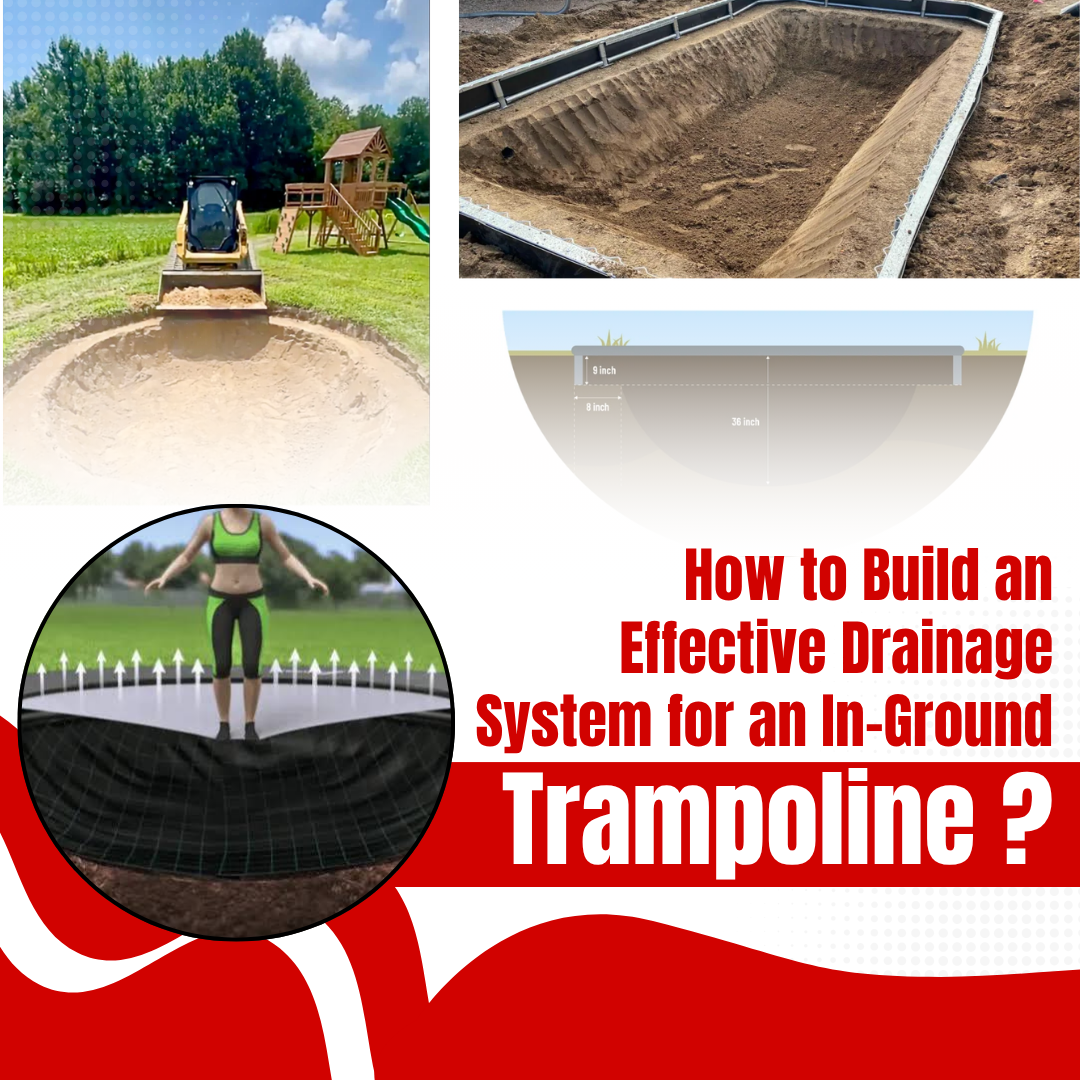
Building drainage is less challenging than it sounds. It comes down to four jobs: read the ground, prepare the base, lay a pipe, and give the water somewhere to go. Do them in that order, and most gardens can cope with a normal British winter.
Assess the Soil and Ground Conditions
Dig a small test hole about as deep as your pit, fill it with water, and see how long it takes to empty. Clay holds on for hours, sometimes days. Sandy soil clears quickly. Loam sits somewhere in the middle.
Look at where puddles form after rain, too, and think about how high the water table sits in your area. If the hole holds water even in dry weather, get professional advice before you dig any further.
Prepare the Bottom of the Trampoline Pit
Level the floor, then spread a layer of clean drainage gravel. As a rough guide, 10 to 15 cm is common, though your trampoline’s instructions may say otherwise. Avoid fine sand or soil mixes, because they clog.
Many installers lay a permeable geotextile membrane first so soil can’t creep into the stones. A firm, even base matters. Water follows the lowest point, and you want to be the one who chooses it.

Install a Perforated Drainage Pipe
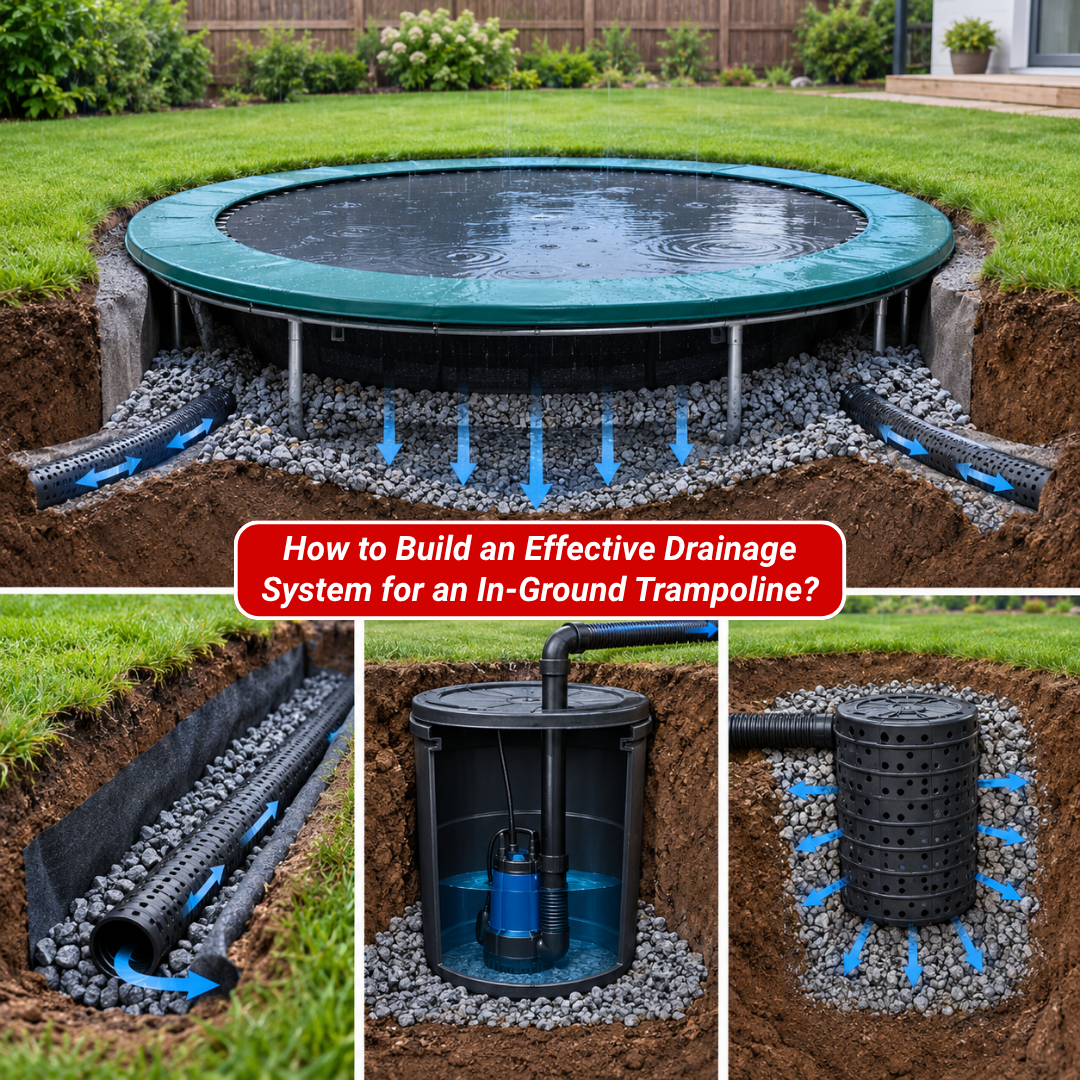
A perforated pipe collects water from the gravel and carries it away. The usual approach goes like this:
- Cut a shallow trench across the pit floor, sloping to one side.
- Lay the pipe on a bed of gravel with the holes facing down.
- Keep a gentle fall away from the pit, often around 1 in 80.
- Cover the pipe with more gravel.
Connect the Drainage to a Suitable Outlet
The pipe has to lead somewhere. Your options are a French drain, a dry well (also called a soakaway), or an existing surface water drain.
Sending the water to another corner of the lawn only moves the swamp. And don’t connect to a foul sewer. Water companies generally don’t allow surface water into them, so check with yours first.
If you’re considering a sunken trampoline, drainage is only one part of getting the pit right. From choosing the right location to preparing the ground and installing the trampoline safely, there are several details worth getting right from the start. For a step-by-step overview, see the guide to installing an in-ground trampoline.
Which outlet suits you depends on your land, so let’s look at the three main choices.
Which Drainage Solutions Can You Use for an In-Ground Trampoline?
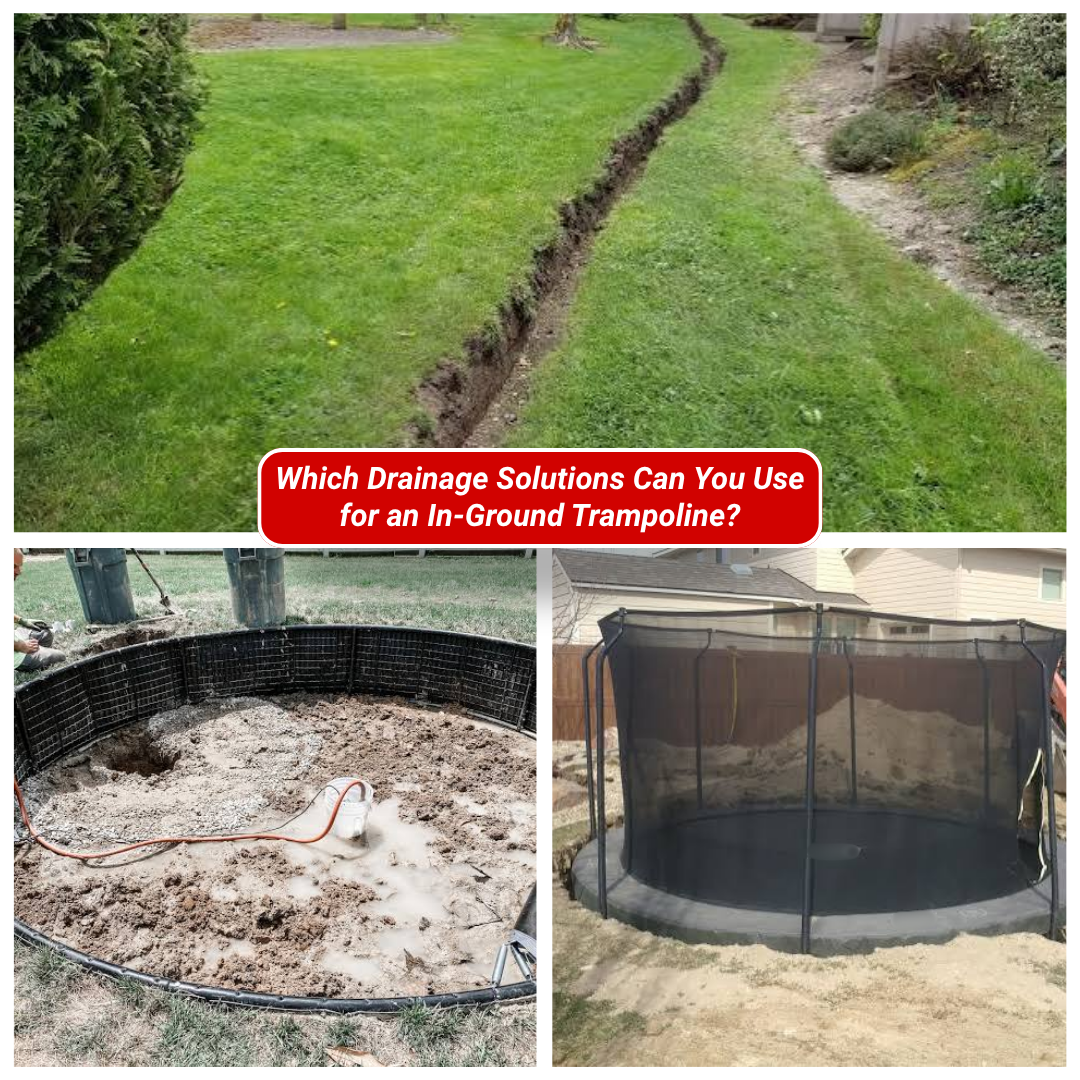
Three options come up again and again. They solve the same problem in different ways, and the right one depends on how much slope you have and how wet your ground gets.
French Drain
A French drain is a gravel-filled trench holding a perforated pipe, which leads water to lower ground. It works well if your garden slopes away from the pit. Dig it deep enough to keep the fall, wrap the gravel in membrane, and keep the far end clear of weeds and soil.
Sump Pump
A sump pump sits in a small chamber at the lowest point and pushes water out when the level rises. It suits flat gardens or pits lower than any outlet you can reach. It needs power, a float switch that works, and a check-up before winter. Pumps do fail, so a backup makes sense where heavy rain is common.
Dry Well
A dry well is an underground chamber that lets water soak slowly into the surrounding soil. It works in free-draining ground and struggles badly in clay. Building Regulations guidance (Approved Document H) generally keeps soakaways at least 5 metres from buildings, and your council may have its own rules, so check first.
Option | Best for | Watch out for |
|---|---|---|
French drain | Sloping gardens | Needs a lower outlet |
Sump pump | Flat or low sites | Power and upkeep |
Dry well | Sandy or loamy soil | Poor results in clay |
Once it’s built, a few habits keep it working.
How to Prevent and Maintain Drainage Problems?
Most drainage failures are boring. Something blocks, and nobody notices for a season.
- Point gutters and downpipes away from the pit.
- Slope the ground around the rectangular in-ground trampoline so surface water runs off.
- Check pipes, gravel and outlets for blockages each autumn.
- Peek into the pit after heavy rain.
- Clear leaves, grass clippings and soil before they clog the gravel.
- Watch for erosion, soggy patches or puddles that keep returning.
Expert tip: if puddles return after every storm or groundwater is high, call a drainage specialist rather than digging deeper. Bigger holes rarely fix a water table problem.