You’re watching the Trampoline Gymnastics World Championships. A gymnast steps onto the bed, takes a breath and starts to bounce. Each bounce goes higher than the last. Then they’re upside down, spinning and twisting, ten skills in a row, high above the floor.
Then they land. Both feet in the middle of the bed, perfectly still.
You’re left wondering how anyone can do that. How do they stay so calm up there? What do they practise, and how do they practise it? And could you ever do something like it yourself?
Those are exactly the questions this guide answers.
From 4 to 8 November 2026, the 39th Trampoline & Tumbling World Championships take place in Nanjing, China. Around 400 gymnasts from 41 nations will compete for 16 world titles. They’ll do it across four disciplines:
- Individual trampoline: one gymnast, ten skills, and as much height and control as possible.
- Synchronised trampoline: two gymnasts, side by side, performing the same routine at exactly the same moment.
- Tumbling: a fast run down a long strip, with powerful flips and twists.
- Double Mini-Trampoline (DMT): a short, sharp routine on a small two-part apparatus.
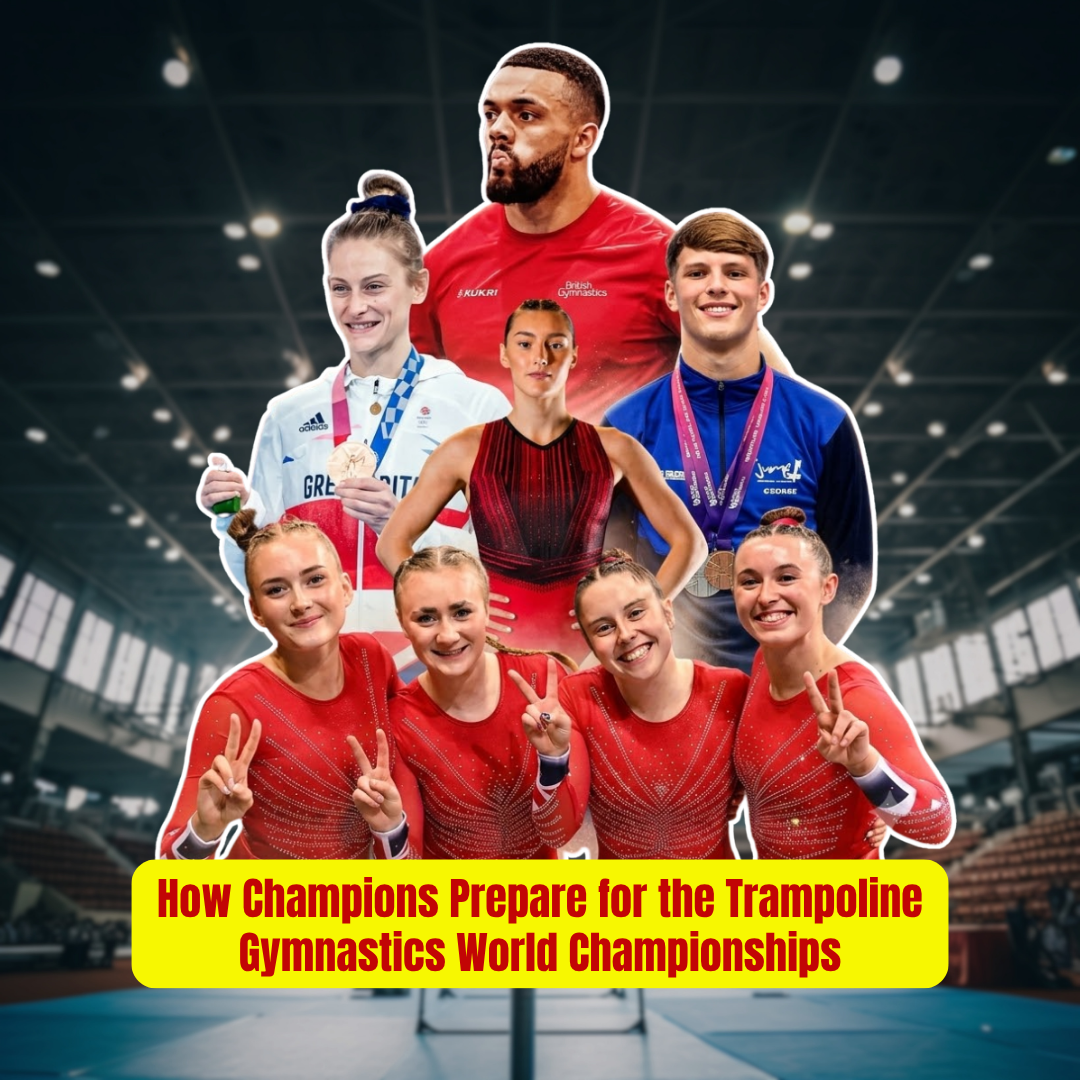
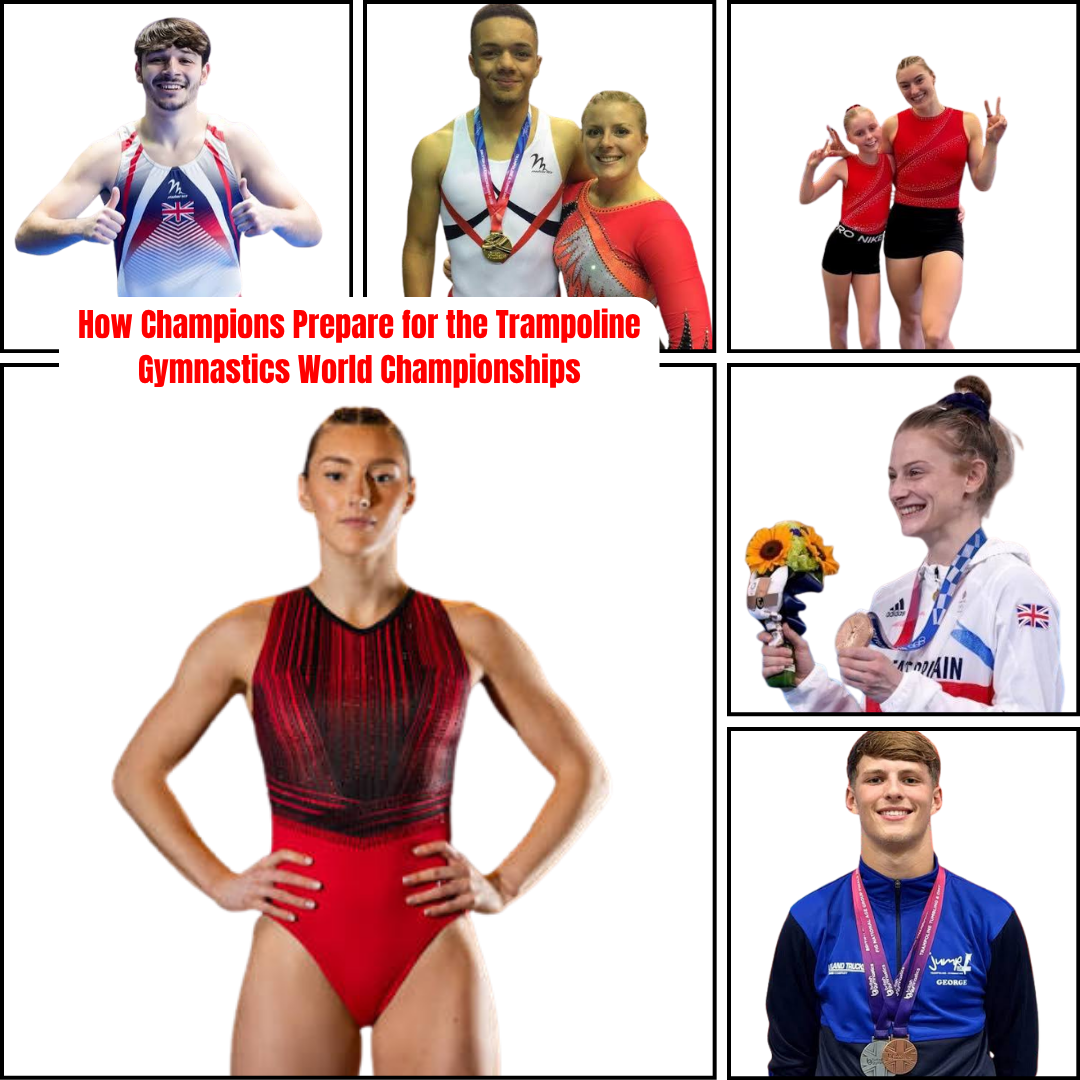
Below, you’ll meet some of Britain’s best trampoline and DMT gymnasts. You’ll see how they train, from warm-ups to landings, and find out what you can safely try at home.

How Are the Disciplines Judged?
Each discipline asks for something different, so most athletes specialise. A great trampolinist isn’t automatically a great tumbler.
Judges look at how cleanly each skill is performed and how difficult it is. On the full-size trampoline, they also reward time in the air and staying close to the centre of the bed. In synchro, they check how well the two gymnasts match each other.
Meet the British Trampoline Gymnasts to Watch
Britain has plenty of talented gymnasts. British Gymnastics chooses the final teams for Nanjing, so check its announcement to see who is travelling. Here are seven names worth knowing, with how some of them train, based on published interviews. Training changes through the season, so treat these as snapshots.
Bryony Page
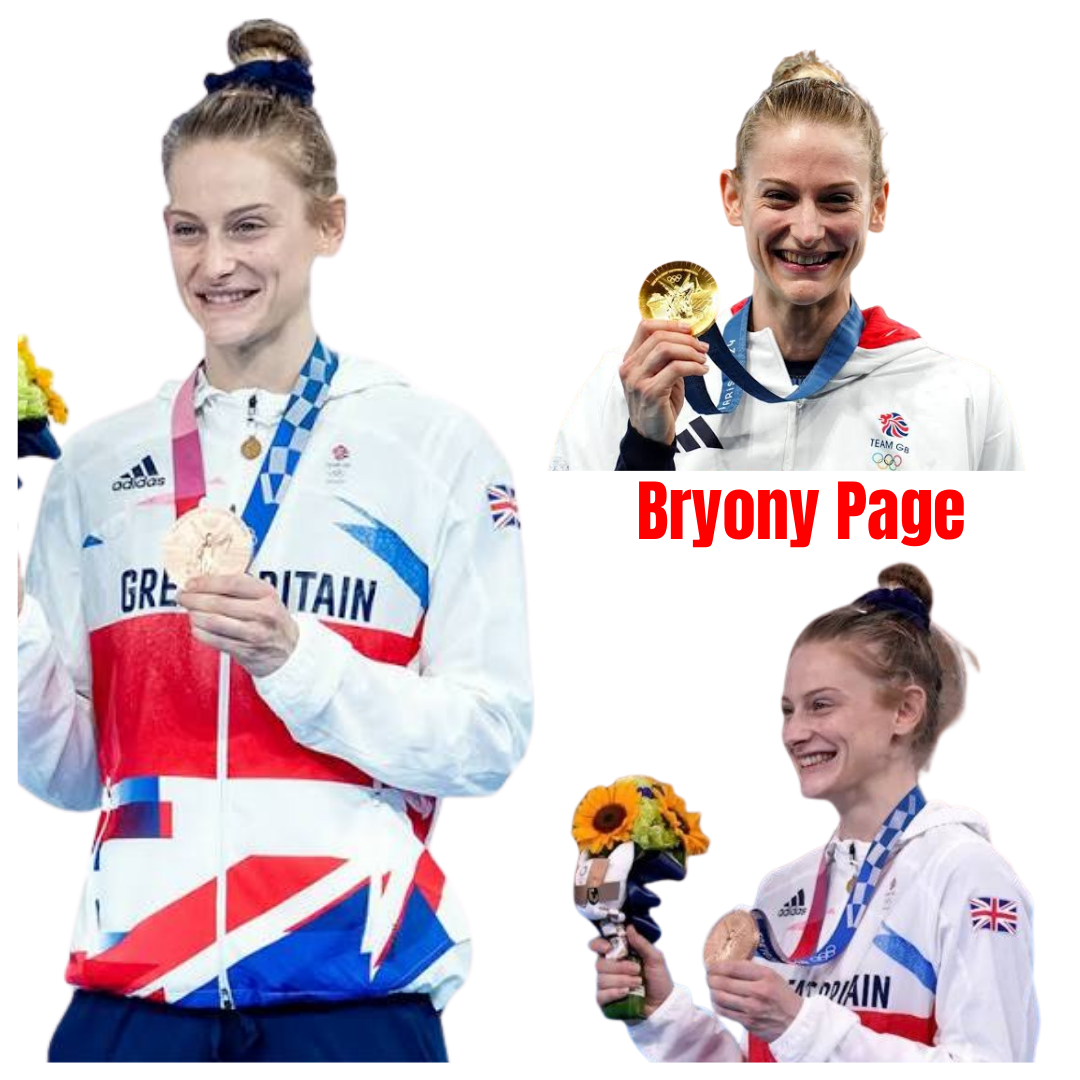
Bryony Page has won Olympic silver (Rio 2016), bronze (Tokyo) and gold (Paris 2024). She is also a world champion, with individual titles in Baku in 2021 and Birmingham in 2023.
What stands out is how long she has stayed at the top. She first competed at the Worlds in 2010. After a tough year, she won world silver in 2022. In 2025, she added synchro silver with Izzy Songhurst and a mixed all-around team bronze.
How she trains: Before Paris 2024, Page told Stylist she did four trampoline sessions a week, around 12 hours in the hall. She has also explained that she cuts back gym strength work as a competition gets closer and books regular sessions with a sports psychologist.
Izzy Songhurst
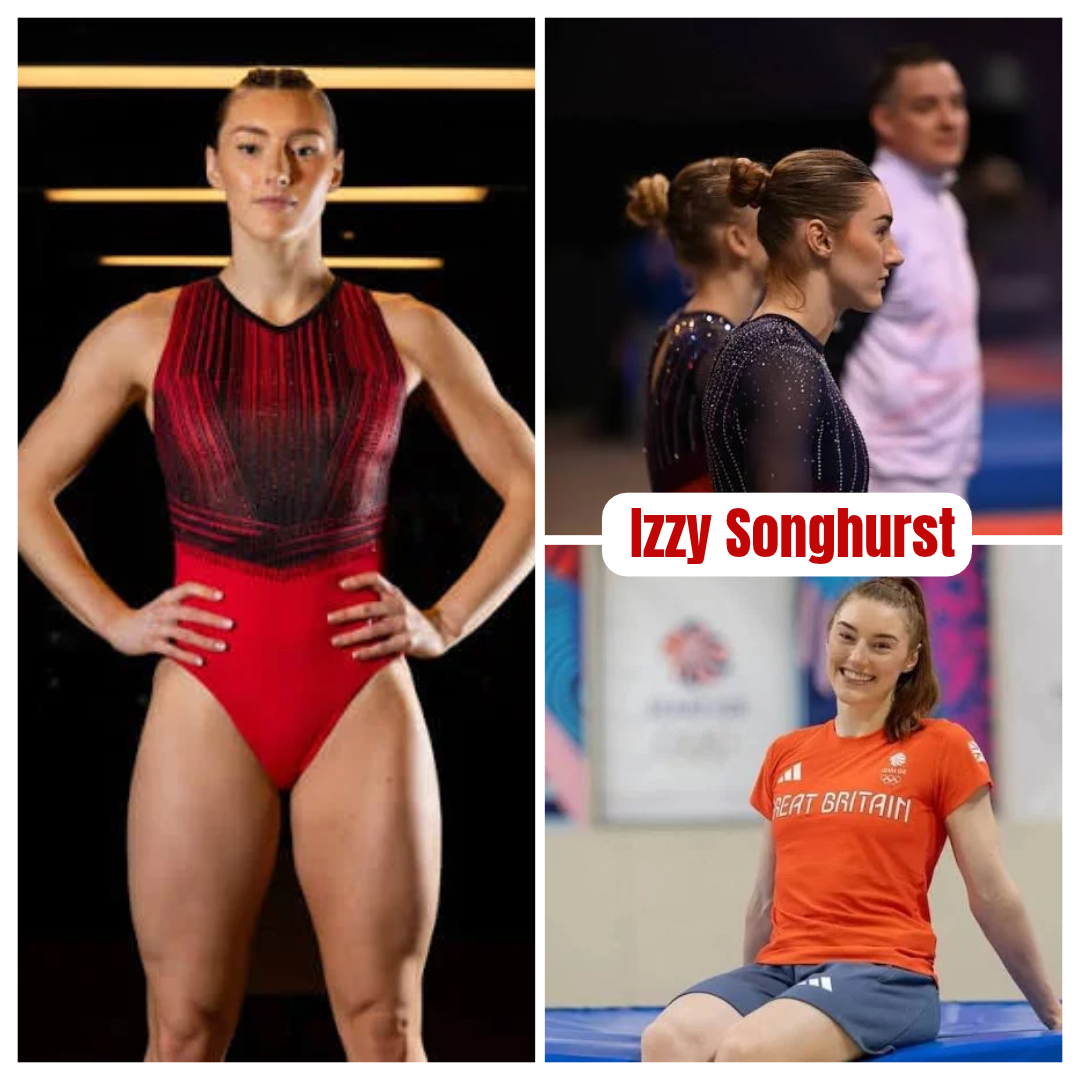
Izzy Songhurst is from Poole in Dorset. British Gymnastics lists her as the 2023 and 2024 Women’s British Trampoline Champion. She won world team silver in 2019. At the 2025 Worlds, she and Page took synchro silver, and she helped Great Britain to all-around team bronze.
How she trains: ‘Synchro’ means learning to match another person’s bounce. Songhurst has said that training with someone at the level you aspire to has helped her, and she has called Page very supportive. The pair have also trained together in Poole.
Zak Perzamanos
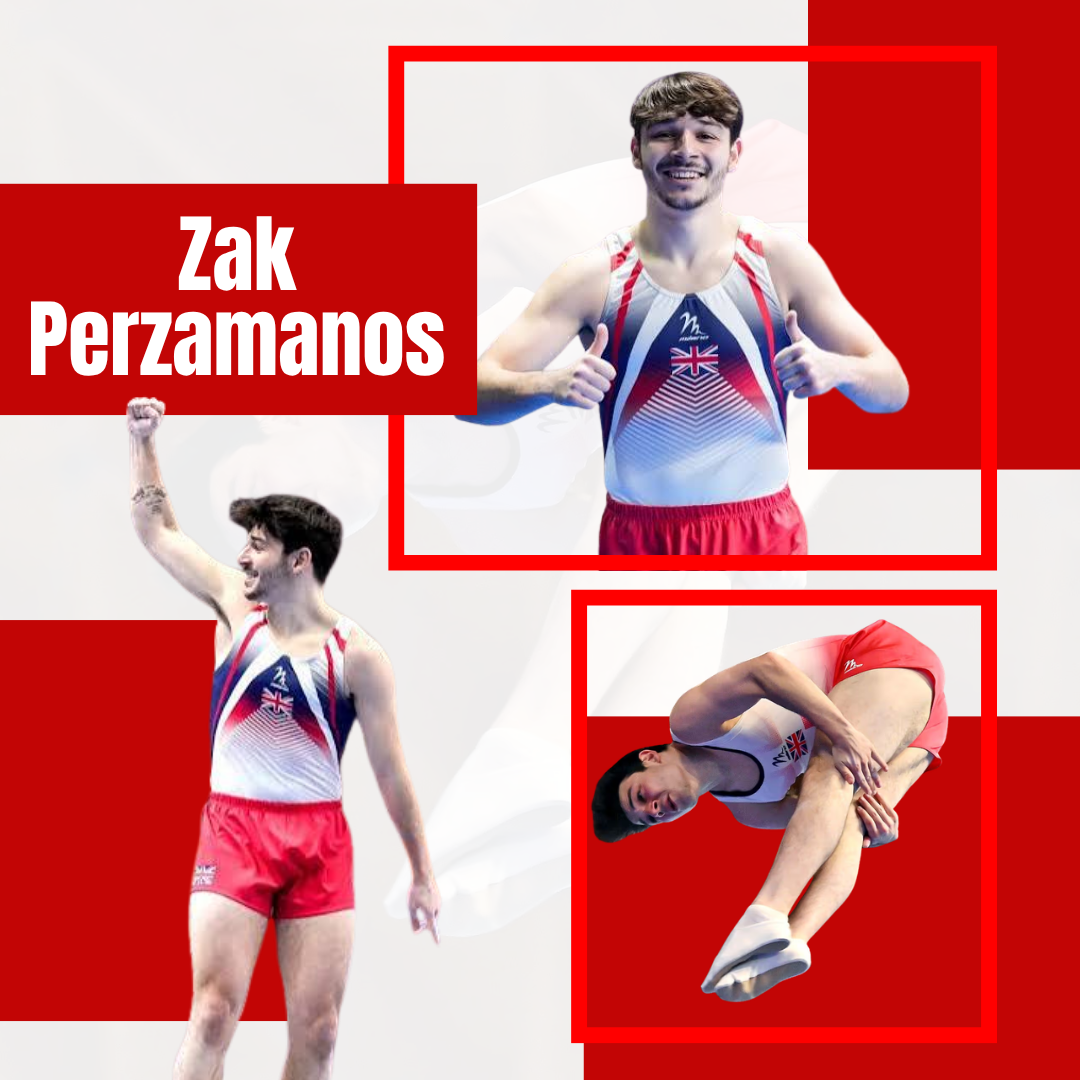
Zak Perzamanos, from Liverpool, won world gold with Britain’s all-around team in 2022. With Corey Walkes, he later won the men’s synchro title at the 2024 European Championships. He also competed at the Paris 2024 Olympics. In Pamplona in 2025, he finished 13th in the men’s individual qualification, according to his official FIG profile.
How he trained his way up: The same profile says he began at nine, on a trampoline in his garden. He then joined a local club, and at 13 he moved to Liverpool to train full-time at the Liverpool Trampoline Gymnastics Academy, working with coach Jay Scouler.
Corey Walkes

Corey Walkes, from Somerset, is Perzamanos’s synchro partner. Together they won the 2024 European title. He was also part of Britain’s men’s team that took bronze at the 2023 Worlds in Birmingham and the team that finished fourth in Pamplona in 2025 alongside Perzamanos and Max Middleton.
How he trains: Walkes has said that strength matters, because stronger legs help you jump higher and hold your body shapes. As a teenager, he did gym-based conditioning alongside his trampoline sessions. He trained at Quayside Trampoline and Gymnastics Club in Bridgwater under head coach Sue Bramble.
Max Middleton
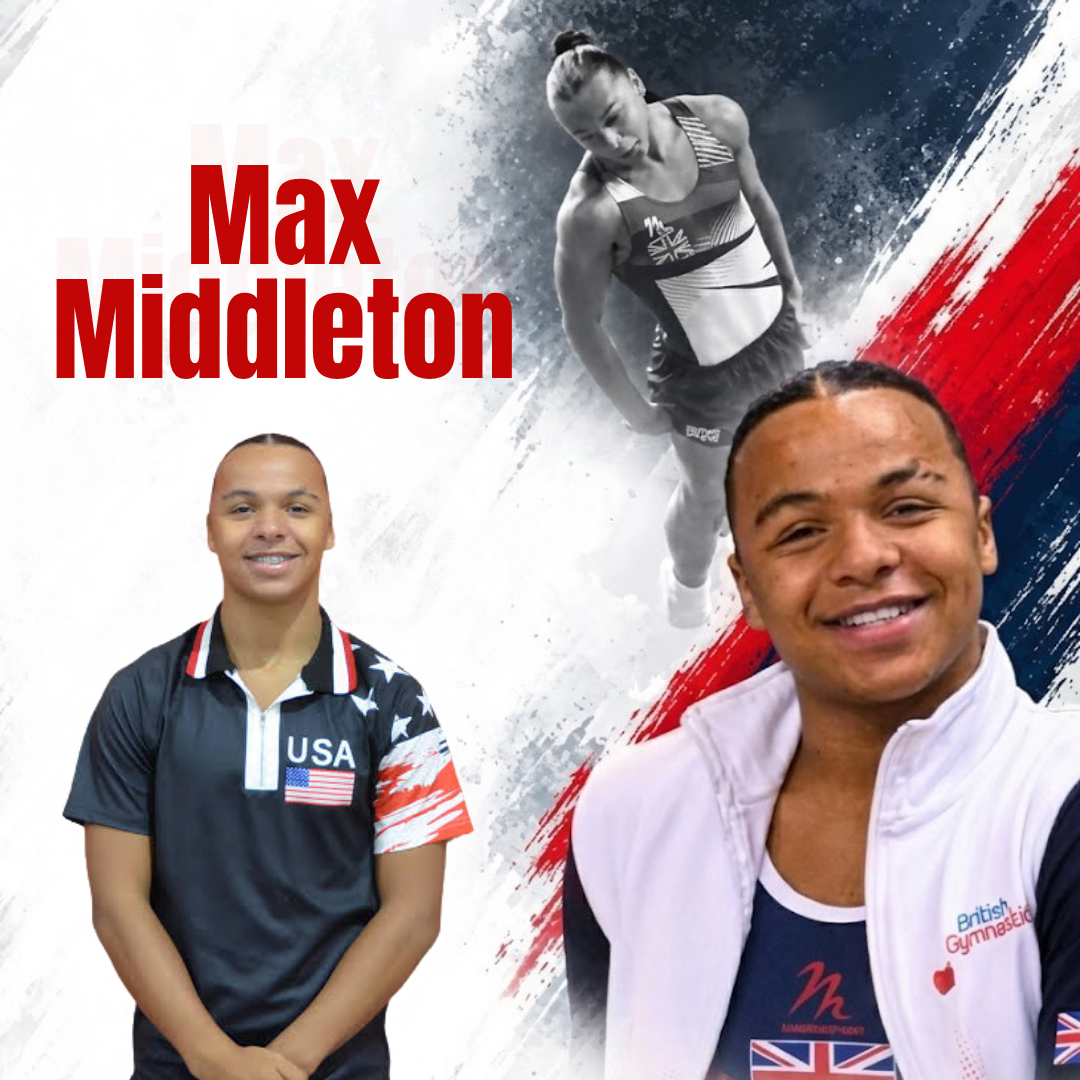
Max Middleton, from Liverpool, was crowned a Junior World Champion in synchro at the first-ever Junior World Championships, alongside Tom Gibson, as reported by the Milton Keynes Citizen. He then stepped up to the senior team at the 2025 World Championships.
Sophie Jo Millican
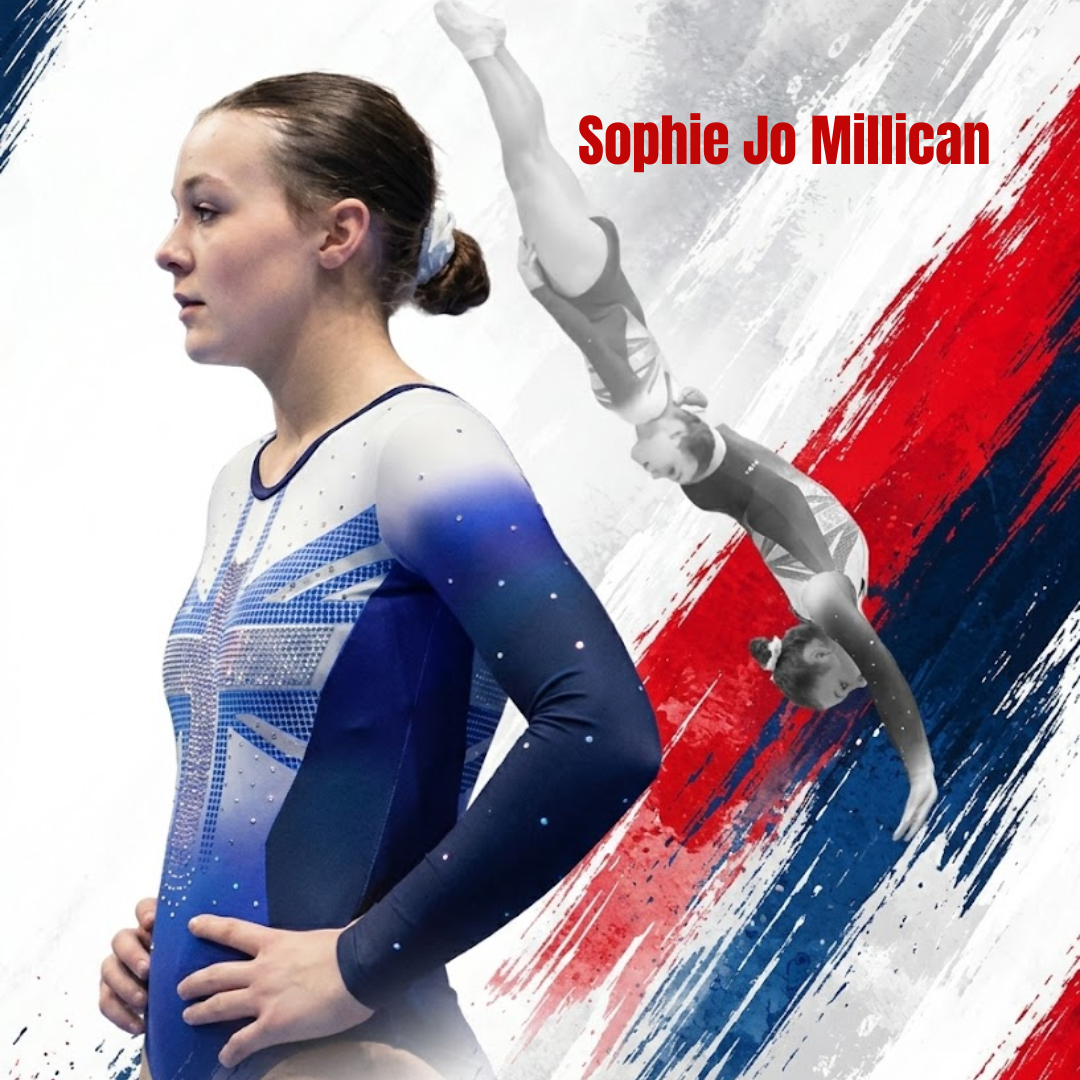
Sophie Jo Millican is a younger name to watch. She began gymnastics at four, and coaches at Focus Gymnastics in Widnes spotted her trampolining talent. She helped Great Britain’s junior team win gold at the European Championships in Italy, the Liverpool Echo reported.
How she trains: Her father told the Echo she was so motivated that she would go into the garden and do planks and other strength work by herself. Small, regular habits add up, though elite young gymnasts always train under qualified coaches.
What Is a Double Mini-Trampoline (DMT) and How Does It Work?
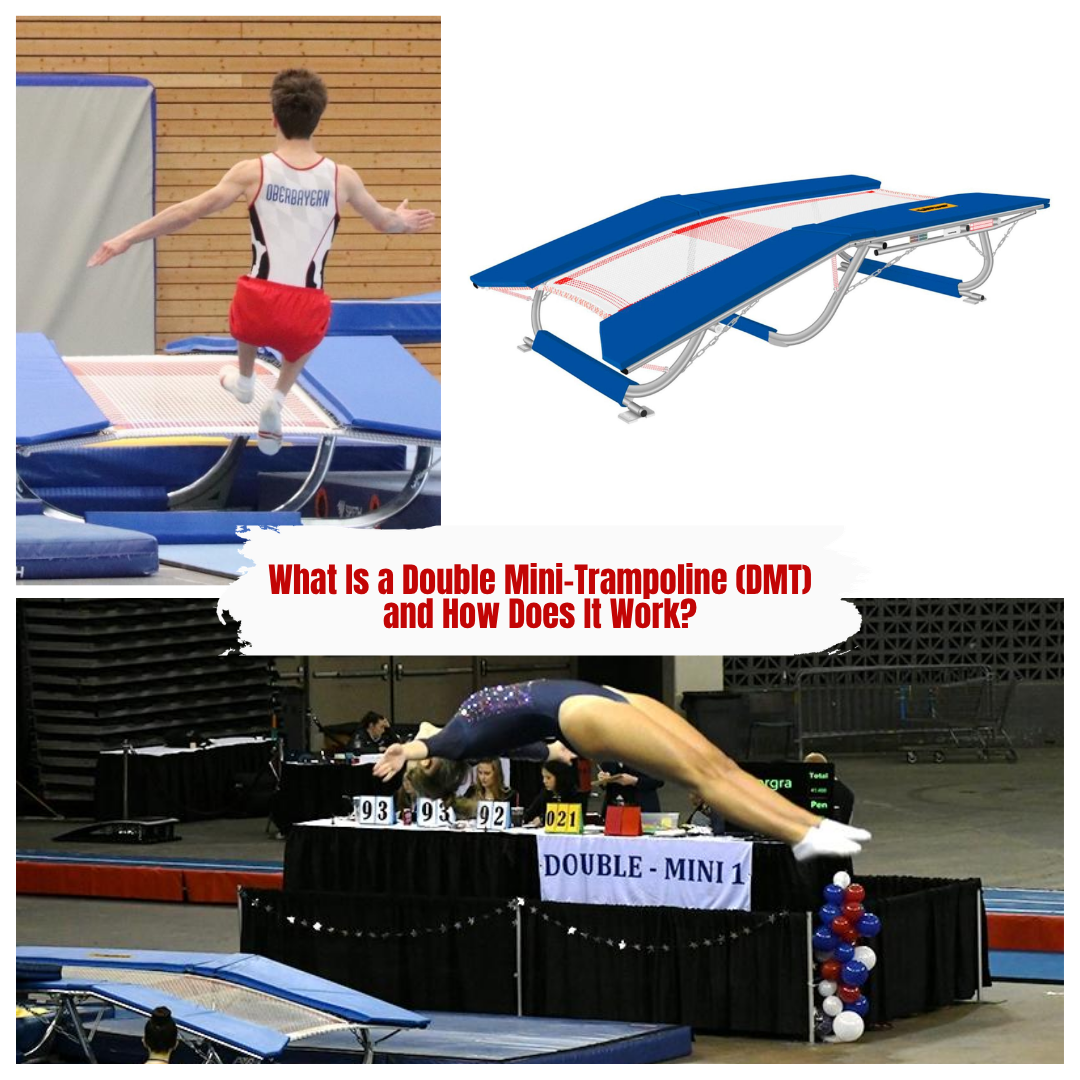
A double mini trampoline is a trampoline event with a twist. Instead of one big, flat bed, the gymnast uses a small apparatus with two sections: a sloping front part and a flat rear part. It’s quick and precise, and it demands courage.
How a DMT pass works, step by step:
- The gymnast sprints along a runway towards the apparatus.
- They jump onto the sloping section to gain speed and height.
- They perform a first skill in the air, such as a flip or a twist.
- They land on the flat section.
- They launch again, perform a second skill, and land on a thick mat.
How Is DMT Different From Individual Trampolines?
On a full-size trampoline like an Akrobat Primus Flat Plus 17 x 10ft Rectangular Trampoline, a gymnast builds height over ten bounces. In DMT, there are only a couple of skills, so everything counts. Speed from the run-up, timing on the ramp and a stable landing decide the score.
Why Does DMT Need So Much Precision?
There is almost no time to fix mistakes. A small error at take-off can send a gymnast off-line in mid-air. Good aerial awareness, which means knowing where you are while spinning, makes the difference.
Meet Britain’s DMT Gymnasts
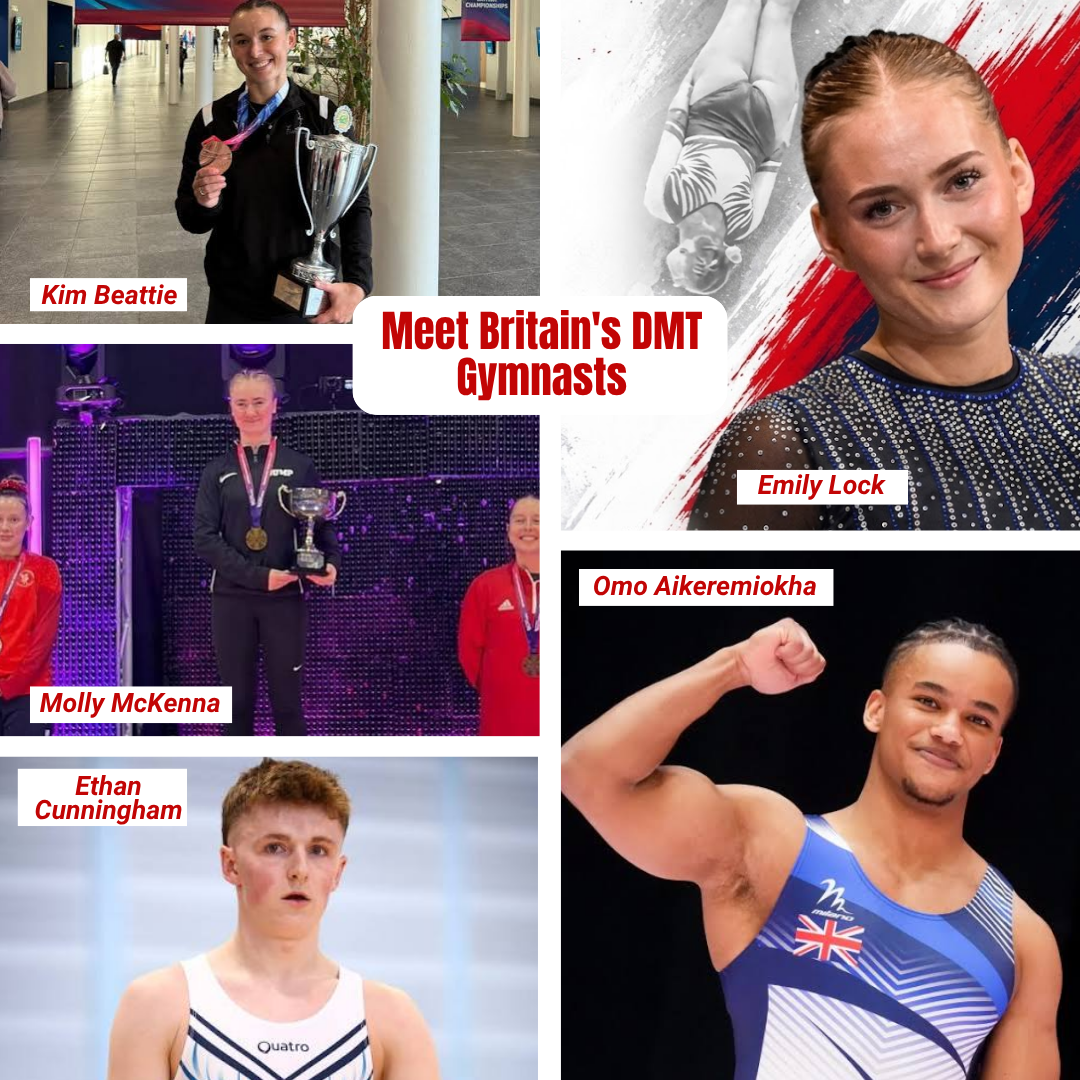
DMT isn’t an Olympic sport, but Britain has won several team medals at recent Worlds. Here are five athletes to know.
Kim Beattie
Kim Beattie, from Banchory, won DMT team silver at the 2022 Worlds in Sofia while studying engineering at the University of Aberdeen, the university reported. In 2025, she won team silver again in Pamplona alongside Molly McKenna, Kirsty Way and Emily Lock, as Scottish Gymnastics reported. Two world medals three years apart show her staying power.
Molly McKenna
Molly McKenna, from Randalstown in Northern Ireland, won team gold at the 2023 Worlds in Birmingham. She was a senior women’s British DMT champion in 2024 and 2025, and she helped Great Britain to team silver in 2025.
Emily Lock
Emily Lock, from Harrogate, made her World Championships debut in 2025 and came home with team silver.
Omo Aikeremiokha
Omo Aikeremiokha, from Stevenage, won DMT team bronze at the 2023 Worlds in Birmingham. He added all-around team bronze at the 2025 Worlds and took silver in the DMT at the 2025 World Games in Chengdu. His FIG profile lists his record.
Ethan Cunningham
Ethan Cunningham, a University of Stirling student, won silver in the senior men’s category at the 2024 British Championships, as Scottish Gymnastics reported. He represented Great Britain at the 2025 World Championships in Pamplona.
How Do Elite Trampoline Gymnasts Prepare for a World Championship?
Every club and coach works differently, and elite programmes rarely share their schedules. What follows is a general picture of how trampoline gymnasts commonly train. It is not a timetable for any named athlete.
A routine might last seconds. Preparing it takes months. So what happens behind the scenes before an athlete steps onto the competition floor?
How Do They Start Their Training Day?
With a warm-up. Gymnasts raise their heart rate, stretch and loosen their joints. Mobility work gets the shoulders, hips and ankles ready. Then they bounce gently to find their rhythm. Nobody attempts a big skill on cold muscles.
How Much Time Do They Spend on the Trampoline?
A lot, but it’s carefully divided. Sessions typically mix single skills, full routines, synchro practice and technical fixes. Some days focus on difficulty. Others focus on clean shapes and landings. Quality matters more than volume. A tired gymnast repeating a skill badly only builds a bad habit.
How Do They Practise Flips, Twists and Landings?
In small steps. Gymnasts work on:
- Height: a higher jump gives more time for each skill.
- Control: rotations must start and stop on purpose.
- Body shape: tuck, pike, and straight positions need to look sharp.
- Balance in the air: knowing where you are while spinning.
- Landings: the same position every time.
Skills are built up gradually. A new flip may begin on a lower-risk apparatus with extra mats and coach support before it ever appears in a routine.
How Do Coaches Help Them Improve?
Coaches watch every bounce. Many use video so athletes can see what they cannot feel. A slow-motion replay shows a bent knee or a late twist at once. Coaches also decide when a skill is ready. That judgement protects both performance and safety.
What Happens After Trampoline Practice?
The work continues off the trampoline. Athletes commonly do strength training, flexibility work and conditioning to protect their bodies. Recovery matters, so rest, food and sleep count. Mental preparation also matters. Many athletes practise visualisation and routines that keep them calm when the arena is loud.
What Trampolines and Equipment Do Champions Use?
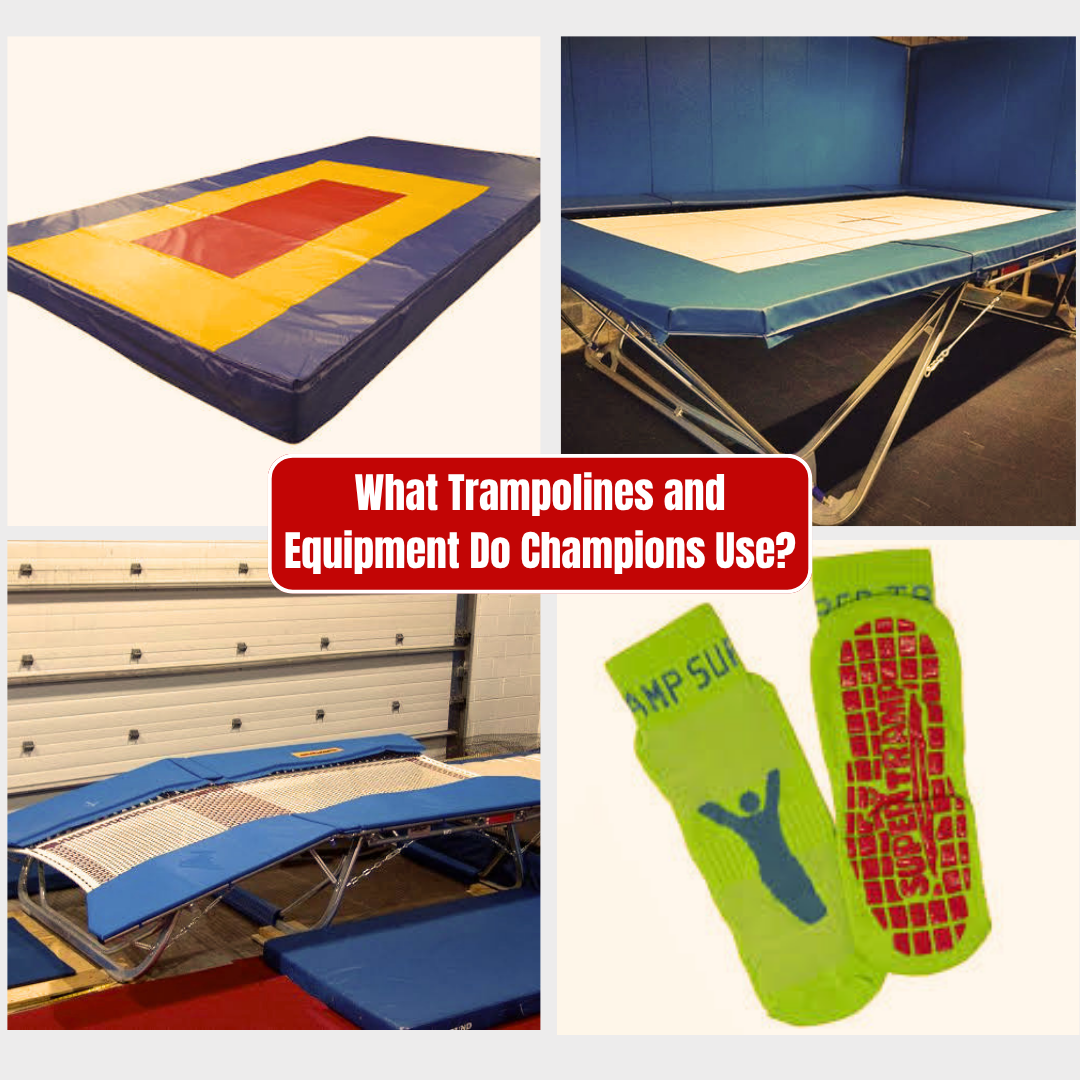
Competition equipment is built for precise, repeatable performance under strict rules. We won’t name brands or models used by individual athletes, as we can’t verify them.
Full-Size Competition Trampolines
These have a rectangular frame, a tough woven bed and a system of springs or similar supports that give consistent, high bounce. Padding covers the frame and springs.
DMT Apparatus and Landing Mats
A DMT has the sloping and flat sections described earlier, plus a thick landing mat. Runway, angle and mat follow strict standards, so athletes can trust their take-off and landing.
Safety Equipment
Typical set-ups include padded surrounds, extra landing mats, raised platforms for spotting, trampoline grip socks and coaches who are qualified to teach advanced skills.
Can You Learn Professional Gymnastics on a Garden Trampoline?
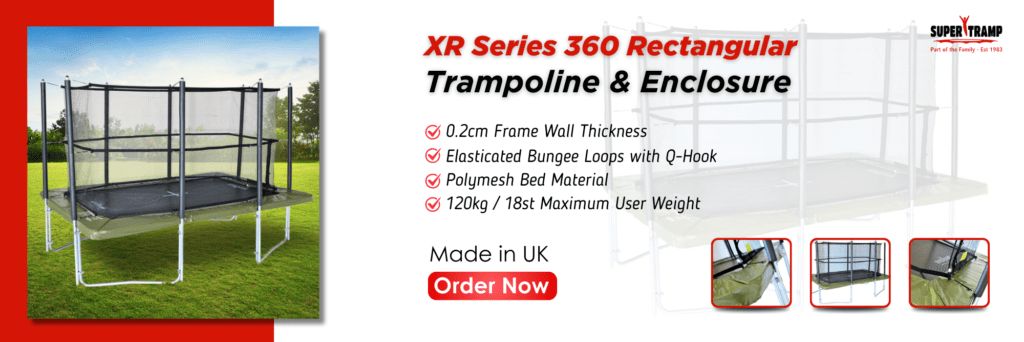
A garden trampoline is made for recreational bouncing and family fun. It isn’t designed for advanced flips or twists, and these skills need qualified coaching, proper facilities and specialist equipment.
That isn’t a bad thing. Garden trampolining is brilliant for fitness, balance and simple enjoyment. Many children first fall in love with bouncing in the back garden. At Supertramp, we’ve been making high-quality garden trampolines since 1983, and they’re designed for families and beginners. If your child wants to take the sport further, look for a local club with qualified coaches.