What if trampoline jumping enhances brain function and mental clarity, not just your fitness? A bounce looks simple, but your body is busy behind the scenes. It tracks where you are, corrects your balance and times every muscle, all in a split second.
It’s 3 pm, your head feels foggy, and the thought of another treadmill session makes you dread. This one is for you. World Mental Health Day is on 10 October, and it’s a good moment to be honest about something almost everyone faces at some point: a stretch when our mental health needs attention. It’s a serious issue, and talking about it openly helps. Small, practical habits can support us too, and bouncing may be one of them. Below, we’ll look at what your brain does mid-bounce, why it may leave you feeling sharper, and how to try it safely. No miracle claims, just the science.

Key Points
- Every bounce on a garden trampoline asks your brain to track movement, hold balance and keep time.
- Your inner ear, eyes, muscles and joints all feed the same picture.
- Proprioception is your body’s internal GPS, and a trampoline keeps it busy.
- A short bounce break may leave you feeling fresher after a long stint at a screen.
- Fun exercise is easier to stick with than a workout that feels like a chore.
- Trampolining isn’t a medical treatment or a guaranteed brain booster.
- Start gently, stay in control and follow safety guidance.
How Does Trampoline Jumping Enhance Brain Function?
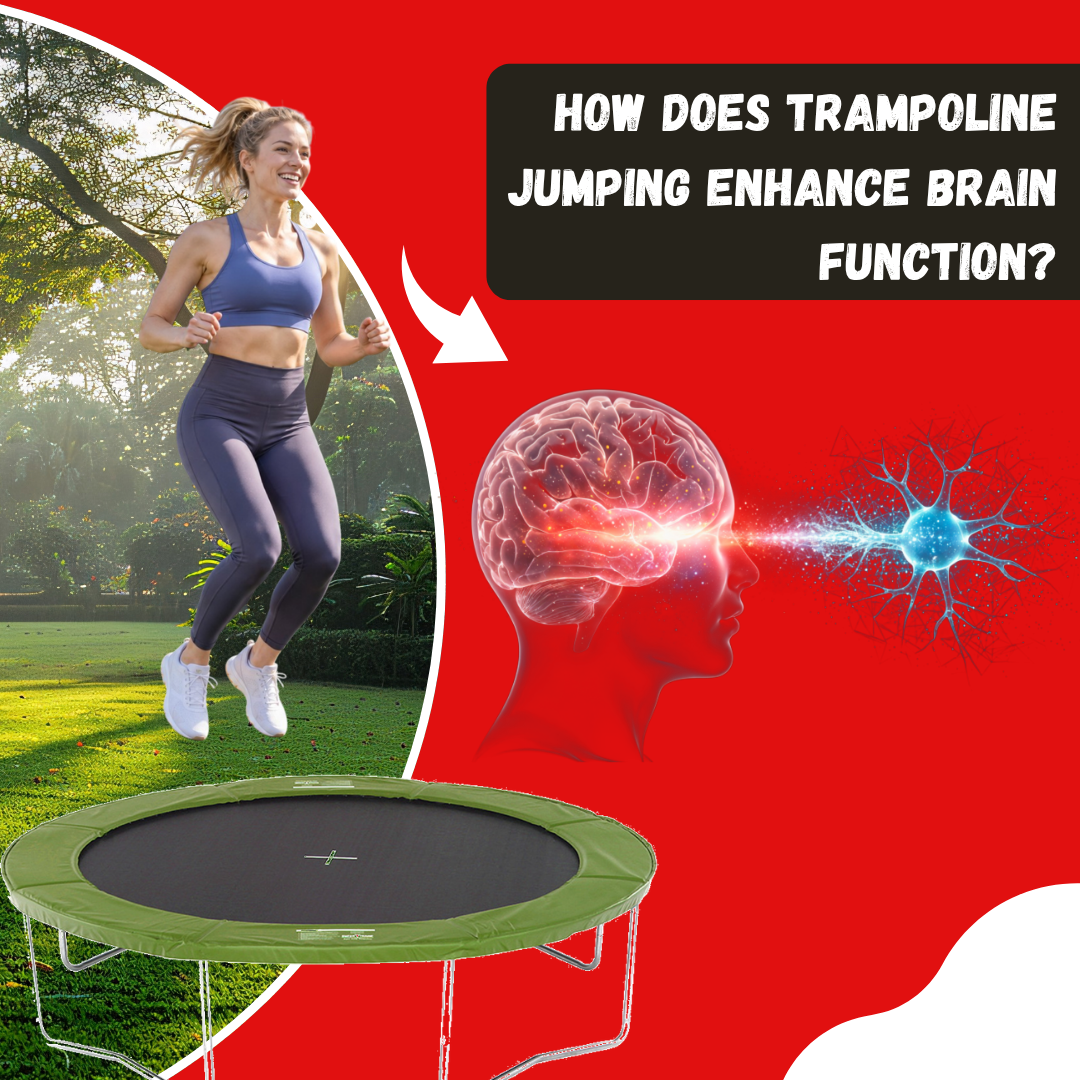
Think of an above-ground trampoline as a floor that changes its mind every second. You push down, it pushes back, and your brain has to keep up. When you bounce on a trampoline, the surface sinks and then pushes you back up, so your body can’t just run on autopilot. Scientists who study movement call this the brain-body connection. Your senses send signals, your brain figures out what they mean, and your muscles react. Repeat that a few hundred times in one session and you’ve given the whole loop a proper workout. It’s a bit like solving a puzzle with your feet.
Does trampoline jumping affect the brain? Bouncing keeps your balance, movement and attention systems busy at the same time. It isn’t a medical treatment, but it’s a lively way to keep your brain involved.
Your Brain Has to Track Every Bounce
Each jump changes your speed, height and angle. Your brain reads those changes as they happen and updates its picture of where your body is. That’s why bouncing feels harder than it looks, especially in the first few minutes.
Proprioception: Your Body’s Internal GPS
Proprioception is your sense of where your body is without looking. It’s how you can touch your nose with your eyes shut. Sensors in your muscles and joints feed that information to your brain. On a trampoline, those sensors rarely get a rest.
Why Every Landing Requires a Quick Adjustment
The mat never behaves exactly the same twice. Land a touch off-centre and your ankles, knees and core correct it before you’ve even thought about it.
Rhythm and Timing Matter When You Bounce
A steady bounce has a beat, rather like a drummer keeping time. Holding it means your brain has to predict when you’ll land and get your legs ready. Lose the beat, and you feel it instantly.
From Arms to Legs, Everything Has to Work Together
Watch a beginner, and you’ll spot the problem. Legs working, arms stuck. Good bouncing on a mini trampoline links the two. Arms swing to steady you, legs soak up the landing, and your core holds the middle together. Think of patting your head while rubbing your tummy – only bouncier.
All that coordination takes concentration, which brings us to focus.
Could Trampoline Exercise Help You Stay Focused and Mentally Clear?
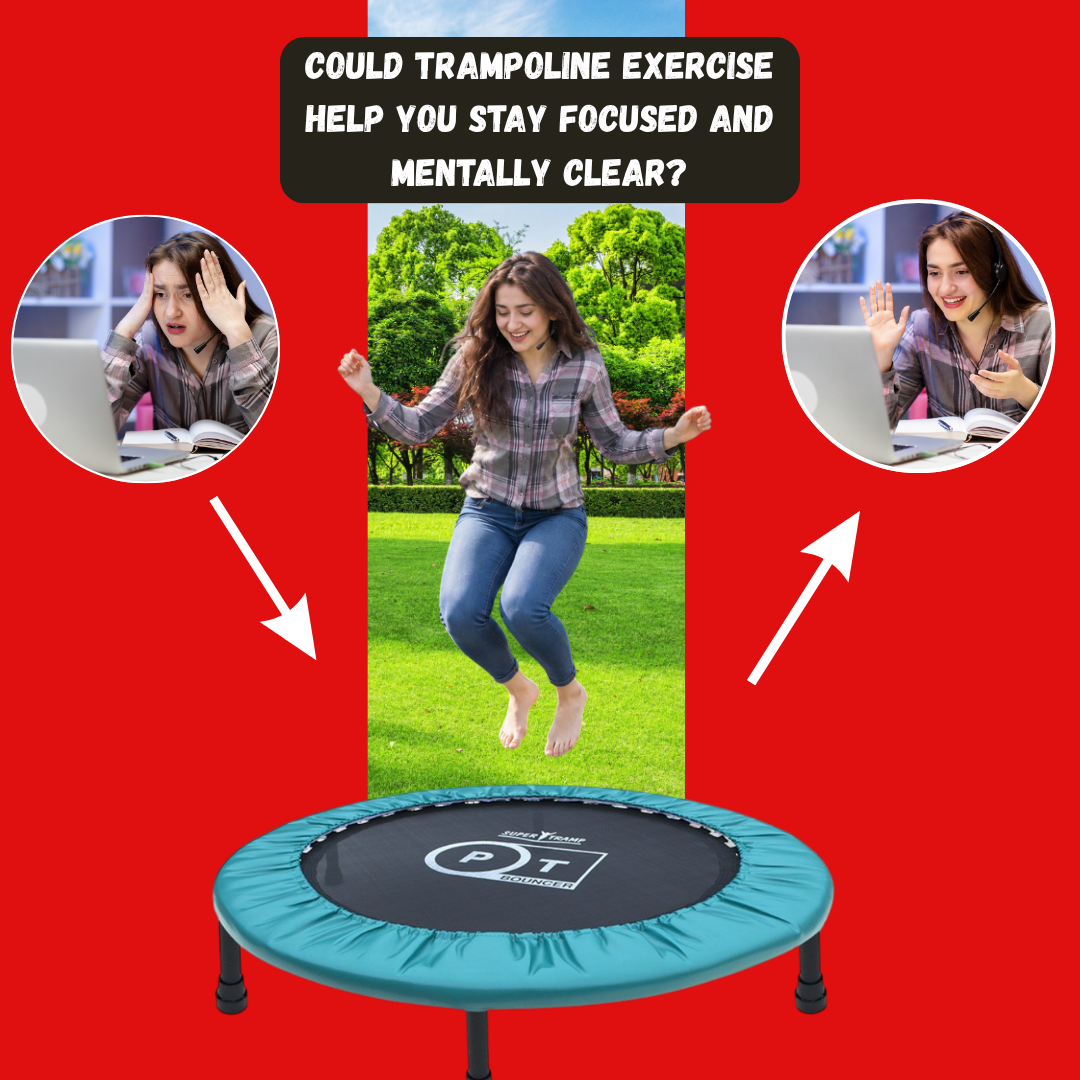
At 3 pm on a Wednesday, you’ve been on Teams calls since nine, your eyes feel strained, and your brain feels foggy. Another coffee? Maybe. Or a few minutes of movement. Regular activity is linked with feeling more alert, and the NHS suggests adults aim for at least 150 minutes of moderate activity a week. Trampolining is one enjoyable way to get there. It won’t cure tiredness. But it gives you a reason to leave the chair, and it demands just enough attention that your mind can’t wander off to your inbox.
Above-ground trampoline jumping may help you feel more mentally refreshed by combining physical activity, coordination and focused movement. It also gives you a reason to step away from prolonged sitting or screen time.
Your Brain Gets a Small Job With Every Bounce
Balance, rhythm and posture all need a little attention. Nothing heavy. Just enough to pull your mind into the present moment.
Moving Can Be a Useful Break From Your Screen
Long stretches of sitting are tough on the body, and plenty of people say the same about the mind too. The NHS advises breaking up long periods of sitting with movement. A short bounce on the 14ft Gallus Playground Trampoline changes your posture, your view and your pace all at once.

Can a Few Minutes of Bouncing Feel Like a Mental Reset?
Many people say yes. There’s no perfect number of minutes. It depends on person to person. Try five and see how you feel.
From Desk Fog to Movement Mode
You work in marketing in Manchester and have been glued to a laptop since nine. You step into the garden, bounce gently on the Boomer High Performance Garden Trampoline for five minutes, then head back in. Same job, different headspace. A change of scenery, a change of posture and a bit of fresh air. That’s often what a “reset” really is.
How Trampoline Jumping Can Challenge Your Brain
Let’s break this down properly, because “it’s good for your brain” is such an unclear thing to say.
- Coordination: Arms, legs, eyes and core all need to move as one unit, not as separate parts doing their own thing.
- Spatial awareness: Your brain is tracking exactly where your body sits above the mat, second by second, without you ever glancing down to check.
- Timing and reaction: Change your bounce height or direction, and your whole body has to recalculate fast.
- Concentration: You genuinely can’t zone out completely while bouncing. Try it, and you’ll lose your balance.
Combine all four together, and you get a form of movement that’s mentally busier than most people assume.
Does Trampoline Jumping Affect Mood and Stress?
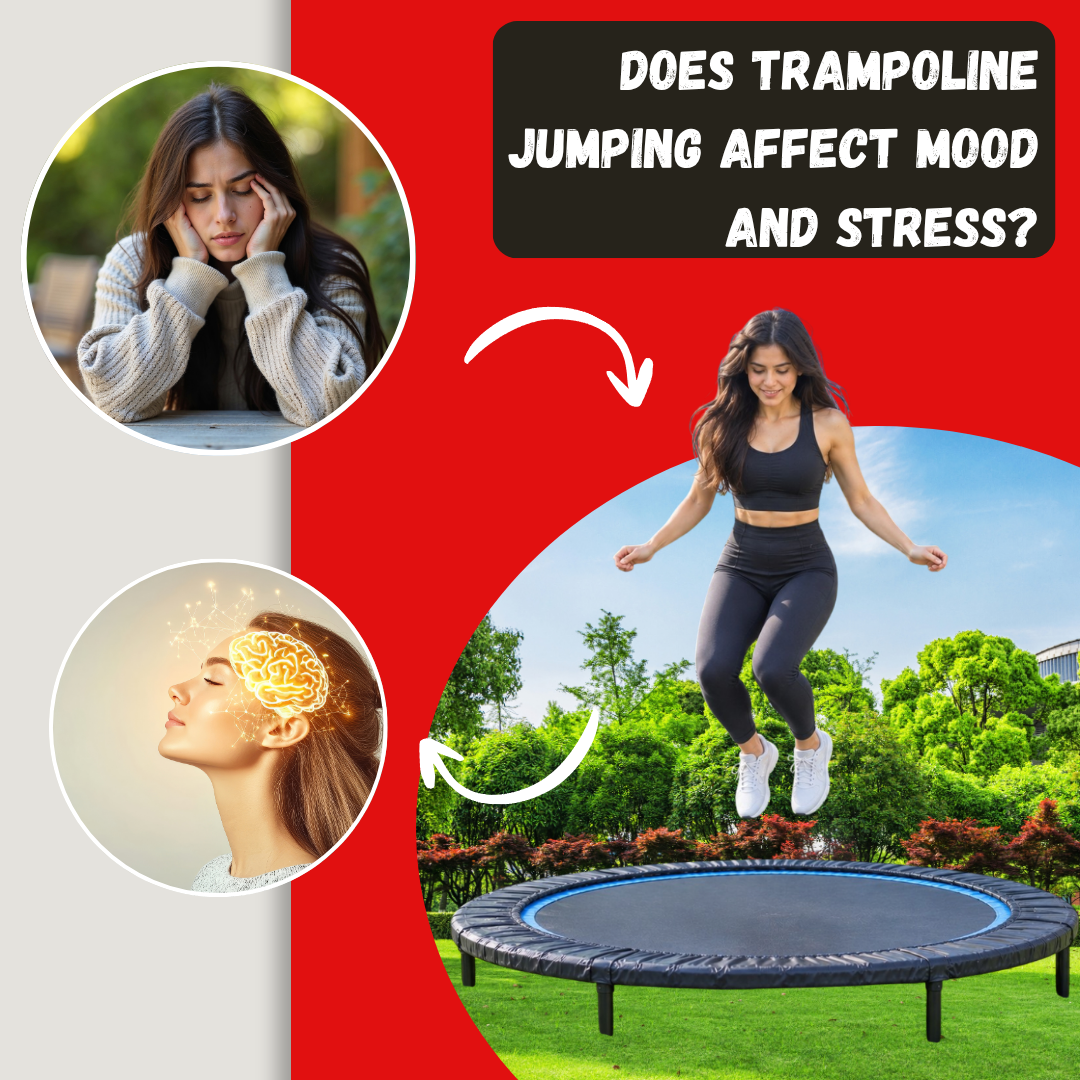
After exercise, plenty of people report feeling lighter. The NHS links regular physical activity with better mood and lower stress. We should be careful here, though. Bouncing isn’t a treatment for anxiety or depression, and if you’re struggling, your GP is the right first call. What we can say is that moving your body outdoors and having fun rarely makes a bad day worse. And fun counts for more than people admit.
Exercise Can Leave You Feeling More Energised
Your heart rate climbs, you breathe deeper, and your blood moves faster. Afterwards, many people feel warmer and more awake. The effect is often subtle, similar to the lift after a brisk walk.
The Fun Factor Can Make a Difference
The best workout is the one you actually do. If running feels like a chore, you’ll skip it. Bouncing on a rectangular trampoline rarely feels like a chore and more like fun, so people tend to stick with it longer.
Could Bouncing Be Your Favourite Way to Take a Break?
Yes. Swap one scroll through your phone for five minutes in the garden and see what happens. No targets, no pressure.
How Can You Use a Trampoline to Give Your Brain and Body a Fun Workout?
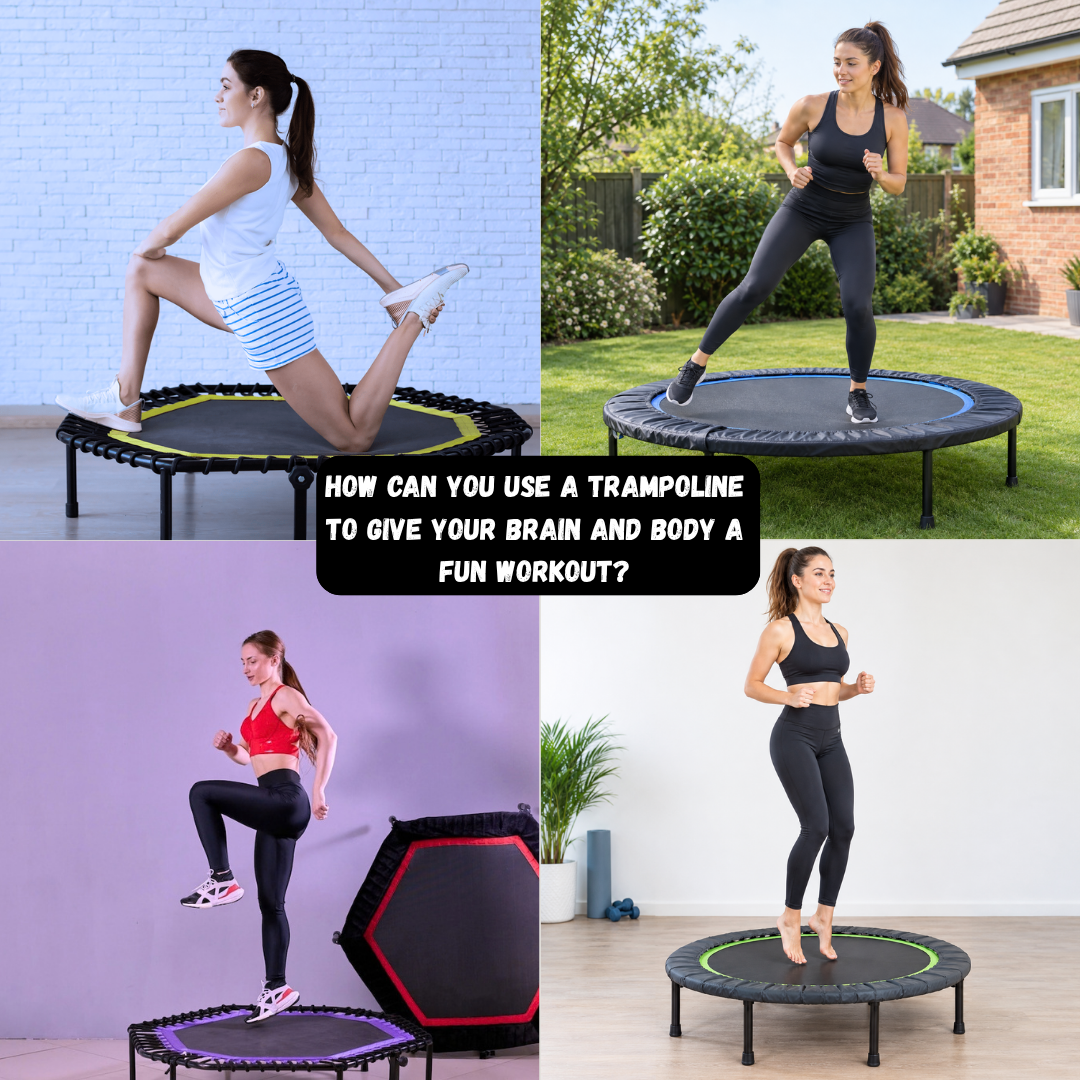
You don’t need a grand plan. You need a clear space, decent kit and a few spare minutes. Most people jump too high, too soon, and that’s the most common mistake we see. Height isn’t the goal. Control is.
Start With a Gentle Bounce
Spend a couple of minutes on low, steady bounces. Keep your eyes forward and aim for a smooth rhythm.
Add Simple Coordination Challenges
Pick two or three of these, not all at once:
- Knee lifts
- Side-to-side steps
- Heel raises
- Gentle twists
- Slow arm swings or circles
If you’d like more ideas, these simple trampoline exercises are a good place to start.
Finish With a Controlled Cool-Down
Slow your bounce gradually, then stand still for a few breaths. A light calf and thigh stretch rounds it off nicely.
Keep Safety in the Picture
- Use a trampoline suited to your age and weight, and follow the manufacturer’s guidance
- Look for models made to the British Standard for domestic trampolines (BS EN 71-14)
- Keep the jumping area clear of toys, furniture and overhanging branches
- Use recommended trampoline safety equipment, such as enclosure nets and padding
- Build up slowly, and don’t rush into big jumps
RoSPA also publishes practical trampoline safety advice for UK families.