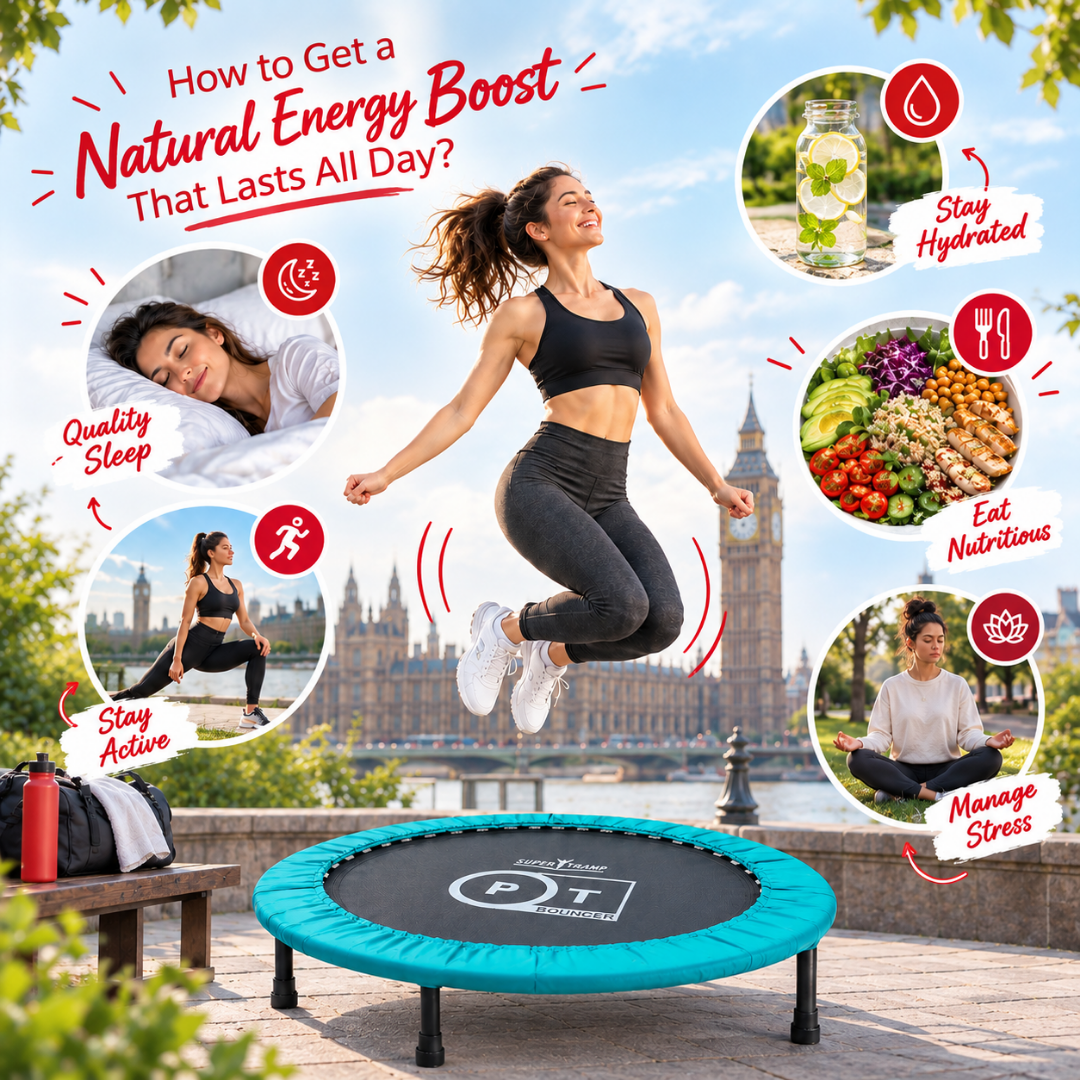
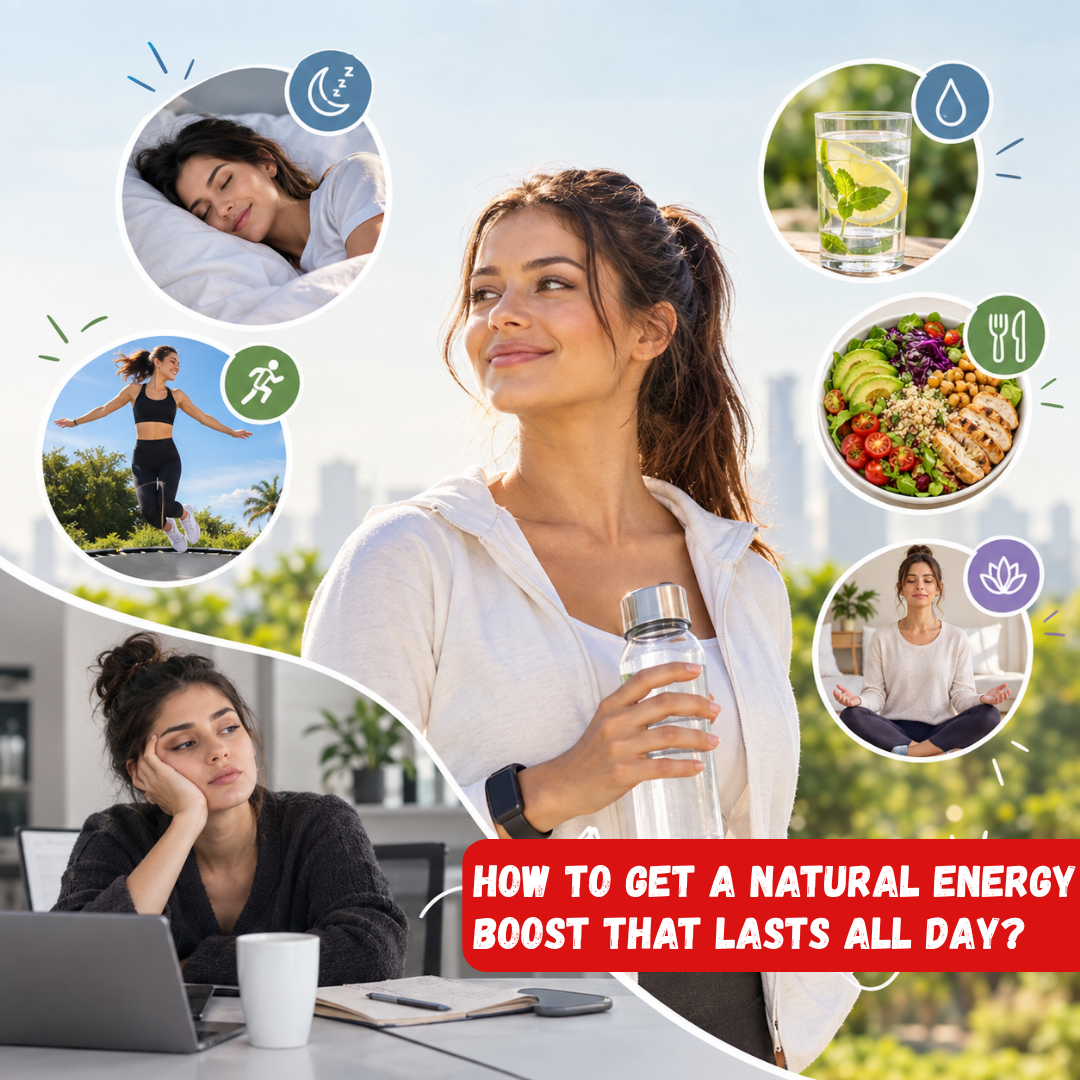
You wake up feeling reasonably normal, and by 10 am, you’re clear-headed and fully in your groove. Then somewhere around 2 or 3 pm, the wheels start coming off: your eyes feel heavy, your focus wanders, and instead of reaching for a natural energy boost like a quick walk, a stretch, or a cold glass of water, you find yourself eyeing up a third coffee just to survive the next meeting.
Sound familiar? You’re not alone, and you’re certainly not broken. A genuine, lasting natural energy boost rarely comes from one clever trick, food or supplement. It comes from a handful of ordinary habits working together: sleep, hydration, food, movement and how you manage stress.

This article walks through what actually works, including where a few minutes on a trampoline fits into the picture. Worth noting: if tiredness sticks around no matter how much you rest, it’s worth mentioning to a GP, the NHS makes a similar distinction between everyday tiredness and fatigue that doesn’t shift.
What Are the Best Natural Ways to Boost Your Energy?
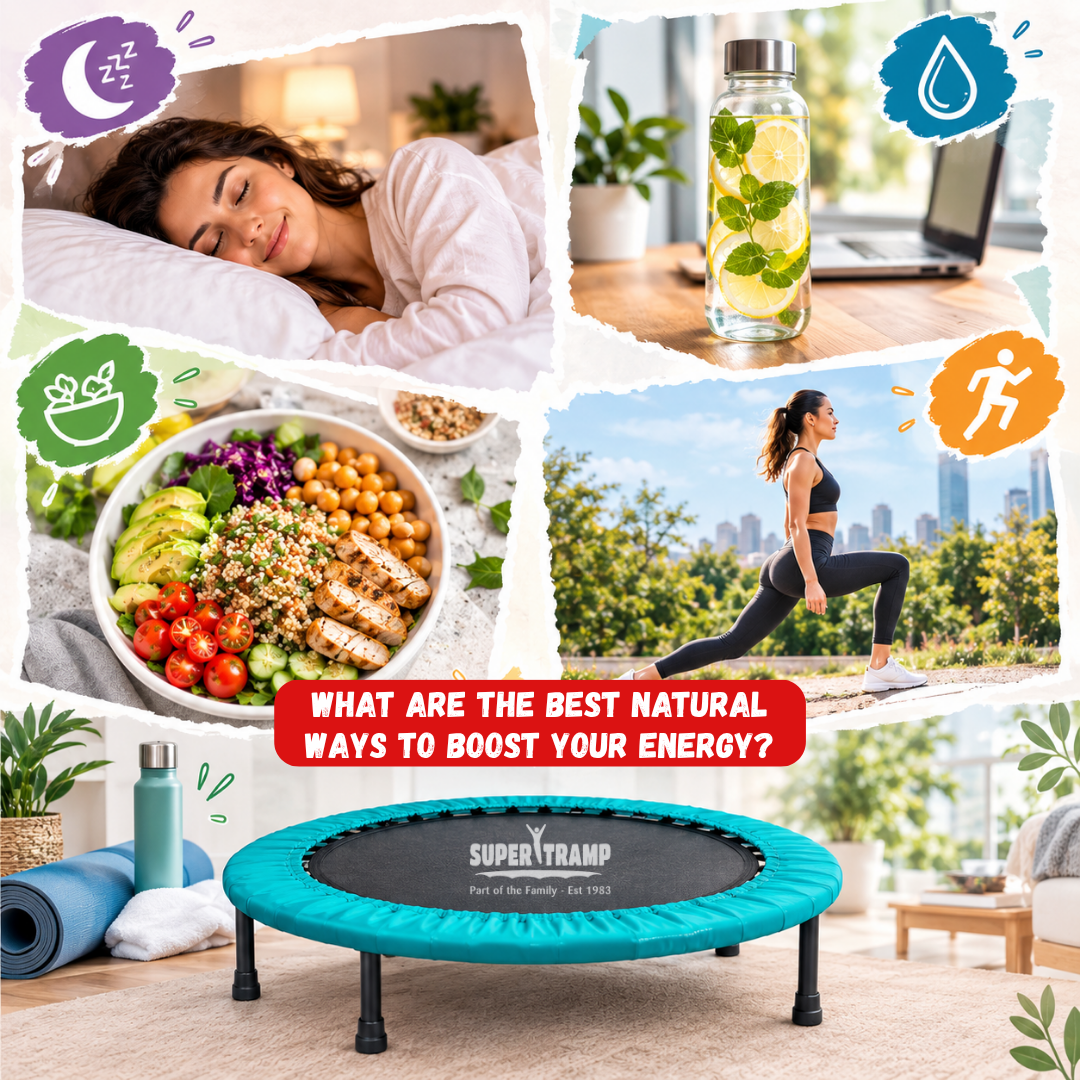
The best natural ways to boost energy include sleeping enough, drinking sufficient water, eating regularly, moving your body, and giving yourself proper breaks from sitting. None of these is hard. Together, though, they’re the difference between a steady afternoon and a slump you can’t think your way out of.
Let’s look at each one properly.
Start With Quality Sleep
Sleep is where the whole thing begins. Skimp on it, and everything downstream – mood, concentration, appetite, even how much you crave sugar – gets harder to manage.
A Few Things Genuinely Help:
- Keep roughly the same sleep and wake time, even at weekends.
- Build a wind-down routine that signals to your brain it’s time to switch off.
- Dim the lights and step away from screens an hour before bed.
Stay Hydrated Throughout the Day
Even mild dehydration can leave you sluggish and foggy, and most people don’t realise how easily it creeps up, particularly during a busy working day when you simply forget to drink.
The NHS suggests around 6 to 8 cups or glasses of fluid a day as a general guide, though this varies depending on your size, activity levels and the weather. Keep a glass or bottle within reach at your desk. It sounds obvious, but out of sight really does mean out of mind here. Drink a bit more if you’re exercising, or the weather’s warm.
Choose Foods That Provide Steadier Energy
What you eat, and how often, shapes your energy far more than most people credit. Wholegrains, fruit and veg, decent protein sources, healthy fats and fibre-rich foods all release energy more gradually than sugary snacks or refined carbs, which tend to spike blood sugar and then drop it just as fast.
The NHS recommends regular meals with healthy snacks roughly every three to four hours as one sensible approach. Skipping meals to “save time” almost always backfires you end up compensating with something quick, sugary and short-lived by mid-afternoon.
Take Movement Breaks
Sitting for hours on end, particularly if you work from home or spend most of your day at a desk, quietly drains you. Your circulation slows, your posture sags, and your brain gets less stimulation than it needs.
Try to:
- Stand up and walk every hour or so.
- Stretch between tasks, even briefly.
- Step outside for fresh air where you can.
- Break long meetings into shorter movement windows.
What’s the fastest natural way to increase energy? A short burst of physical activity, some fresh air, a glass of water or a balanced snack can all help you feel more alert. Which one works best depends on why you’re tired in the first place.
Can Trampolining Give You a Natural Energy Boost?
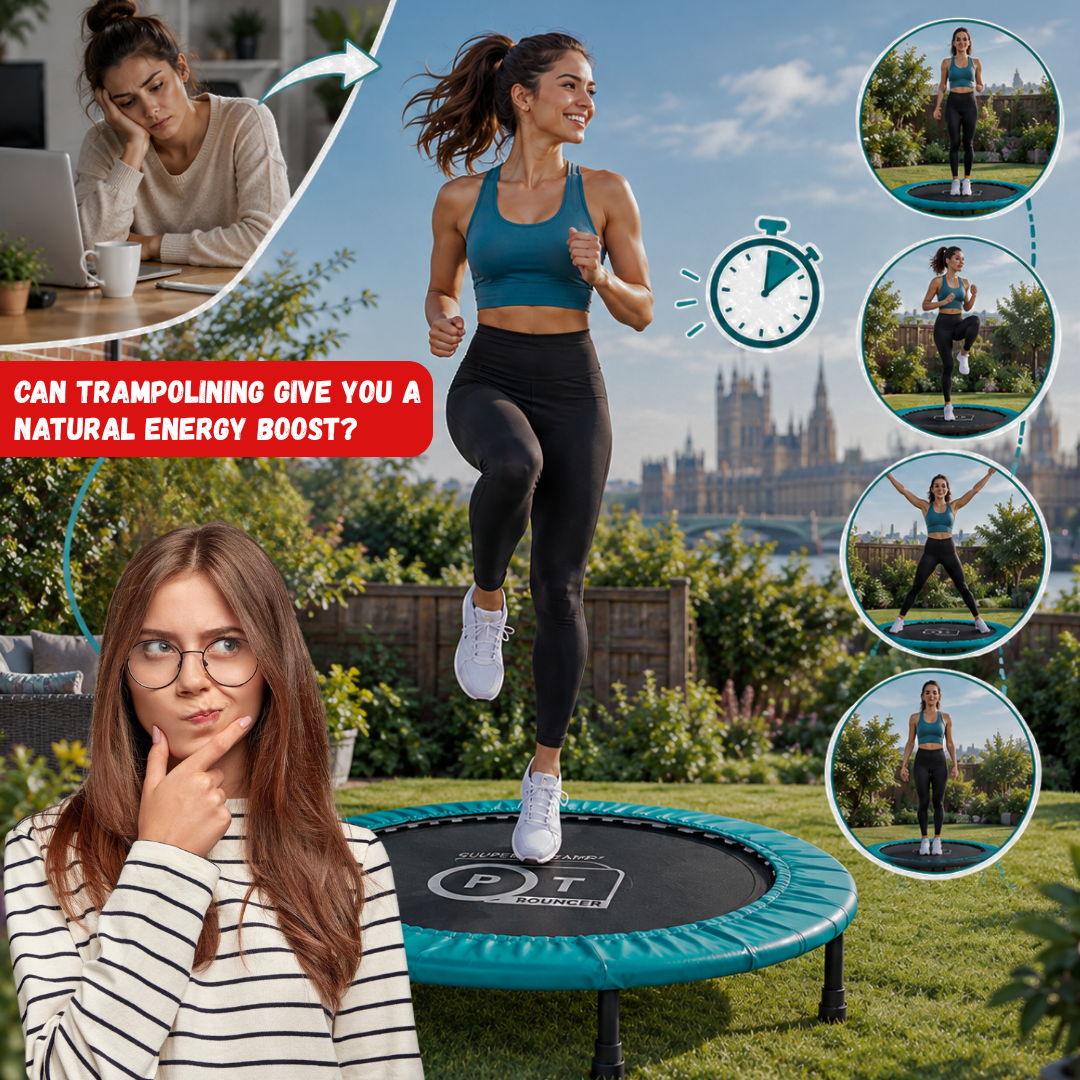
Yes, trampoline exercise, often called rebounding, is a genuinely enjoyable way to get your body moving, raise your heart rate and build a bit of regular activity into your week without it feeling like a chore.
Why Rebounding Can Help You Feel More Energised
There’s something about bouncing that doesn’t feel like “exercise” in the traditional sense, which is exactly why people stick with it. It gets you moving when you’d otherwise sit still, raises your heart rate and breathing, and gives you a proper cardiovascular workout all from your living room or garden.
Research into mini trampoline rebounding has found it can produce moderate-to-vigorous exercise intensity, and more recent studies describe recreational rebounding as capable of generating substantial aerobic and anaerobic responses. In plain terms: it’s a more serious workout than it looks like from the outside.
It’s also convenient. No gym membership, no traffic, no changing rooms — just a few minutes on your own rectangular trampoline whenever you need to shake off dullness.

Beat the Afternoon Energy Slump
When the dip hits – and for most people, it will – it will resist reaching straight for caffeine. Try a short walk, a glass of water, a balanced snack if you’re actually hungry, some fresh air, or a quick garden trampoline session. Often it’s not one single fix but a combination of two or three of these that shifts things.
Manage Stress and Give Yourself Recovery Time
Constant low-level stress is exhausting in a way that’s easy to underestimate. Short breaks, a few minutes of breathing exercises, and simply refusing to work flat-out without pause all help protect your energy reserves. Make room for physical activity you actually enjoy, and treat sleep as non-negotiable rather than the first thing sacrificed when life gets busy.
How Can You Create a Simple All-Day Energy Routine?
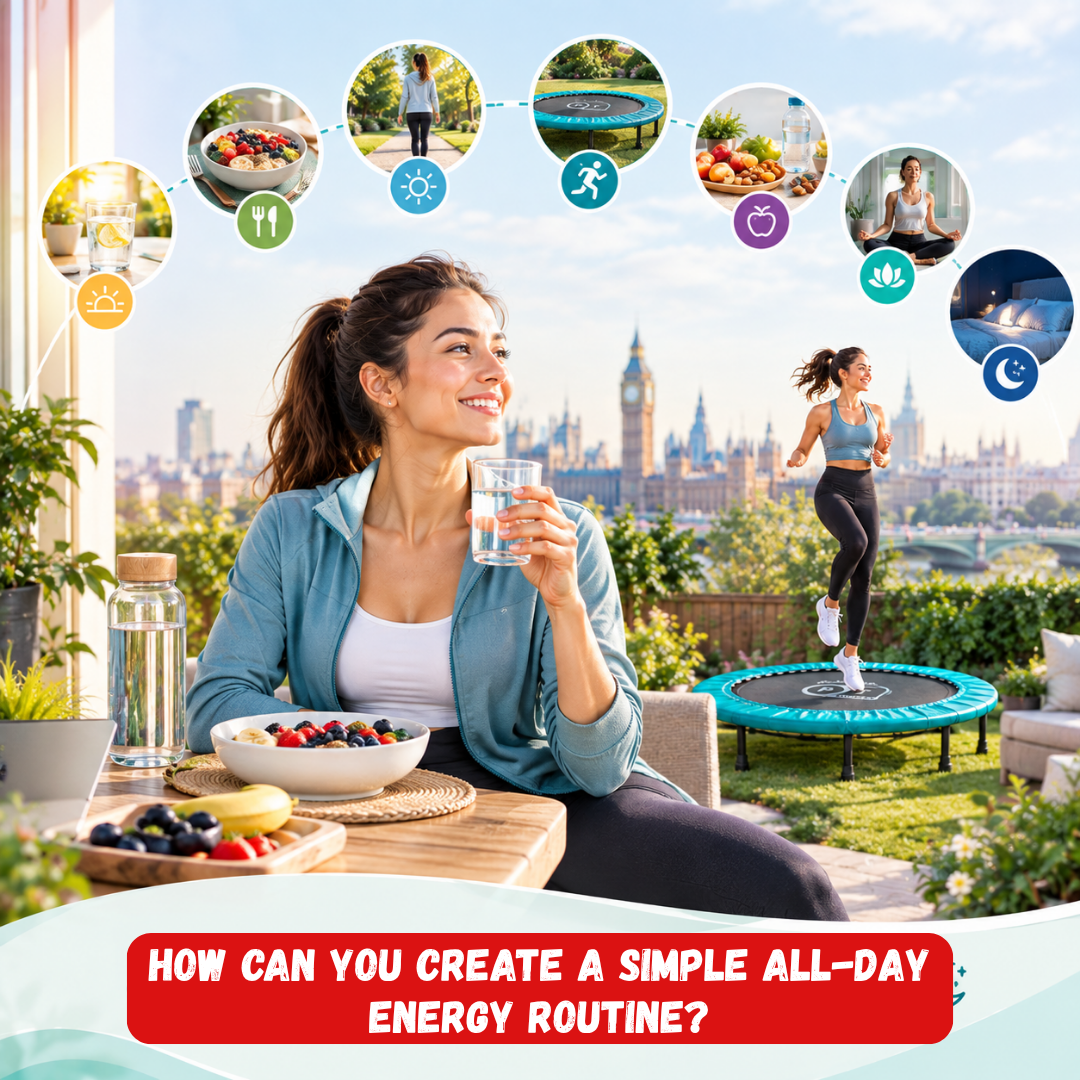
Putting this into a routine you can actually follow makes it far more likely to stick. Here’s a straightforward structure to adapt to your own day.
Morning
Hydrate as soon as you’re up, get some natural light, eat something balanced, and fit in 5–10 minutes of movement. A short walk or a spell of rebounding both work well.
Midday
Eat a proper lunch rather than something rushed at your desk. Take a short walk or a performance trampoline break, keep drinking water, and avoid sitting through the entire afternoon without moving.
Afternoon
If you’re genuinely hungry, have a nutritious snack. When energy dips, take a movement break. Even five minutes of gentle rebounding can shift how you feel.
Evening
Wind things down. Cut back on stimulating activity and late caffeine, and aim for a consistent bedtime.
The point of all this isn’t to feel buzzing with energy every hour of the day that’s not realistic, and chasing it is exhausting in itself. The real goal is building habits that support steady energy and smooth out the avoidable dips.