6 Breathing Exercises for Anxiety Disorder and Panic Attacks

6 Breathing Exercises for Anxiety Disorder and Panic Attacks

Your chest feels tight. Your heart’s going faster than it should. And someone, somewhere, has just told you to “take a deep breath”, as if that’s ever helped anyone mid-panic. Here’s the thing: breathing exercises for anxiety disorder do work for a lot of people, but not in the ambiguous, one-size-fits-all way they’re usually described. There’s a difference between forcing huge breaths of air and gently guiding your breath back to something more stable. One helps. The other can make you feel worse.

This article walks through six breathing techniques you can actually follow, even when your thoughts are racing, in just a few minutes, in a comfortable spot or on a trampoline, and with a willingness to try.

How Do Breathing Exercises Help With Anxiety and Panic Attacks?

When anxiety kicks in, breathing often becomes fast and shallow without you noticing. It’s the body’s stress response doing what it’s designed to do, preparing you for a threat that, in most cases, isn’t actually there.

Slowing the breath down doesn’t switch anxiety off like a light. But it can quietly signal to your nervous system that things aren’t as dangerous as they feel. For many people, that’s enough to take the edge off a chaotic moment.

Not everyone responds to breathing techniques in the same way, and that’s worth saying plainly. Some people find slow breathing calming almost right away. Others find it does very little on its own, especially during severe anxiety. If deep or slow breathing ever makes you feel dizzy or short of breath, stop and let your breathing return to normal. That reaction is more common than people admit.

When Should You Try a Breathing Exercise?

  • At the first signs of anxiety building
  • During a stressful moment at work or at home
  • After something overwhelming has happened
  • As part of a regular wind-down routine
  • Before sleep, when your mind won’t switch off

6 Breathing Exercises to Calm Anxiety and Panic Attacks

Pick a position that feels secure: sitting, standing, or lying down. None of these should feel uncomfortable. If something feels uncomfortable, ease off rather than pushing through it.

1. Diaphragmatic Breathing (Belly Breathing)
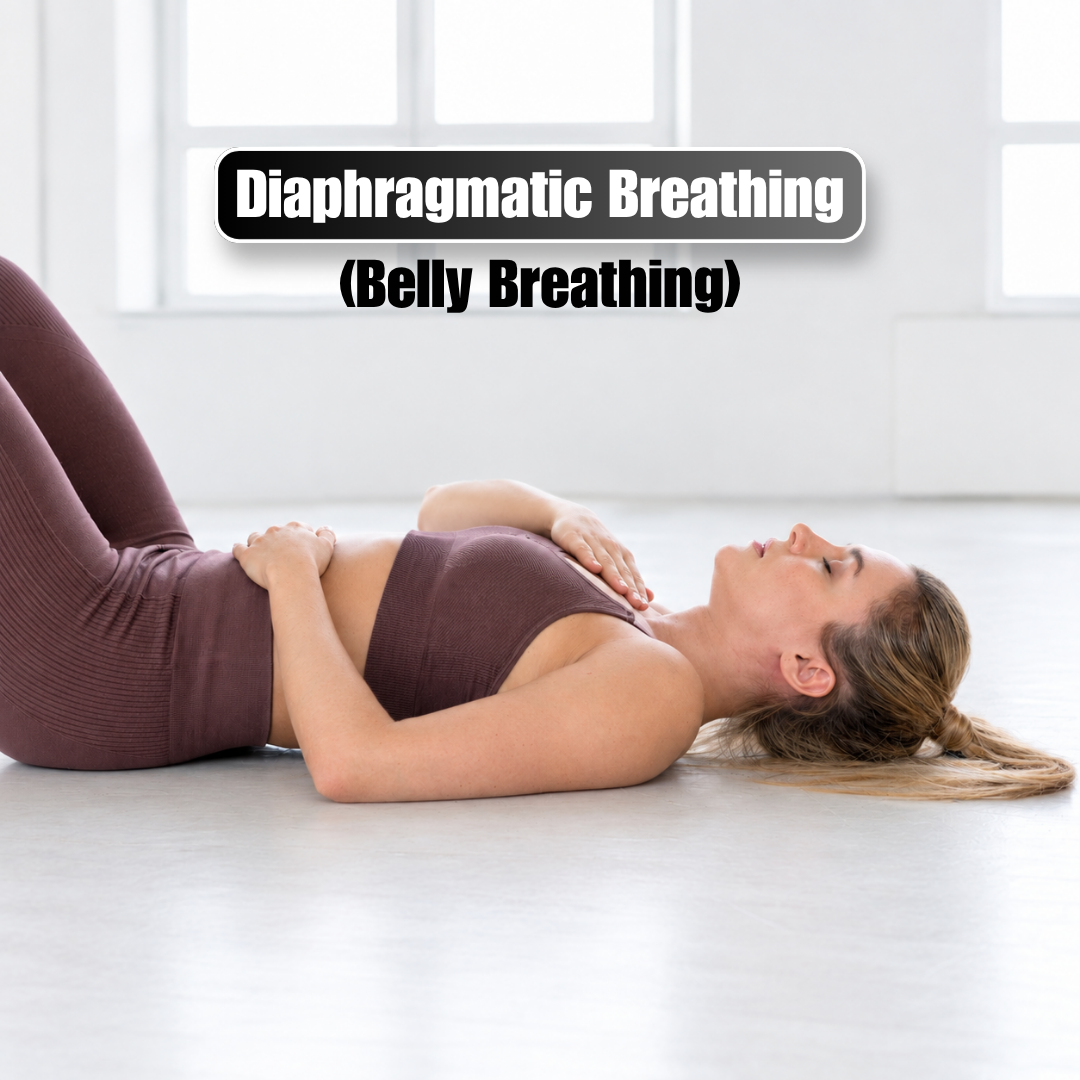
Diaphragmatic Breathing (Belly Breathing)

Diaphragmatic breathing, or belly breathing, is a deep-breathing process that engages the diaphragm to draw air low into the lungs, causing the abdomen to rise rather than the chest. It helps with relaxation, improves oxygen exchange, and is often used in stress management, singing, and respiratory therapy. 

How to do it:

  1. Sit or lie somewhere comfortable.
  2. Place one hand on your chest and the other on your abdomen.
  3. Breathe in gently through your nose.
  4. Let your abdomen rise naturally. Your chest should move slightly.
  5. Exhale slowly and without force.
  6. Repeat for several breaths.

Why it may help: It shifts your attention away from shallow chest breathing and gives you something physical to focus on, which can be grounding when your thoughts are racing around.

2. Box Breathing
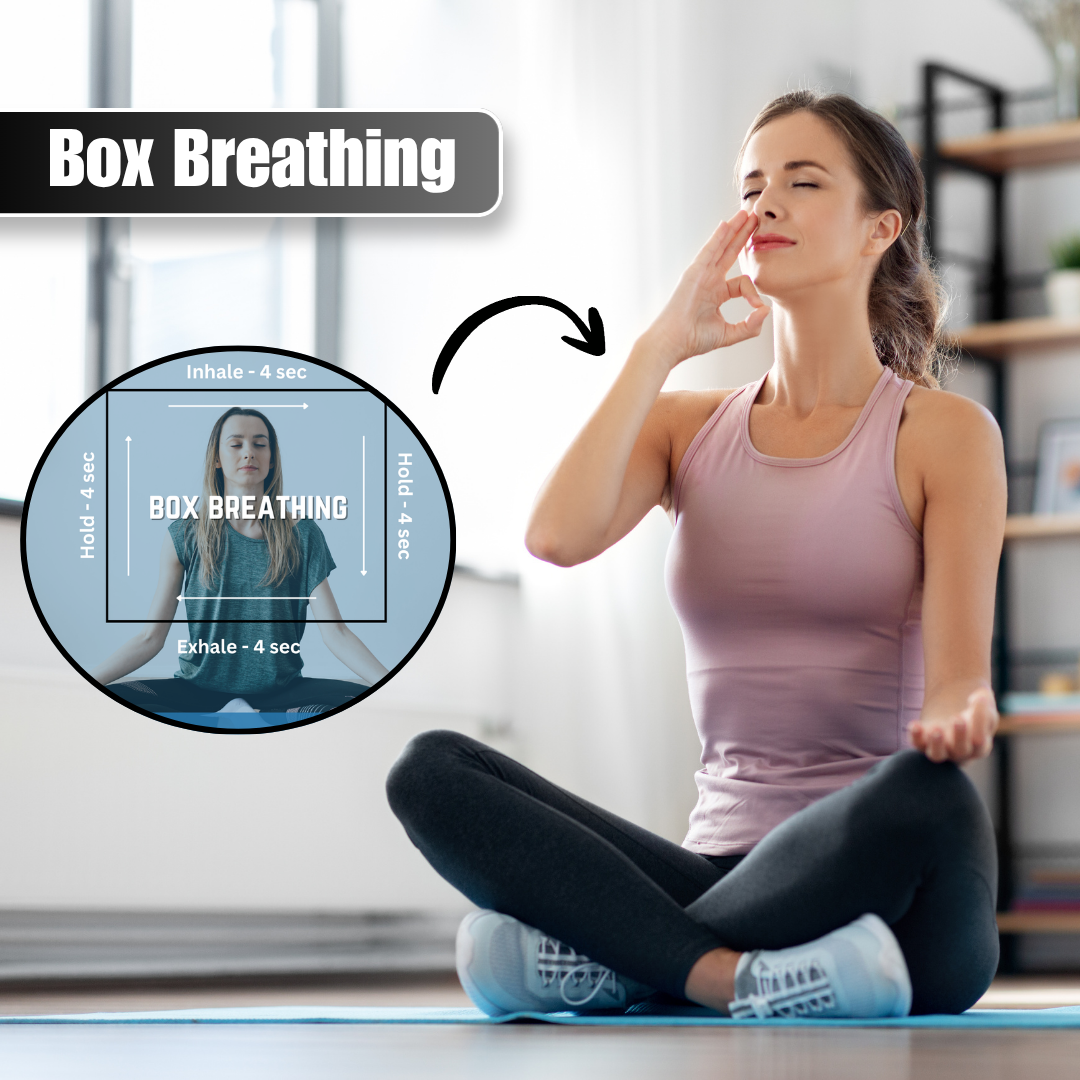
Box Breathing

This one’s popular with athletes and even used by military personnel to stay composed under pressure, and it’s simple enough to remember without thinking too hard.

How to do it:

  1. Inhale for 4 seconds.
  2. Hold for 4 seconds.
  3. Exhale for 4 seconds.
  4. Hold for 4 seconds.

Repeat for a few rounds. Don’t force the holds. If 4 seconds feels too long, shorten it.

Why it may help: The structured rhythm gives the mind a pattern to follow, which can interrupt racing or anxious thoughts.

3. Longer-Exhale Breathing
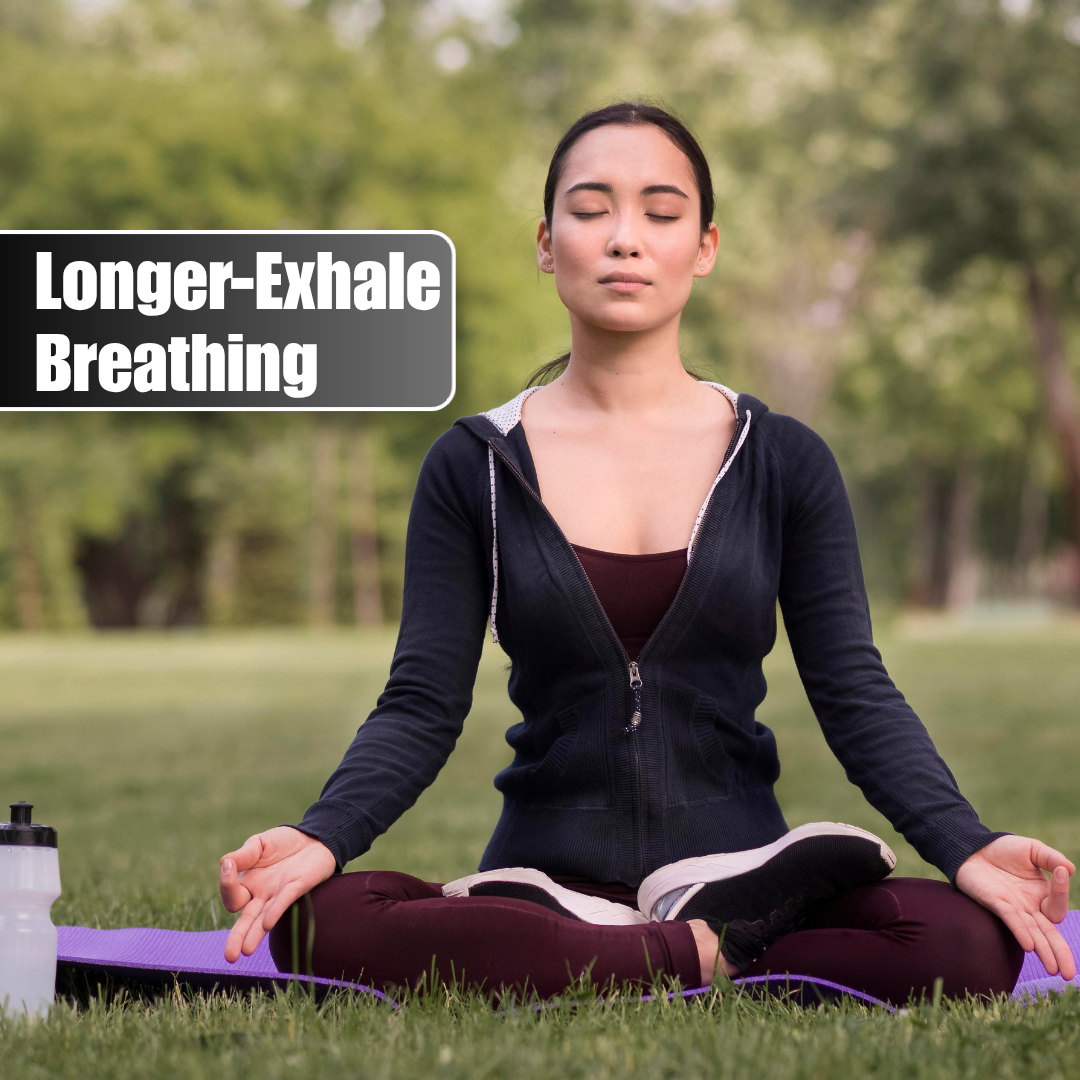
Longer-Exhale Breathing

Longer-exhale breathing is a simple technique where you inhale for a shorter count (e.g., 4) and exhale for a longer count (e.g., 6–8) to activate the body’s relaxation response. This pattern helps lower heart rate and calm the nervous system, making it useful for stress and anxiety relief. 

How to do it:

  1. Inhale gently for 4 seconds.
  2. Exhale slowly for 6 seconds.
  3. Repeat for several rounds.

Why it may help: Making the exhale longer than the inhale tends to encourage the body toward a calmer, slower rhythm. It’s one of the easiest patterns to remember on the spot.

4. Alternate Nostril Breathing (Nadi Shodhana)
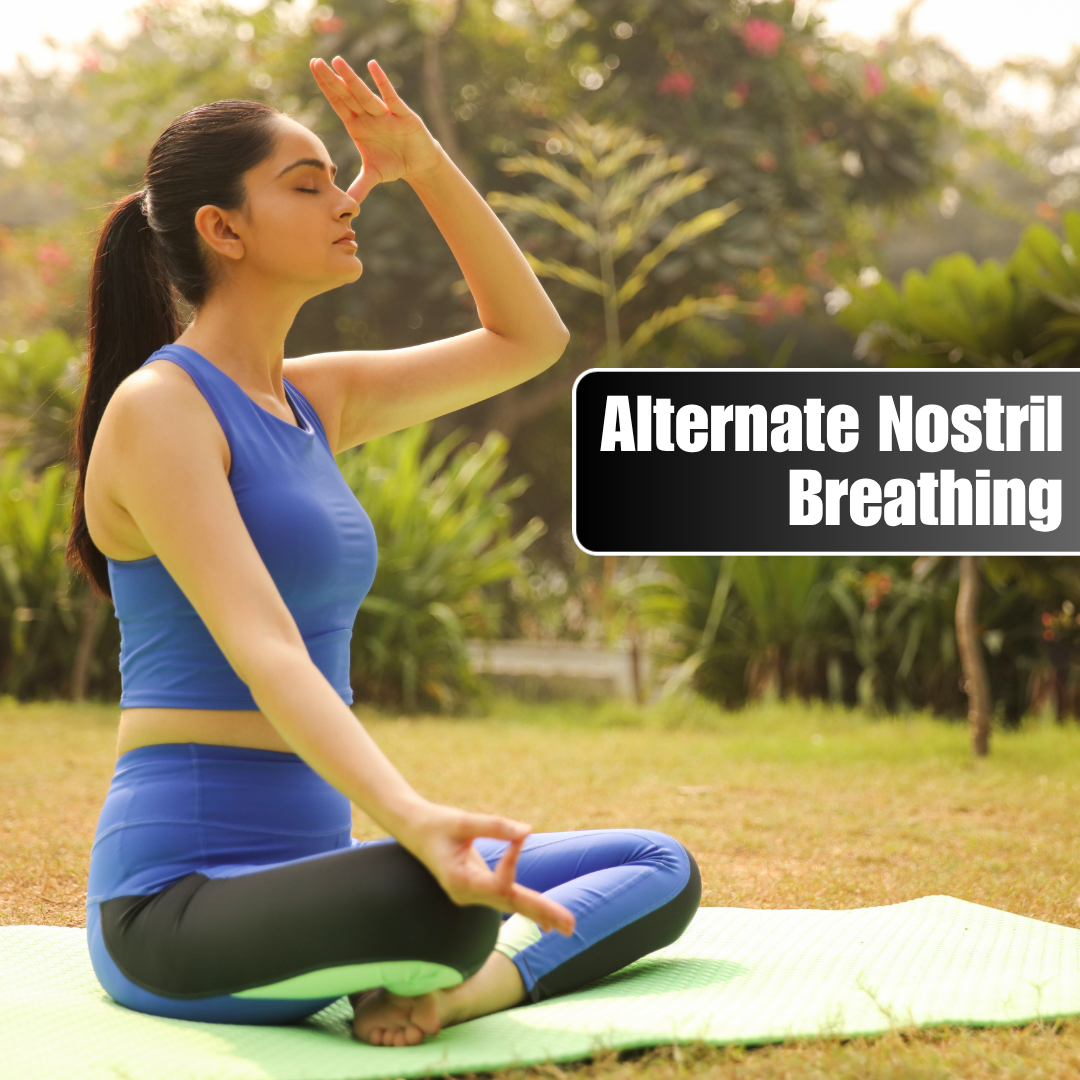
Alternate Nostril Breathing (Nadi Shodhana)

Nadi Shodhana (alternate nostril breathing) is a calming yoga breath that balances the nervous system by switching the breath between nostrils.

How to do it:

  1. Sit tall, relax your shoulders, and take 2–3 normal breaths.
  2. With the right hand, use the thumb to close the right nostril. Inhale slowly through the left nostril.
  3. Close the left nostril with the ring finger and exhale through the right.
  4. Inhale through the right, then close it and exhale through the left, one round complete.
  5. Repeat for 5–10 rounds, keeping the breath light, silent, and unforced.

It helps reduce stress, quiet mental chatter, and improve focus.

Why it may help: The steady switching pattern requires just enough concentration to pull attention away from anxious thoughts without demanding much effort.

5. 5-4-3-2-1 Breathing and Grounding

This pairs breathing with a well-known grounding technique, and it’s particularly useful when anxious thoughts feel like they’re taking over completely.

How to do it:

  1. Take a comfortable breath.
  2. Notice 5 things you can see.
  3. Notice 4 things you can touch.
  4. Notice 3 things you can hear.
  5. Notice 2 things you can smell.
  6. Notice 1 thing you can taste.

Why it may help: It keeps you in the present moment rather than the anxious thought cycle, using your senses as a distracting tool that’s hard to argue with.

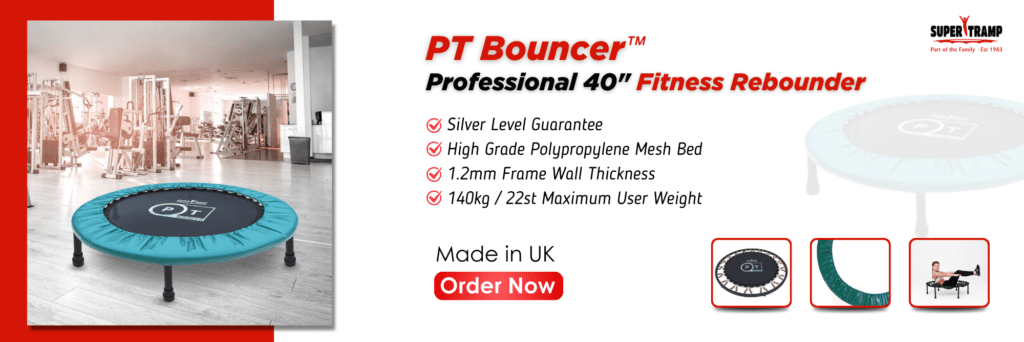
6. Gentle Breathing on a Trampoline
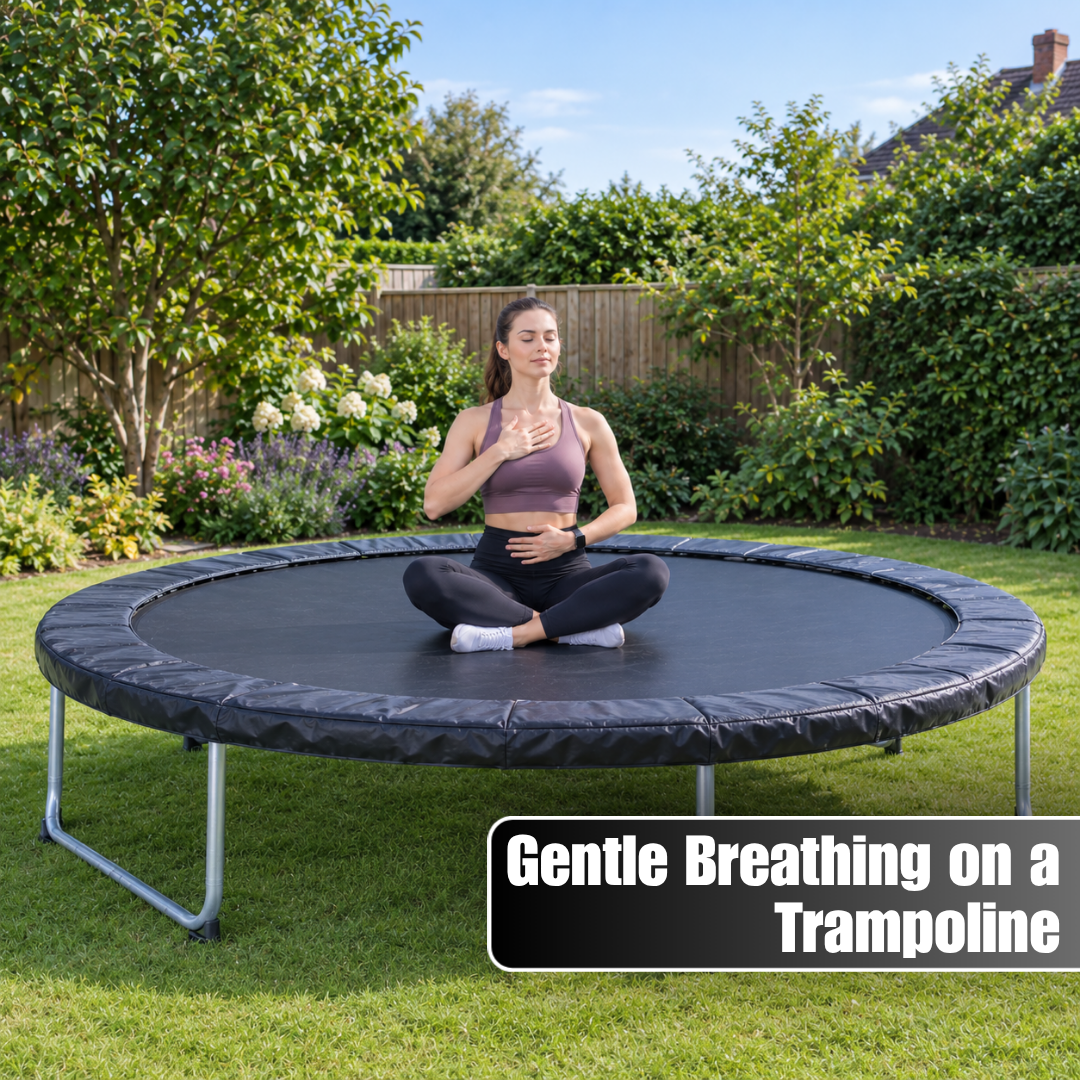
Gentle Breathing on a Trampoline

This isn’t a bouncing workout. It’s a stationary breathing exercise that happens to take place on an in-ground trampoline, which some people find more calming than a plain chair or floor.

  1. Stand or sit safely on a stable trampoline, using the enclosure if there is one.
  2. Keep your feet still. No bouncing.
  3. Relax your shoulders and jaw.
  4. Breathe in gently through your nose for around 4 seconds.
  5. Breathe out slowly for around 6 seconds.
  6. Continue for 1–3 minutes.

Stop immediately if you feel dizzy or unsteady. The point here is a calm breathing rhythm in a familiar space, not exercise.

How to Use Breathing Exercises During a Panic Attack?

When panic actually hits, long explanations aren’t useful. Here’s a shorter process worth remembering.

Stop and Find a Safe Position

Sit or stand somewhere you feel secure. It doesn’t need to be perfect, just somewhere you won’t feel uncomfortable or unsteady.

Relax Your Shoulders

Skip the large, dramatic breaths. Instead, let your shoulders, jaw and hands soften. Tension in these areas often mirrors the tension in your breathing.

Slow Your Breathing Gradually

Try a gentle 4-second inhale followed by a 6-second exhale. Don’t aim for your biggest possible breath, aim for a comfortable, steady one. Rushing to fix your breathing instantly usually fails.

Focus on the Present Moment

Combine your breathing with grounding. Notice what’s around you: sounds, textures, colours. This gives your mind a place to land other than the panic itself.

Don’t Force the Exercise

The goal is comfortable, controlled breathing, not the deepest breath you can manage. Forcing it is often what causes the dizziness people complain about.

There’s no single instant fix for a panic attack. What tends to help is moving somewhere safe, slowing your breathing gradually, and grounding yourself in your surroundings until the intensity eases.

How to Make Breathing Exercises More Effective?

Work on these when you’re calm, not just when anxiety strikes – it’s much easier to use a technique you already know well.

  • Keep it gentle: Avoid taking excessively deep or rapid breaths.
  • Get comfortable first: Sit, stand, or lie somewhere you feel secure.
  • Lengthen the exhale: A relatively longer, relaxed exhale tends to settle the breathing rhythm faster than focusing on the inhale.
  • Build a habit: A few minutes daily, practised regularly, beats only reaching for these techniques during a crisis.
  • Find your fit: Some people prefer belly breathing. Others find grounding techniques or the mini trampoline exercise easier to stick with.
  • Stop if it’s uncomfortable: Dizziness or breathlessness means it’s time to return to normal breathing.

Breathing exercises can sit alongside professional support, such as therapy or medication, but they’re not a replacement for it. If anxiety is difficult to manage day-to-day, it’s worth speaking to a GP or a mental health professional.

Points to Remember 

  • Anxiety often causes fast, shallow breathing. Slowing it down may help you feel calmer, though results vary from person to person.
  • Six techniques worth trying: diaphragmatic breathing, box breathing, longer-exhale breathing, alternate nostril breathing, 5-4-3-2-1 grounding, and gentle stationary breathing on a garden trampoline.
  • During a panic attack, prioritise safety first, then a slow breathing rhythm, then grounding.
  • Gentle, comfortable breathing works better than forcing deep breaths, which can trigger dizziness.
  • Practising regularly, while calm, makes these techniques easier to use when anxiety actually hits.

Conclusion

None of these six techniques is a cure, and it would be misleading to promise otherwise. What they offer is something simpler but genuinely useful: a way to interrupt the cycle, even briefly, and give yourself a bit of stability when things feel overwhelming.

Try a couple of these when you’re calm. See which one feels natural. That’s the one worth having ready for the moments when you need it most.

If anxiety or panic attacks are affecting your day-to-day life, it’s worth speaking with a GP or a specialised mental health professional. Breathing techniques work best as one part of a wider approach, not the whole solution.

FAQ's

What Breathing Exercises Can Help With Anxiety and Panic Attacks?

There’s no specific best technique for everyone. Slow breathing with a comfortable, slightly longer exhale, such as a 4-second inhale and a 6-second exhale, is a simple starting point most people can try without any preparation.

Get somewhere safe, slow your breathing gradually rather than forcing deep breaths, relax your shoulders and jaw, and use grounding techniques like naming things you can see or hear until the intensity begins to ease.

Even a couple of minutes can be a useful starting point. Many people find five minutes of regular practice, done regularly, more effective than occasional longer sessions.

They may help you manage the symptoms and feel calmer, but they can’t guarantee a panic attack stops immediately. Think of them as a coping tool rather than an off switch.

Yes, as long as it stays gentle and stationary. Keep your feet still and focus on the breathing rhythm rather than bouncing, particularly if you’re feeling dizzy or unsteady.