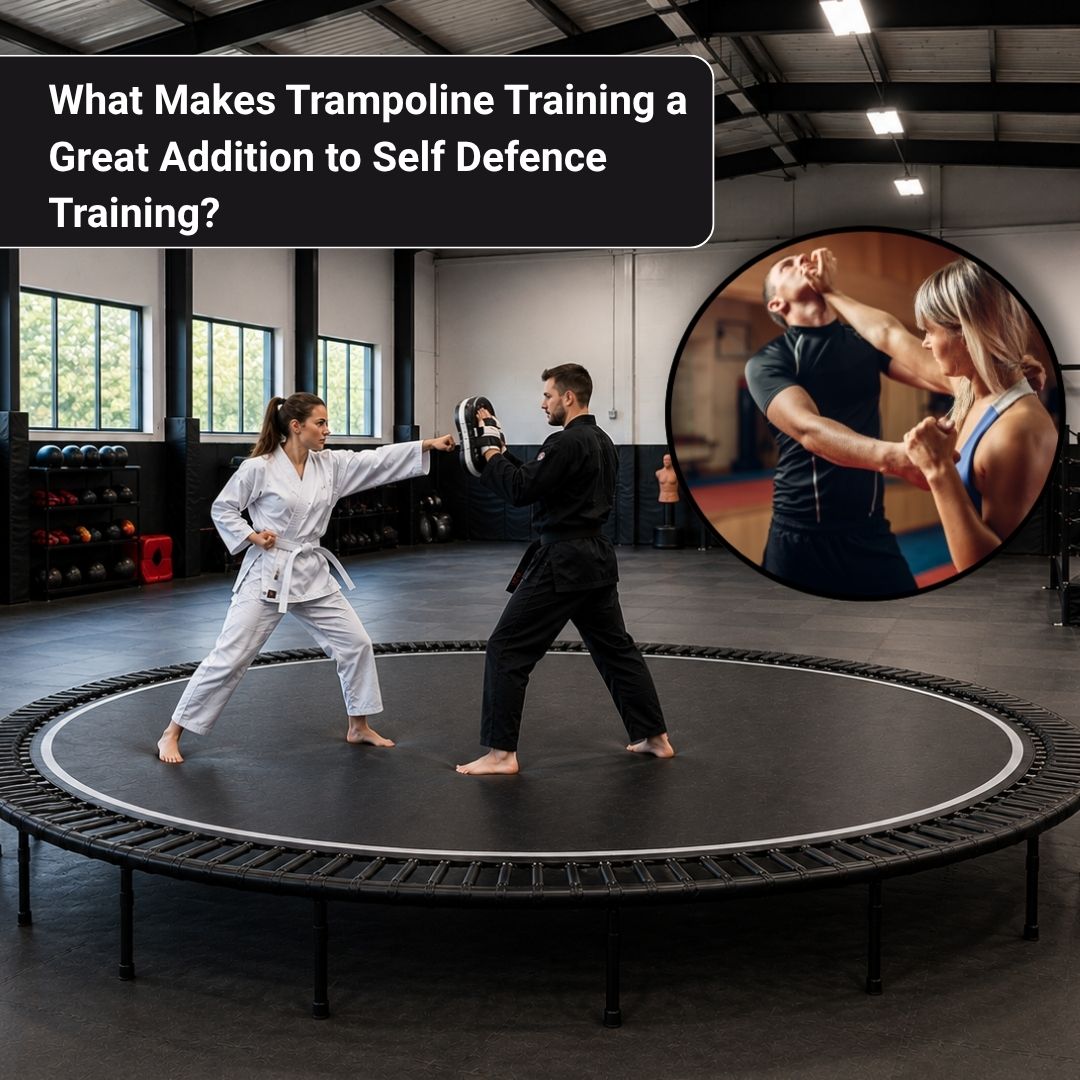
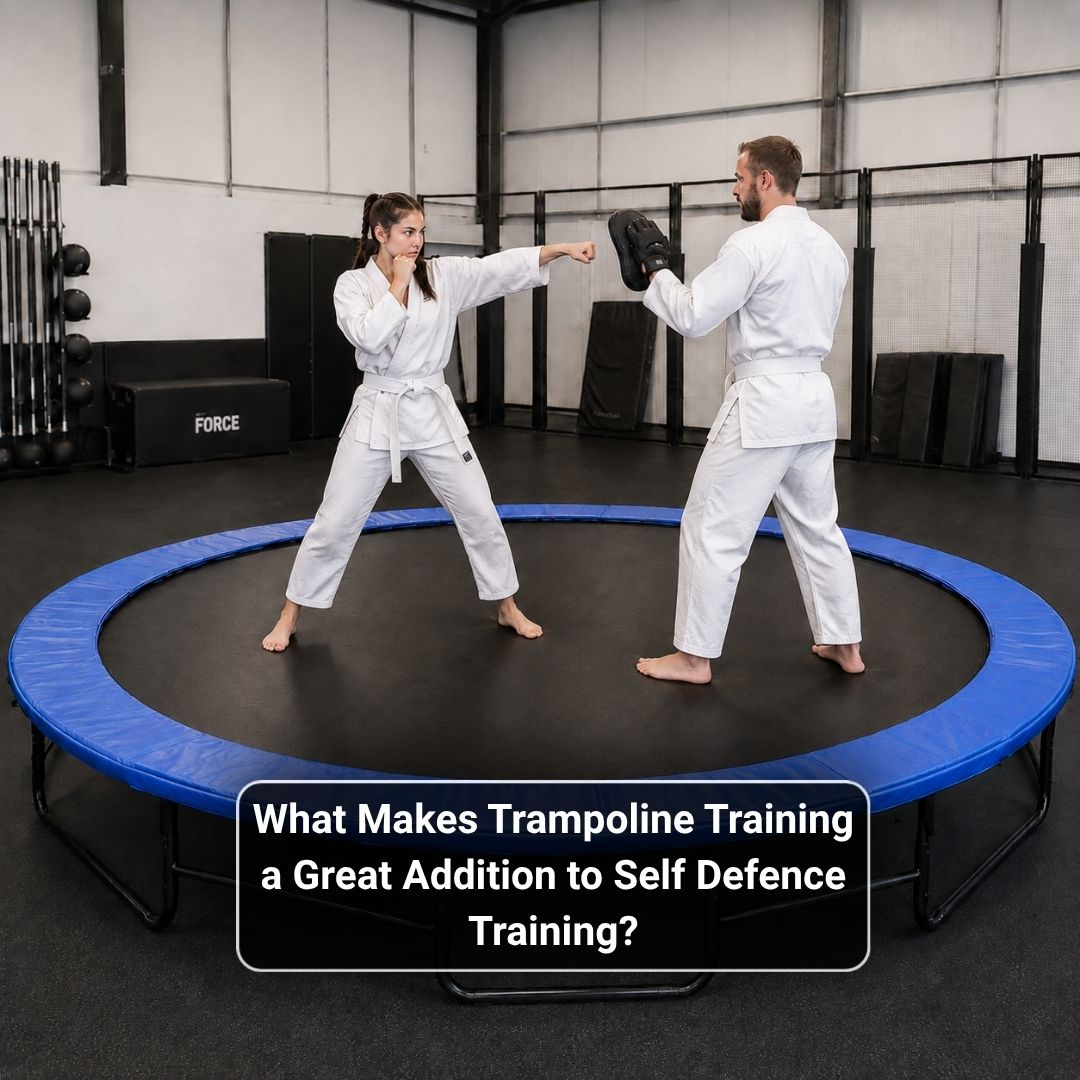
Self-defence coaches often emphasise that one of the most crucial aspects of the sport is not punching but footwork. While most beginners are eager to throw punches, effective self-defence is not just about the techniques a trainer teaches, it also relies on balance, coordination, and agility.
In this article, we will discuss why trampoline training is beneficial to develop these abilities and what it might lack for self-defence training. Moreover, we will address why it is a great supplement and how to combine it with regular self-defence training.

How Does Trampolining Connect With Self-defence?
Self-defence training and trampolining are seemingly different, as the former involves sparring with an opponent using various combinations of movement and techniques, while the latter is simply bouncing on a bungee-like surface. However, the two types of training have a significant connection that might not seem apparent at first.
This connection also highlights how trampolining can support different fitness needs beyond self-defence. Gentle rebounding may offer an interesting way for people with arthritis to stay active, but how does it actually help?
Self-defence is About More Than Learning Techniques
Balance
Helps you stay stable while moving, changing direction or dealing with uneven surfaces.
Coordination
Helps your arms, legs and body work together so movements feel smooth and controlled.
Footwork
Helps you move quickly, create distance, avoid strikes and position yourself better.
Movement Control
Good balance and coordination help you stay in control while performing different movements.
Why It Matters
These skills form an important foundation for many combat sports and self-defence activities.
Where Does the Trampoline Fit in?
Trampoline exercises can challenge your balance, coordination and movement control, making it a useful complement to self-defence training.
The Connection Between Rebounder Training and Self-defence
Constant Balance Adjustments
A trampoline requires small, continuous movements to help you stay stable.
Improves Coordination
Bouncing challenges your body to work together and respond to changes in position.
Supports Controlled Movement
It encourages you to focus on where your body is moving and how you land.
Helps Develop Body Awareness
Regular trampoline exercises can make you more aware of your balance, posture and positioning.
A Useful Training Tool
Rather than teaching strikes or blocks, a trampoline can complement self-defence training by working on movement skills.
Builds Movement Control
Self-defence often requires controlled and deliberate movement, making balance and coordination valuable skills to develop.
But balance and coordination may only be the beginning. Hidden benefits of trampoline exercises could extend to your heart, energy levels and overall wellbeing—so is bouncing actually a simple way to support long-term health?
How Can Rebounder Training Improve Skills Useful for Self-defence?
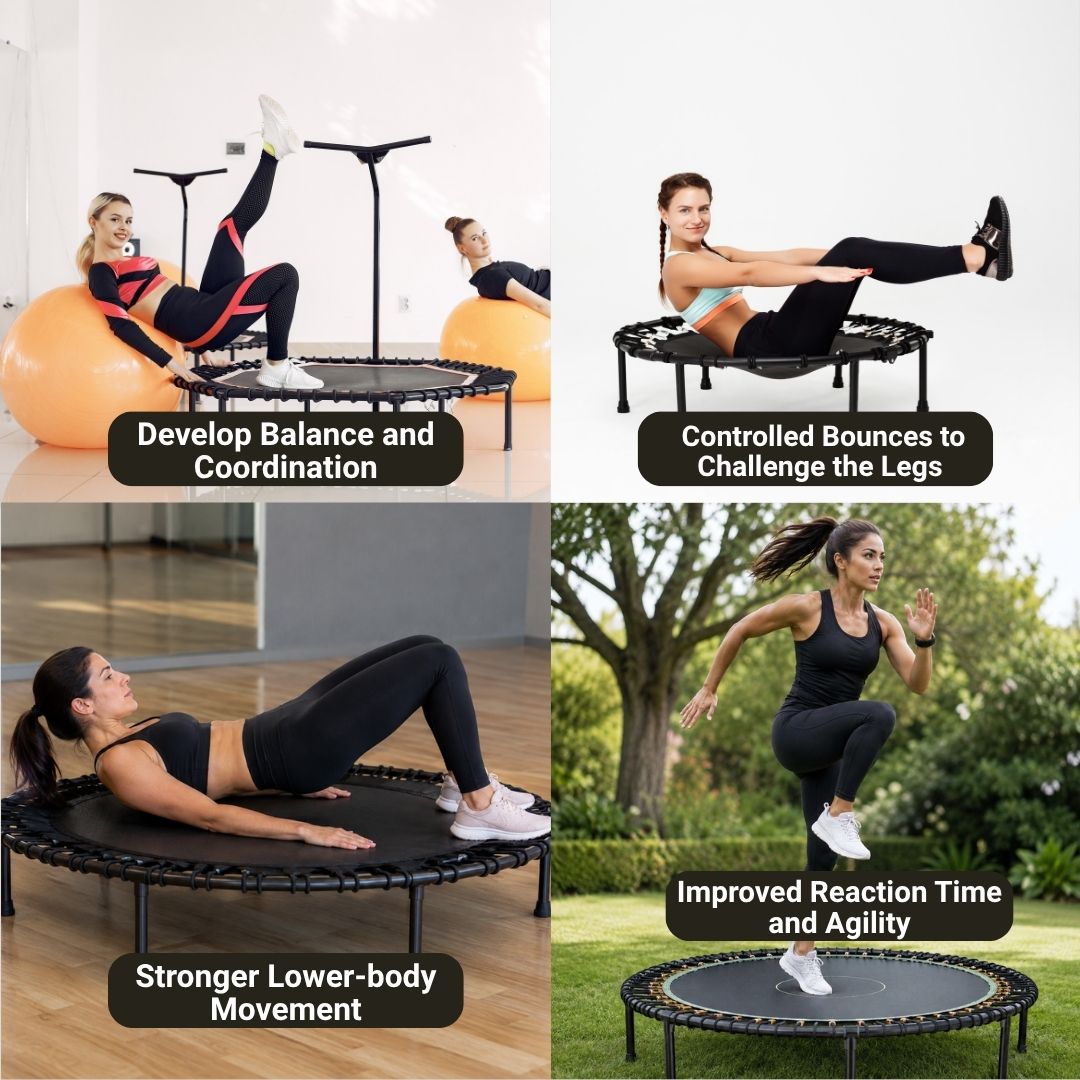
Develop Balance and Coordination
Learning to Control Your Landing
Bouncing on a mini trampoline constantly requires a person to adjust their movement to keep their balance, making it an excellent tool for improving balance.
Maintaining Stability While Moving
Moreover, the same motion usually trains coordination as well by forcing a person to synchronise their movements.
Improved Reaction Time and Agility
Responding to Changes in Direction
An outdoor trampoline workout is also great for developing agility. It challenges the body to react to uneven landings by making slight adjustments to keep the same position. Such motion is beneficial for improving one’s reaction time and, therefore, their agility.
Building Better Movement Awareness
Finally, the need to jump to the sides or to move forward on the fitness trampoline makes one think about movement in a different way, which is also great for becoming more agile.
Stronger Lower-body Movement
Using Controlled Bounces to Challenge the Legs
Finally, bouncing up and down works the lower body, enabling it to become stronger for combat sports. Unlike running, it does not put undue stress on the knees but still causes a similar reaction in the leg muscles.
Could a Trampoline Workout Make You More Agile?
Agility Starts With Controlled Movement
Many believe that being agile is an innate ability, but in truth, agility consists of three traits that are trained: balance, coordination, and reaction time. Thus, a trampoline workout is a great way to become more agile.
Why the Rebounder Creates a Different Training Challenge
A rebounder creates an unstable environment that challenges one’s balance and coordination. The need to react to every little movement keeps the body guessing and allows a person to enhance their agility in a short amount of time.
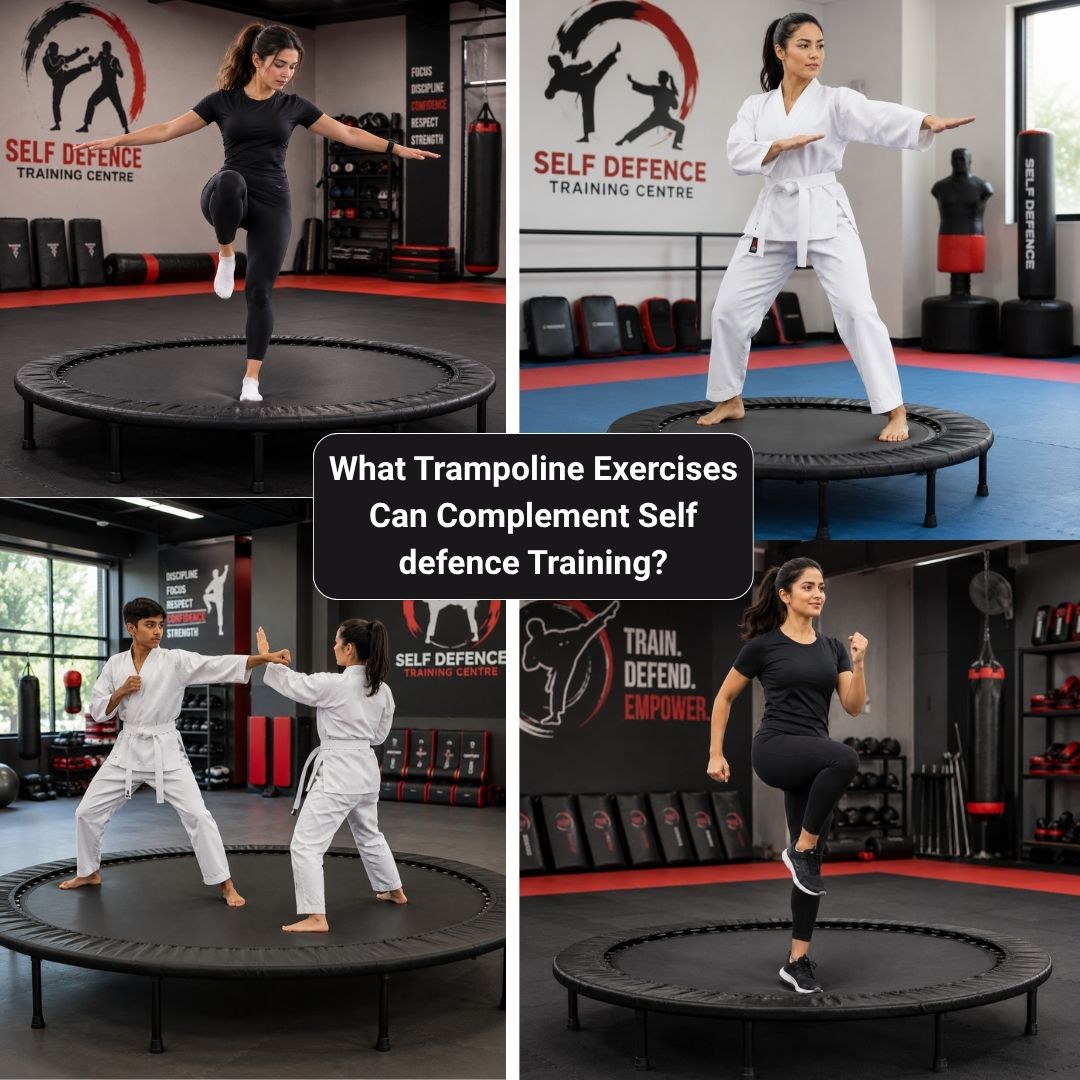
What Trampoline Exercises Can Complement Self defence Training?
Exercises for Beginners
Basic Bounce
Basic bouncing up and down on the trampoline while keeping the movements soft
Marching Bounce
Marching in place while bouncing
Controlled Knee Lifts
Lifting one’s knees while bouncing to work on balance
Exercises for Intermediate Fighters
Side-to-side Bounce
Lateral movements to the sides to work on footwork
Alternating Knee Drives
Alternating knee lifts to increase pace and coordination
Controlled Direction Changes
Bouncing forward to practice directional movement
Exercises for Advanced Fighters
Single-leg Balance Work
Single-leg work to improve balance on one side
More Complex Coordination Drills
More advanced coordination drills
Only Progress When Basic Landing Control is Reliable
Progress to more complex movements only when basic bouncing and directional movement feel second nature, as working on the fundamentals is critical.
Want to build more than just footwork? Build better balance with trampoline exercises that can help improve strength, coordination, and stamina for self-defence training.
What Safety Gear Do You Need for Training?
Before discussing the trampoline safety gear that a fighter should utilise before incorporating it into their training, it is essential to note why it is so important. The right equipment will ensure that one can train on a trampoline safely.
Essential Trampoline Safety Equipment
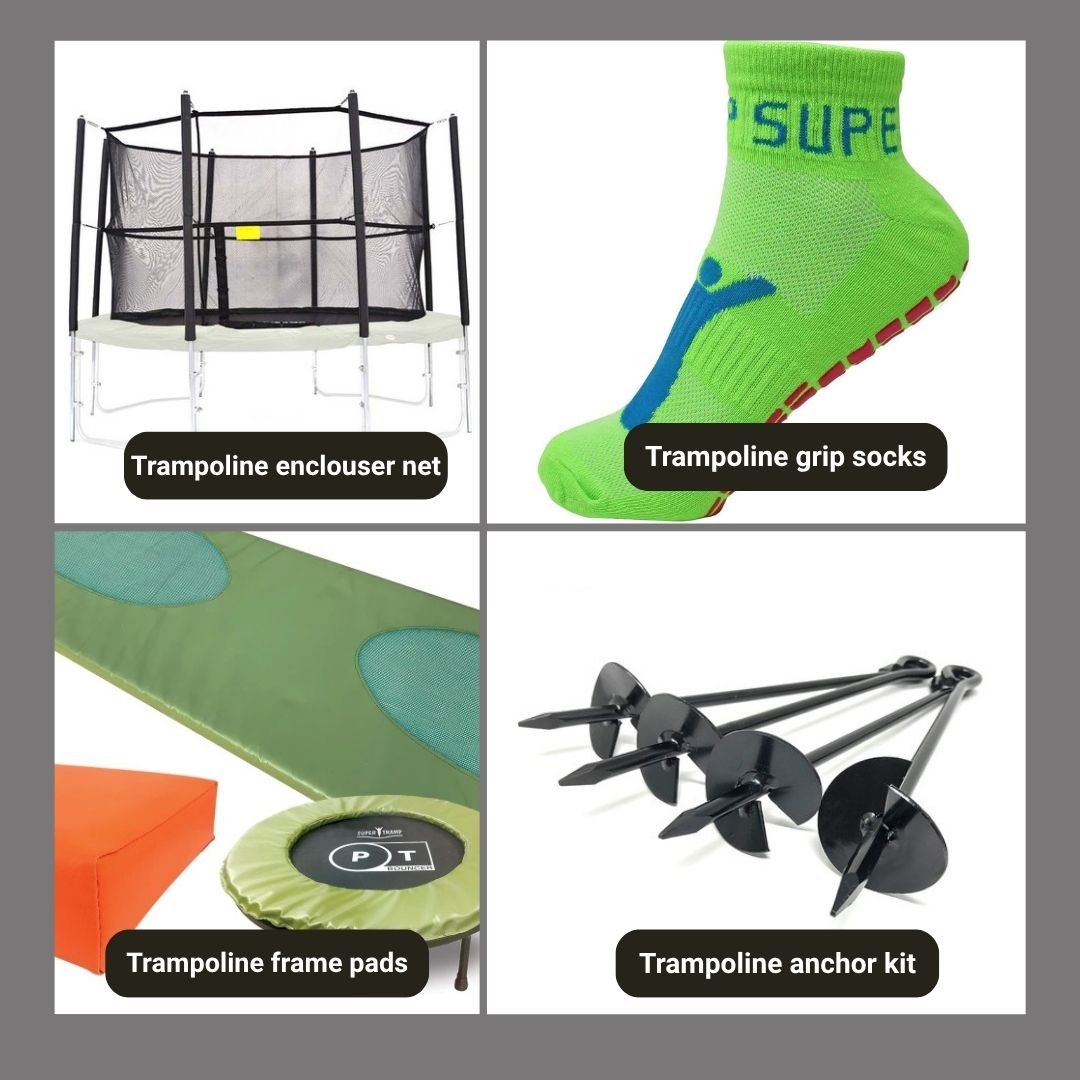
Safety Padding for the Frame and Springs
Trampoline pads cover areas around the trampoline and help reduce the risk of injury from accidental contact.
Trampoline Enclosure for Added Protection
A trampoline enclosure creates a safer jumping area and helps prevent users from falling off the trampoline.
Safety Netting to Help Prevent Falls
A safety net keeps users within the jumping area during movement and reduces the chance of falling outside.
Trampoline Anchors for Better Stability
Trampoline anchors help keep the trampoline securely in place, especially during active or energetic workouts.
Trampoline Socks
You can use trampoline socks for better grip during your training sessions on a 14ft trampoline.
Resistance Bands
Resistance bands are a simple way to add strength and resistance to your workout without heavy weights. They can help build muscle control, improve stability and make exercises more challenging as your fitness improves.
Why a Securely Positioned Trampoline Matters During Movement Drills
A sturdy and safe trampoline is vital for training, as many movements require quick directional changes and jumps, which are dangerous if the equipment does not provide adequate support.
Is Rebounder Workout a Replacement for Self-defence Training?
No — and this distinction matters.
What Trampoline Training Can Help Develop
- Balance
- Coordination
- Agility
- Body control
- General fitness
Why Combining Both Can Make Sense
It is essential to utilise the two training methods in tandem. In other words, use proper self-defence instructions for techniques and employ a trampoline for additional coordination and balance drills.
How Can You Safely Combine Trampoline and Self-Defence Training?
It is crucial to warm up before utilising a trampoline for training, as it is a strenuous activity. It is also essential to utilise controlled, safe movements when on the rebounder. Additionally, one should leave enough time for recovery between training sessions, as working out on a trampoline is not easy on the joints. Most importantly, one should not push their body too hard.
Who Benefits From Bouncing on a Trampoline?
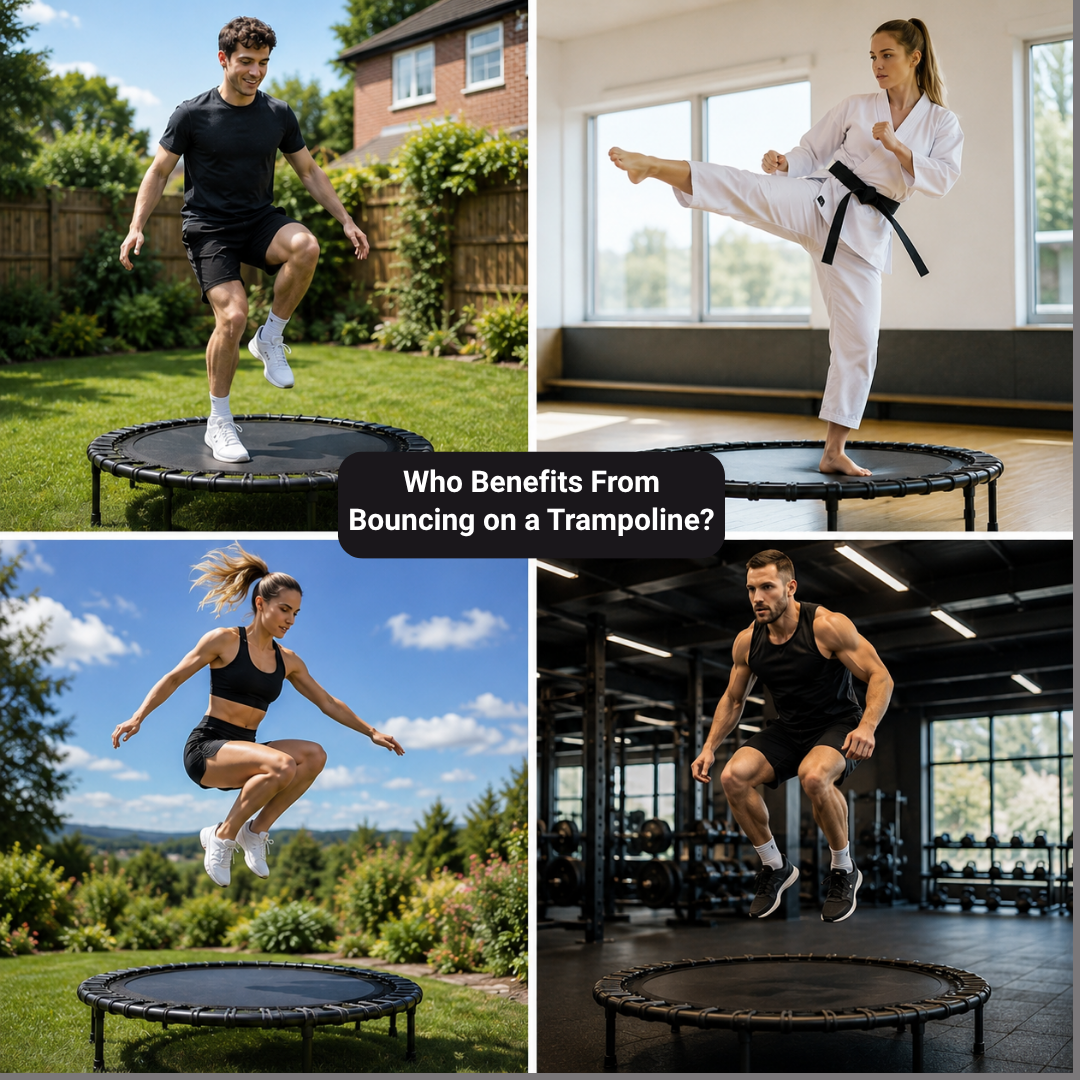
There are numerous benefits to utilising a trampoline for self-defence training. Therefore, many people can benefit from it, including:
- Beginners who want to learn how to utilise certain movement patterns.
- Martial artists who need to improve their fitness while having fun.
- Fitness enthusiasts who seek a new way to engage in physical activity.
- Competitive fighters who need to improve their agility and coordination.
- People who do not enjoy running but want to improve their fitness.
- Finally, anyone who is looking to develop core stability, body control, and coordination.
Points to Remember
- Self defence training is all about movement and making the most of it during a fight.
- A trampoline is an effective way to develop balance, coordination, agility, and reaction time, which are essential parts of combat sports.
- It is also a great tool to improve certain fitness properties, including core strength and endurance.
- However, training on a trampoline is not a replacement for proper self-defence training, as it will not train one to utilise specific movement patterns.
- Moreover, one should utilise the right safety equipment and be aware of the potential dangers of training on a trampoline.
- Finally, when done correctly, it is a great supplemental training method for self-defence, as it helps develop many skills needed for it.
Conclusion
Self defence training is about much more than techniques. In fact, proper movement is paramount to execute one’s moves efficiently and effectively during a fight. Unfortunately, it is often overlooked in favour of the techniques, but it is vital to develop it regardless. Firstly, movement consists of balance, agility, and coordination, which are all crucial during a fight.
Secondly, one should learn how to utilise their entire body to execute movements efficiently. Luckily, trampoline training is an effective way to do so, as it allows one to develop these crucial combat skills without putting undue stress on the knees and back. Therefore, it is a great supplement to one’s self-defence training, even if it is not enough on its own.
If you are considering utilising a trampoline for your self-defence training, remember that it is crucial to utilise controlled, safe movements.