Tabata workouts are short, structured interval sessions that can support fat loss and improve your fitness when combined with regular activity and balanced eating. They use 20 seconds of hard effort followed by 10 seconds of rest.
Many people want to know if they can reduce belly fat this way. The honest answer is that Tabata can help with overall fat loss, but it can’t target one area of the body. A mini trampoline can also add variety to home sessions, as long as the moves suit your fitness level.
This guide explains how Tabata works, what it can and can’t do for belly fat, and how beginners can start safely at home. So, can four minutes of exercise really change your belly? Let’s look at what’s true, what’s hype and how to start.
What Is Tabata Training?
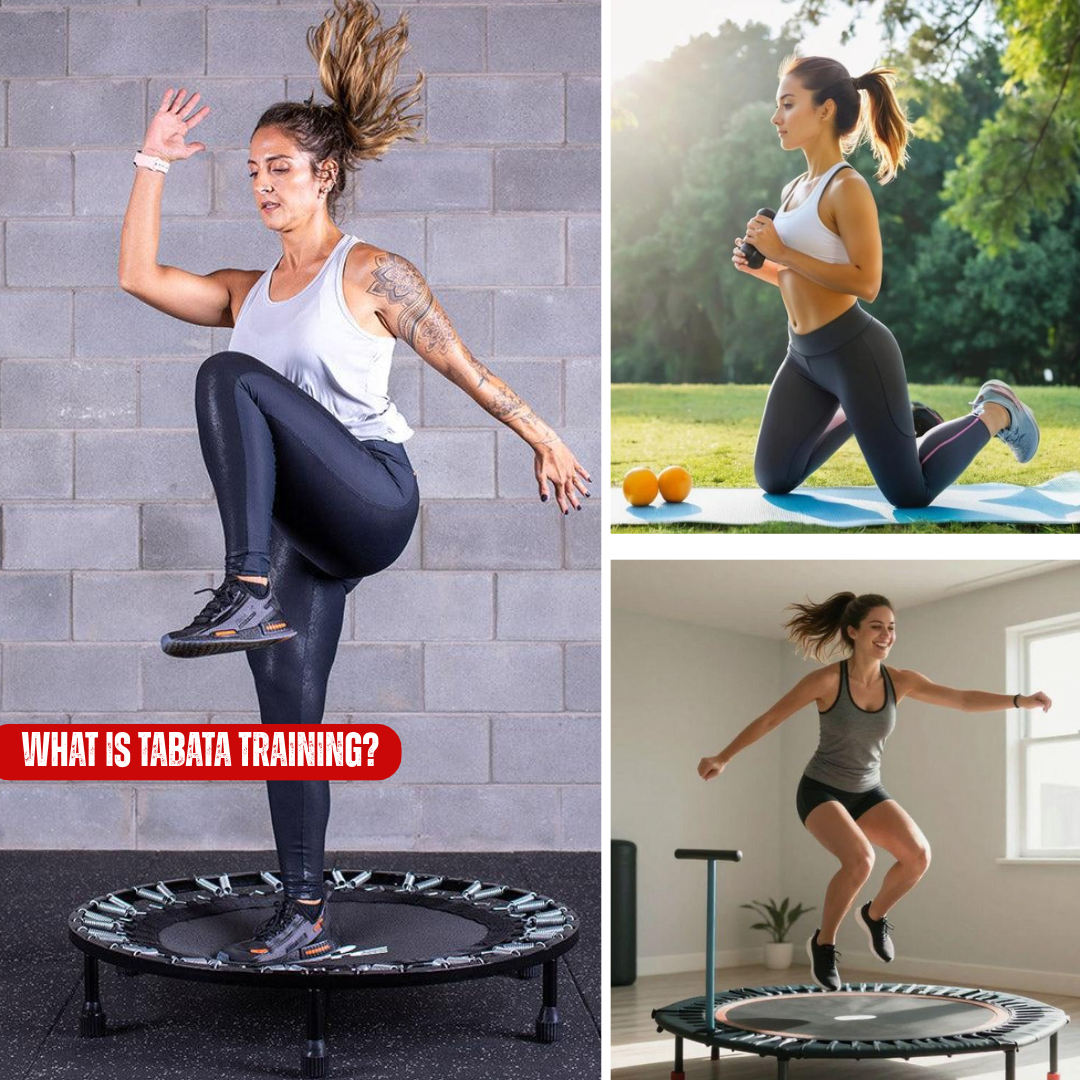
Tabata training is a type of high-intensity interval training (HIIT). You work very hard for 20 seconds, rest for 10 seconds, and repeat this eight times. That makes one four-minute round.
The name comes from Dr Izumi Tabata, a Japanese researcher. His 1996 study used a stationary bike and all-out effort. This is why Tabata workouts have a reputation for being tough.
Tabata Workout Meaning: Understanding the 20/10 Rule
The “20/10 rule” is the heart of the method. Twenty seconds is the work interval, and ten seconds is the rest interval. Many “Tabata” videos online use the same timing but a lower effort. That’s fine for beginners, but it isn’t the original protocol.
How Is Tabata Different From a Regular HIIT Workout?
HIIT is the wider family of interval training, and it can use many timings, such as 40 seconds on and 20 off. Tabata is one specific format within it, with 20 seconds on and 10 off. The short rests make it feel demanding, so beginners should focus on safe technique before increasing intensity.
How Does It Work?
- Warm up first: Spend 5 to 10 minutes on easy marching and gentle mobility work.
- Work for 20 seconds: Do one exercise, such as squats or fast marching, at a hard effort that suits your level.
- Rest for 10 seconds: Stop, breathe and get ready for the next round.
- Repeat eight times: Eight rounds of 20 seconds on and 10 seconds off take four minutes.
- Raise your heart rate: The short bursts push your heart and lungs, which builds cardiovascular fitness over time.
- Use your muscles: Depending on the exercise, it works your legs, glutes, core and upper body.
- Cool down: Finish with 5 minutes of slow movement and gentle stretching.
- Start gently if you’re new: Use shorter work intervals and longer rests until you feel confident.
How Do Tabata Workouts Support Belly Fat Loss?
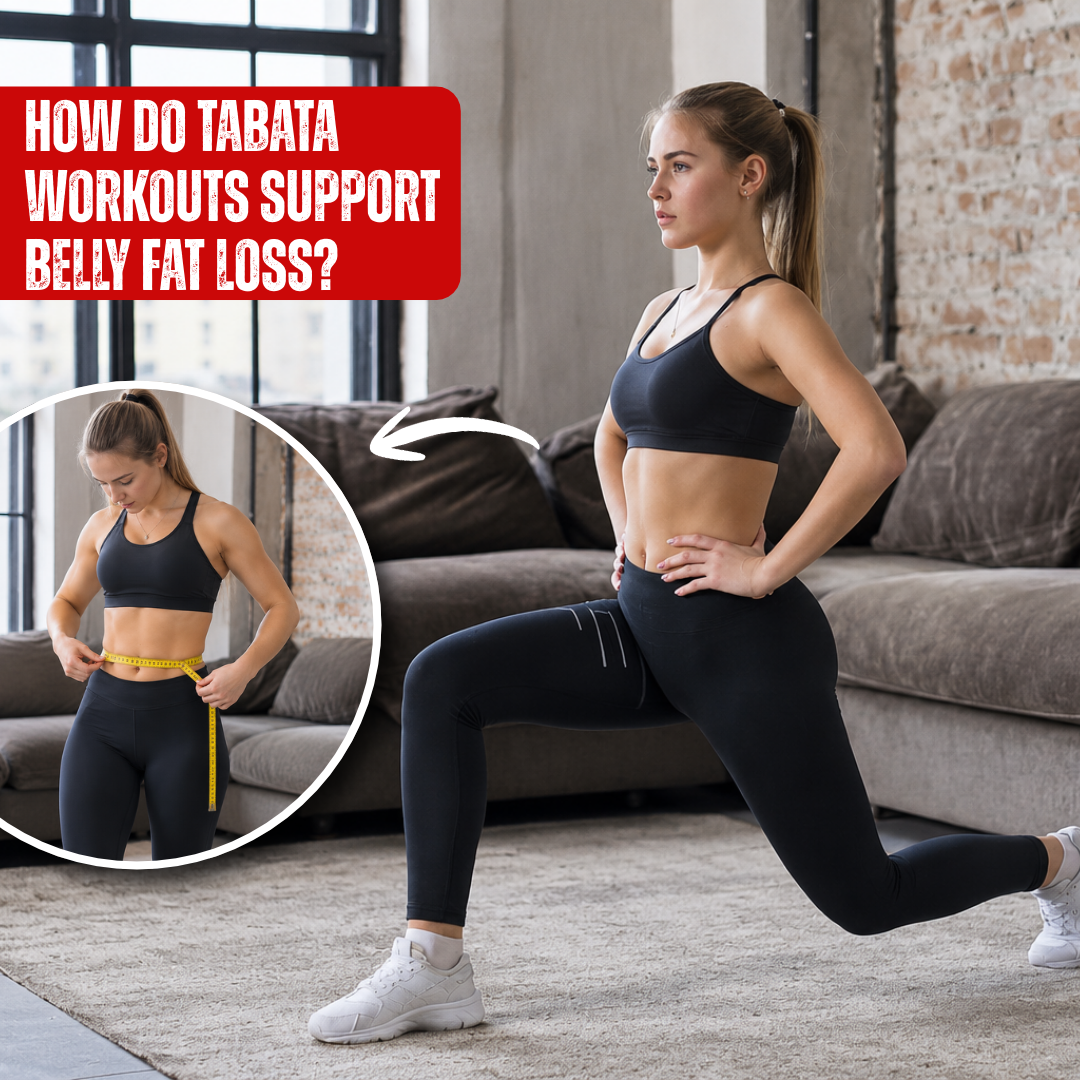
Tabata workouts can support belly-fat loss by increasing energy use and improving fitness. However, they can’t target belly fat directly. Lasting change depends on regular activity, balanced nutrition and consistency over time.
Can Four Minutes of Exercise Really Make a Difference?
Short, hard efforts ask a lot of your body. Your heart rate climbs, and your muscles work quickly. That raises your energy use during the session and builds cardiovascular fitness over time.
Your results will also depend on your effort, your starting fitness, your wider activity and what you eat. So I won’t promise a number of calories or pounds. Anyone who does is guessing.
Why You Cannot Target Belly Fat Alone
Here’s the myth that catches many of us out. Hundreds of sit-ups will strengthen your stomach muscles. They won’t burn the fat that sits over them.
Your body decides where fat comes off, and genetics play a big part. Research on “spot reduction” doesn’t support the idea that you can choose the area. The helpful news is that overall fat loss can reduce your waist over time.
What Helps Tabata Support Long-Term Fat Loss?
A few habits make the biggest difference:
- Regular sessions: Steady effort beats the occasional all-out day.
- Balanced meals: Sensible portions and plenty of whole foods help.
- Everyday movement: Brisk walks and taking the stairs all count.
- Sleep and recovery: Tired bodies struggle to train well.
Tabata is one useful tool in that mix. It isn’t the whole toolbox.
What Is Tabata Training Good for Besides Fat Loss?
Fat loss isn’t the only reason to try it. Here’s what else a good interval session offers.
- Cardiovascular Fitness and Stamina: Intervals challenge your heart and lungs. Over weeks, stairs feel easier, and you recover faster after a hurry for the bus. That’s a real, everyday win.
- Muscular Endurance and Full-Body Movement: The exercises you choose decide what works. Squats use your legs and glutes. Marching with a tall posture engages your core. Add arm movements, and your upper body joins in too. It’s a lot of work in a small space.
- Short Sessions That Fit Around Everyday Life: Between work, family and everything else, time is tight. Tabata fits neatly into a gap.
“Four minutes” means one interval set, not the whole session. You still need a warm-up, some recovery and a cool-down. Allow 15 to 20 minutes in total.

How to Start Tabata Workouts for Beginners at Home
You don’t need a spare room or fancy kit. You need a plan that feels manageable. Start gently and build from there.
What Essential Gear Is Helpful for Home Tabata Sessions?
Keep it simple. These basics are enough:
- Comfortable clothes you can move in
- Supportive trainers, where the exercise suits them
- A timer or interval-timer app on your phone
- A clear, non-slip space with room to move
- Water nearby and a mat for floor exercises
Can You Use a Mini Trampoline for a Tabata Workout?
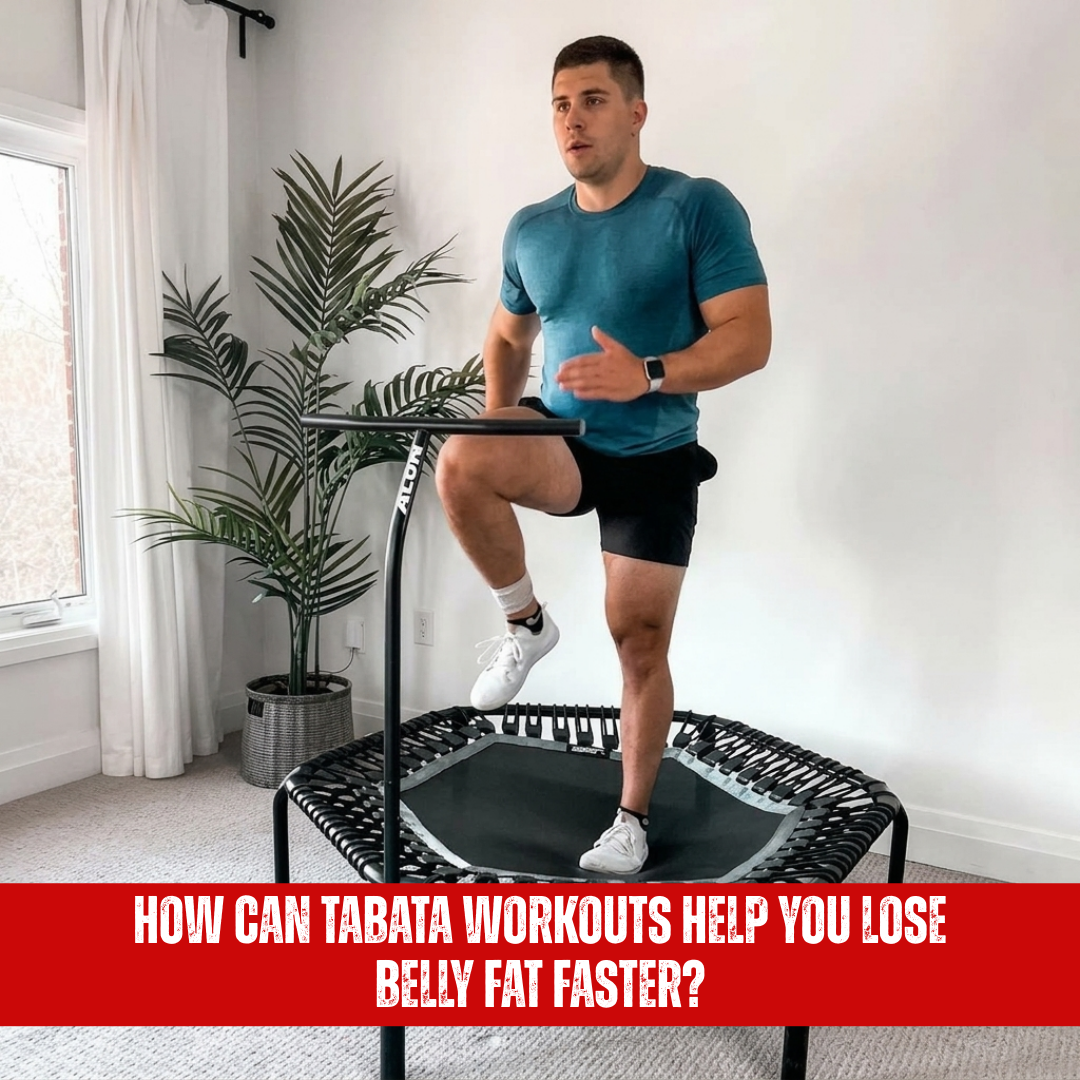
You can, and it’s optional. Controlled bouncing, marching and gentle jogging on the spot can all add variety. A fitness trampoline is something to consider, not something you must buy.
One caution. Bouncing on a trampoline isn’t automatically the same as the original Tabata protocol. Start with small, controlled movements. Follow the manufacturer’s safety guidance. Leave out risky jumps and tricks.
Recommended Tabata Workout Structure for Complete Beginners
This is a modified beginner session, not the original protocol. It’s built to be kind to you.
Time | Stage | What to Do |
5–10 minutes | Warm-up | Easy marching, gentle mobility and comfortable bodyweight moves. |
2–4 minutes | Introductory intervals | 10 seconds of gentle marching or controlled bouncing, then 20 seconds of easy recovery. Repeat four to eight times. |
5 minutes | Cool-down | Slow down gradually, breathe comfortably and finish with gentle mobility work. |
Adjust the session to suit you. Stop if you feel unwell, dizzy or have chest pain. If you have health concerns, speak to your GP before starting vigorous exercise.
How to Progress Without Doing Too Much
Change one thing at a time. You might lengthen the work interval a little, move with better control or add a second session in the week. Don’t rush to maximum effort. Fitness builds best when you can keep turning up.
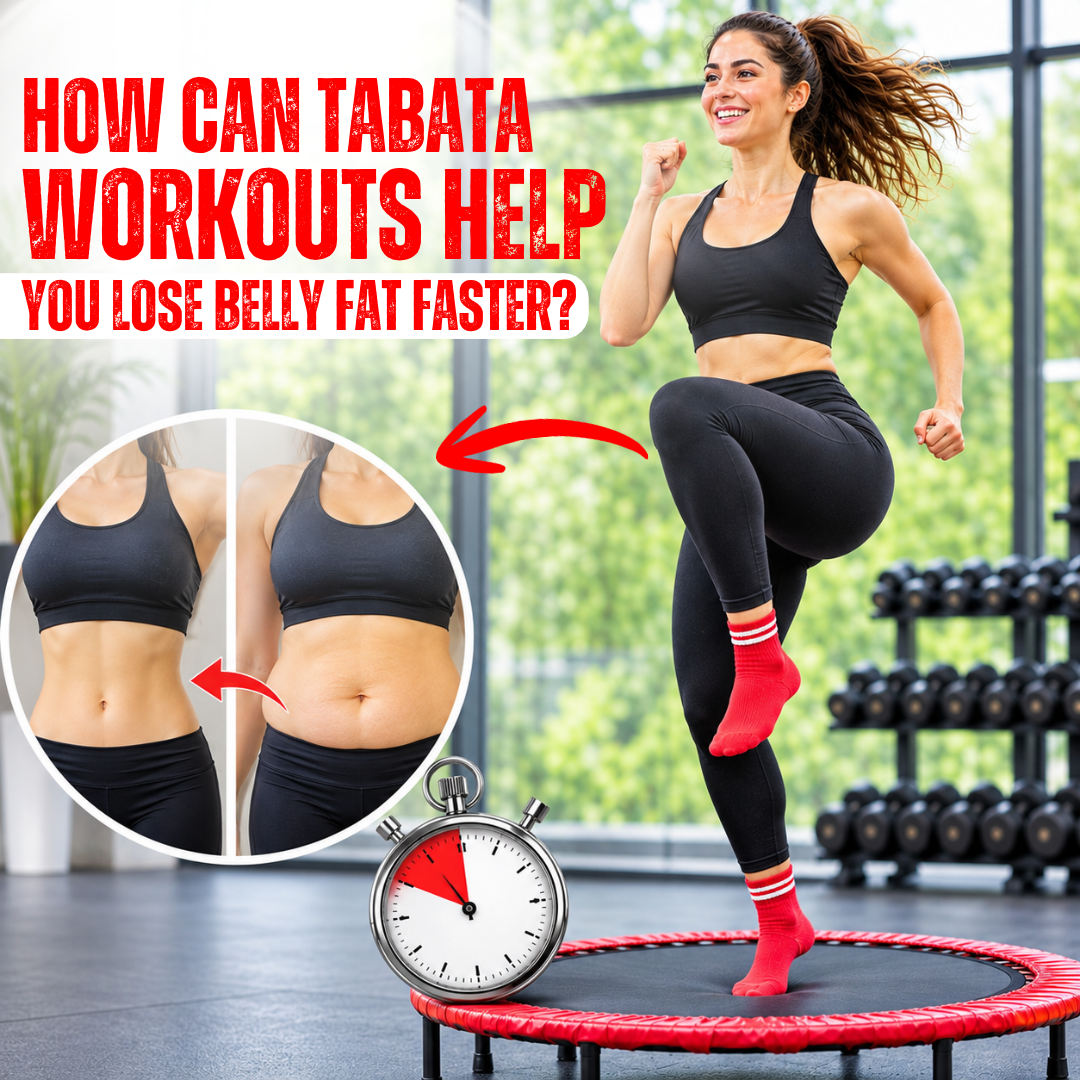
Can a Mini-Trampoline Tabata Workout Help With Belly Fat?
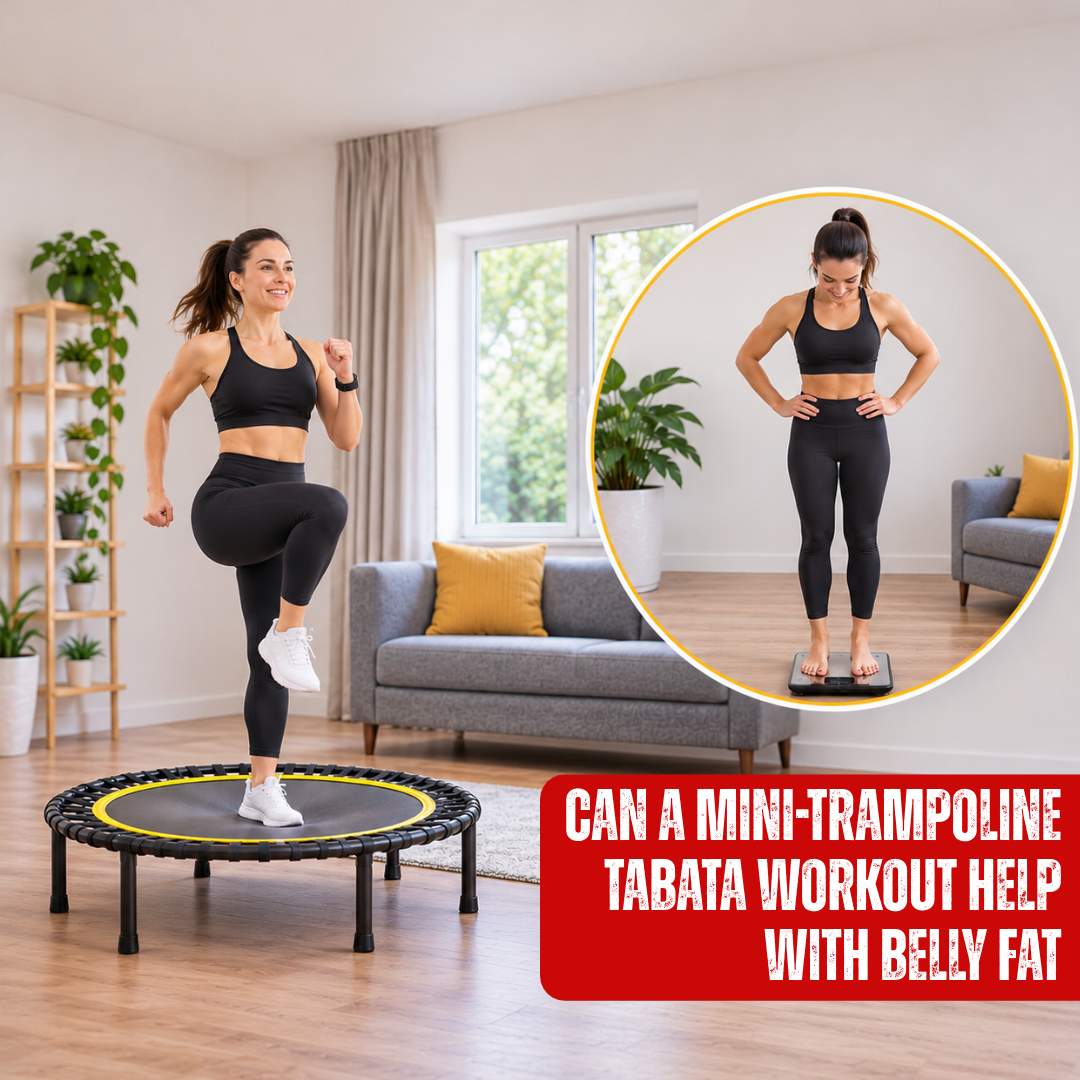
It can help in the same way any enjoyable exercise helps. It gets you moving and raises your heart rate. It can’t burn fat from your tummy alone. What it can do is make a routine feel less like a chore.
Why Rebounding Can Add Variety to Home Fitness
Rebounding means bouncing on a mini trampoline. It’s convenient, it’s at home, and it breaks up the usual squats-and-lunges routine.
Intensity depends on the movement, the time and your own fitness. A gentle bounce is easy. A fast jog is harder. You choose the level.
Simple Trampoline Movements to Try
- Gentle, controlled bouncing
- Marching on the spot
- Low-impact jogging-style movements, if comfortable and suitable for you
Keep Safety Ahead of Intensity
Check what your trampoline is designed for. Look at the weight limit, its condition and the space around it. A garden trampoline built for recreational jumping isn’t automatically right for fast fitness intervals. A fitness trampoline is made with exercise in mind.
Follow the manufacturer’s guidance. And never give up control just to squeeze in an extra repetition.
A Small Change That Makes a Routine Easier to Maintain
The best workout is the one you’ll repeat. If bouncing makes you smile, you’ll probably come back to it. If you’d like to explore options, Supertramp’s fitness-trampoline range is one place to look.