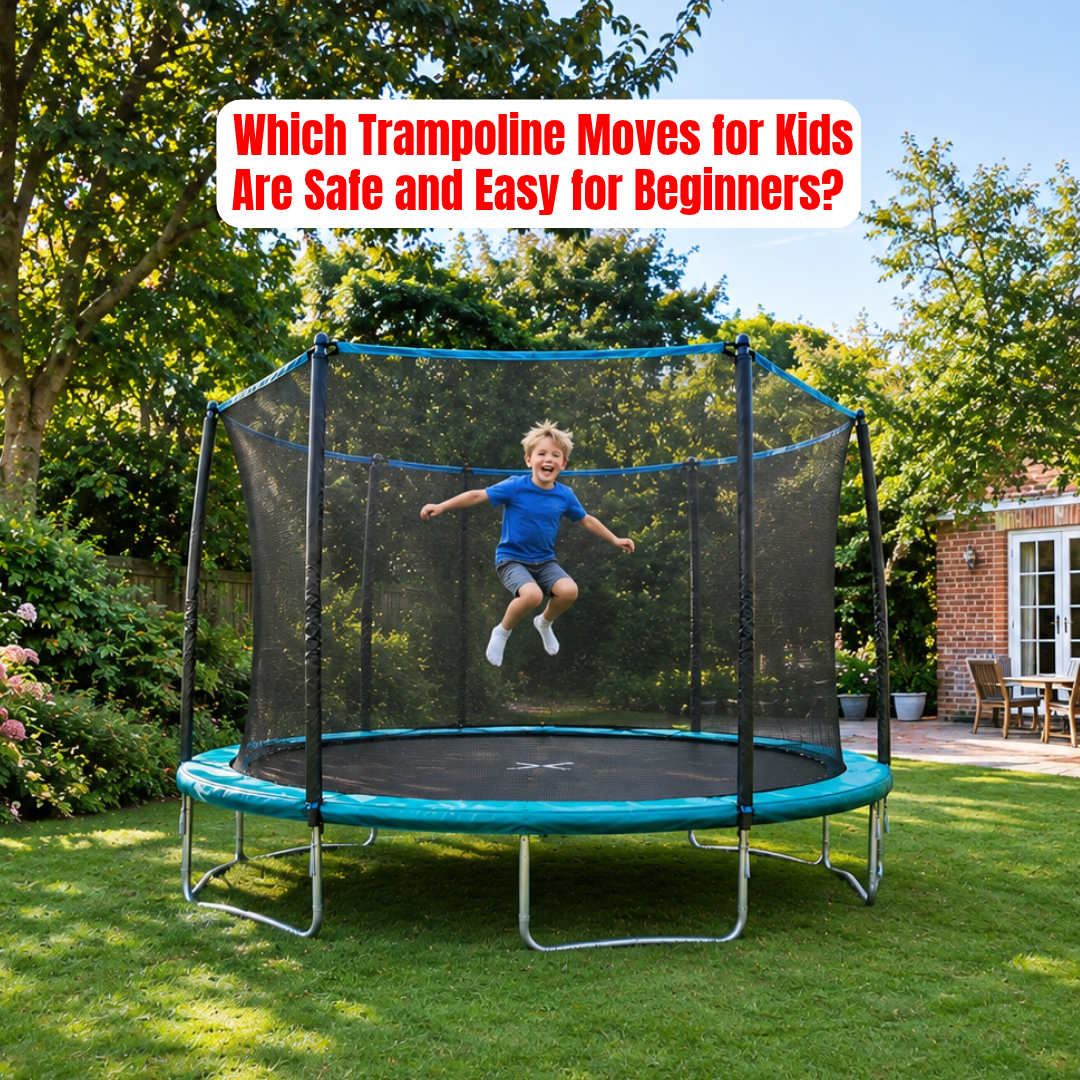
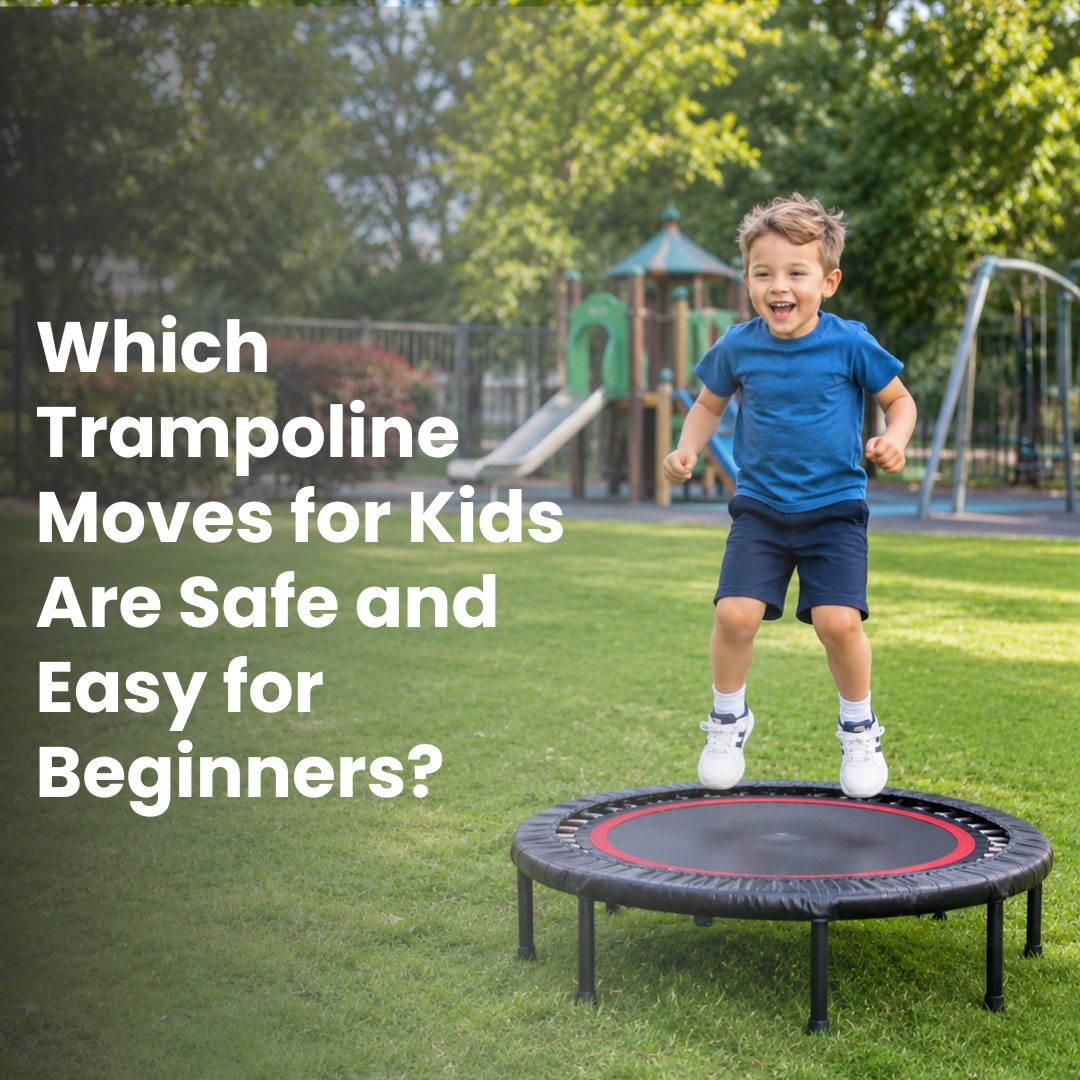
Trampoline moves for kids are the easiest way to turn a bored bounce into a game your child actually wants to master. They’re also a far better answer than “no” when your child asks to try the flip they saw online.
You probably know how it goes. The new garden trampoline is a huge hit for the first week. By week three, your child is bouncing in the same spot and looking for something bigger. That’s when copying risky tricks starts to look tempting.

Here’s the good news: children don’t need to go higher to have more fun. They need something to aim for. This guide gives you 15 simple moves, from gentle first bounces to balance and coordination challenges. You’ll also find the one skill most kids skip, and it’s the one that keeps them safest.
What Are the Best Beginner Trampoline Moves for Kids to Learn Safely?
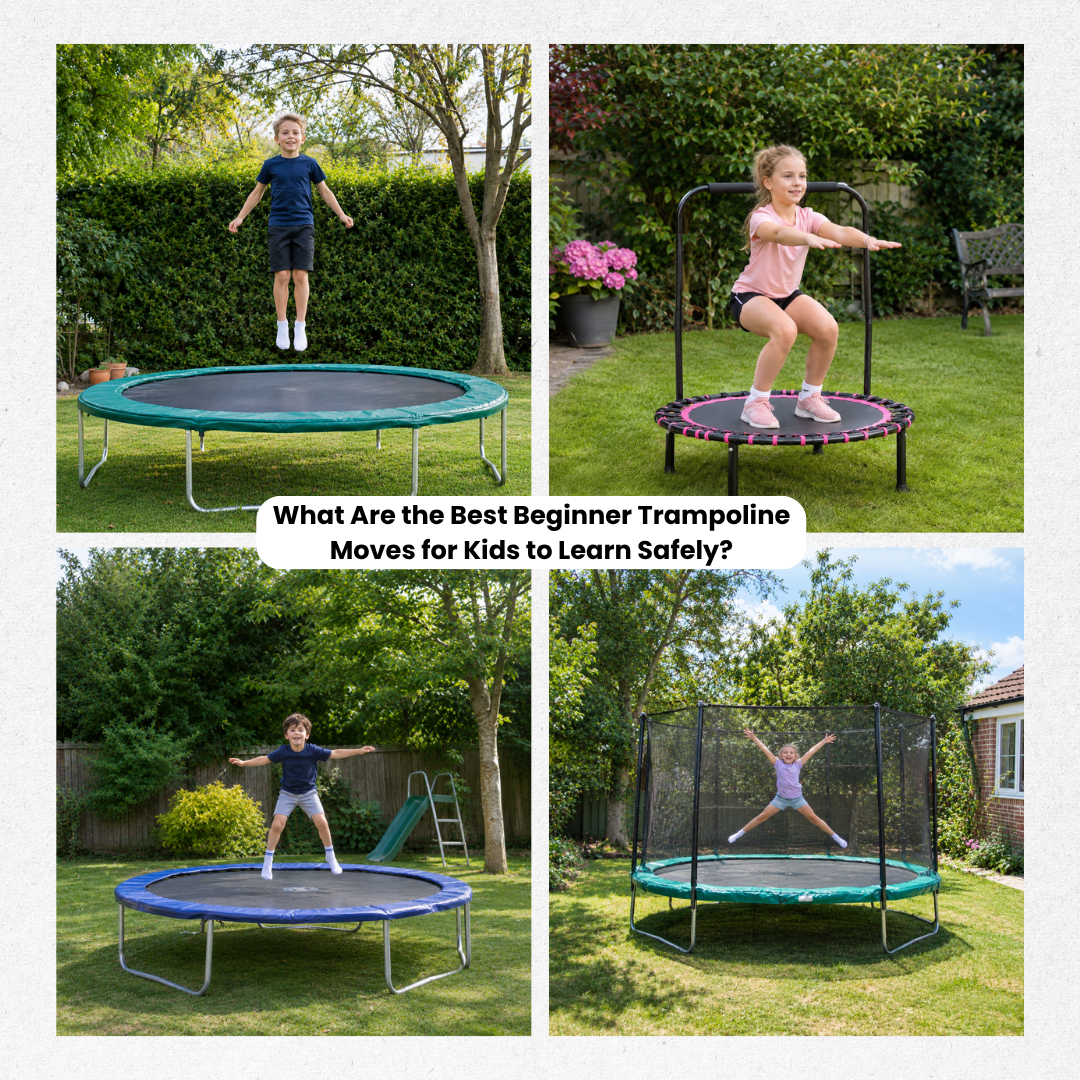
The best beginner above-ground trampoline moves for kids are low and controlled. They help children practise balance, body control and stable landings before anything more complicated.
Think of these four as the foundation. Everything else builds on them.
1. The Basic Straight Bounce
Stand in the centre of the mat with feet about hip-width apart. Bounce gently, keeping the body upright, and the arms relaxed at the sides.
Tell your child that small and steady beats big and unsteady. They should aim to land in the same spot each time. If they drift towards the edge, pause and reset.
2. The Bounce and Freeze
Ask your child to do one small bounce, then stand still on the mat. Wait a second or two before they go again.
This move teaches the skill most children skip: stopping. A child who can stop on command is much easier to keep safe. You can make it a game by calling “freeze” at random moments.
3. The Gentle Knee Bend
Standing still, your child bends their knees slightly, then straightens up. After that, they can add a tiny bounce at the top.
It’s a simple way to build body awareness. Children begin to feel how the mat responds to their weight. Keep the bends small and smooth, not deep.
4. The Star-Shaped Movement
Start on the mat while standing. Your child opens their arms and legs wide into a star shape, then brings them back together.
Once they can bounce with control, they might try a small, low star jump. Only add this if the basic bounce already looks steady. There’s no rush, and no medal for going early.
Trampoline Moves for Beginners Kids to Practise at Home
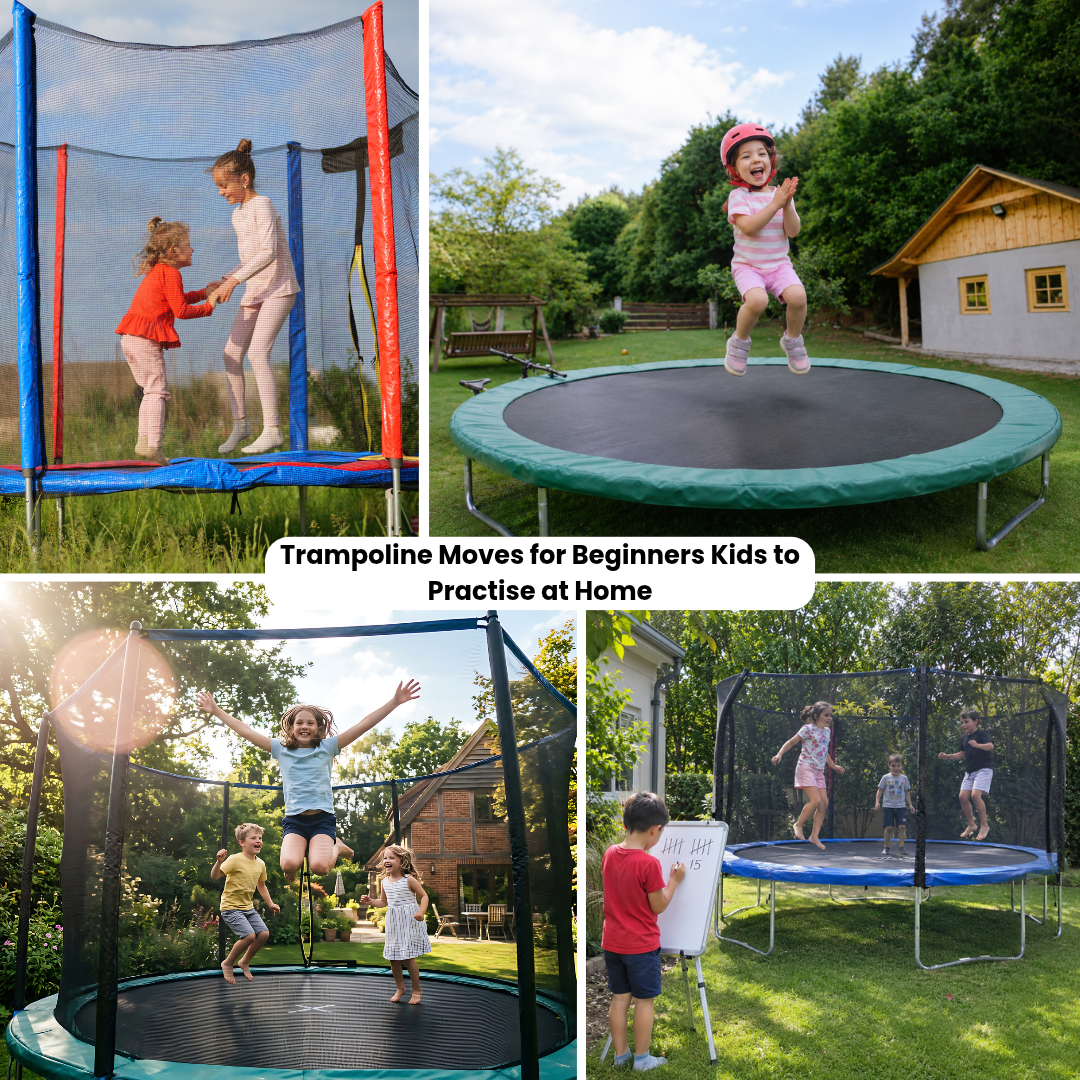
Once the basics feel comfortable, add some play. These easy in-ground trampoline games for kids work well for first-time users because each one asks for focus and control rather than height.
The key rule: introduce one activity at a time. Let your child enjoy it before you move on.
5. The Follow-the-Leader Bounce
You stand beside the rectangular trampoline and show one simple movement, such as a knee bend or a star shape. Your child copies it, then waits for the next instruction.
Keep your movements small and clear. It turns practice into a game, and children who feel like they’re playing tend to stay more focused.
6. The Count-and-Bounce Challenge
Pick a short number, such as three. Your child counts out loud while doing three low, controlled bounces, then stops and settles.
Counting gives the bounces a clear beginning and end. It also helps younger children slow down. You can raise the number gradually, but keep the bounces small.
7. The Bounce-and-Clap Challenge
Start with clapping while standing still. Then try a clap between turns, once your child has stopped bouncing.
Avoid clapping during a wobbly jump. Hands that leave the body can throw you off balance. The aim is rhythm and coordination, not a clever trick.
8. The Movement Memory Game
You show a short sequence, such as knee bend, star shape, freeze. Your child watches, then repeats it back.
Start with two movements and build up only if they’re enjoying it. This one is great for children who like puzzles. It also quietly practises listening, which helps with safety.
How to Improve Kids’ Balance for Trampoline Tricks at Home
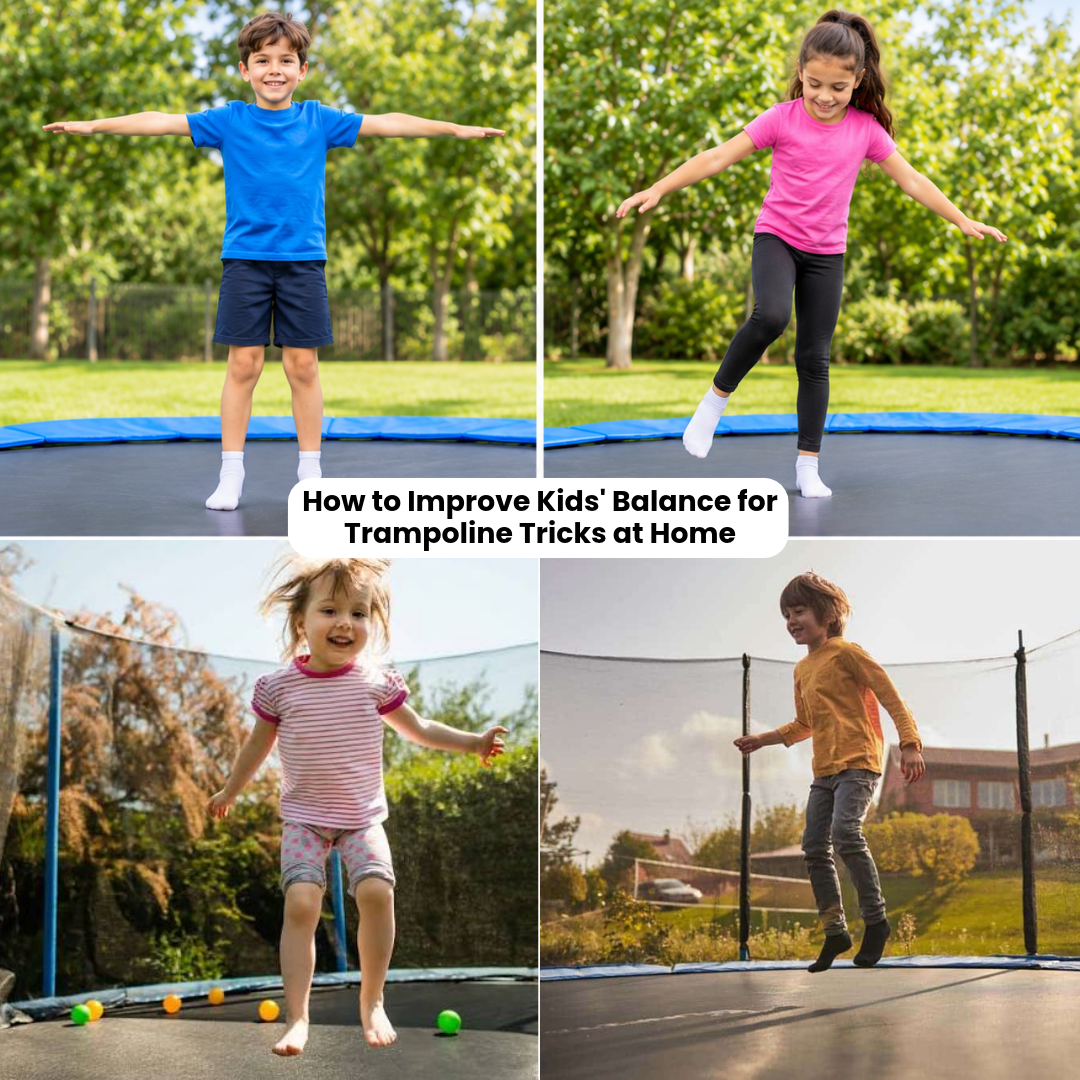
Balance doesn’t arrive overnight. It grows through repetition, body awareness and patience. These four challenges are gentle trampoline balance exercises for kids that you can slot into any session.
9. The Still-Standing Challenge
Your child stands on the mat while it is not moving and holds a steady position for a few seconds. Count together, then celebrate.
It sounds too easy, but a soft mat makes balance harder than it looks. Add a game: can they stay still while you say a silly story?
10. The Gentle Weight-Shift Challenge
While standing, your child slowly shifts their weight from one foot to the other. No hopping, no big movements.
This helps them feel how the mat reacts. Keep it within their comfort level. If they wobble or look unsure, go back to the still-standing challenge.
11. The Pause-and-Reset Challenge
Give your child two simple movements, with a pause between each. After every move, they stop, stand tall and wait for the next instruction.
This builds a habit that matters far beyond the trampoline. Calm resets help children stay in control when excitement rises.
12. The Rhythm-and-Repeat Challenge
Choose a steady verbal rhythm, such as “bounce, bounce, stop”. Your child follows the beat with small, even bounces.
The goal is consistency, not height. If you hear the rhythm slipping, bring the pace down. Smooth and steady wins.
Easiest Trampoline Tricks for New Users
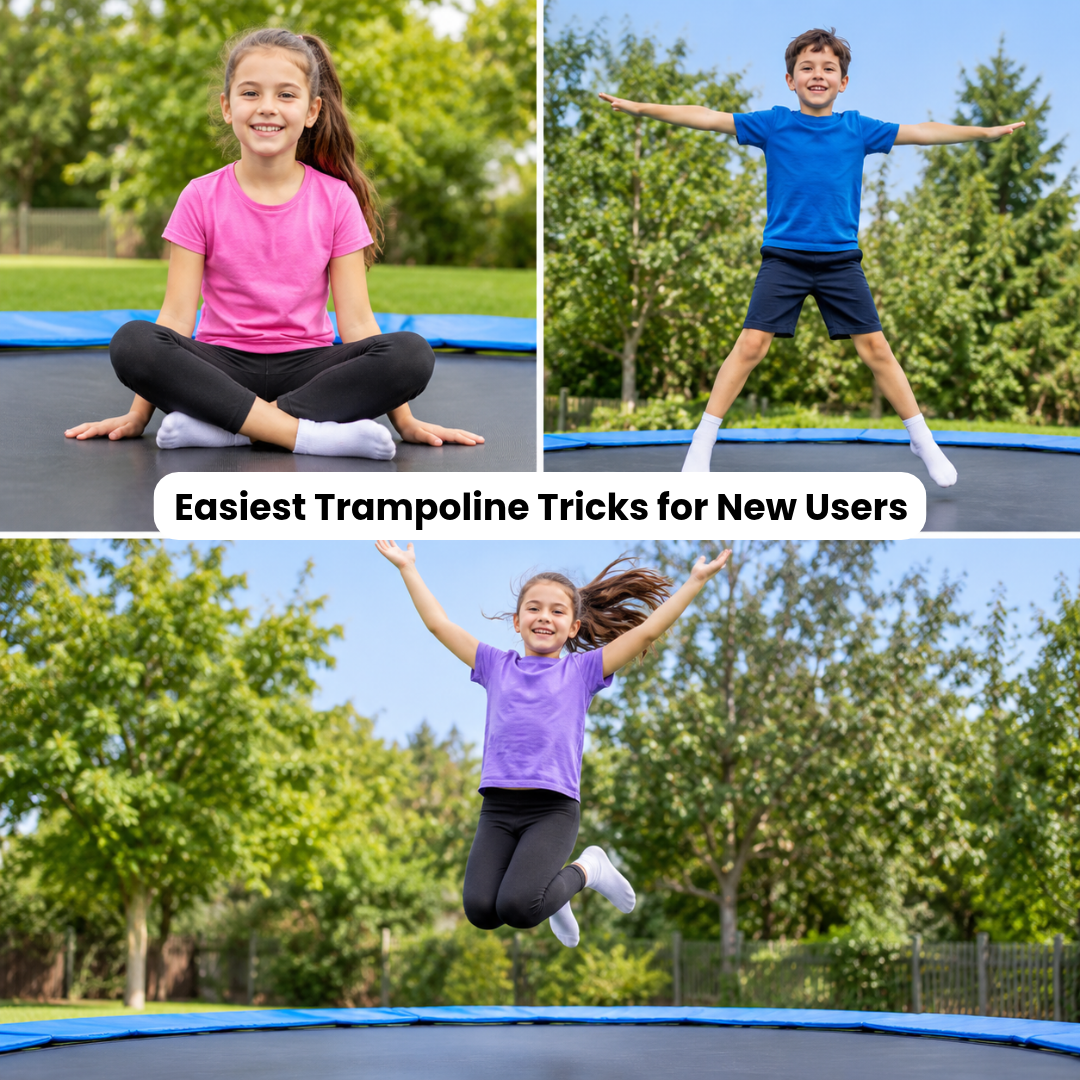
First, a useful distinction. Fun movement games are not the same as gymnastics skills. Easy trampoline tricks for kids at home should stay simple, controlled and low. Anything technical needs proper coaching.
13. The Seated Balance Activity
With the mat still, your child sits steadily with adult guidance. They hold the position for a few seconds, then stand up carefully.
This is a balance activity only. Please don’t turn it into a seat drop or bounce from sitting. The mat is for stillness here.
14. The Copy-the-Shape Challenge
Call out simple shapes, such as tall, wide or small, and your child copies them with their arms and body while standing.
It’s playful, and it builds body awareness without risky mid-air positions. Children love inventing their own shapes, so let them take a turn at leading.
15. The Mini Movement Routine
Combine two or three moves your child already knows, with a pause between each. For example: straight bounce, freeze, star shape, freeze.
Keep it within what they’ve shown they can do. Children feel proud of a neat routine, and it gives them something to show grandparents at the weekend.
When Should Kids Move Beyond Beginner Trampoline Skills?
Readiness depends on control, maturity and good instruction, not simply age or enthusiasm. A child who is keen is not necessarily ready.
Flips, somersaults and other advanced skills should never be taught through casual home practice. If your child wants to progress, look for a qualified trampoline gymnastics coach at a local club. Recreational trampolining and structured gymnastics are different activities with different levels of support.

How to Safely Learn Basic Trampoline Jumps Step by Step
Moves are more fun when there’s a plan behind them. Here’s a simple, step-by-step way to practise basic trampoline jumps without turning it into a lesson.
Step 1: Start With Balance and Body Control
Before any jumping on the Orbit Pro 14ft Trampoline, let your child stand steadily on the mat. Ask them to make small movements, such as bending the knees or lifting their arms, while staying upright.
If this feels wobbly, spend more time here. Strong foundations make everything after it safer.
Step 2: Practise One Movement at a Time
Choose a single move and stick with it for the session. Short, focused practice beats a long, chaotic one.
It’s tempting to mix several new moves together. Resist that. Children learn best when they can repeat one thing until it feels easy.
Step 3: Focus on Controlled Landings
A good landing is a stable one. After each bounce, your child should be able to settle on their feet with knees slightly soft, ready to stop or go again.
Tell them not to chase the next bounce straight away. A calm landing is a skill in its own right.
What Should Parents Watch for During Practice?
Keep an eye out for these signs, and stop the session if you see them:
- Losing balance repeatedly
- Tiredness, slower reactions or sloppy movements
- Fear or reluctance
- Not following instructions
- Other children or pets near the mat
What Safety Rules Should Parents Follow Before Kids Start Jumping?
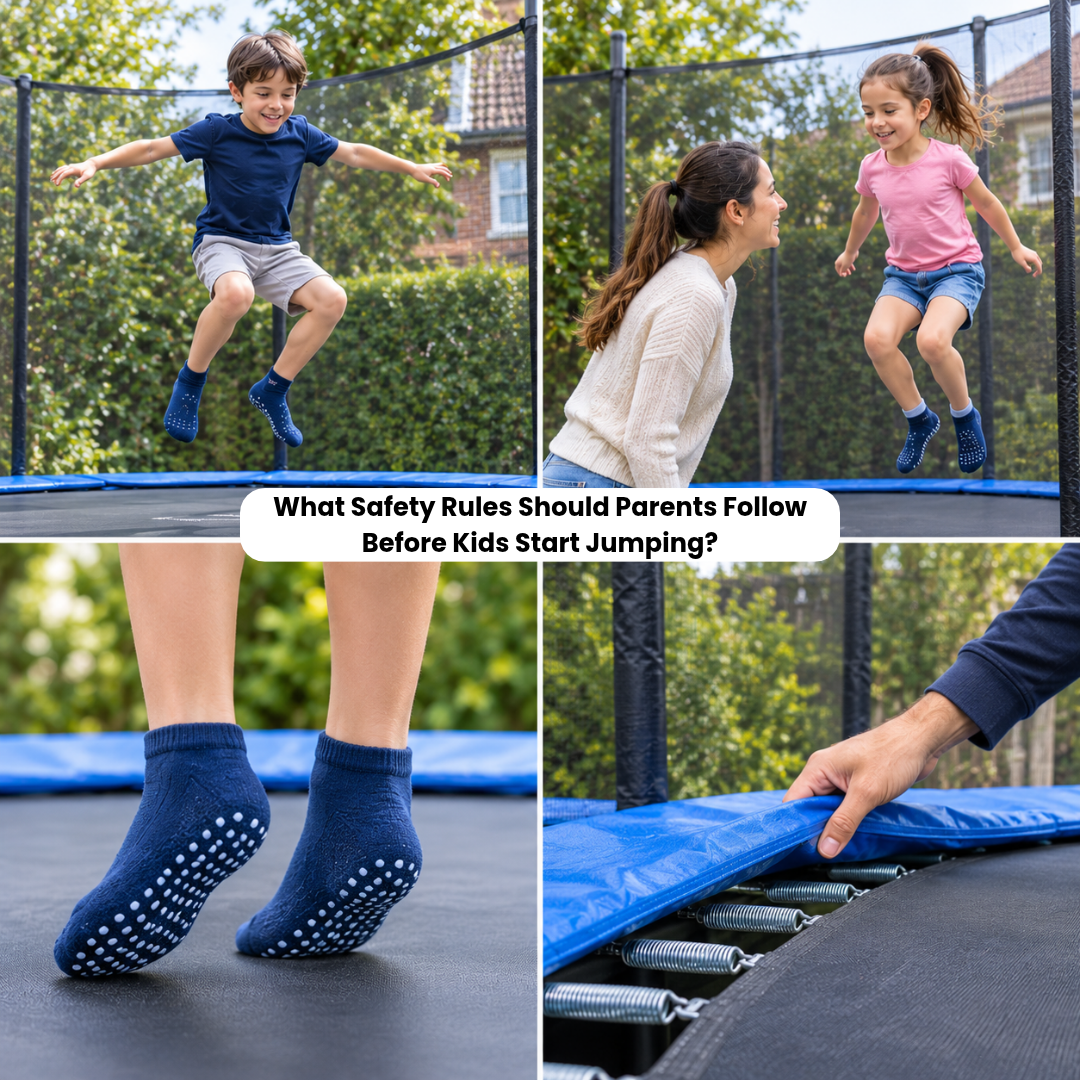
Safety isn’t the boring part of trampolining. It’s what keeps the fun going. Always follow the manufacturer’s instructions, and treat these as a starting point:
- Allow only one child on the trampoline at a time.
- Supervise closely throughout the session.
- Use grip socks for the trampoline for protection and better grip.
- Check the frame, mat, springs, padding and enclosure before each use.
- Follow the manufacturer’s age, weight and usage guidance.
- Keep toys, pets and other obstacles away from the jumping area.
- Leave plenty of clear space around and above the trampoline.
- Stop if the trampoline is wet, slippery or damaged.
- Never allow rough play, flips, somersaults or jumping off.
Remove jewellery and check pockets too, since small items can cause trouble on the mat.
Why Is a Safety Enclosure Important?
A well-fitted safety enclosure can help reduce the chance of a child falling off the trampoline. It cannot remove every risk, and it doesn’t replace supervision. Frame padding is worth checking too, as it covers the springs and hard edges.
Supertramp offers garden trampolines with enclosures and padding, and the same rule applies to any model: check that every part is fitted correctly and in good condition.
Make Every Bounce a Chance to Learn Something New
Trampoline moves for kids don’t need to be flashy to be worth doing. A calm bounce, a neat freeze and a proud little routine give children plenty to work towards.
Keep three things in mind. Start simple and move at your child’s pace. Value control, supervision and good equipment over impressive tricks. And end sessions while they’re still enjoying them.
If you’re choosing a trampoline or checking whether your current one still suits your family, take a look at Supertramp’s range of garden trampolines and safety accessories. Compare the size, enclosure and clearance with your garden and the manufacturer’s recommendations. Then you can focus on the fun part.