

It’s 11 pm. You’ve closed the laptop. You’ve brushed your teeth. You’ve jumped into bed. But your brain hasn’t got the message. The to-do list keeps scrolling. Tomorrow’s meeting replays in your head. Sound familiar? Across the UK, plenty of people lie awake at night, even when they’re exhausted. Not because they’re tired. But because they can’t switch off. This is where exercise before you sleep can help. Not as a magic fix. As a small, clear step. It tells your body it’s time to slow down. This guide covers what sleep efficiency means. It covers which gentle exercises, such as rebounding on a mini trampoline, may help. And it gives you a simple bedtime routine you can stick to.

How Long Should You Exercise Before Going to Sleep?
Ten to fifteen minutes works well for most people. Long enough to feel a shift. Short enough to avoid turning into a full workout.
Leave yourself a little time after, too. Five or ten minutes lets your heart rate settle. It gives your body time to cool down before sleep. Jump straight from exercise into bed, and you might still feel too alert to nod off.
Watch how your body responds over a week or two. Some people can exercise right up until lights out. Others need a bigger gap. There’s no single rule that fits everyone.
Once you’ve found your rhythm, the next question is what kind of movement fits best. And that’s where gentle rebounder work can surprise people.
Can Trampoline and Rebounder Exercises Be Part of a Bedtime Routine?
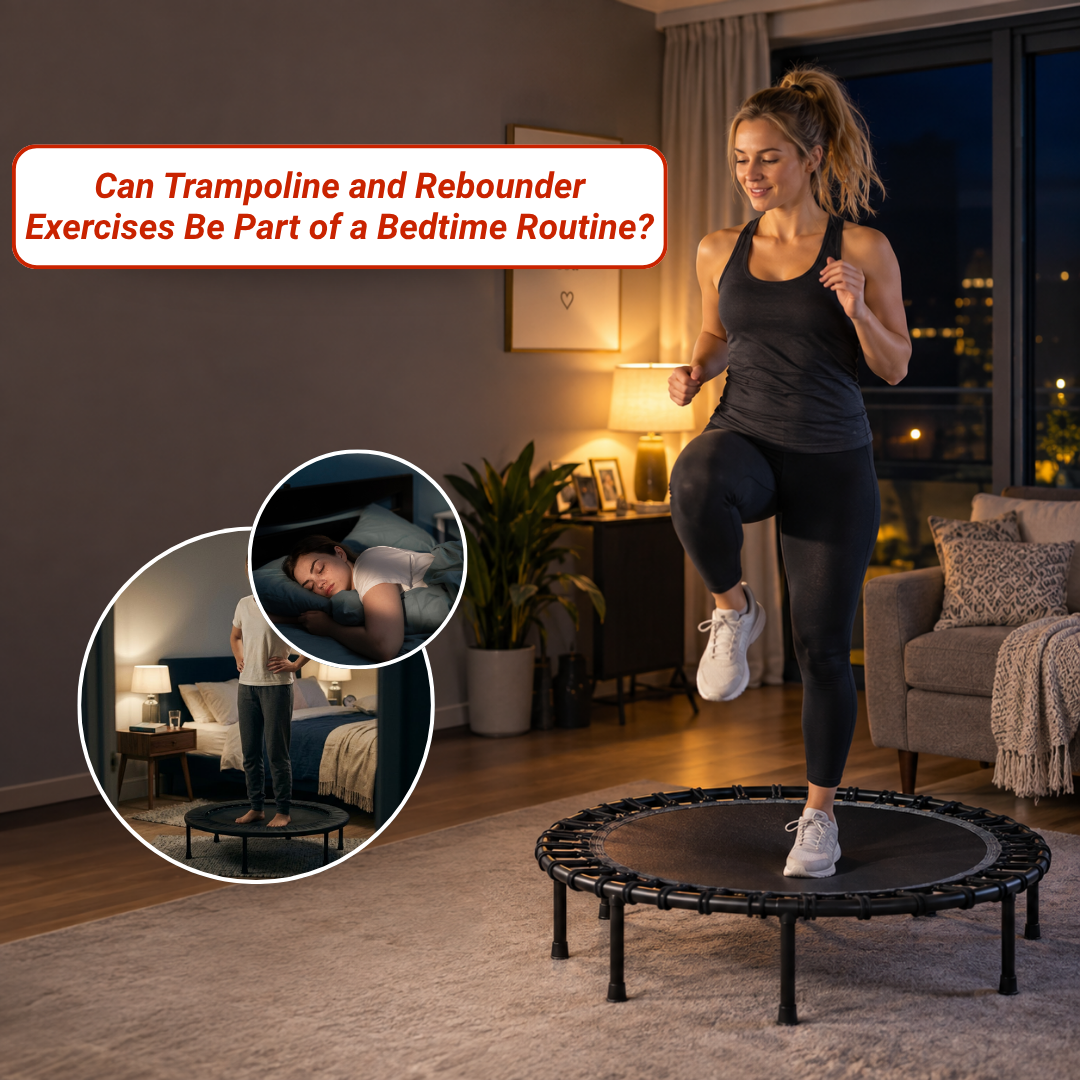
Rebounders are small, springy trampolines built for indoor use. They’ve become popular with people who want movement without the impact of running. Or the noise of a full workout. Used gently, they fit well into an evening routine.
What is a Rebounder and How Does It Work?
A rebounder is a mini trampoline. But it’s built for steady, low bouncing. Not the high jumps you’d see on a garden trampoline. The mat and its springs or bungee cords soak up much of the shock.
Garden trampoline jumping is all about height. Rebounder exercise is the opposite. It’s about control and small, steady moves. That’s why it suits a wind-down session, not a cardio blast.
What Are Some Gentle Rebounder Exercises Before Bed?
A short, calm routine might include:
- Slow, steady bouncing with barely any height
- Gentle marching on the spot
- Light side-to-side steps
- Simple balance holds, standing still on the mat
- A few minutes of stretching once you step off
None of this should leave you out of breath. If it does, you’ve moved from gentle into something more intense.
How Can You Keep Rebounder Exercise Low Impact?
Keep your feet close to the mat. Don’t launch upward. Small moves do far more for calm than big bounces ever will. Posture matters too. Keep your shoulders relaxed. Engage your core gently. Look forward, not down at your feet.
Beginners should start slowly. It’s tempting to want a “proper workout”. But the point of an evening session is holding back. Not going hard.
Who Should Try a Gentle Rebounder Routine?
Rebounders suit a wide range of people. Anyone who wants an indoor option that skips the trip to the gym. People who prefer short sessions over long ones.
That said, think about your own fitness level first. Check for any joint, balance or health issues too. Healing from an injury? Managing a health issue? Ask your GP or a physio first. Not sure? Ask anyway.
Choosing the right kit is only half the job, though. Using it the right way is what keeps a bedtime habit safe, not risky.
How Can You Use a Rebounder Safely Before Bed?
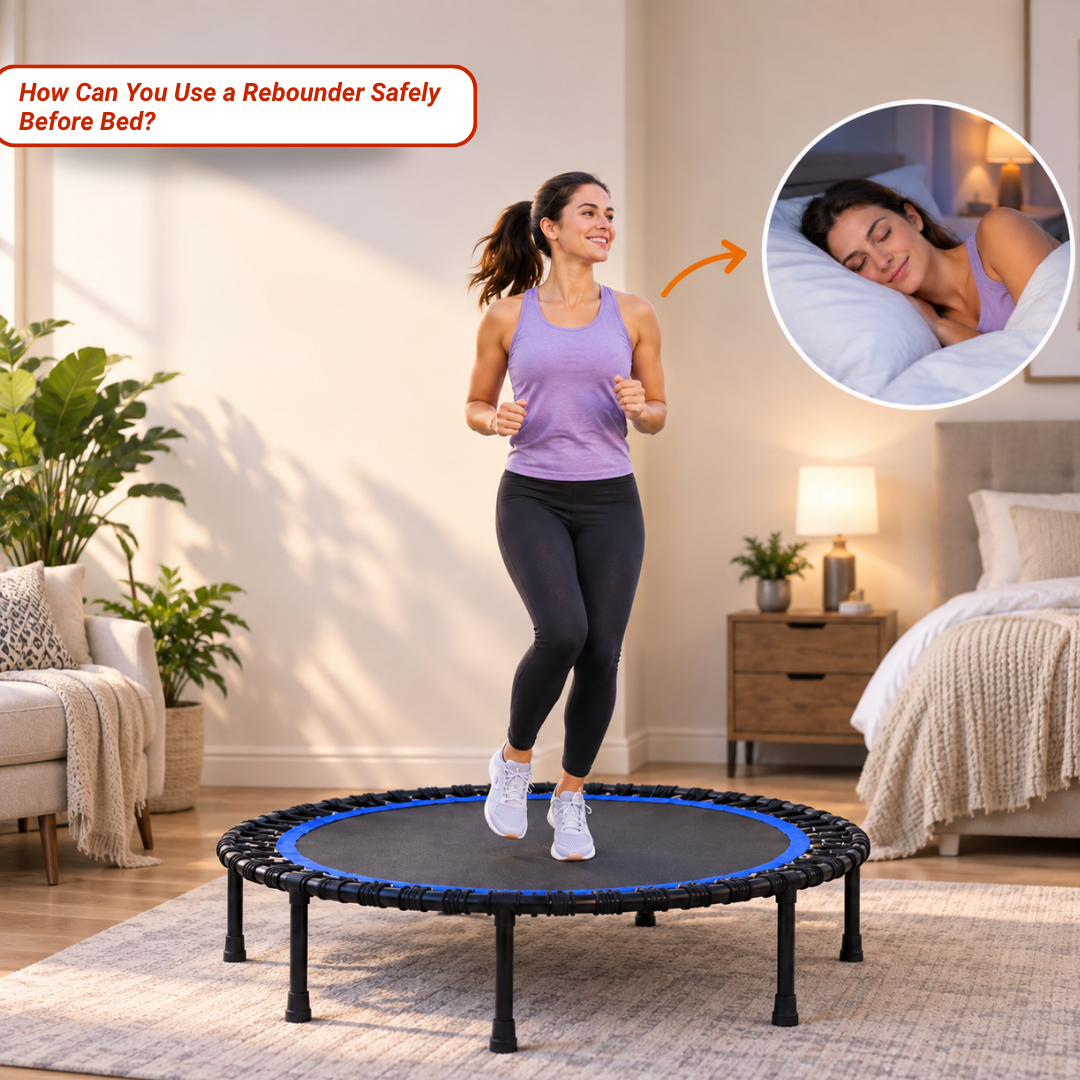
Safety isn’t the fun part of any exercise guide. But it can help stop a calm routine from turning into an unexpected trip to the hospital. A few quick checks go a long way, especially late at night when you’re tired and less alert.
Trampoline Accessories for Safer Exercise
A few extras make a real difference to how safe a rebounder feels to use.
Grip Socks
Made with rubber patches on the sole, trampoline grip socks stop your feet from sliding on the mat mid-bounce. A cheap, simple fix that solves one of the most common causes of a stumble.
A Handlebar
This is the biggest one for beginners. A handlebar gives you something to hold while you find your balance, and it takes a lot of the wobble out of your first few sessions. Once you’re steady on your feet, you can always take it off.

Frame Pads
Frame pads are the padded covers that sit around the edge of the rebounder, over the trampoline springs or bungee cords. Without them, it’s easy to catch a foot or ankle on the metal frame or the springs underneath, especially in low light. A good set of pads covers the whole edge, not just parts of it.
A Quality Trampoline Mat
The trampoline mat is the part that takes all the strain, bounce after bounce. A thin or worn mat loses its bounce and can even tear underfoot. Look for a mat made from tough, tightly woven material, stitched firmly to the frame.
A Storage Cover
Not essential for safety, but it does keep dust and damp off the mat and springs between uses. That helps the whole rebounder last longer.
With the safety basics sorted, it’s time for a routine you can try tonight.
How Can You Build a Relaxing Low-Impact Exercise Routine Before Bed?
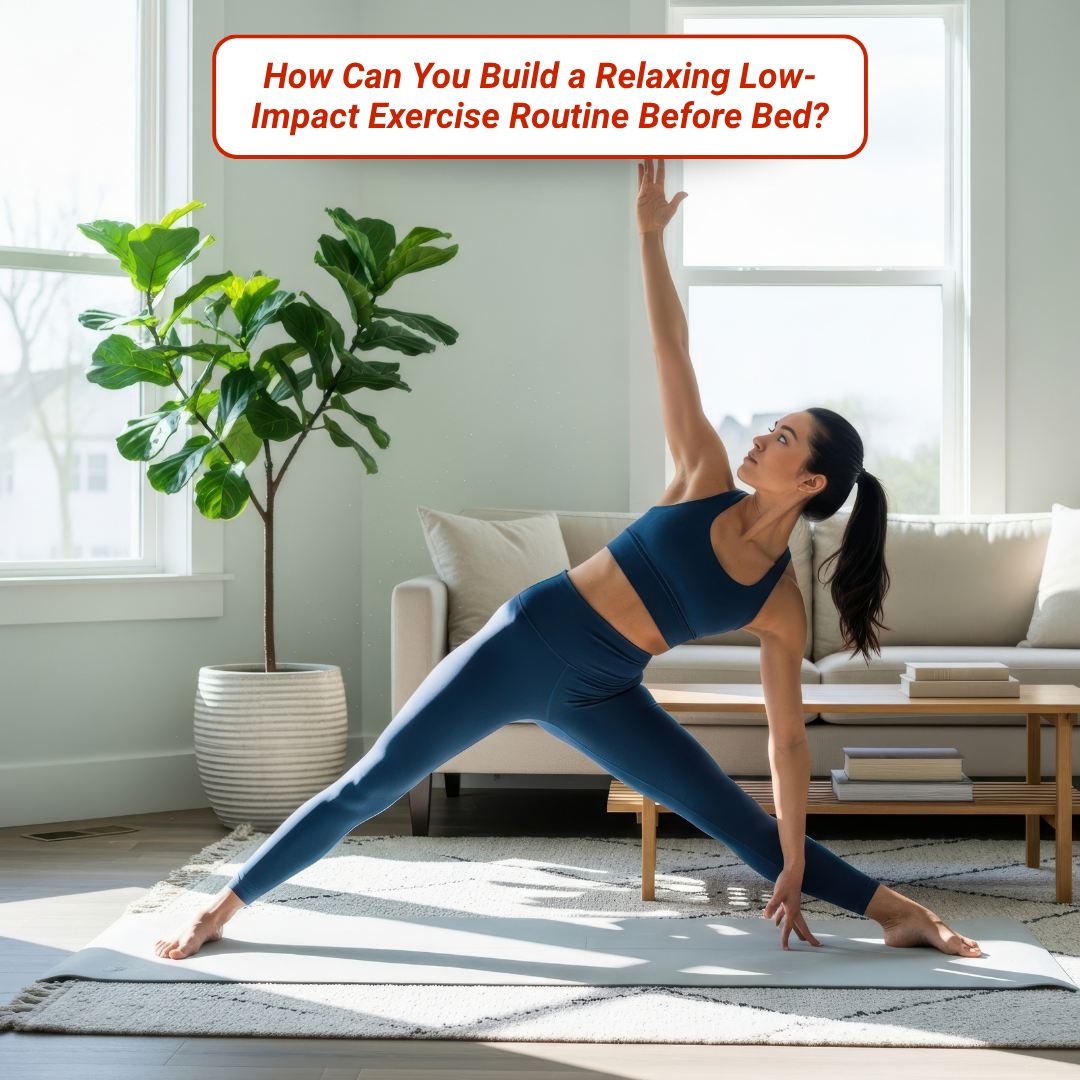
A good bedtime routine doesn’t need to be complex. The simpler it is, the more likely you’ll keep doing it, night after night. And that’s where the real benefit lies.
Start With 5 Minutes of Gentle Movement
Begin with slow walking or gentle marching on the spot. Ease your joints into motion. Add a few moves for your shoulders, hips and ankles. Pair this with slow, steady breathing. This tells your body the pace of the day is dropping.
Add 5–10 Minutes of Low-Impact Exercise
This is where light rebounder movement fits in nicely. Or gentle bodyweight exercises. Or simple mobility work. Keep the effort level easy. You should be able to breathe the whole time easily. Not gasping for air.
Finish With Stretching and Relaxation
Wind down with gentle leg stretches. Add some slow shoulder rolls and neck moves. This releases tension from sitting or screen time. Deep, slow breathing helps bring your heart rate down. Slowly ease off until you feel fully settled.
What Should You Avoid Right Before Sleeping?
Skip Intense Workouts. Skip Aggressive Jumping. Avoid Anything That Leaves You Overheated or Buzzing With Adrenaline. Resist the Urge to Check Your Phone Straight After, Too. Bright screens can undo much of the calm you’ve just created.
How Can You Tell if Your Bedtime Exercise Routine Is Working?
Give it a fair trial. Try it for a couple of weeks, not just one night. Notice if you fall asleep faster. Notice if you wake less at night. Notice how rested you feel each morning. If something feels off, tweak the timing or how hard you go. Don’t scrap the whole idea. Small changes often help more than starting from scratch.
Conclusion
There’s no single fix for perfect sleep. Anyone who says otherwise is oversimplifying things. Gentle, low-impact movement offers something more real. A low-risk way to ease from a busy day into proper rest. Without the hard effort that can backfire near bedtime. A slow stretch. Some mobility work. A few gentle minutes on a rebounder. The value comes from doing it often, not doing it perfectly. Watch how your own body reacts. Adjust as you go. Treat this as one part of your sleep routine, not a standalone cure.
Take a look at Supertramp’s range of rebounders and safety extras. Built for home use and everyday safety. Perfect for anyone who’d rather ease into sleep than sweat their way there.