If you’re looking for a smarter way to improve your workout for a HYROX competition, your training may need more than running and strength workouts alone. HYROX demands endurance, power, balance, coordination and the ability to keep moving efficiently when fatigue starts to build.
That is where training on a trampoline can offer something different. The controlled, repetitive movement of bouncing can help develop cardiovascular fitness, lower-body control, coordination and reactive strength while adding variety to your conditioning routine. It can also provide a useful way to work on movement quality without turning every training session into another run.
But can jumping on a trampoline really help you perform better in a HYROX race?
Yes, but mainly as a supplementary training tool. Trampoline workouts can support cardiovascular conditioning, balance, coordination and reactive movement while adding variety to your HYROX training. In this guide, we’ll explore how to use a trampoline for HYROX training, which exercises can be useful, how plyometric and reactive strength fit into your preparation, and why the right safety equipment matters when training at higher intensity.

What Is HYROX and Why Does Your Training Need More Than Running and Strength Work?
HYROX has eight challenging stations that require a combination of different types of exertion, with a 1km run between each. SkiErg, Sled Push, Sled Pull, Burpee Broad Jumps, Rowing, Farmers’ Carry, Sandbag Lunges, and Wall Balls, all combined with running, make it less about maximum strength and more about fatigue management while continuing to produce power.
This is why powerlifters often experience difficulty and why runners can struggle at the Sled. For HYROX, the race is about the combination of cardiovascular, strength-endurance, and power. It also comprises agility and the ability to recover while continuing to be explosive. Each aspect combines to make HYROX tough, so that no matter how well an athlete trains some components, they will always be limited by their weakest link.
What Physical Skills Does HYROX Actually Test?
HYROX tests more than raw strength or speed. It combines several physical abilities in one demanding race. From maintaining a steady pace to moving efficiently between stations, each skill plays an important role in helping you perform well under fatigue.
Cardiovascular Endurance
Sustaining effort across roughly an hour of racing
Muscular Strength and Strength Endurance
Repeated force production under fatigue
Explosive Power
Needed for burpee broad jumps and fast station transitions
Balance and Coordination
Particularly under load and when tired
Movement Efficiency and Recovery
The ability to settle your breathing while still working
Why Cross-training Genuinely Helps
Training the same three sessions on repeat run, lift, and HYROX simulation tends to plateau fast. Cross-training introduces a different stimulus, keeps the nervous system adaptable, and often reduces the nagging overuse issues that come from doing the same movement pattern week after week. This is where professional trampoline work earns its place: not as a headline session, but as a supporting one.
How Can a Trampoline Improve Your HYROX Results?
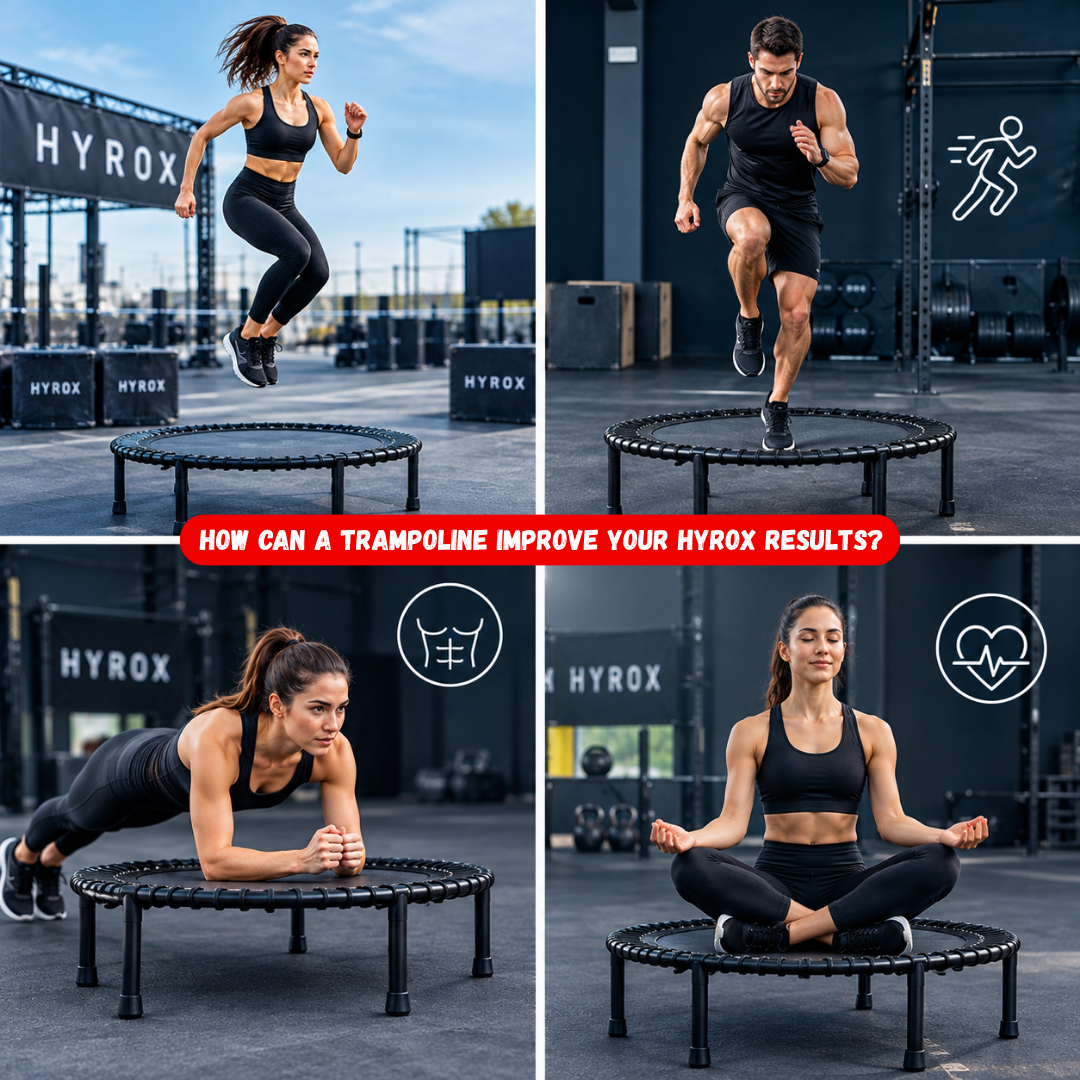
Controlled fitness trampoline exercise can support HYROX preparation by developing cardiovascular conditioning, balance, coordination, lower-body endurance and reactive movement qualities that carry directly into running and station performance. It works alongside running, strength training and HYROX-specific practice rather than instead of them.
Improve Cardiovascular Conditioning
A trampoline workout can help you build the cardiovascular fitness needed to handle repeated bursts of effort during HYROX. It supports sustained conditioning while also training your body to recover quickly before the next demanding movement.
Maintain an Elevated Heart Rate
A 14ft trampoline raises your heart rate quickly, and it does so without the joint impact of another run.
Mimic Stop-and-Start Efforts
Short bouts of bouncing, followed by brief recovery, mimic exactly the kind of stop-and-start effort HYROX demands between stations.
Improve Recovery Between Efforts
Regular interval-based trampoline exercise may help athletes become more comfortable recovering while continuing to move.
Build Repeatable Performance
The goal isn’t always to produce maximum output in one effort. HYROX requires athletes to maintain consistent, repeatable performance across multiple runs and stations.
Support Conditioning
Repeated bouncing keeps the cardiovascular system working while giving athletes a different conditioning stimulus from running.
Train for Fatigue Management
As fatigue builds, maintaining movement quality and controlling effort becomes increasingly important during HYROX.
What Does Reactive Strength Mean in Practice?
Reactive strength is your body’s ability to catch itself when you land, then spring right back up. No pause. No hesitation.
Trampoline training builds this skill in a gentle way. You still land, absorb force, and push off fast. But the trampoline soaks up some of that impact for you.
This Matters for Athletes Who Are:
- Already doing a high volume of training
- Looking for more movement variety
- Wanting to add conditioning without another running session
- Building coordination and reactive movement progressively
- Wanting to protect their joints from constant hard landings
Trampoline Drills Worth Learning
- Controlled vertical bounces (building rhythm and control)
- Single-leg balance bounces (proprioception and ankle strength)
- Low-height power jumps (explosive but controlled)
- Alternating-foot bounces (coordination)
- Fast-foot bounce drills (reactive speed)
A note worth repeating: these drills should be progressed gradually. They complement heavy sled work, lunges and carries; they don’t replace them.
Trampoline Exercises Worth Building Into a HYROX Programme
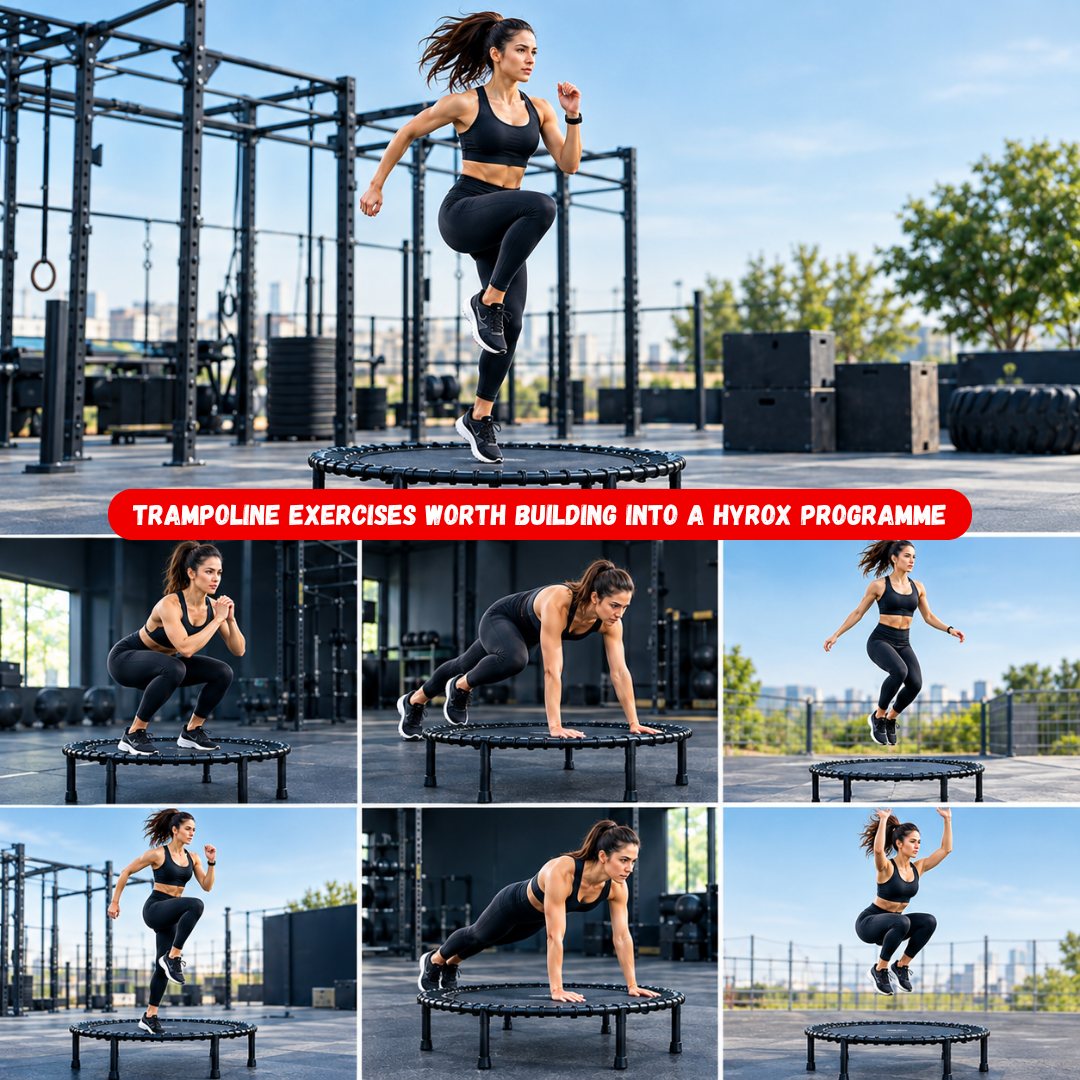
Trampoline exercises can be adapted to suit different fitness levels while developing cardiovascular fitness, coordination and lower-body control. Start with simple movements, then gradually increase the pace, complexity and intensity as your confidence and conditioning improve. Choose the level that matches your current ability and progress at a controlled pace.
Beginner
- Basic bounce, alternating foot bounce, marching bounce, and controlled squat bounce.
- Generally do well with one short session weekly, focused entirely on control rather than intensity.
Intermediate
- High-knee bounce, fast-foot bounce, single-leg balance work, and side-to-side movement.
- Athletes can usually manage two, ideally on days that aren’t already loaded with heavy lower-body work.
Advanced
- Controlled power jumps, explosive bounce intervals, combination movement drills, and trampoline-to-floor conditioning intervals.
- HYROX competitors sometimes use three, but they’re also the ones most likely to overdo it. More isn’t automatically better, and fatigue accumulates fast when every session is high-intensity.
Using a Trampoline to Prepare for Specific HYROX Stations
HYROX Demand | Trampoline Training Can Support |
Repeated running | Cardiovascular conditioning |
Burpee broad jumps | Explosive movement, rhythm |
Sandbag lunges | Single-leg stability |
Farmers carry | Balance and postural control |
Wall balls | Leg drive and coordination |
Repeated stations | Fatigue management, movement efficiency |
Fast transitions | Reactive movement and coordination |
This table shows support, not equivalence. Practising the actual station remains non-negotiable.
A Simple HYROX Trampoline Session You Can Try at Home
This home-friendly session combines rebounder intervals with simple HYROX-style movements to build fitness without needing a full gym setup. Adjust the pace, jumping height and recovery periods to match your current ability, focusing on controlled technique throughout.
20-minute Beginner Session
- Warm-up: 3 minutes of easy movement
- Steady bounce: 5 minutes
- Alternating-foot intervals: 4 minutes (30 seconds on, 30 seconds easy)
- Strength and balance circuit: 4 minutes
- Cool-down: 4 minutes
30-minute Intermediate Session
- Conditioning block: 8 minutes
- Plyometric block: 6 minutes (short, controlled power jumps)
- Balance and coordination block: 8 minutes
- Recovery block: 8 minutes
Progress by lengthening work intervals before shortening rest, and only add movement complexity once the simpler version feels genuinely comfortable, not just manageable.
Trampoline Safety Equipment and Accessories for HYROX Training
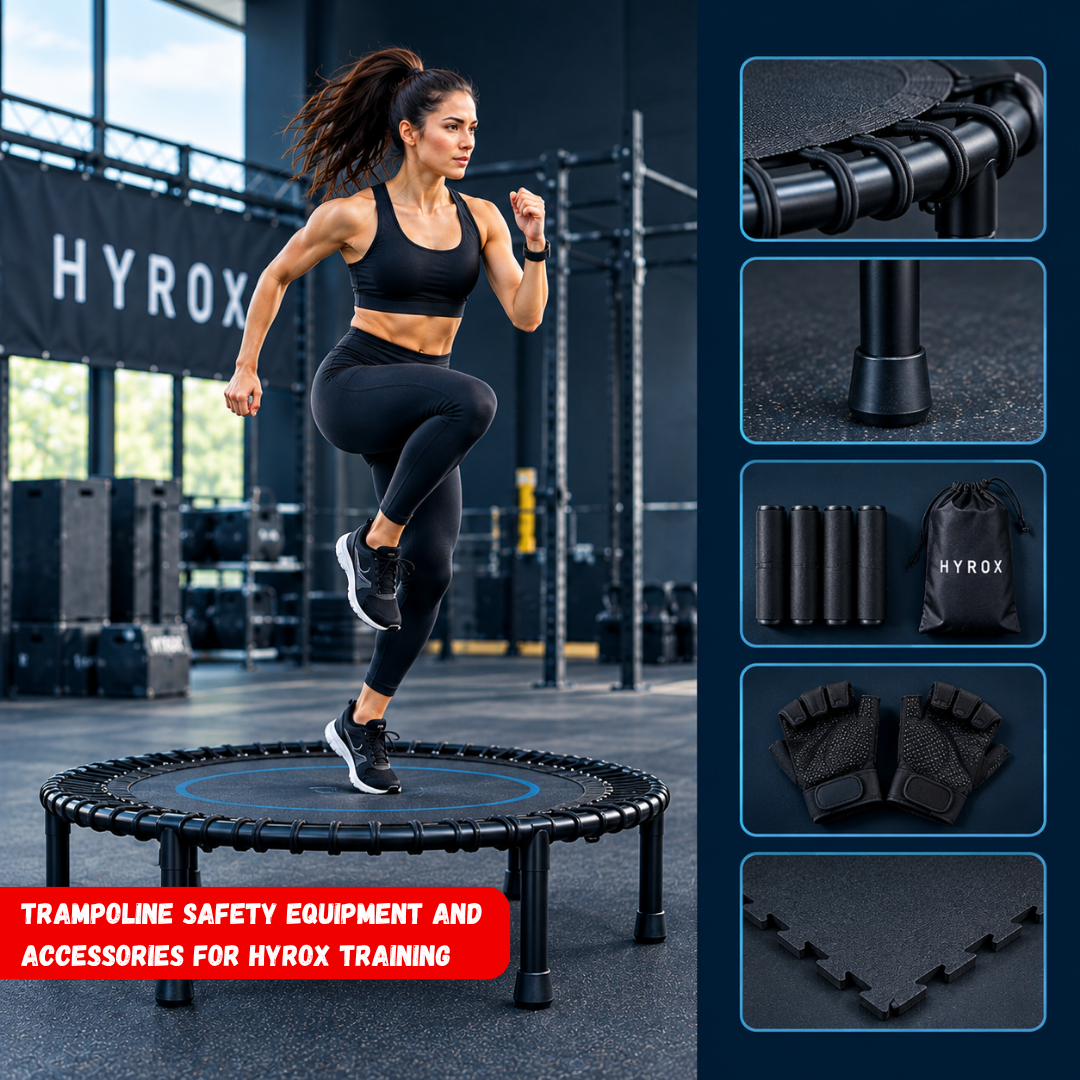
Good equipment isn’t about ticking a box. It’s what allows you to focus on movement quality instead of worrying whether the trampoline itself is going to let you down mid-session.
Essential Safety Equipment
Before adding trampoline work to your HYROX training, make sure you have the right safety equipment and a suitable exercise environment. The correct setup can help reduce injury risk and allow you to focus on building fitness with confidence.
Trampoline Ladder
A trampoline ladder makes getting on and off easier, particularly on taller trampolines, without an awkward extra jump.
Safety Enclosure Net
A safety enclosure net defines the training area and reduces the risk of bouncing off the edge, which is especially relevant once fatigue starts affecting control.
Frame Pads
Frame pads protect against hard structural components around the jumping area.
Trampoline Cover
A trampoline cover helps protect the trampoline from outdoor weather and debris when it is not being used.
Useful Training Accessories
The right training accessories can make trampoline-based HYROX workouts more structured, measurable and effective. They can also help you monitor intensity, improve technique and add variety as your fitness develops.
Trampoline Socks
Trampoline grip socks improve foot grip and the feel of secure contact during controlled drills.
Trampoline Scooter
The trampoline scooter can add variety to movement practice while encouraging balance and coordination.
Resistance Bands
Resistance bands add resistance to simple garden trampoline exercises to challenge your muscles, improve strength and coordination, and make your workout more dynamic.
Important Trampoline Components
Trampoline Bed/Mat
A well-maintained trampoline bed gives a predictable bounce response, which matters for consistent training.
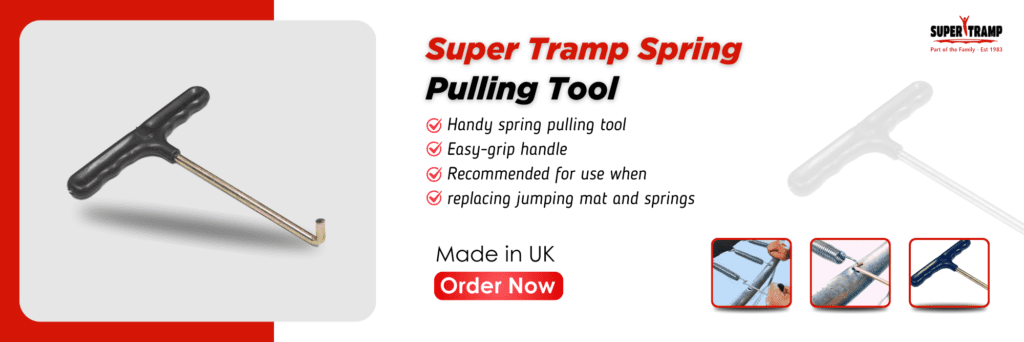
Trampoline Spring
Springs should be checked regularly for signs of stretching, rust, damage or wear that could affect the trampoline’s performance.
The right trampoline accessories can improve safety, comfort and performance while making your workouts more enjoyable. Find out how the right accessories can make a difference and help you get more from your trampoline.
Why This Matters More When You’re Tired
HYROX-style interval training pushes you hard, round after round. And fatigue changes how your body moves, often without you noticing.
Here’s what tired muscles struggle with:
Coordination
Your movements get sloppier as reps pile up.
Landing Control
Tired legs absorb shock less effectively, so landings get harder.
Balance
You shake more, especially on uneven surfaces or during transitions.
Reaction Time
Your body responds more slowly to sudden shifts or obstacles.
Technique
Form breaks down first when energy runs low.
This is when the risk of losing control can increase. When your legs are heavy and concentration starts to drop, maintaining good technique becomes more difficult. That’s why safety equipment matters most late in a session.
Trampoline Workout for Recovery and Conditioning
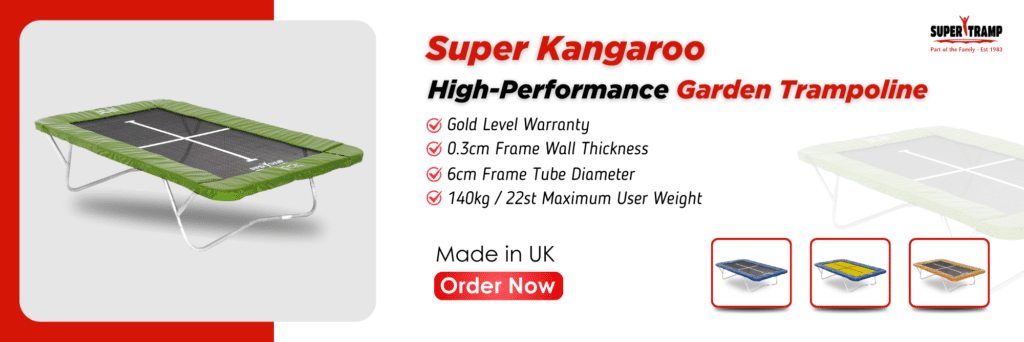
There’s a meaningful difference between using a rectangular trampoline to condition and using it to recover, and conflating the two is a common mistake.
For Active Recovery
Gentle bouncing, controlled movement, and sessions kept genuinely short. Five to ten minutes is plenty. The goal is blood flow, not effort.
For Conditioning Without More Running
Short cardiovascular intervals and repeated movement patterns can build fitness while giving your joints a break from impact.
Skip a hard in-ground trampoline session after an especially demanding lower-body day if technique is visibly breaking down or if you’re carrying pain rather than normal training fatigue. None of those is situations where pushing through pays off.
How Can You Combine Rebounder Training With HYROX Training?

Rebounder training can complement HYROX by improving cardiovascular fitness, coordination and recovery without adding excessive impact. The key is to use it alongside running and strength sessions, rather than treating it as a complete replacement for either.
Weekly HYROX Training Schedule
Monday: Strength + HYROX-specific Work
Focus on building strength and reinforcing movement patterns for the stations.
Tuesday: Trampoline Conditioning
Low-impact conditioning work to build aerobic capacity.
Wednesday: Running + Mobility
Easy aerobic running plus mobility work.
Thursday: HYROX-Specific Station Practice
Practise individual stations to build skill and efficiency.
Friday: Trampoline Coordination/Plyometrics
Develop coordination and reactive strength on the trampoline.
Saturday: HYROX Simulation or Longer Conditioning
Aim to simulate race conditions or do a longer conditioning session.
Sunday: REST or Active Recovery
Prioritise recovery so that you are ready to train fresh for the week ahead.
This example is more suitable for experienced athletes. Beginners can start with one trampoline session per week and build from there.
Beginners are usually better off starting with one short session, mastering basic bounce patterns before anything explosive, and increasing volume only once technique feels solid. Experienced athletes can layer in reactive strength work, conditioning intervals and movement-quality sessions more liberally, though even they benefit from treating trampoline work as a support session rather than the main event.