Street Fighter is a legendary video game launched by Capcom in 1987, and people across the UK have been obsessed with it ever since. After six hugely successful main games, the franchise is now hitting the big screen, with the movie arriving on 16 October. UK fans especially love Cammy White, the fearless British fighter who steals every scene. Cammy is a fighter from the legendary fighting video game series, and half the people want to move like, and the one most likely to put you off exercise if you copy her on hard ground. Fast kicks, spinning dives, and a guard that never drops. In the game, she lands on concrete all day, and nobody’s shins ever hurt. But how does she stay so strong?
But you can’t train yourself on a hard surface all the time, because it will cause injuries that might hurt you. But there’s a gentler way. A bouncy mat takes the sting out of each landing, so you can jump more and ache less. With the Street Fighter 6 movie arriving in October 2026, many have already booked their tickets in Britain. Now’s a fun time to try it. Here are four drills, a few honest warnings and a proper recovery routine.

A trampoline suits Cammy-style training because the mat softens landings while your core, ankles and legs work hard to stay balanced. Four simple drills (tuck jumps, half-twists, micro-bounces and star jumps) build the speed, power and balance her moves rely on. Start gently, jump alone and follow your trampoline’s manual. This guide is perfect for adults and older teens who love Street Fighter, want to move better, and fancy something more fun than a treadmill. Discover how trampoline workouts can help you get fit like Cammy White.
What Makes Cammy’s Movement Style So Deadly?

Cammy’s style rests on three things: explosive leg power, a core that stays firm while she spins, and balance in mid-air. In training terms, that means fast-twitch muscle fibres, which fire quickly for short, sharp efforts, plus proprioception, your body’s sense of where it is in space. Both can be trained at home.
Watch Cammy in Street Fighter 6, and you’ll notice she rarely stands still. She darts in, strikes, then slips away. Among Street Fighter 6 characters, she’s one of the quickest on her feet, and that speed starts in the legs and hips. Other Street Fighter characters lean on brute strength. Cammy leans on timing.
Power Starts at the Ground
Jumping hard and often trains the muscles around your hips, thighs and calves to fire fast. You don’t need a barbell. You need repeats, a bit of height and a surface that forgives you.
A Core That Resists the Spin
Her twisting kicks only work because her middle stays steady while her limbs move. Your deep stomach muscles do the same job on a trampoline, quietly correcting every moment of instability.
Balance You Can’t See
Proprioception sounds fancy, but it’s what stops you from tipping over when you step off a kerb in the dark. It improves with practice on slightly unstable ground. A bouncing mat is exactly that.
If you feel unsteady after five minutes of gentle bouncing, stay with the micro-bounces below for your first couple of weeks. Add the other drills only when landings feel calm.
What is a Trampoline?
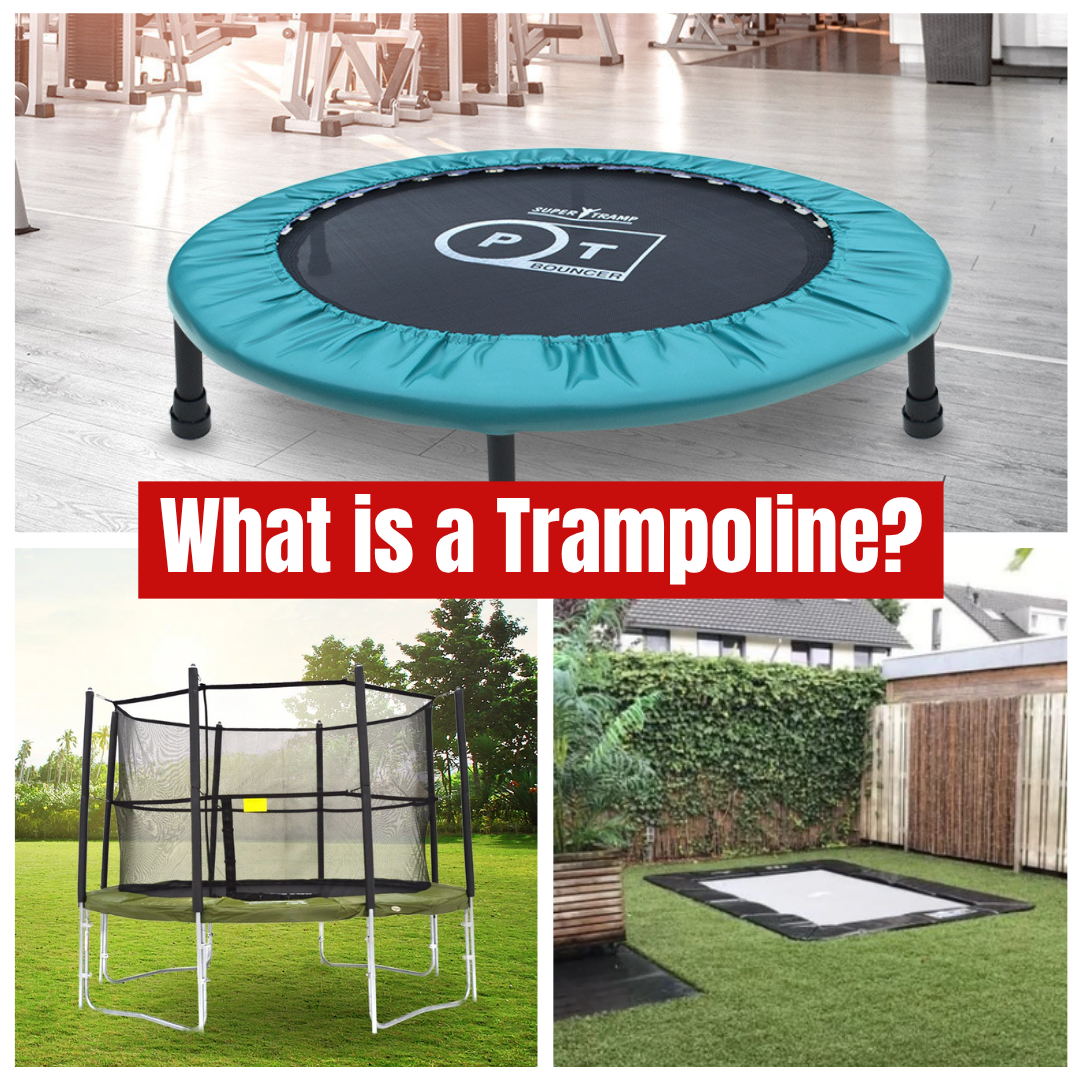
A trampoline is a springy fabric mat held in a frame, which pushes you back up when you land on it. It stores a little of your jump energy and gives it back. That’s why landings feel softer than on hard ground, and why the same piece of kit suits kids, families and fitness fans.
Not all trampolines are the same, though. Three types come up most often when people plan a home workout.
Above-ground Trampolines
- An above-ground trampoline is the classic garden trampoline. The frame stands on legs on top of your lawn or patio.
- Families with a decent garden and room for a safety enclosure.
- It’s more exposed to wind and weather, so think about storms and winter before you buy.
In-ground trampolines
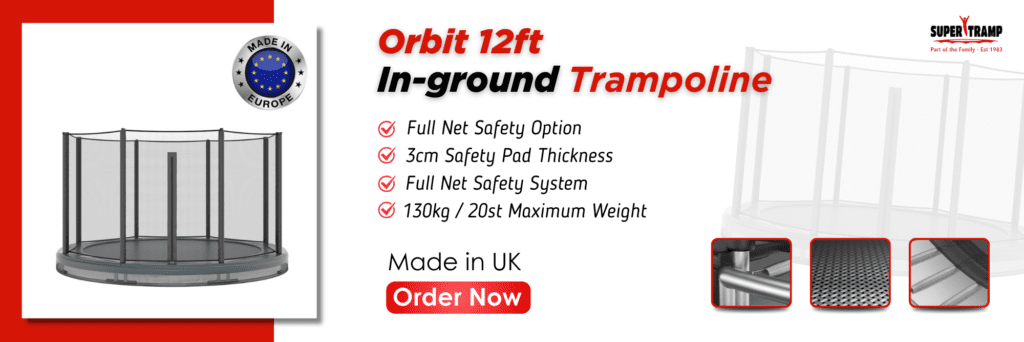
- An in-ground trampoline sunk into the ground so the mat sits closer to ground level.
- People who want a tidier look and an easier step on and off.
- It needs proper installation, and drainage matters because British soil can hold water. Follow the manufacturer’s instructions for your model and don’t guess at depths or clearances.
- It’s a bigger job than putting up an above-ground model, so it suits people who are ready to plan it.
Rebounders and Mini Trampolines
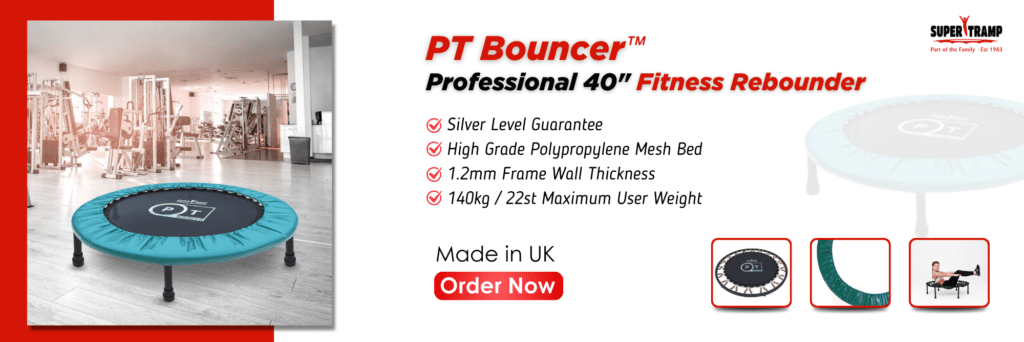
- A small, compact trampoline made for exercise, often called a rebounder or mini trampoline.
- Solo workouts, spare rooms and small homes. It’s the natural choice for the Cammy-style drills in this guide.
- The jumping area is smaller, so keep moves low and controlled.
Why Trampolines Are the Secret Weapon for Fighter-Level Agility and Core Strength?
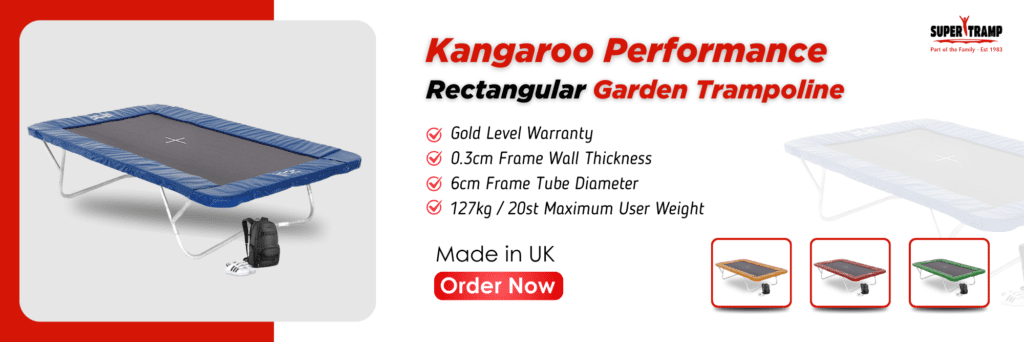
A rectangular trampoline suits Cammy-style training because the mat softens landings while the moving surface keeps your core and ankles working. You can repeat explosive jumps with less jarring than on hard ground.
Softer Landings, More Explosive Reps
- A trampoline mat returns some of your jump energy, so landings feel kinder than on pavement or a gym floor.
- You can fit in more fast, springy reps before your knees, hips and shins complain.
- The exact amount of impact absorbed changes with the trampoline, your weight and your landing technique, so we haven’t put a percentage on it.
- Many owners find they can train for longer on a mat than on hard ground.
- Fitness trampolines are built for indoor training.
Core Engagement on Every Bounce
- Bouncing creates constant instability, so your deep abdominals and stabilising muscles keep firing.
- On a gym floor, your core can idle between reps. On a mat, it can’t.
- Sore stabilisers around the stomach, hips and lower back the morning after a session.
- This is the steady middle Cammy needs during her spinning kicks.
A Short Session That Counts
- Short, hard bursts with proper rests raise your heart rate quickly.
- Ten focused minutes can feel surprisingly tough.
- Calories burnt depend on body size, effort and technique, so avoid exact comparisons with running.
Which One Should You Choose?
- Small garden or grim weather: Choose a rebounder and train indoors.
- Space and a family who’ll want a turn: Choose a garden trampoline with a safety enclosure.
Which Four Drills Help You Move Like Cammy?
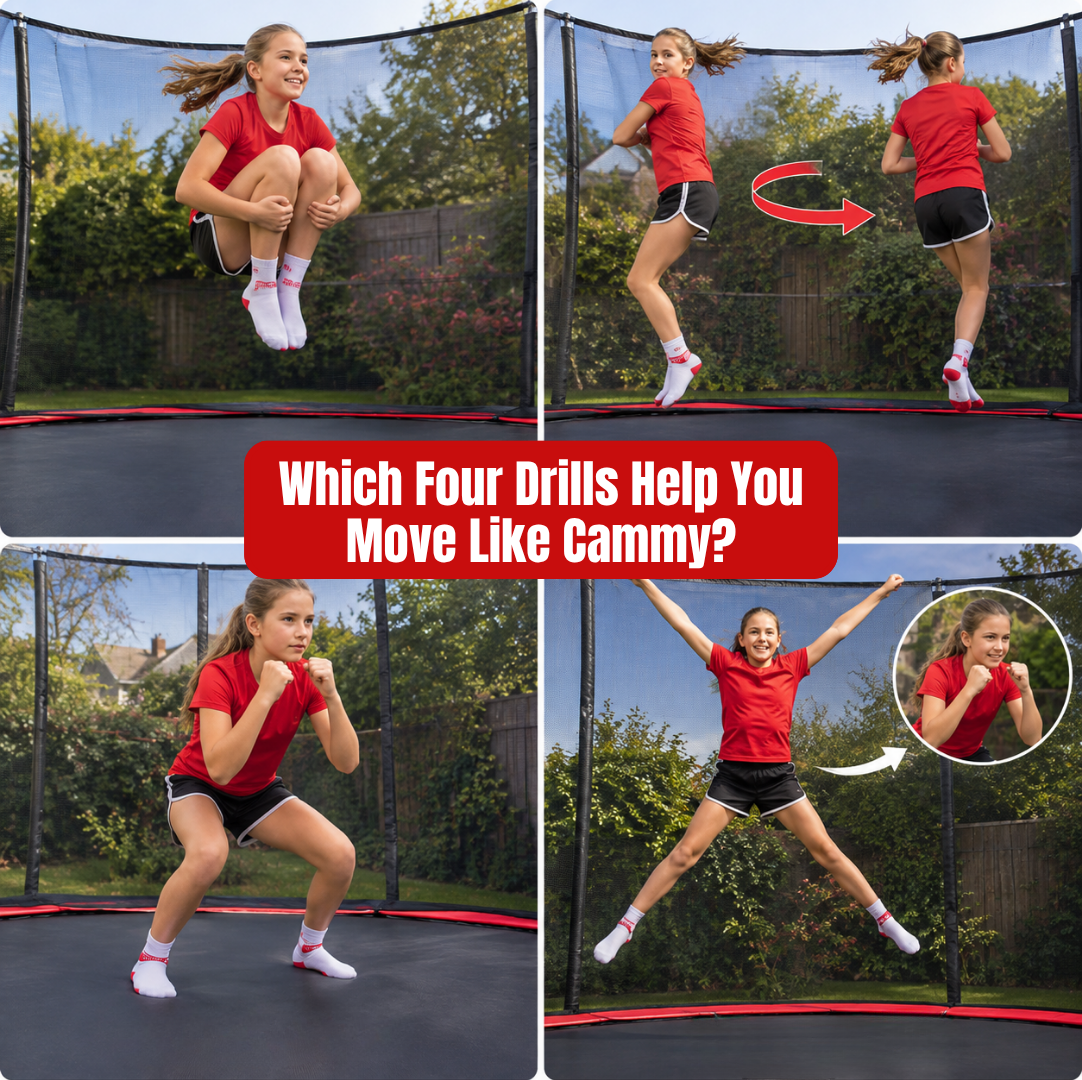
These four drills copy the rhythm of Cammy’s movement without copying the dangerous bits. Do them in order after a warm-up, one person on the trampoline mat at a time. Keep every jump low and controlled to begin with, and increase height only when your landings stay tidy.
Before you start: Check the manual for your model. Use a safety enclosure and padding where your trampoline is designed for them. Garden models in the UK should meet BS EN 71-14, the domestic trampoline standard, and RoSPA offers sensible general guidance. Warm up with two or three minutes of gentle bouncing.
1. Cannon Spike Tuck Jump
Bounce on a performance trampoline, then pull both knees towards your chest at the top and land softly with bent knees. You’re borrowing the feel of the move, not the dive. Aim for a smooth landing before you chase height. It builds vertical power and quick hip flexors.
2. Spiral Arrow Half-twist
Bounce low on a Super Kangaroo Performance Rectangular Garden Trampoline, turn 180 degrees in the air and land facing the opposite way. Then twist back. Keep your arms close and your eyes on a fixed point. Start with tiny turns and stop if you feel dizzy. It wakes up the obliques, the muscles down the sides of your waist.
3. Fighter-stance Micro-bounces
Drop into a low, athletic stance with fists up. Make small, fast bounces without your feet leaving the mat. It looks easy, and it isn’t. Your thighs and glutes will tell you exactly how easy it is within about a minute.
4. Reaction Star Jumps
Jump into a star shape, then snap back to a high guard the instant your feet land. For extra fun, have a friend stand outside the enclosure and call “guard!” at random moments. Nobody joins you on the mat, whatever the game’s two-player mode suggests.
A Beginner Pattern
Many people start with short effort bursts, such as 30 seconds of work and 30 seconds of rest, and repeat the four drills twice. Build from there as it feels comfortable.
Common Mistakes to Avoid
- Jumping too high too soon. Height isn’t the goal.
- Training tired, or on a wet mat.
- Landing stiff-legged. Soft knees are your suspension.
- Bouncing barefoot. Use trampoline grip socks for better grip and protection.
- Letting two people on at once.
If you enjoyed these drills and want more ways to stay active between bounce sessions, you don’t need a gym to do it. Our guide on 7 exercises to do every day covers simple moves that fit around a busy day and build the strength and stamina trampolining asks of you.
How Should You Recover Like a Fighter?
Good recovery means slowing down gradually, breathing deeply and stretching gently while your muscles are warm. Hard sessions only help if your body gets time to adapt. In our experience, people who rest properly stay consistent for longer than people who go flat out and burn out.
Cammy’s calm under pressure is half her charm. Copy that. After your last drill, bounce gently for a minute, then step off and walk around. Take slow breaths in through the nose and out through the mouth until your heart settles. It’s a tiny habit, and it makes the next session feel less like punishment.
Once the mat is completely still, lying on it can make a comfortable spot for gentle hip and hamstring stretches. Check your manual first, and keep the stretches easy rather than forceful. Aching is normal. Sharp pain isn’t. If something hurts in a way that worries you, stop and see your GP or physiotherapist.
Rest days matter too. Two or three short sessions a week is plenty for most beginners. Pair it with a walk through the park, a stretch while it’s an early night before the next big Street Fighter movie premiere. Recovery counts as training.
Which Trampoline Should You Choose?

Choose a rebounder if you’re short on space and want indoor workouts. Choose a garden trampoline if you have room outside and want to share it with the family. Both can support fighter-style fitness, but they suit different homes and habits.
Rebounder | Garden Trampoline |
Solo workouts, small spaces | Family use, bigger jumping area |
Indoors, often in a spare room | Outdoors, on level ground |
Check the manual for your model for safety enclosures. | Safety enclosures and padding are recommended. |
Often easy to move | Needs a plan for storms and winter |
If you’re ready to get fit like Cammy and you’ve worked out which trampoline suits your home, the next question is where it all goes. Our guide to best home gym ideas and design tips shows how to turn a spare room, garage or corner of the garden into a space you’ll actually want to train in.
Key Takeaways
- Cammy White’s agility comes from leg power, a steady core and good balance.
- A trampoline mat softens landings, but your stabilising muscles still do plenty of work.
- Four drills cover most of what you need: tuck jumps, half-twists, micro-bounces and star jumps.
- Jump alone, keep it low at first and follow your manual.
- Recovery and rest days turn effort into progress.
- Talk to a GP or physiotherapist if you have any health concerns.