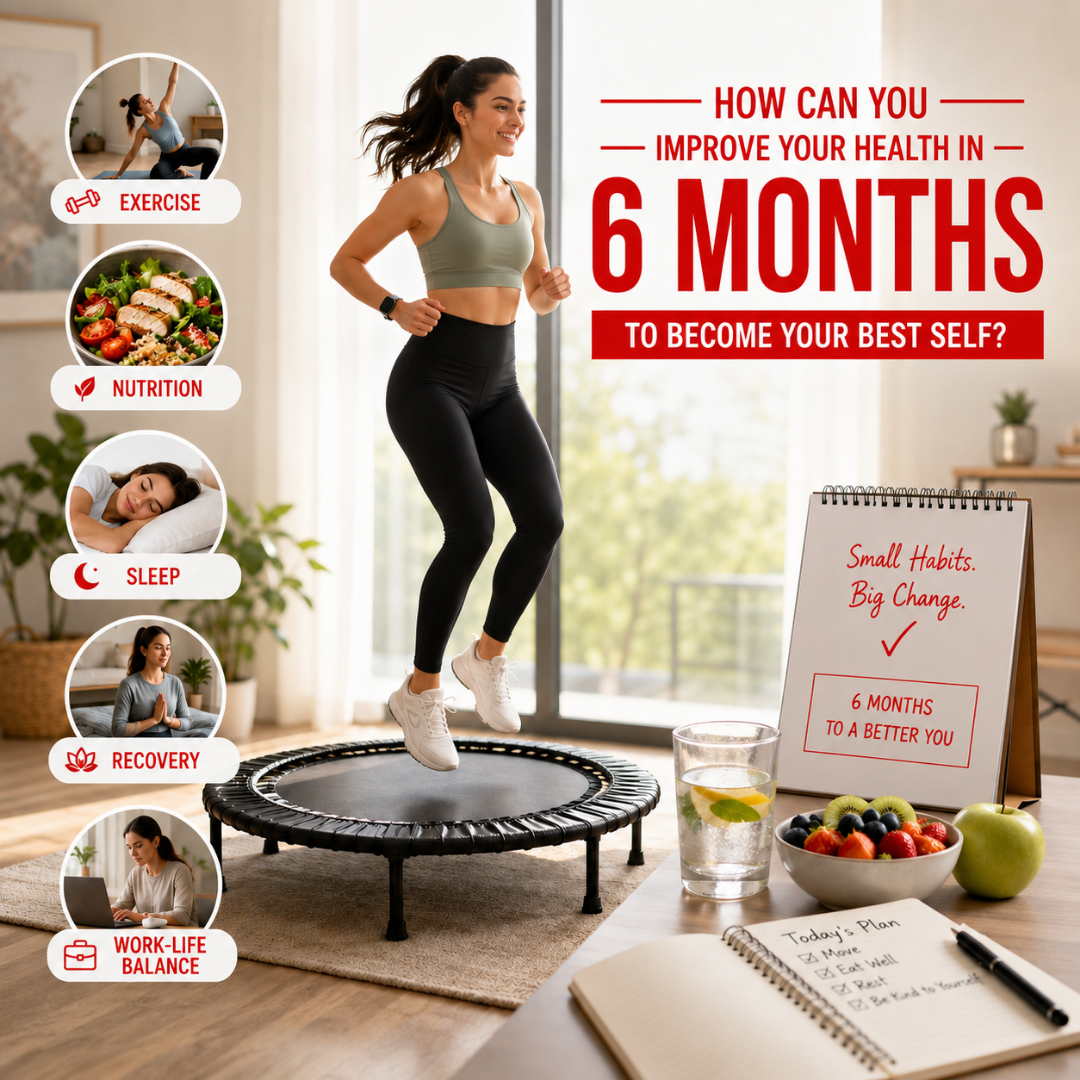

Six months ago, you probably told yourself you’d start “getting healthier” at some point. Most of us do. Then life gets in the way: work, kids, the washing up, Netflix and the gym membership sits there unused, quietly draining your bank account.
Here’s the good news: you don’t need a gym to improve your health in 6 months at home. You can improve your health in 6 months naturally, without special equipment or a training plan. You need something far less fancy – small habits, repeated often enough that they stop feeling like effort and start feeling like Tuesday.
This guide walks through a realistic month-by-month plan covering exercise, food, sleep and recovery, work, and a home trampoline or rebounder as one enjoyable way to keep moving without worrying about it. No extreme diets. No two-hour workouts. Just a plan you can actually stick with.

What Can You Realistically Achieve in 6 Months?
Six months is a genuinely useful stretch of time. Long enough for your body to adapt properly, short enough that it doesn’t feel like a life sentence. Six months is long enough to build meaningful improvements in fitness, strength, daily energy and healthy habits when you exercise consistently.
Better Cardiovascular Fitness
Your heart is a muscle, and like any muscle, it gets more efficient with use. Expect improved stamina, a lower resting heart rate over time, and noticeably more energy for daily tasks.
Healthy Weight Management
Regular movement, even in short bursts, burns calories and supports a healthier body composition. It won’t replace a sensible diet, but combined with one, it makes a genuine difference.
Stronger Muscles and Joints
Low-impact activity builds strength without stressing your joints the way running on pavement can. Mobility tends to improve. Bending, reaching and twisting all get easier.
Better Mental Wellbeing
This one gets underrated. Regular exercise can lower stress hormones and tends to lift mood within weeks, not months. Many people notice this before they notice any physical change at all.
Month-by-month Health Improvement Plan
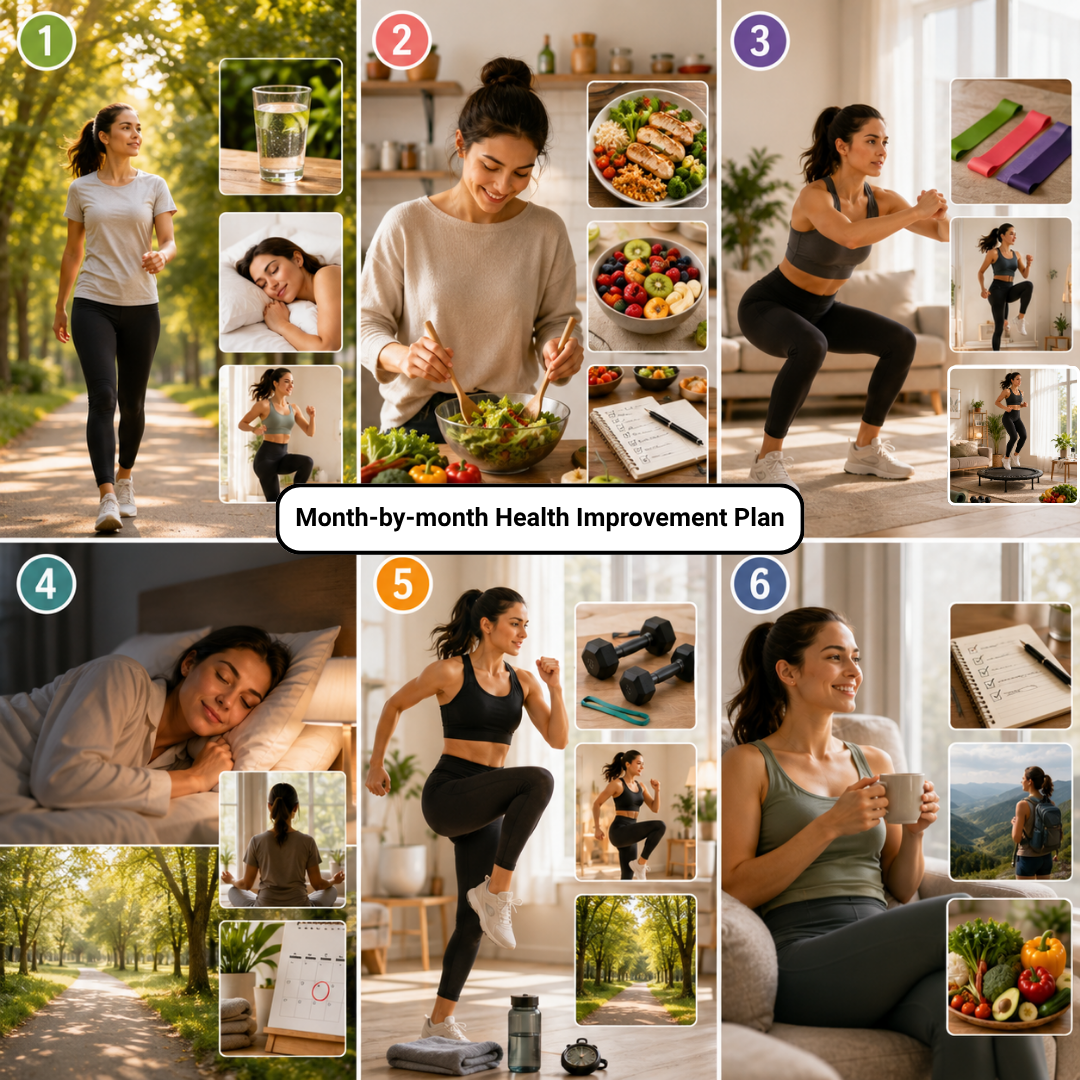
Trying to overhaul everything on day one is precisely why most health kicks collapse by February. Here’s a simple, sustainable route through six months, built one month at a time.
Month 1 – Build Consistent Healthy Habits
Focus: Show up daily. Nothing intense yet, just consistency.
What to do:
- Daily 20-minute walk (any pace, outdoors if possible).
- Drink more water — aim for 6–8 glasses a day.
- Go to bed 30 minutes earlier than your current habit.
- 5–10 minutes on a garden trampoline or rebounder, 3–4 times a week.
Why It Works
Gentle bouncing on a rebounder is low-impact and easy on the joints, so it doesn’t feel like “exercise”, but it still gets your heart rate up and builds the habit of daily movement. The goal this month isn’t fitness, it’s routine.
Month 2 – Improve Your Daily Nutrition
Focus: Add good food in, rather than cutting things out.
What to do:
- Swap one processed meal a day for something homecooked.
- Add a portion of vegetables or fruit to at least two meals daily.
- Keep up month 1’s walking and rebounding habits, don’t drop them.
- Plan meals loosely for the week ahead to avoid last-minute processed choices.
Why It Works
Restriction-based diets tend to fail because they feel like punishment. Focusing on whole foods, one swap at a time, builds a nutrition habit that survives busy weeks.
Month 3 – Increase Physical Activity
Focus: Introduce light strength work and step up the cardio.
What to do:
- 2–3 sessions/week of bodyweight strength work: squats, lunges, wall push-ups, glute bridges (start with 2 sets of 10–12 reps).
- Add resistance bands for light upper-body and leg work 2x/week.
- Extend rebounder or rectangular trampoline sessions to 15–20 minutes, 3–4 times a week.
- Set one or two specific weekly goals (e.g., “20-minute bounce session x4” or “10,000 steps on 5 days”) instead of a vague “exercise more”.
Why It Works
Specific, trackable goals are far easier to stick to than open-ended goals. And by now your core fitness can handle a bit more load.

Month 4 – Focus on Recovery and Sleep
Focus: Progress slows down without recovery. This month is about building on gains.
What to do:
- Lock in a consistent sleep and wake time, even on weekends.
- Take at least one full rest day a week with no structured exercise.
- Add a short outdoor walk on stressful days specifically for cortisol management, separate from your fitness walks.
- Keep strength and rebounder sessions going, but don’t add volume this month.
Why It Works
Recovery is when your body actually adapts to the work you’ve been putting in. Skipping this step is one of the most common reasons people plateau or burn out.
Month 5 – Challenge Your Fitness Levels
Focus: Push intensity, not just duration.
What to do:
- Increase strength sessions to 3 sets of 12–15 reps, or add light dumbbells/resistance bands for extra load.
- Try interval-style trampoline bouncing: alternate 30–60 seconds of fast bouncing. 30–60 seconds of slow, controlled bouncing, repeated for 15–20 minutes.
- Extend one weekly walk into a longer 30–40-minute session.
- Track and compare against your Month 1 baseline: steps, session length, and how sessions feel, rather than comparing yourself to anyone else.
Why It Works
Interval training can be an effective way to improve cardiovascular fitness when appropriate for your fitness level.
Month 6 – Create a Sustainable Lifestyle
Focus: Make it maintenance, not a “plan”.
What to do:
- Keep the routine: walking, rebounder/trampoline sessions, strength work, one rest day running on autopilot.
- Forgive off weeks. Get back to the routine rather than restarting from scratch.
- Set one or two longer-term goals for the next six months (e.g., a specific bounce-session duration, a step-count target, or a strength milestone).
- Review what’s worked over the past five months and drop anything that never worked.
Why It Works
By now the habits should feel like how you live, not a plan you’re following. Long-term consistency beats short-term intensity every time.
Why Is Trampoline a Great Home Exercise Option?
Rebounding, the technical term for trampoline exercise, has quietly become one of the most practical home workouts around, and it’s not just because it’s fun.
Low-Impact Exercise for All Fitness Levels
Trampolining can provide a lower-impact alternative to some forms of exercise, although the amount of impact varies depending on the movement, equipment and how you exercise. This makes it a sensible option for beginners, older adults, or anyone returning to exercise after time off.
Supports Cardiovascular Fitness
Regular bouncing raises your heart rate steadily, building stamina in a way that feels manageable rather than exhausting.
Supports Weight Loss and Calorie Burning
Rebounding raises your heart rate quickly, which supports calorie burn without needing high-impact movement. It’s cardio that doesn’t punish your joints for showing up.
Helps Improve Balance and Coordination
Staying steady on a moving surface trains balance in a way flat-ground exercise simply doesn’t. Regular sessions tend to sharpen body awareness over time, useful well beyond the workout itself.
Makes Exercise More Enjoyable
There’s a reason children never need convincing to jump on a trampoline. Enjoyment is what keeps people consistent, and consistency, not intensity, is what actually changes your health.
Easy to Fit Into a Busy Day
Ten to twenty minutes is genuinely enough. You don’t need to block out an hour to see a benefit. No membership, no commute, no queuing for equipment. You can train before work, during a lunch break, or while dinner’s in the oven.
NOTE: Follow the manufacturer’s safety guidance, use appropriate equipment and stop if you experience pain, dizziness or unusual discomfort. If you have an existing health condition or are unsure whether trampoline exercise is appropriate for you, speak to a qualified healthcare professional before starting.
20-Minute Home Trampoline Routine for Better Health
A 20-minute trampoline workout can be an easy way to add movement to your day without needing a long gym session. Keep the pace comfortable, focus on controlled movements and adjust the intensity to suit your fitness level.
Here are some simple exercises to do:
5-Minute Warm-Up
Gentle bouncing, followed by some dynamic stretching for the ankles, hips and shoulders.
10-Minute Cardio Session
Alternate between a basic bounce, a jog-style bounce, and high-knee bounces in short bursts.
5-Minute Cool Down
Slow, controlled bouncing, some breathing exercises, and static stretching to finish.
No-Equipment Exercises You Can Do at Home
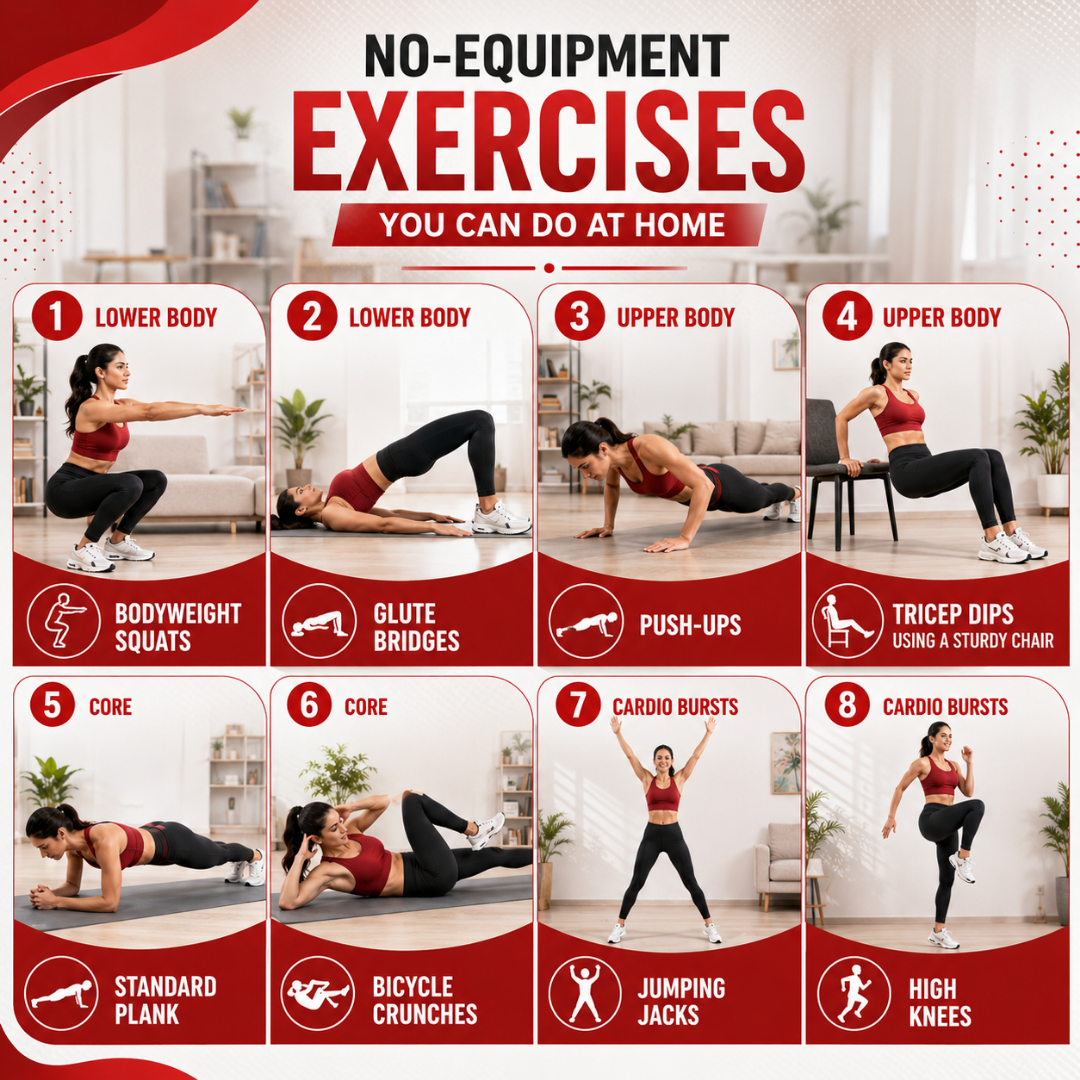
These simple exercises can fit into short breaks throughout the day and help you gradually build strength, mobility and fitness. Here’s a simple exercise to do:
Lower Body
Bodyweight Squats
Strengthen the thighs, glutes and core. Keep knees tracking over toes and chest lifted.
Glute Bridges
Lie on your back, feet flat, and lift your hips upward. Targets glutes and lower back with minimal joint strain.
Upper Body
Push-ups
Works chest, shoulders and triceps. Drop to the knees to reduce load while keeping good form.
Tricep Dips Using a Sturdy Chair
With hands on the chair edge, lower and raise the body. Isolates the back of the arms.
Core
Standard Plank
Hold a straight line from head to heels. Builds core endurance without any spinal flexion.
Bicycle Crunches
Alternate elbow-to-knee twists, lying on your back. Targets obliques as well as the abdominals.
Cardio Bursts
Jumping Jacks
Full-body movement that raises heart rate quickly. Good warm-up or interval option.
High Knees
Jog on the spot, driving knees up toward the chest. Builds cardio fitness and engages the core.
Daily Habits That Can Transform Your Health Faster
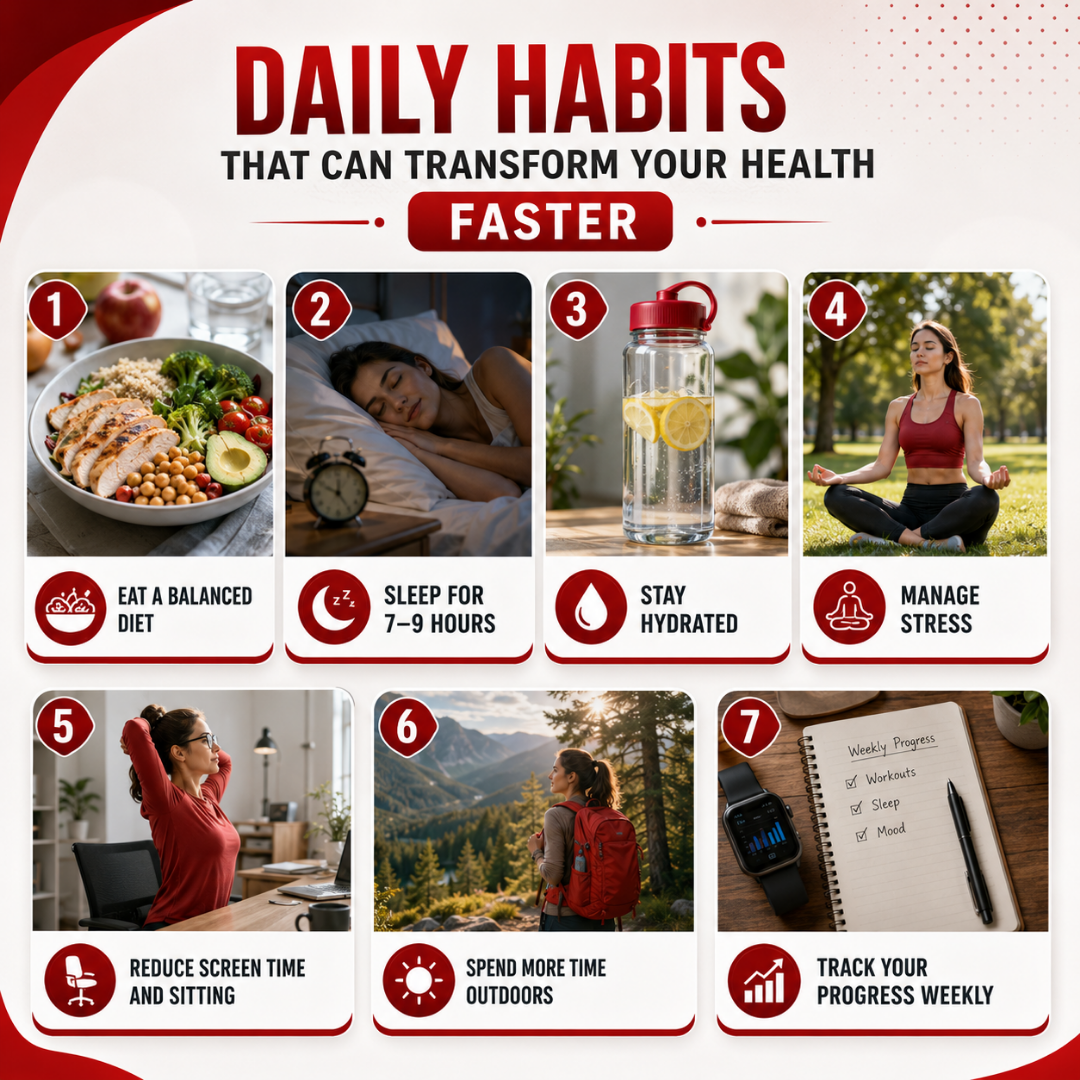
Exercise is only part of the picture. These habits work quietly in the background.
Eat a Balanced Diet
Aim for a mix of whole foods, lean protein, fibre-rich carbohydrates, fruits, vegetables, grains, milk and healthy fats.
Sleep for 7–9 Hours
Sleep is when your body actually does its repair work. Neglecting it weakens almost everything else on this list.
Stay Hydrated
Keep a bottle within sight. Most people underestimate how much low-level fatigue is simply mild dehydration. Drink regularly throughout the day and keep water nearby, particularly when exercising or spending time outdoors.
Manage Stress
For some people, short walks, breathing exercises, time outdoors and regular movement all lower stress in ways that compound over months.
Reduce Screen Time and Sitting
Set a reminder to stand every hour if your job is desk-based. Small interruptions to sitting add up.
Spend More Time Outdoors
Daylight exposure supports both mood and sleep quality, two things that quietly influence everything else.
Track Your Progress Weekly
A simple note of workouts, sleep and mood each week keeps you honest without becoming obsessive.
What Trampoline Safety Gear Do You Need for Home Workouts?
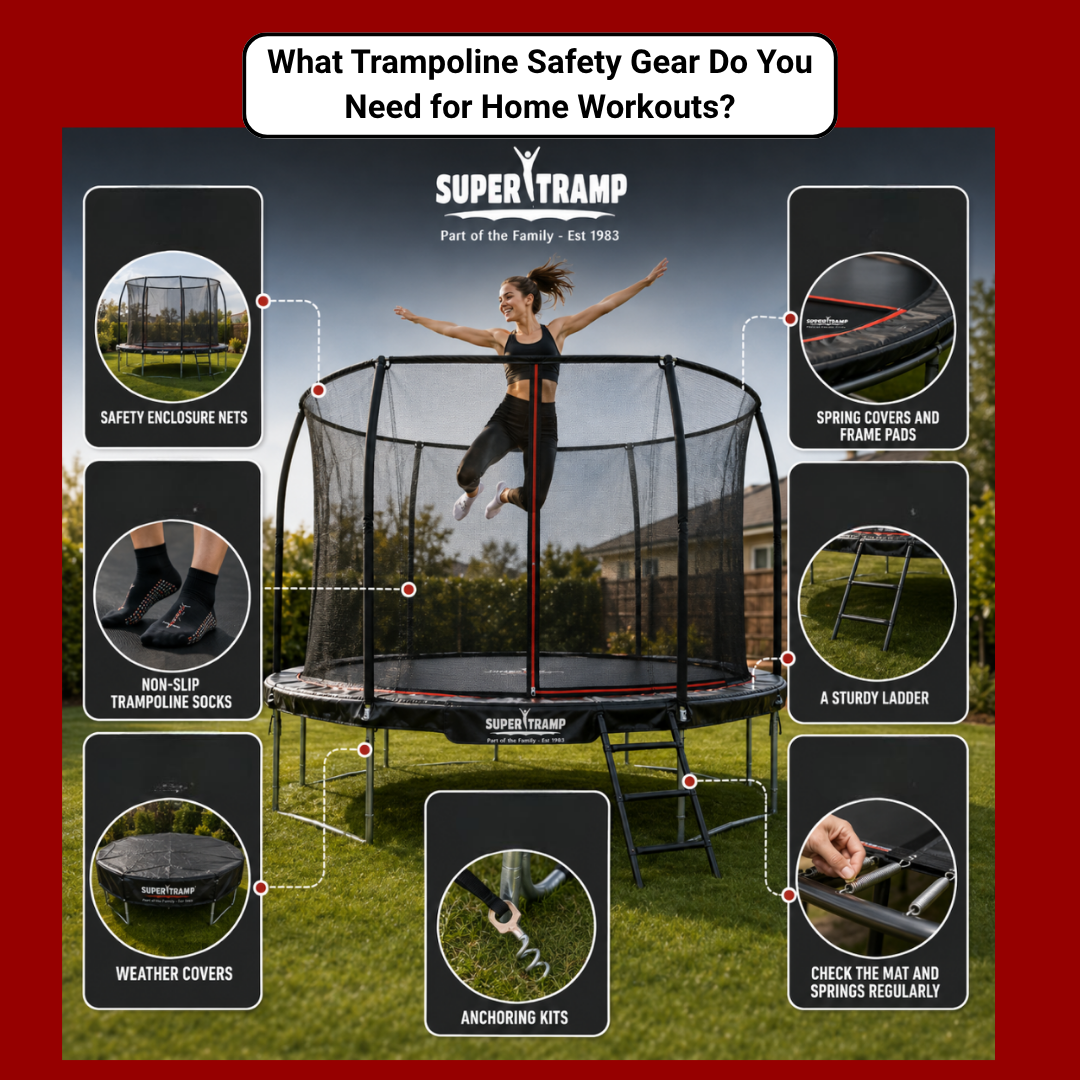
If you’re training on an above-ground trampoline regularly, a few sensible additions protect both you and the equipment.
- Safety enclosure nets reduce the risk of accidental falls, particularly useful in households with children nearby.
- Spring covers and frame pads protect against exposed springs and hard edges.
- Non-slip trampoline socks improve grip and stability during bouncing.
- A sturdy ladder makes getting on and off safer, especially for larger trampolines.
- Weather covers protect outdoor trampolines from rain, frost and UV damage between sessions.
- Anchoring kits improve stability in exposed or windy gardens.
Checking the mat and springs regularly is worth building into your routine, easy to forget and important when it matters.