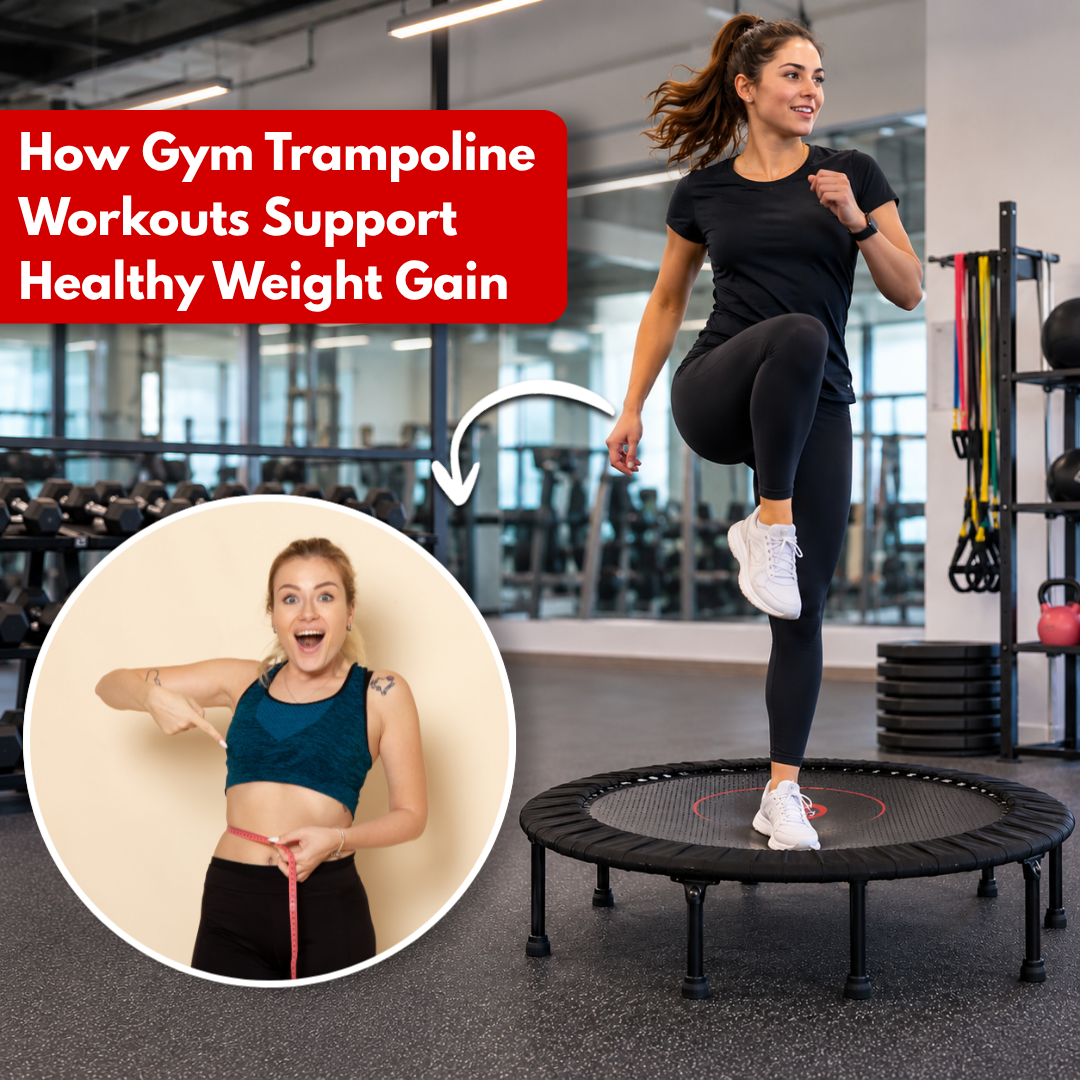
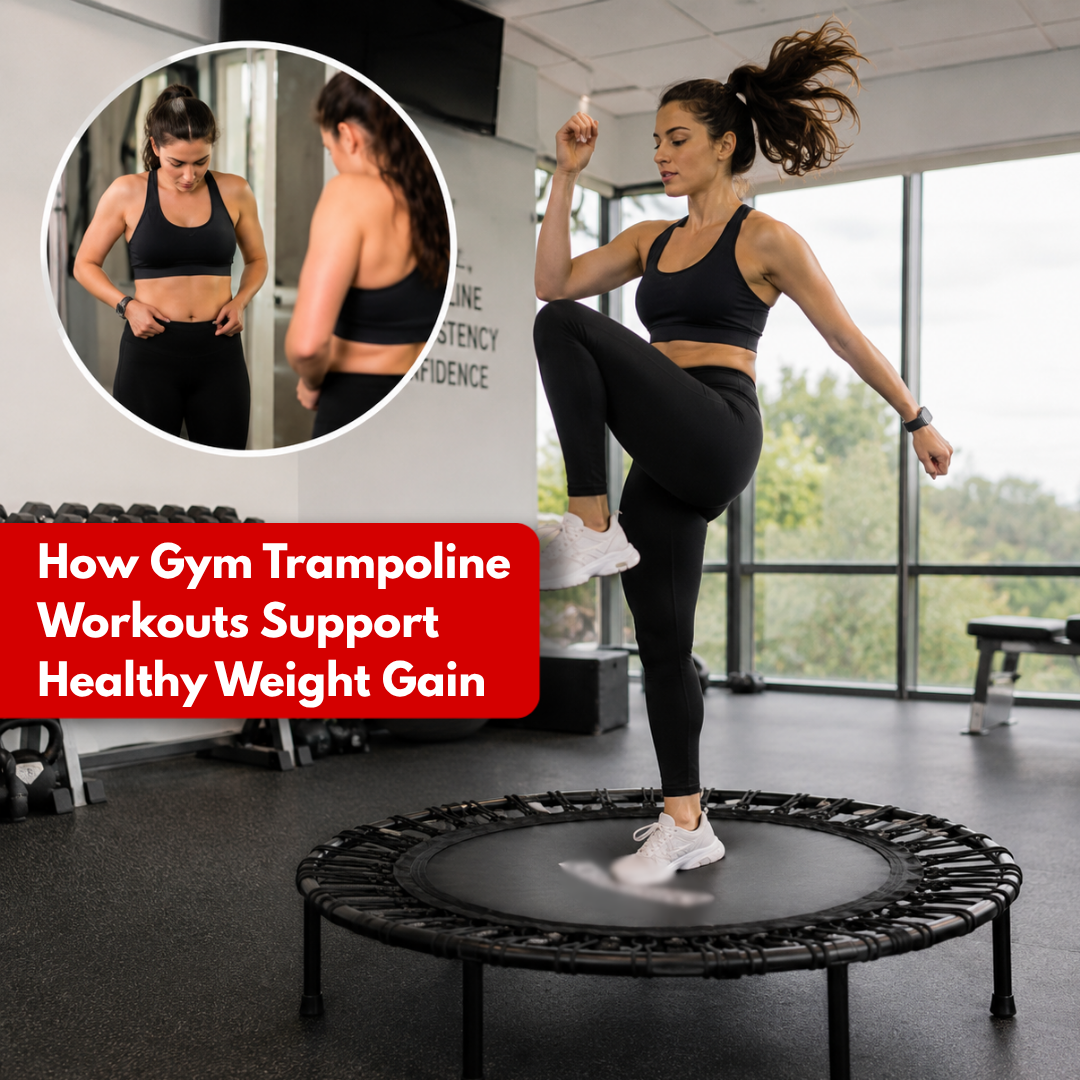
Gaining healthy weight isn’t just about eating more calories. Your body needs to be trained for that to ensure that those excess calories are used to build lean muscle as opposed to extra fat. With that in mind, a gym trampoline offers a different way to put your body to work that can also support healthy weight gain along with a good diet and weight lifting plan. Many people believe trampolines are solely for cardio or for losing weight. However, with rebounding, your muscles are always firing to rebound, land and shift your direction, which can serve as more than just a cardio workout.
Healthy Weight Gain Usually Involves:
- Builds lean muscle
- Balanced calorie surplus
- Includes strength training
- Supports mobility and fitness
- Improves performance
Why Muscle Matters More Than Body Fat?
Especially for those who have a naturally high metabolism or are back to the gym after a layoff, trampoline use is another way to gently amp up workout volume and intensity without stressing your knees and ankles, too. This makes sticking to your plan, which is often a huge hurdle when you’re trying to gain weight via muscle, so much easier.
To get the most from your efforts, combine your trampoline sessions with:
- A slight calorie surplus via healthy, nutrient-dense foods
- Daily protein that meets your body’s needs for muscle recovery
- A progressive resistance-training program
- Sufficient rest and sleep to support recovery
- Regular body-composition checks (instead of just weighing yourself)
Looked at that way, you realise the rectangle trampoline is no mere bounce-toy at all. It’s another tool in a well-constructed training program to develop strength, function, and healthy body weight.
Develops Functional Strength with Trampoline
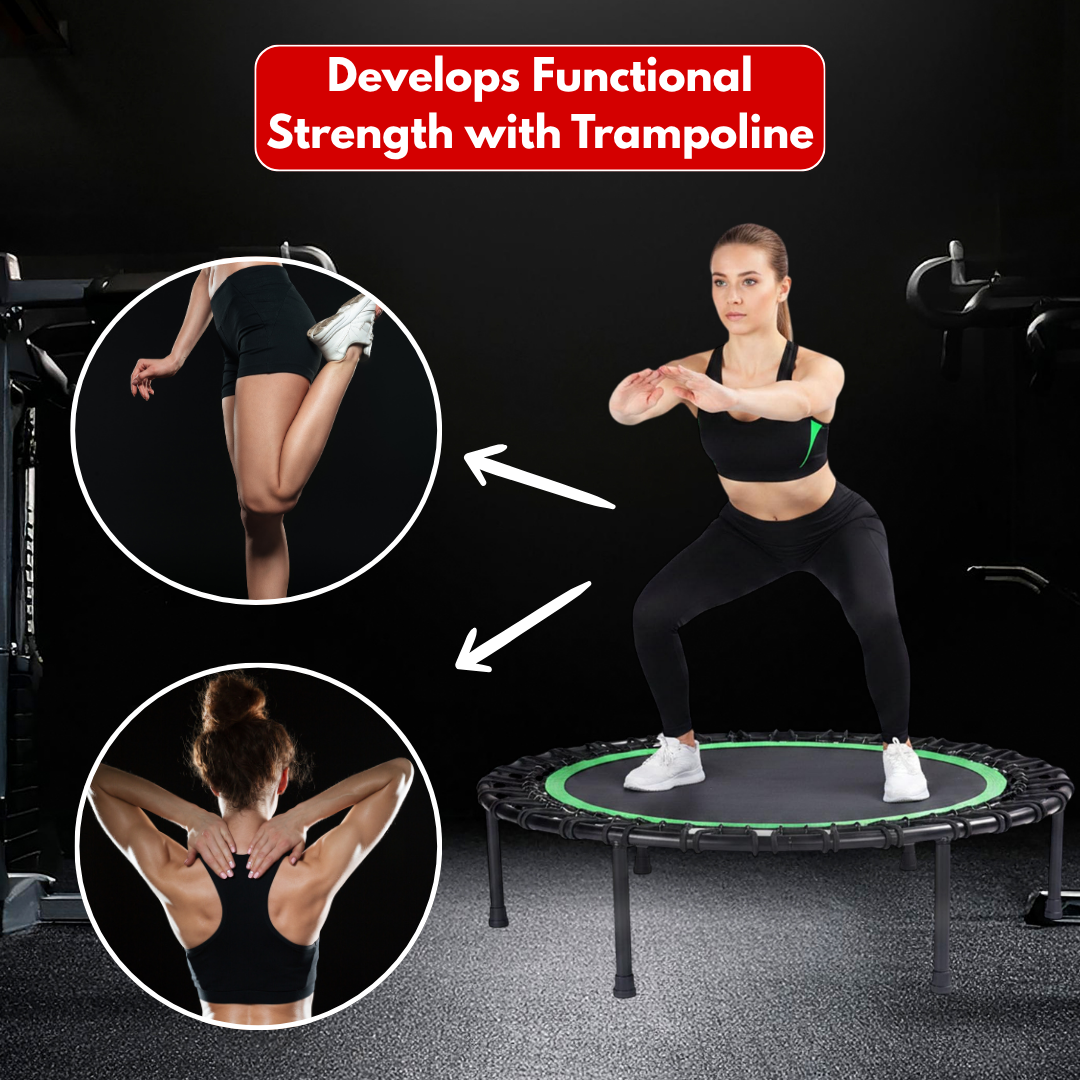
Building muscle isn’t only about lifting heavier weights. You also need strength that transfers into real movement.
A fitness trampoline develops what trainers call practical and real strength—the ability to generate force while maintaining balance, coordination and body control.
This Can Benefit People Involved in:
- Football
- Rugby
- Athletics
- Tennis
- Basketball
- Martial arts
- Dance
- Gymnastics
This means that better mobility usually translates to you having better technique when you lift, which means you aren’t wasting as much energy (or being more likely to make bad lifting decisions).
Trampoline Encourages Consistent Training
You may find other gym exercises boring, and it will not maintain a routine.
Traditional gym routines can become repetitive, particularly for beginners. Working out on a round trampoline introduces variety without reducing training quality.
Most of us also enjoy the way rebounding feels, so it’s much simpler to get our sessions done during the week. Consistency is one of the keys to building healthy muscle.
Places Less Stress on Joints with Rebounder
Jumping or running vigorously repeatedly and exercises like plyometric jumping can also put a huge strain on knees, hips and ankles. However, the sprung bed of a good trampoline will help soak up the landing shock through springs or elastic ropes and pads in any jumping moves, making it much kinder on joints than landing on a hard floor. Sports therapists also recommend less impactful forms of exercise for clients during parts of their rehabilitation (though anyone injured should take advice from their medical practitioner prior to taking on a new routine).
Best Trampoline Exercises for Building Strength
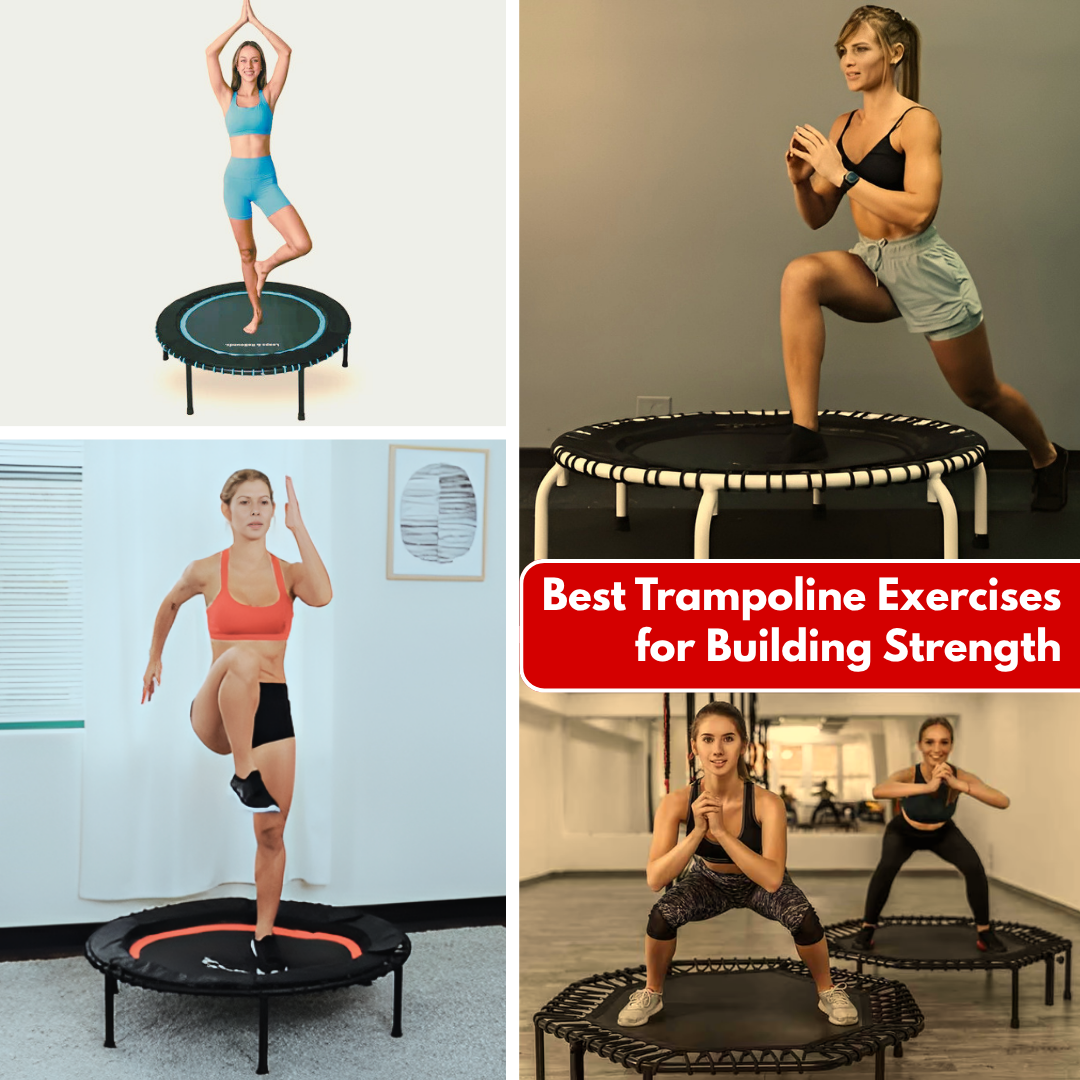
Not every trampoline exercise has the same purpose. Some improve endurance, while others place greater emphasis on muscular control and power.
Bounce Squats
Combining gentle bouncing with bodyweight squats increases lower-body engagement while improving balance. Focus on controlled movement rather than jumping as high as possible.
Single-Leg Balance Holds
The smallest muscles in the body are the hip, knee, and ankle muscles. They are incredibly hardworking to help you keep balance on a single foot. Coaches and personal trainers like to incorporate single-leg movements in the warm-up before heavier lifting.
High-Knee Running
Skipping with your knees bent on the trampoline is fantastic for coordination, hips, and cardio. You can also do high-intensity interval jumps on the fitness rebounder for sport-specific training that’s low impact on the joints.
Jump Lunges
Jump lunges will take more skilled people and take your glutes, quads and hamstrings up a level. Balance is also key here. Technique is more important than speed.
Core Stability Bounces
Controlled, small bounces coupled with bracing the abdomen help keep your ab muscles working the whole time. This helps build a solid base to come back to for compound lifts like squats and deadlifts.
Your Weekly Routine for Healthy Weight Gain
A trampoline should add to – rather than be a substitute for – a formal strength program.
- Monday – 10 minute trampoline warm-up and upper body strength training
- Tuesday – Fitness Trampoline balance and mobility
- Wednesday – Lower body strength training
- Thursday – Light trampoline exercise
- Friday – Trampoline intervals and full-body resistance workout
- Saturday – Flexibility and coordination drills
- Sunday – Rest and recovery
Common Mistakes That Can Slow Your Progress
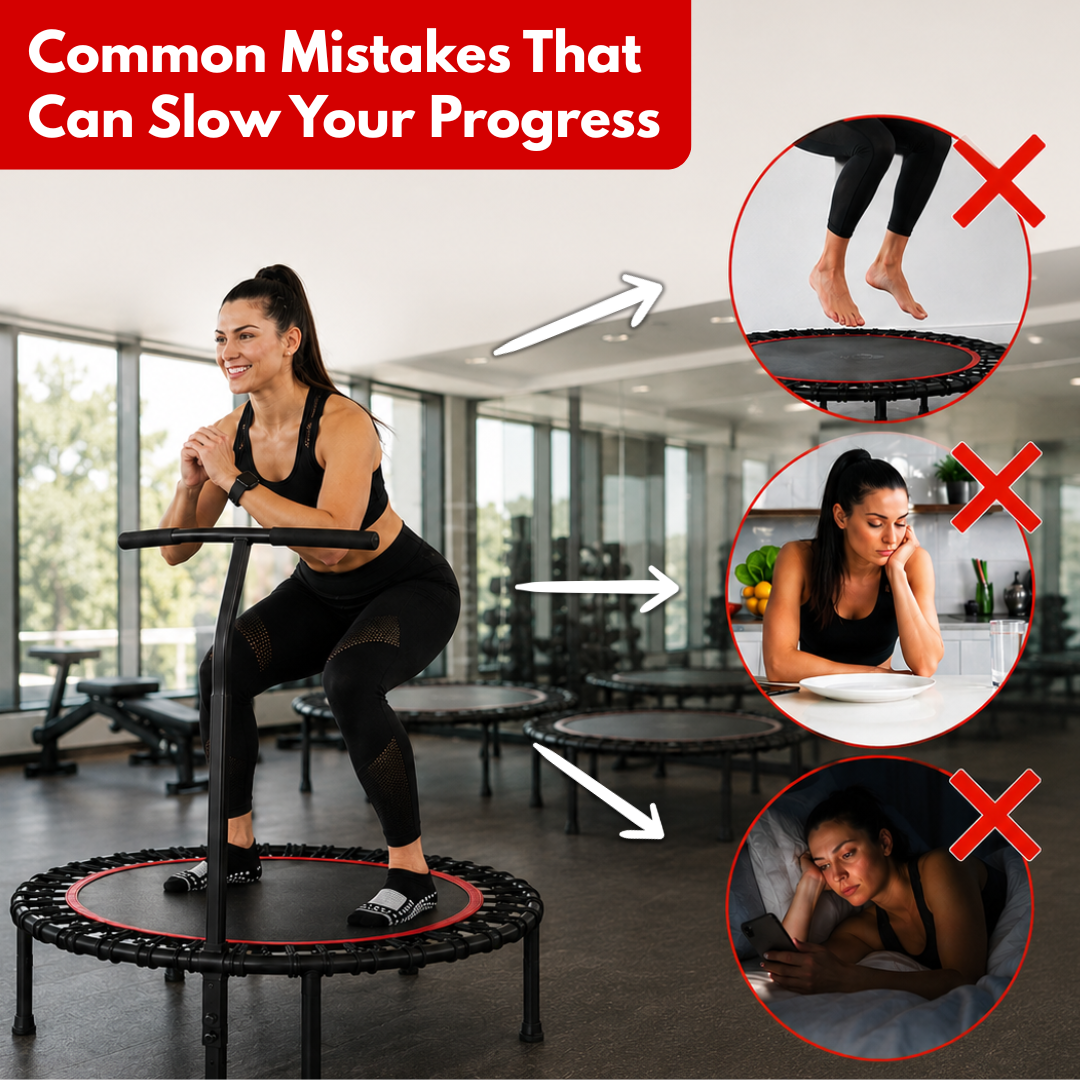
Healthy weight gain doesn’t happen overnight, and you may be sabotaging your efforts in several ways. Here are a few common training mistakes you’ll want to watch out for if you’re looking to build muscle.
Your Entire Training Program Revolves Around the Trampoline
Rebounding is best utilised as a complement to strength training, not as its sole replacement.
You’re Forgetting About Nutrition
A hard training session won’t override an energy and protein deficit. Most individuals seeking muscle growth will benefit from a slight calorie surplus and a healthy daily protein intake.
You’re Skipping Recovery
Muscle doesn’t grow during a workout. It grows in between workouts. Adequate sleep, water intake, and rest days are crucial for long-term success.
You’re Focusing on High Intensity Instead of Proper Form
More bounce doesn’t mean better results. More deliberate movement engages more of the muscles you’re targeting and saves you from unneeded injury.
Not Using Proper Safety Tools
If you use safety tools like grip socks, a handle, an enclosure net, etc for your trampoline training, it will become safer, more fun, and impactful.