You don’t need a gym subscription or a spare room full of dumbbells to build muscle. Your own bodyweight, a bit of floor area, and some consistency for 7 exercises to do every day at home will get you further than most people expect.
That’s the bit nobody tells beginners. Gyms are brilliant if you enjoy them, but they’re not the only way to stronger arms, a stronger core or legs that don’t complain on the stairs. If you’ve ever stopped a home workout routine because it felt pointless or because you weren’t sure the exercises were “enough”, this is for you.
Here, you’ll find 7 exercises to do every day for building muscles, backed by simple explanations of why they work. We’ll also look at something most articles skip entirely: how a trampoline can genuinely support strength and balance work, not just cardio. Yes, you really can build muscle at home. Let’s get into how.
Can You Build Muscle Without a Gym?
Yes. You can build muscle at home using bodyweight exercises, resistance bands or weights. The trick is working out your muscles consistently and gradually increasing the difficulty through more repetitions, sets, resistance or harder variations. Protein, enough sleep and proper recovery matter just as much as the exercises themselves.
Muscle doesn’t grow because you moved. It grows because you gave your muscles a reason to adapt, then let them recover and rebuild slightly stronger than before. That’s the whole thing, whether you’re lifting a barbell or holding a plank until your arms shake.
What actually stimulates growth is resistance. Your bodyweight provides plenty of it, especially early on. A press-up engages your chest, shoulders and triceps just as effectively as a machine at the gym, provided you’re doing enough of them and pushing the difficulty up over time. This is where progressive overload comes in, which we’ll cover properly in a moment.
Equipment helps, but it’s not the key factor. Consistency is the key. Someone who trains three or four times a week at home, sticking with it for months, will outpace someone who joins a gym, goes twice, then quits.
There’s also a difference worth clearing up: building muscle and burning calories aren’t the same goal, even though both involve exercise. Cardio burns energy in the moment. Resistance training, including bodyweight work, builds tissue that changes your body over the long run. You want a bit of both, but if muscle is the priority, resistance has to lead.
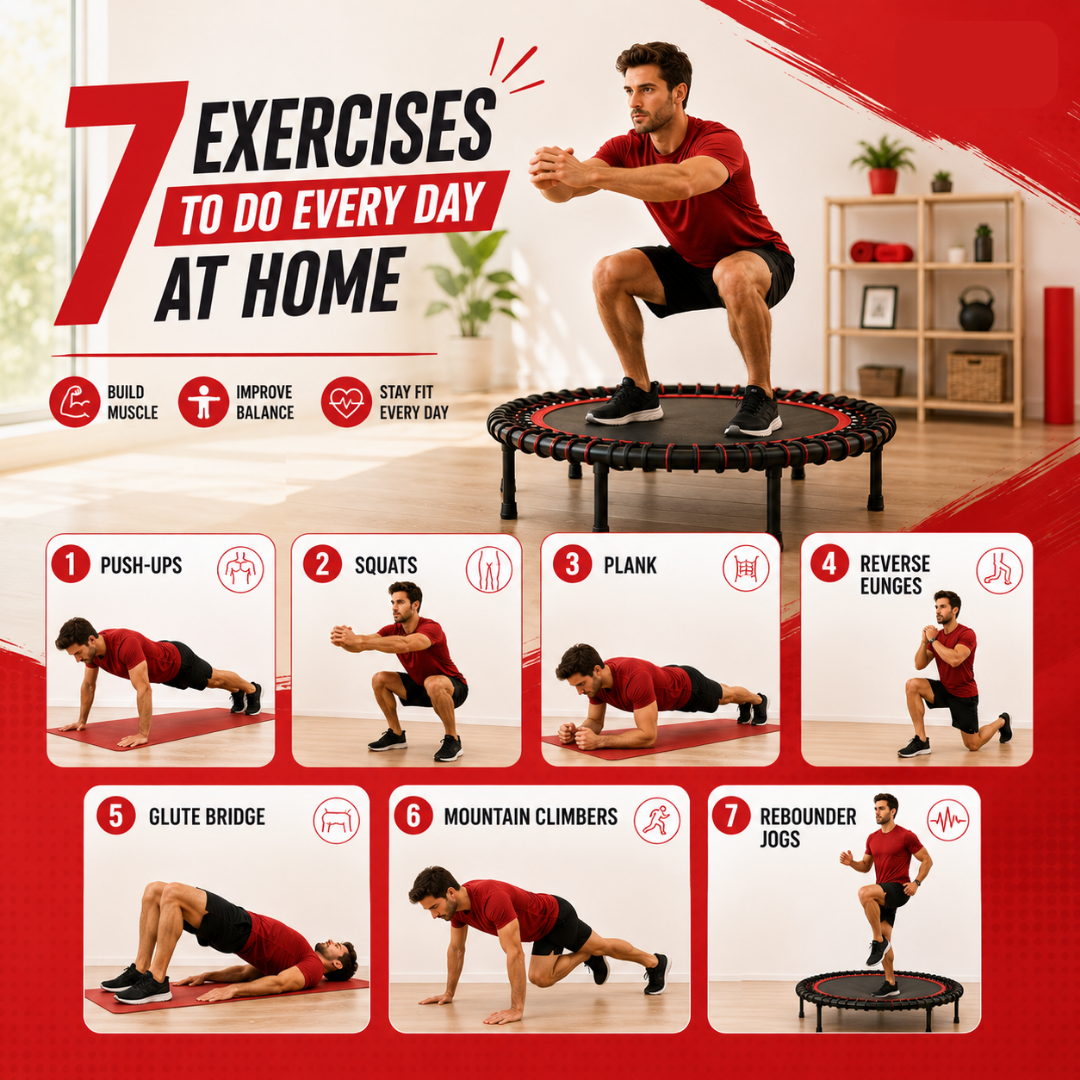
7 Exercises to Do Every Day for Desired Fitness
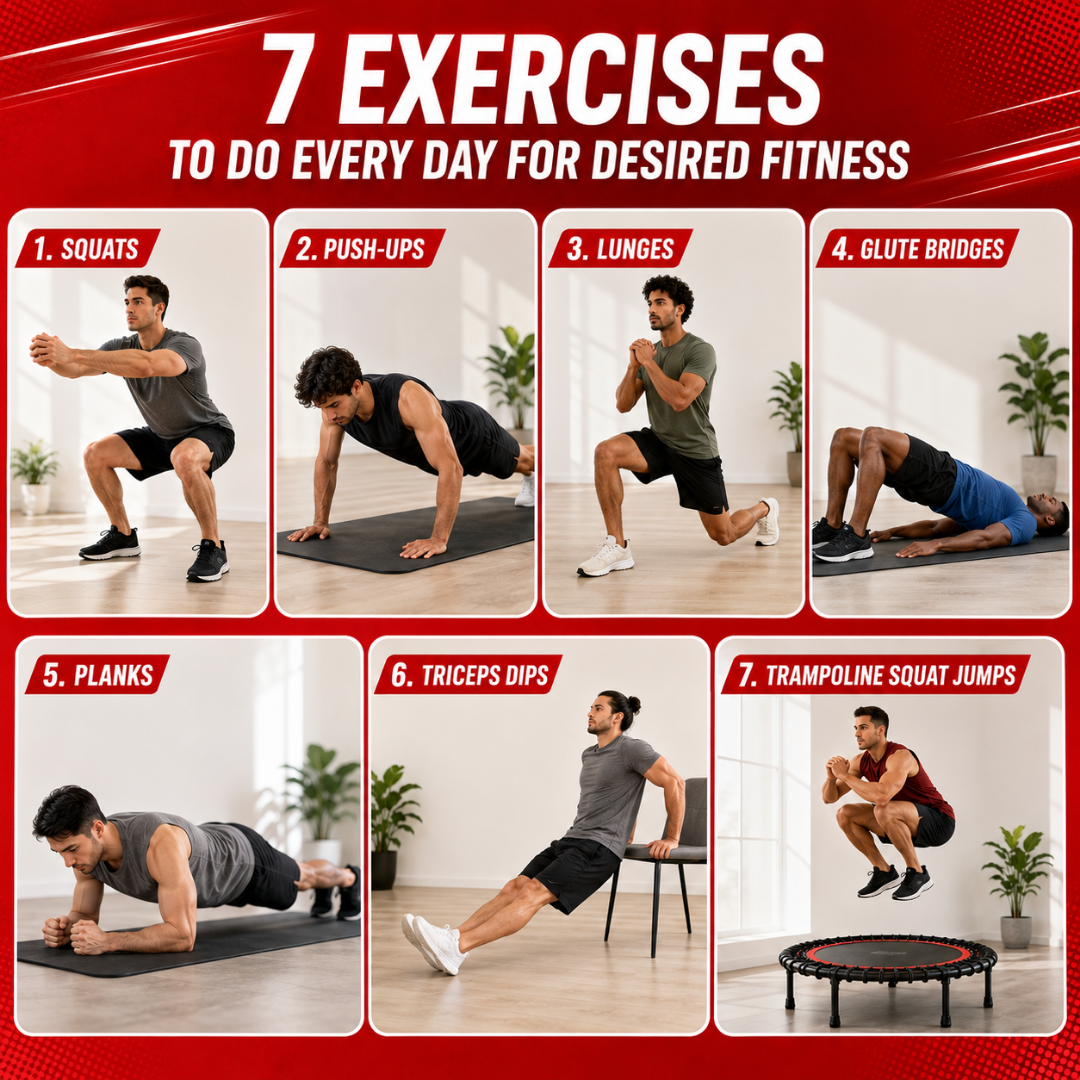
These seven moves cover your whole body without needing so much as a resistance band. We’ll go through what each one works, how to do it properly, and how to make it harder once it starts feeling easy.
1. Squats
Muscles worked: Quadriceps, hamstrings, glutes and core
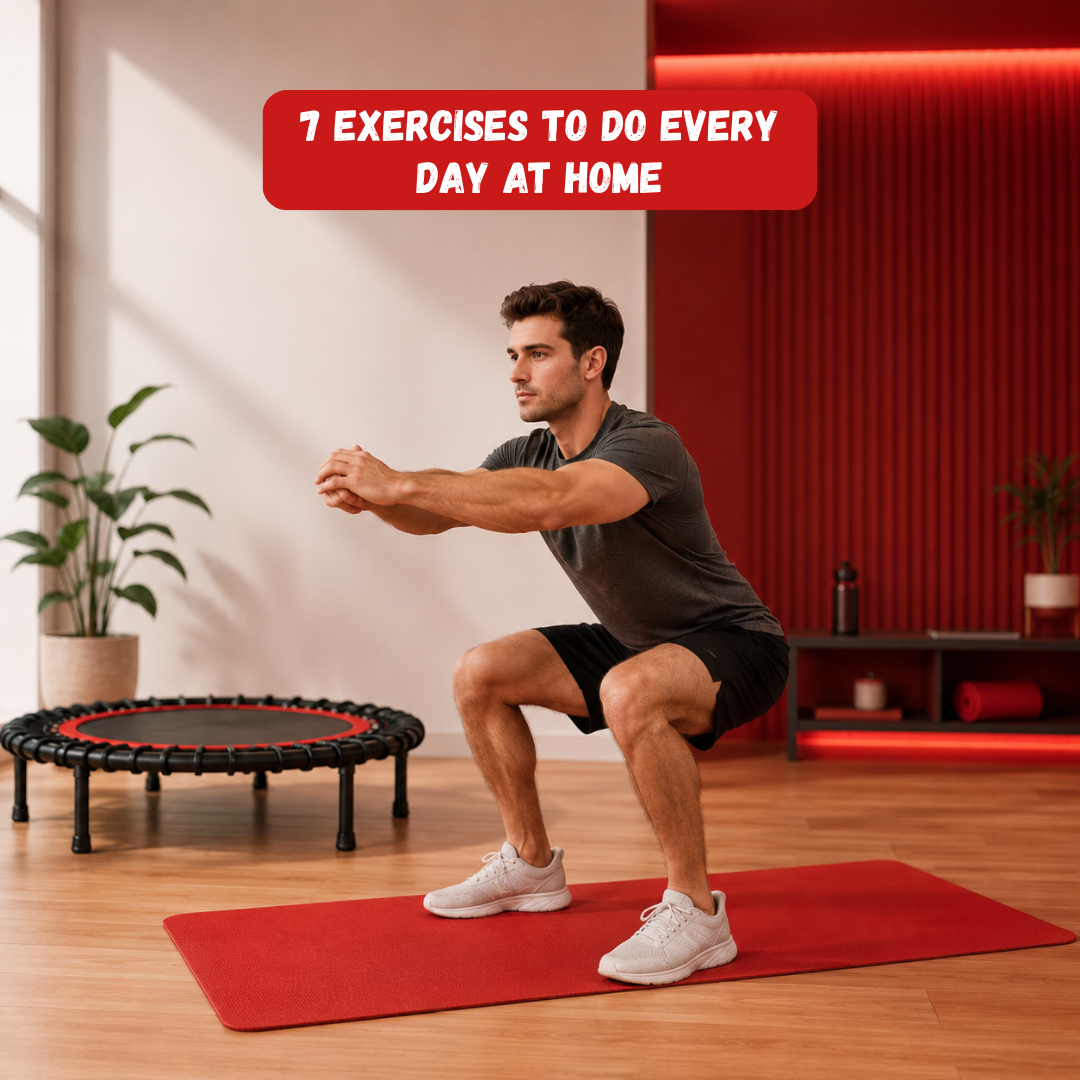
Stand with feet shoulder-width apart, then lower your hips as though sitting into a chair, keeping your chest up and knees tracking over your toes. Push through your heels to stand back up.
Beginners can hold onto a wall or countertop for balance while learning the movement. Once it feels natural, try slowing the inclination to three seconds or adding a pause at the bottom before standing. Once you are comfortable with the basics, you can try a single-leg variation and hold a weight for better results.
Suggested starting point: 8–15 reps.
2. Push-Ups
Muscles worked: Chest, shoulders, triceps and core
Hands slightly wider than shoulder-width, body in a straight line from head to heels. Lower your chest towards the floor, then press back up.
If a full press-up isn’t achievable yet, drop to your knees or place your hands on a raised surface like a sofa arm or stairs. As you get stronger, lower the surface height until you’re on the floor.
Suggested starting point: 5–12 reps.
3. Lunges
Muscles worked: Glutes, quadriceps and hamstrings
Step forward, lowering your back knee towards the floor while keeping your front knee elevated over your ankle. Push back to standing and repeat on the other leg.
Balance is often the limiting factor here before strength is. Practising slowly, near a wall you can touch for support, helps far more than rushing the reps.
Suggested starting point: 8–12 reps per leg.
4. Glute Bridges
Muscles worked: Glutes, hamstrings and core
Lie on your back, knees bent, feet flat on the floor. Squeeze your glutes and lift your hips until your body forms a straight line from shoulders to knees.
A common mistake is arching the lower back instead of using the glutes to lift. Focus on the squeeze at the top rather than the height you reach. Once that’s easy, try lifting one leg off the ground for a single-leg bridge.
Suggested starting point: 10–15 reps.
5. Planks
Muscles worked: Core, shoulders and supporting stabiliser muscles
Forearms on the floor, body straight from head to heels, hips neither sagging nor piked up. Hold.
Most beginners can manage 20 to 40 seconds with decent form. It’s better to hold a shorter plank properly than to hold a longer one while your hips drop and your lower back takes the strain. Once you’re comfortable, side planks add a fresh task.
Suggested starting point: 20–40 seconds.
6. Triceps Dips
Muscles worked: Triceps, shoulders and chest
Using a solid chair or the edge of a bench, hands gripping the edge, legs extended out in front. Lower your body by bending your elbows, then push back up.
Check the chair won’t slide before you start. Bend your knees to make the exercise easier, or straighten your legs further out to make it harder.
Suggested starting point: 6–12 reps.
7. Trampoline Squat Jumps
Muscles worked: Glutes, quadriceps, hamstrings and calves
This is where things get more interesting than your standard “seven exercises” list. Controlled jumping on a fitness trampoline recruits the same lower-body muscles as a regular squat jump, but the surface absorbs some of the landing impact, which many people find kinder on the knees than jumping on a hard floor.
Start with a small squat, then push off into a light hop rather than a high-level jump. Land softly, bending your knees to absorb the impact, and reset before the next workout. Beginners should keep the height low and controlled. More confident jumpers can add a fuller squat depth or a slight pause mid-air.
Suggested starting point: 30–60 seconds.
How Can Trampoline Exercises Support a Home Strength Routine?
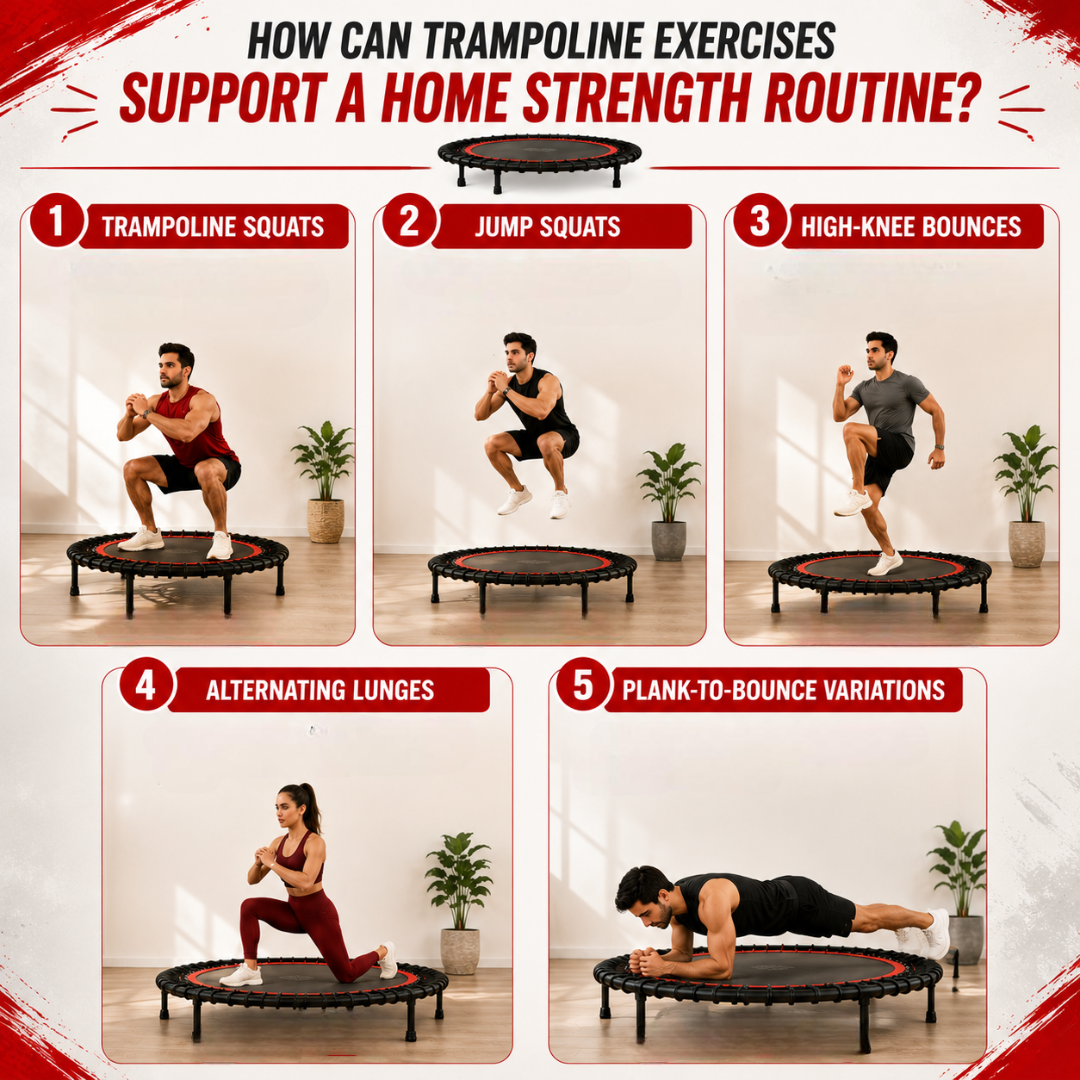
Garden trampoline exercises on a The Boomer High Performance Garden Trampoline can strengthen the legs, glutes and core while adding resistance-free jumping movements to a home workout. They’re not a replacement for resistance training if your main goal is significant muscle growth, but they’re a genuinely useful addition.
Trampoline Squats
Controlled squats performed while standing on the above-ground trampoline surface. The instability forces your stabiliser muscles to work harder than a squat on solid ground, which is useful for building lower-body control. For doing trampoline squats, you can select our versatile 10ft Gallus Playground Trampoline to enhance your performance like a bodybuilder.
Jump Squats
A progression from gentle bouncing on a rectangular trampoline into a full squat jump. This is more explosive and works the fast-twitch muscle fibres involved in power, on top of the standard strength benefits of a squat.
How Many Repetitions Should You Do to Build Muscle at Home?
Exercise | Beginner Starting Point |
Squats | 8–15 reps |
Push-ups | 5–12 reps |
Lunges | 8–12 per leg |
Glute bridges | 10–15 reps |
Plank | 20–40 seconds |
Triceps dips | 6–12 reps |
Trampoline exercises | 30–60 seconds |
These are starting ranges, not fixed rules. As the exercises become easier, the repetitions should increase, or you should switch to a harder variation.
What Should You Eat to Support Muscle Growth?

Nutrition doesn’t need to be complicated to work in your favour.
- Protein-rich foods such as lentils, vegetables, dry fruits, beans and dairy support muscle repair.
- Carbohydrates like wholegrains, oats and potatoes fuel your workouts.
- Healthy fats from nuts and olive oil support hormone function.
- Water throughout the day, particularly around training.
- Overall calorie intake roughly matching your activity level, since muscle growth needs available energy.
There’s no magic number of grams that guarantees results, and anyone promising that is oversimplifying. Consistent, balanced eating alongside regular training is what actually moves the needle.
A Simple 20-Minute Home Muscle-Building Workout
A practical routine, using everything above:
- Squats: 12 reps
- Push-ups: 8–12 reps
- Reverse lunges: 10 per leg
- Glute bridges: 15 reps
- Plank: 30 seconds
- Triceps dips: 8–10 reps
- Trampoline squat jumps: 30 seconds
Repeat for 2–3 rounds, resting briefly between exercises. Adjust reps and intensity to suit your current fitness level, and don’t be afraid to drop a round if you’re new to this. If you want to improve yourself in 6 months, you can follow this simple workout routine.