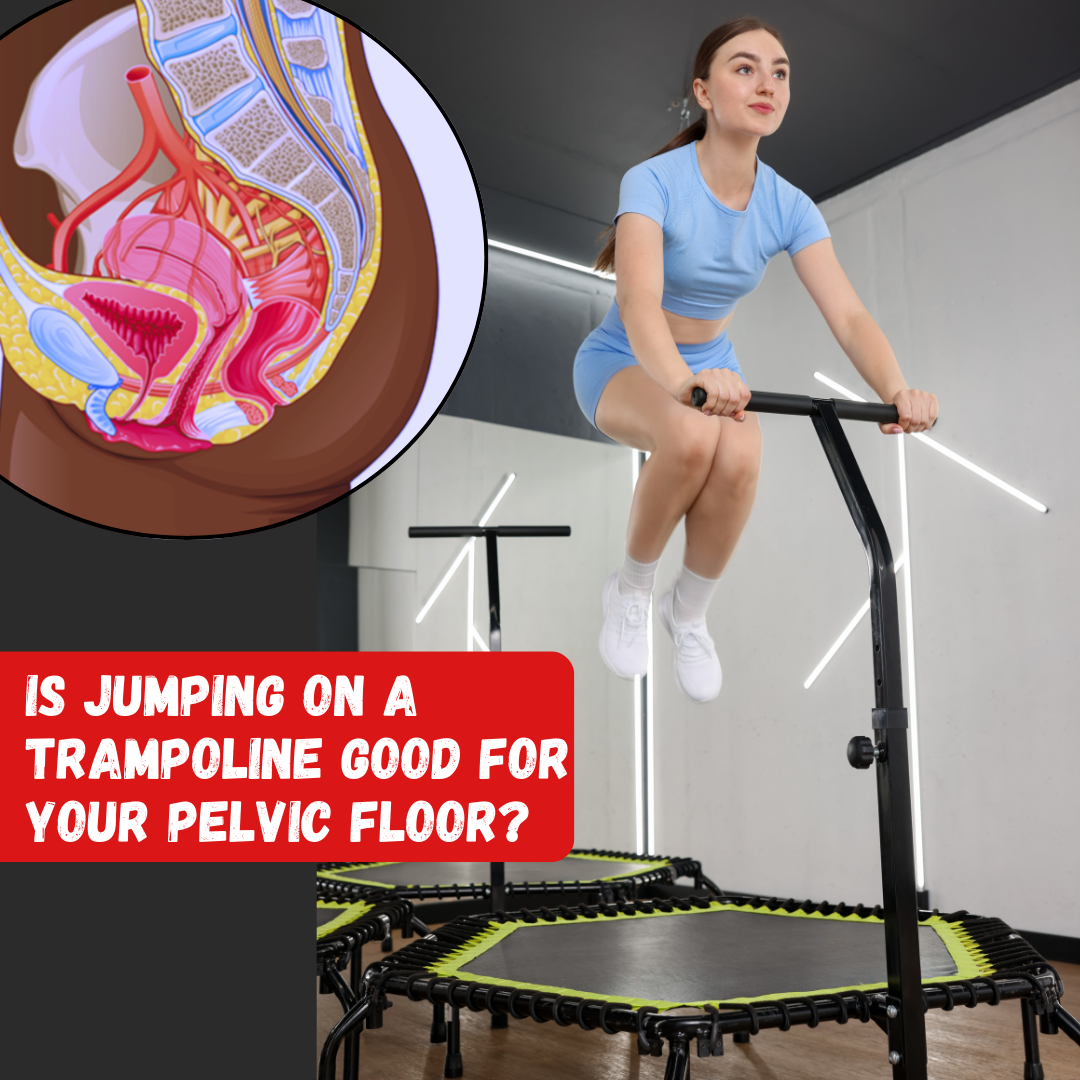
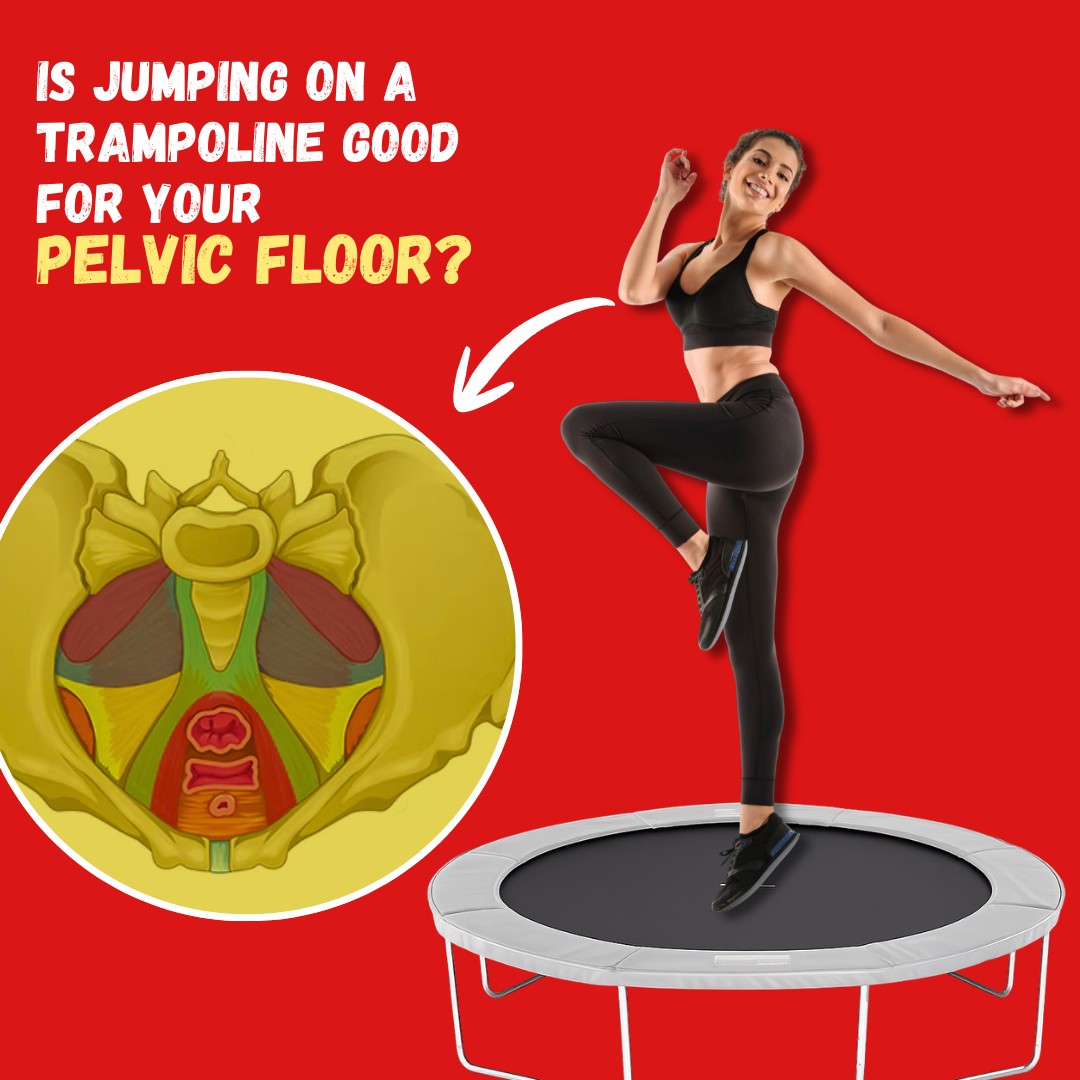
A small leak when you laugh. A sudden urge to cross your legs when you sneeze. Moments like these can feel awkward, but they often point to one quiet issue many people ignore: a weak pelvic floor. Naturally, this raises an important question many readers search for today: How to strengthen the pelvic floor? Or is jumping on the trampoline good for my pelvic floor? The pelvic floor is a group of supportive muscles that help control the bladder, stabilise the core, and support daily movement. When these muscles react slowly to pressure from coughing, lifting, or running, problems begin to show.

This is where trampolining enters the conversation. Gentle bouncing on a right trampoline creates controlled pressure changes that prompt the pelvic floor to react and lift in real time. When practised correctly, trampoline exercise can help train these muscles to respond faster and with better control. In this guide, you will discover what research says, how the body responds, and the safest trampoline exercises that can strengthen and support your pelvic floor health.
What Research Says About Trampolining for the Pelvic Floor?
Before recommending any exercise for pelvic health, it helps to look at what research actually shows. Studies on mini-trampoline or fitness trampoline exercise reveal that the body responds in a very specific way during bouncing. These responses explain why many experts now consider trampolining a useful activity for pelvic floor training.
1. Pelvic Floor Muscles Activate Naturally
Research using electromyography (EMG) has shown that mini-trampoline movement activates the pelvic floor muscles strongly and consistently. EMG measures electrical activity in muscles, so it allows researchers to see when muscles switch on during movement.
During gentle bouncing, two phases occur: landing and rebound. When your feet meet the mat, the body experiences a brief downward pressure. The pelvic floor reacts instantly to stabilise the pelvis and protect the bladder.
This reaction is not forced or consciously squeezed. Instead, the muscles contract reflexively, much like the way your body balances itself when you step on uneven ground. Over time, repeated reflex contractions help train the pelvic floor to respond faster and more efficiently.
2. Improvement in Urinary Control
Researchers have also studied how trampolining affects bladder control. One notable programme followed postmenopausal women over 12 weeks using a structured mini-trampoline routine.
Participants exercised for about 30 minutes, three times per week. By the end of the programme, many women experienced noticeable improvements.
Key outcomes included:
- Fewer episodes of urinary leakage.
- Faster pelvic floor reaction during pressure changes.
- Better balance and lower-body coordination.
The improvement did not come from aggressive jumping. Instead, controlled bouncing helped the muscles practise reacting to small pressure shifts, which is exactly what happens during everyday activities.
3. Reflexive Training for Daily Life
The pelvic floor works best when it responds automatically. In real life, pressure changes happen suddenly when you cough, sneeze, laugh, or lift something heavy.
Trampoline exercise trains the muscles for these moments. Each bounce creates a quick cycle of loading and unloading through the pelvis.
This repeated pattern teaches the pelvic floor to:
- Contract quickly when pressure increases.
- Relax again once the load disappears.
- Work together with the core and hip muscles.
Because the movement is rhythmic and controlled, the muscles practise timing rather than brute strength. This type of training improves how the pelvic floor reacts in daily situations.
When Impact Becomes Too Much
While moderate trampolining supports pelvic floor function, very high-impact training tells a different story. Studies on elite female trampolinists have reported a high rate of stress urinary incontinence.
In some cases, athletes training on full-sized competition trampolines experienced leakage during intense routines. These athletes perform repeated high jumps that generate far greater forces than typical fitness bouncing.
The key difference lies in intensity and repetition.
- Competitive trampolining involves powerful jumps and long training sessions.
- Mini-trampoline fitness focuses on gentle, controlled bouncing.
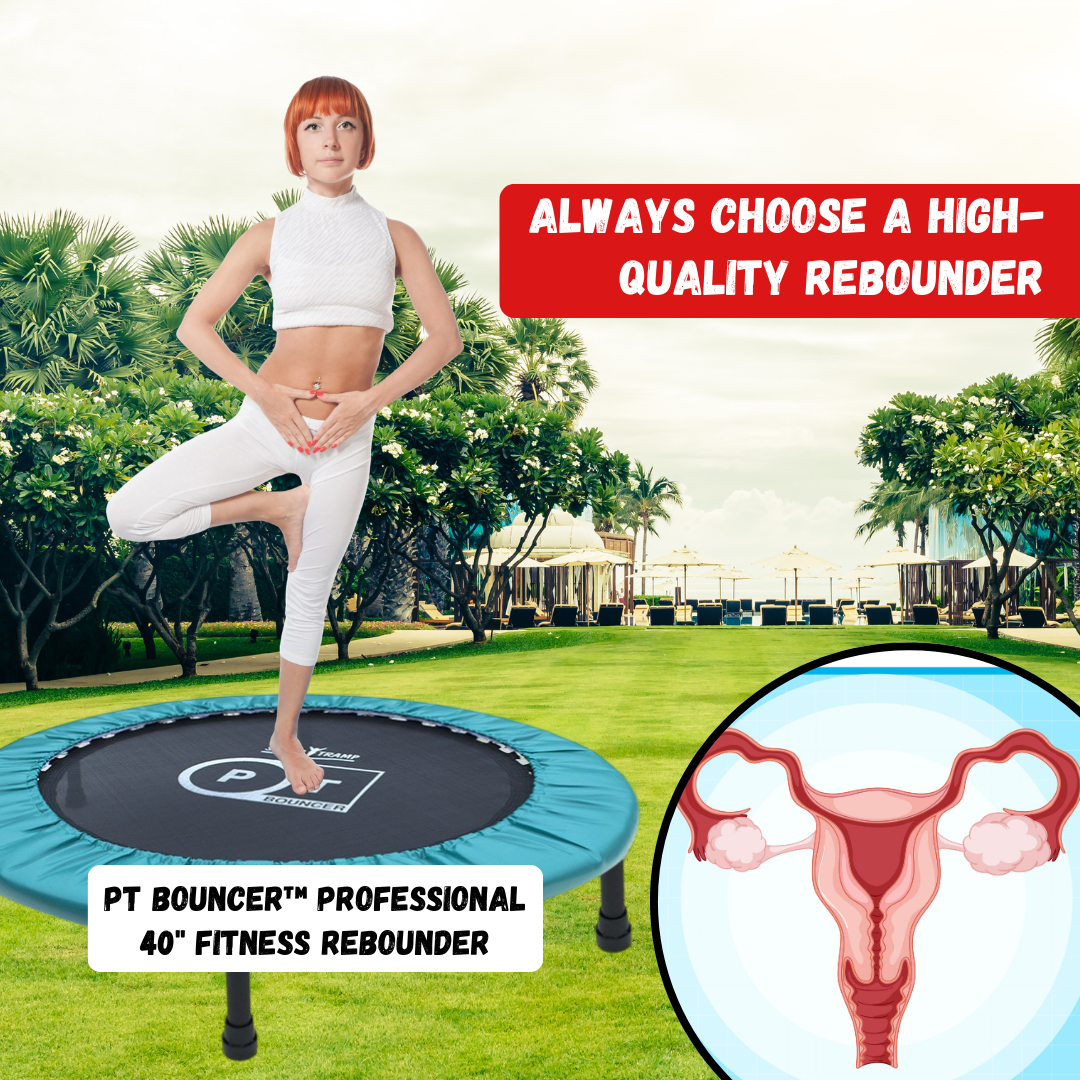
For general exercise, a small rebounder, the PT Bouncer™ Professional 40″ Fitness Rebounder, with low-impact movement keeps pressure manageable while still activating the pelvic floor.
Clinical Context and Research Observations
Researchers have explored trampolining across different groups. Their findings provide a clearer picture of how the body responds.
Study Focus | Observed Outcomes |
Postmenopausal Women | Reduced urinary leakage, improved bone density, better balance |
Young Healthy Women | Increased pelvic floor muscle activation during bouncing |
Active Women | Improved pelvic floor coordination during exercise |
These observations suggest that controlled trampoline exercise can support pelvic floor training when performed correctly and progressively.
Research clearly shows positive muscle activation and functional benefits. The next question naturally follows: why does trampolining help the pelvic floor so effectively? The next section explains the key physical benefits that make this simple movement surprisingly powerful for pelvic health.
Core Benefits of Trampolining for the Pelvic Floor
Once you understand how the body reacts during bouncing, the next step is to look at the real benefits. Research and practical experience show that gentle trampoline exercise trains the pelvic floor in ways many traditional exercises cannot.
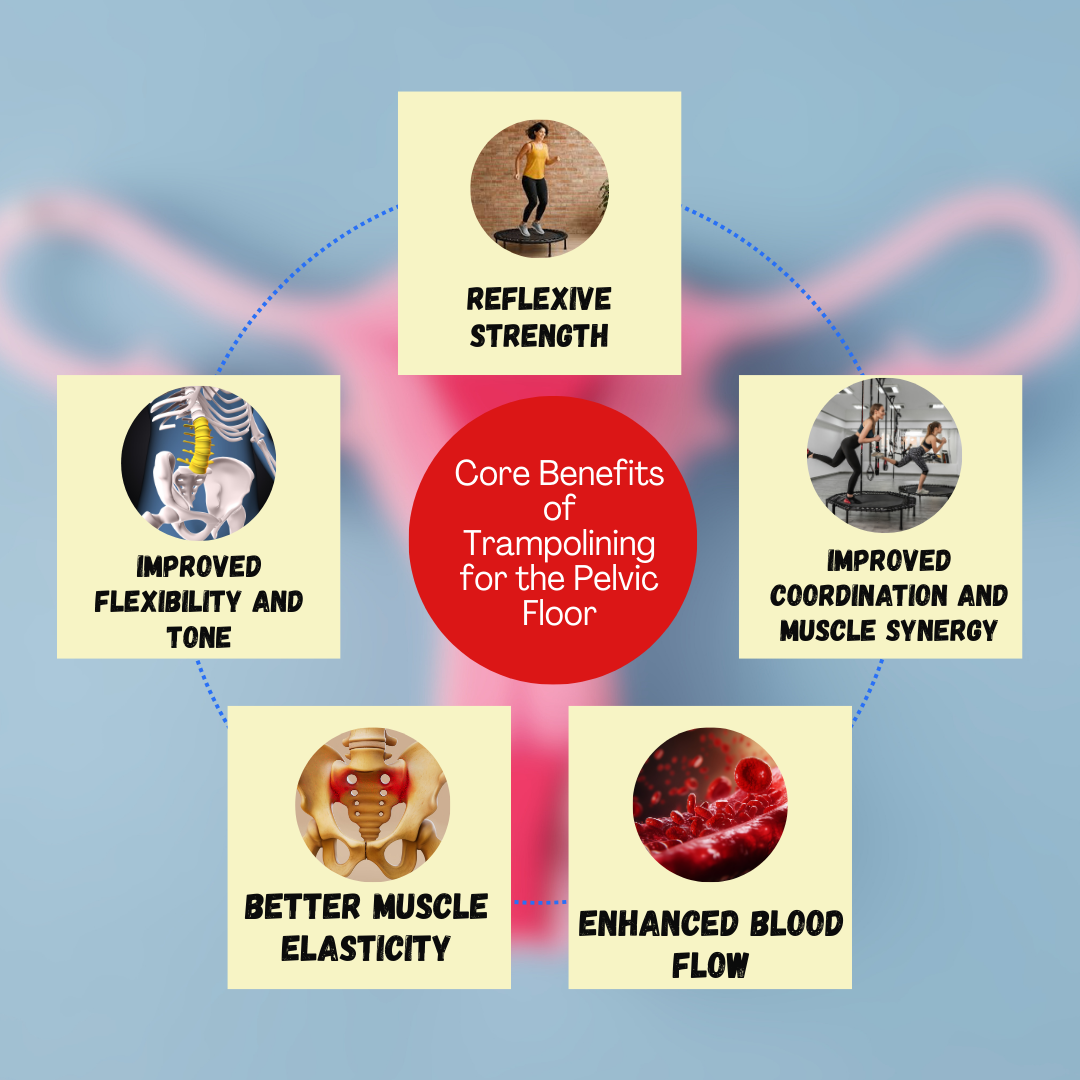
1. Reflexive Strength
- Each time you land on the trampoline mat, your body manages a small downward force.
- The pelvic floor reacts instantly by lifting and tightening to stabilise the pelvis and support the bladder.
- This repeated reflex action strengthens the muscles naturally.
2. Improved Coordination and Muscle Synergy
- During garden trampoline exercise, it works together with the core, glutes, and inner thighs.
- For example, when you bounce lightly with knees soft and posture upright, the inner thighs assist pelvic muscle activation while the core stabilises the torso.
- This teamwork improves coordination across the entire pelvic region.

3. Enhanced Blood Flow
- Rhythmic bouncing encourages healthy circulation through the pelvis.
- Better blood flow helps deliver oxygen and nutrients to the muscles that support bladder control and pelvic stability.
4. Better Muscle Elasticity
- Healthy pelvic muscles need to contract and relax quickly.
- Regular rectangle trampoline movement trains this ability by creating gentle cycles of loading and release.
- Instead of becoming stiff or over-tight, the muscles stay responsive and flexible.
- This responsiveness helps the pelvic floor react better during sudden pressure changes.
5. Improved Flexibility and Tone
- During bouncing, the pelvic floor repeatedly lifts and relaxes in a natural rhythm.
- This action improves functional tone, meaning the muscles remain strong without becoming overly tense.
- Consistent trampoline exercise also improves the timing of muscle contractions.
- That timing plays an important role in preventing leakage during activities like coughing, lifting, or jogging.
Now that the benefits are clear, the next step becomes practical.
The following section explains how to use a trampoline correctly with specific exercises designed to strengthen the pelvic floor safely and effectively.
Best Exercises for Pelvic Floor Strength

Once you understand how bouncing activates the pelvic floor, the next step is learning the right movements. These trampoline exercises keep the impact gentle while training the muscles to react quickly and stay supportive.
1. Health Bounce (The Starter Move)
- This is the safest place to begin. Stand with feet hip-width apart and let the mat move under you while your feet stay in contact with the surface.
- Keep your posture tall and breathe steadily while the body creates small, controlled bounces.
- This movement wakes up the pelvic floor and trains it to react to light pressure changes.
Safety tip: Lift the pelvic floor gently rather than clenching tightly.
2. Ball Squeeze Jumps
- Place a soft exercise ball or small cushion between your knees and perform small controlled jumps.
- The inner thighs engage to hold the ball in place, and these muscles naturally assist pelvic floor activation.
- This connection helps strengthen the entire pelvic support system.
Useful tip: Begin with small bounces before progressing.
3. Seated Bounces
- Sit in the centre of the trampoline with feet resting lightly on the frame or floor.
- Bounce gently so the mat moves beneath your sit bones.
- This position stimulates pelvic floor muscles directly without placing heavy pressure on them.
Safety tip: Keep breathing steady throughout the movement.
4. Heel Lift Bounce
- Start with a gentle bounce and lift one heel at a time while the toes stay on the mat.
- This small shift in weight forces the pelvic muscles to stabilise the pelvis.
- It also improves balance and muscle response.
5. Side-to-Side Bounce
- Shift your weight slowly from one foot to the other while maintaining a light bounce.
- The pelvic floor reacts to these side movements by stabilising the hips and lower core.
- This exercise builds coordination and functional pelvic control.
Useful tip: Keep your chest upright and your posture relaxed.
Now that the exercises are clear, one final step remains.
Before starting any routine, it is important to understand how to practise trampolining safely so the pelvic floor gains strength without unnecessary strain.
Safety Tips for Using Trampolining as Pelvic Floor Exercise
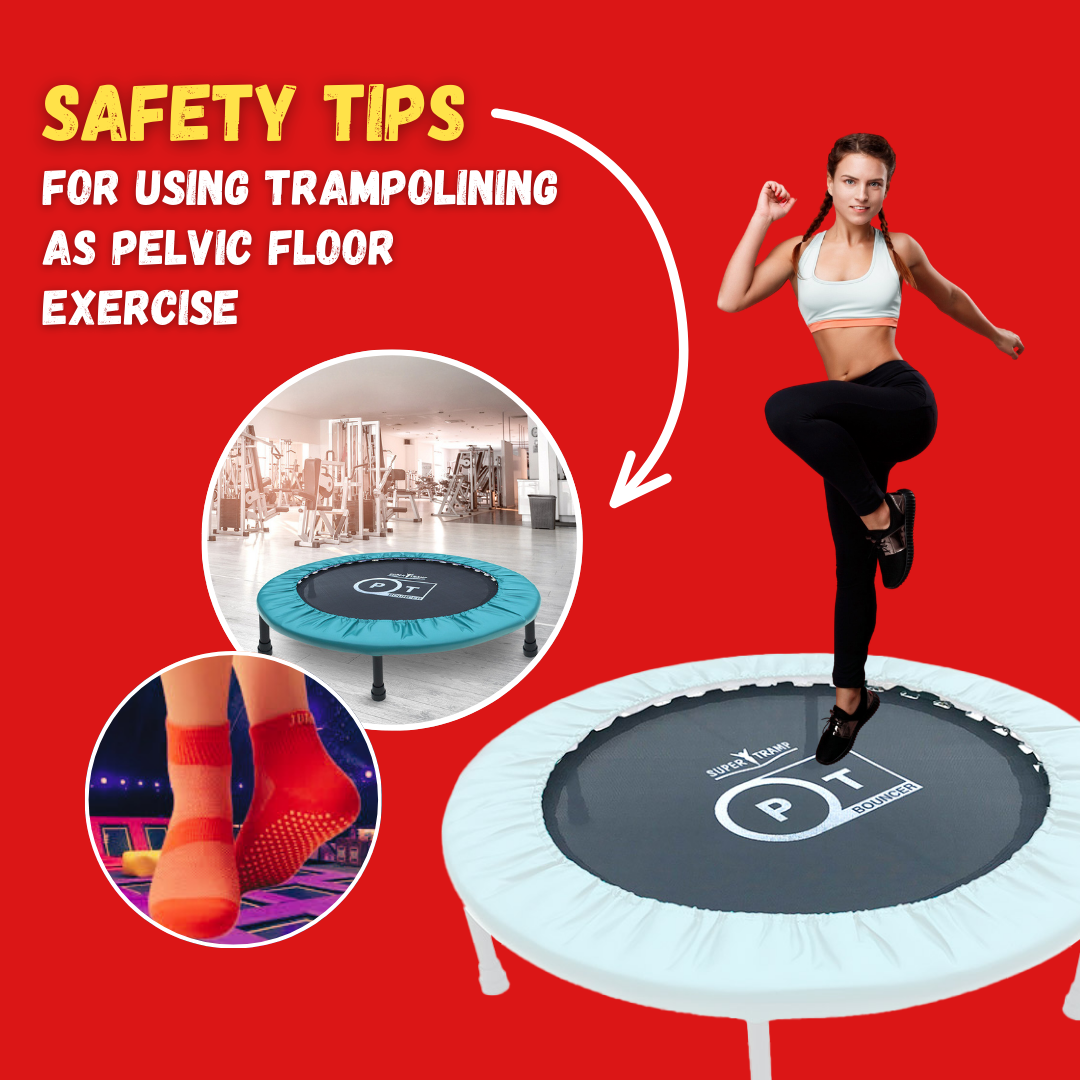
Before starting trampoline exercise for pelvic health, proper preparation matters. A few simple habits can protect the pelvic floor and allow the muscles to strengthen without strain.
Preparation Before You Start
- Empty your bladder first.
- Activate the muscles with light Kegels.
- Use a high-quality mini rebounder.
- Wear grip trampoline socks.