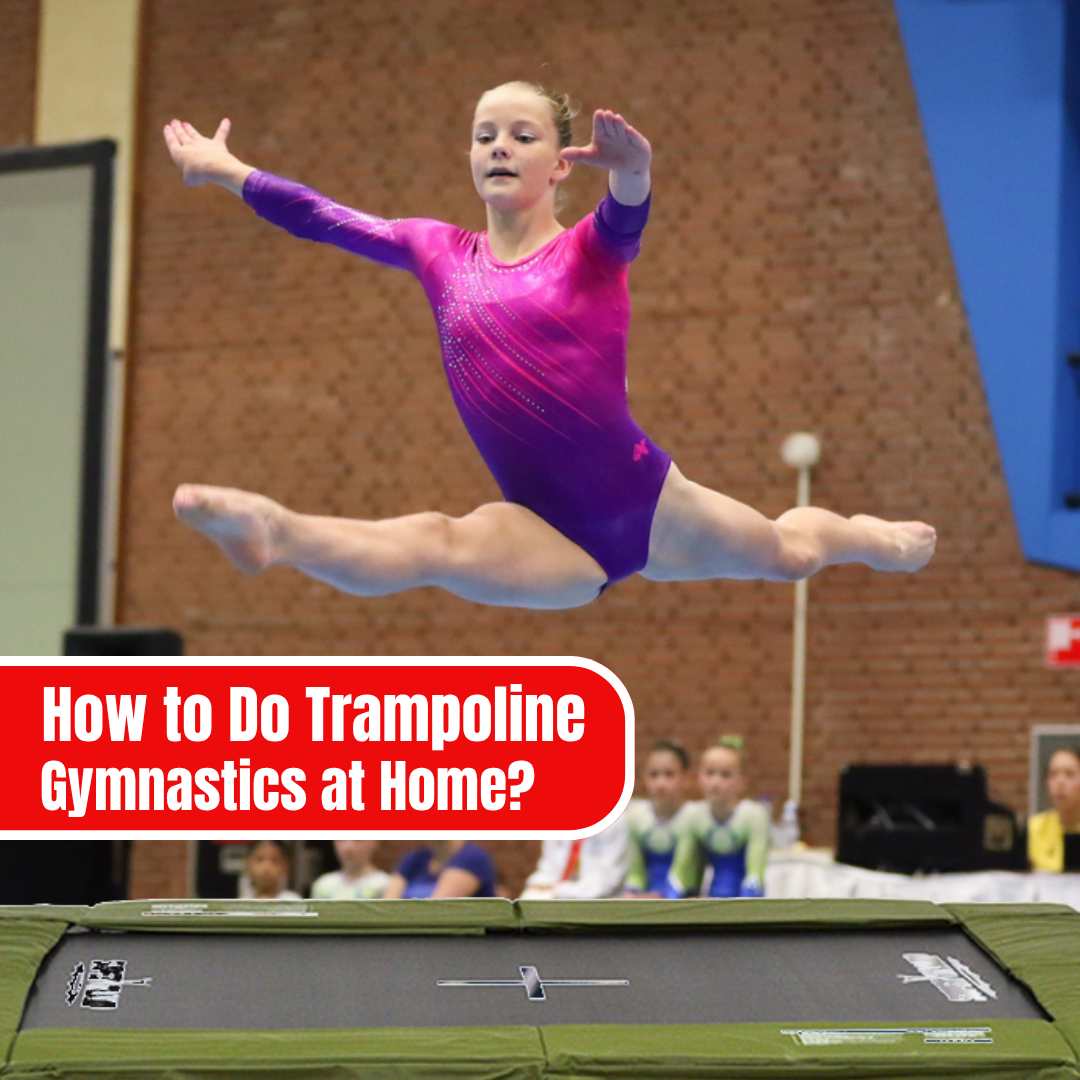
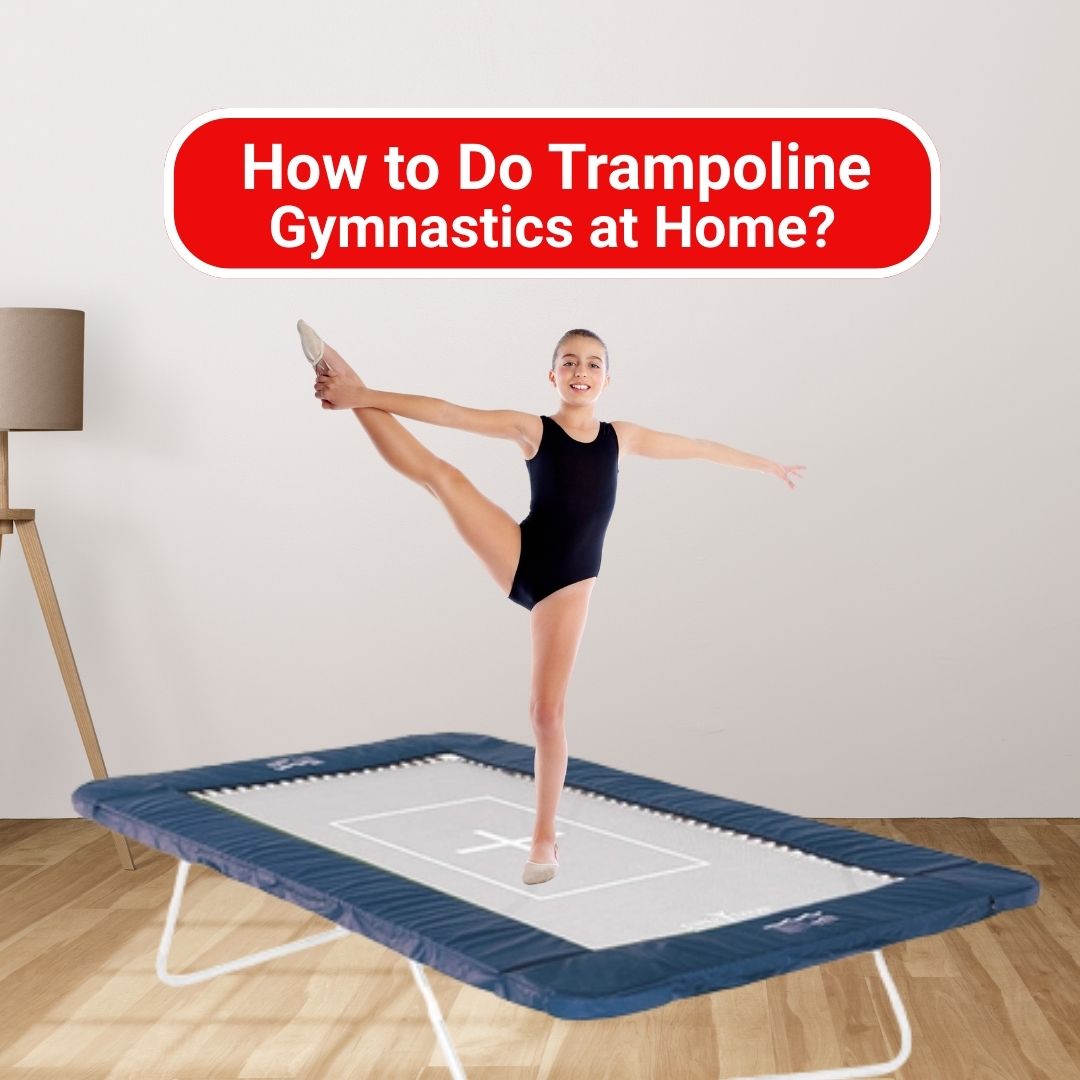
A child bouncing in the garden, a teenager trying to copy a move from a gymnastics video, or a parent wondering if that trampoline could do more than simple jumps. Trampoline gymnastics often begins exactly this way, with curiosity mixed with a small worry: Is it safe to practise at home, and where should we even start? Many home trampoline owners enjoy the bounce but never realise that the same surface can help build real gymnastics skills when used correctly.

With the right approach, trampoline gymnastics becomes far more than play. It strengthens balance, improves coordination, and teaches the body how to move confidently in the air. Beginners, children, and even adults can learn simple techniques without stepping into a professional gym. However, safe progress always begins with understanding the basics. Before trying any tricks, it helps to know why trampolines play such an important role in gymnastics training.
Do Trampolines Help With Gymnastics?
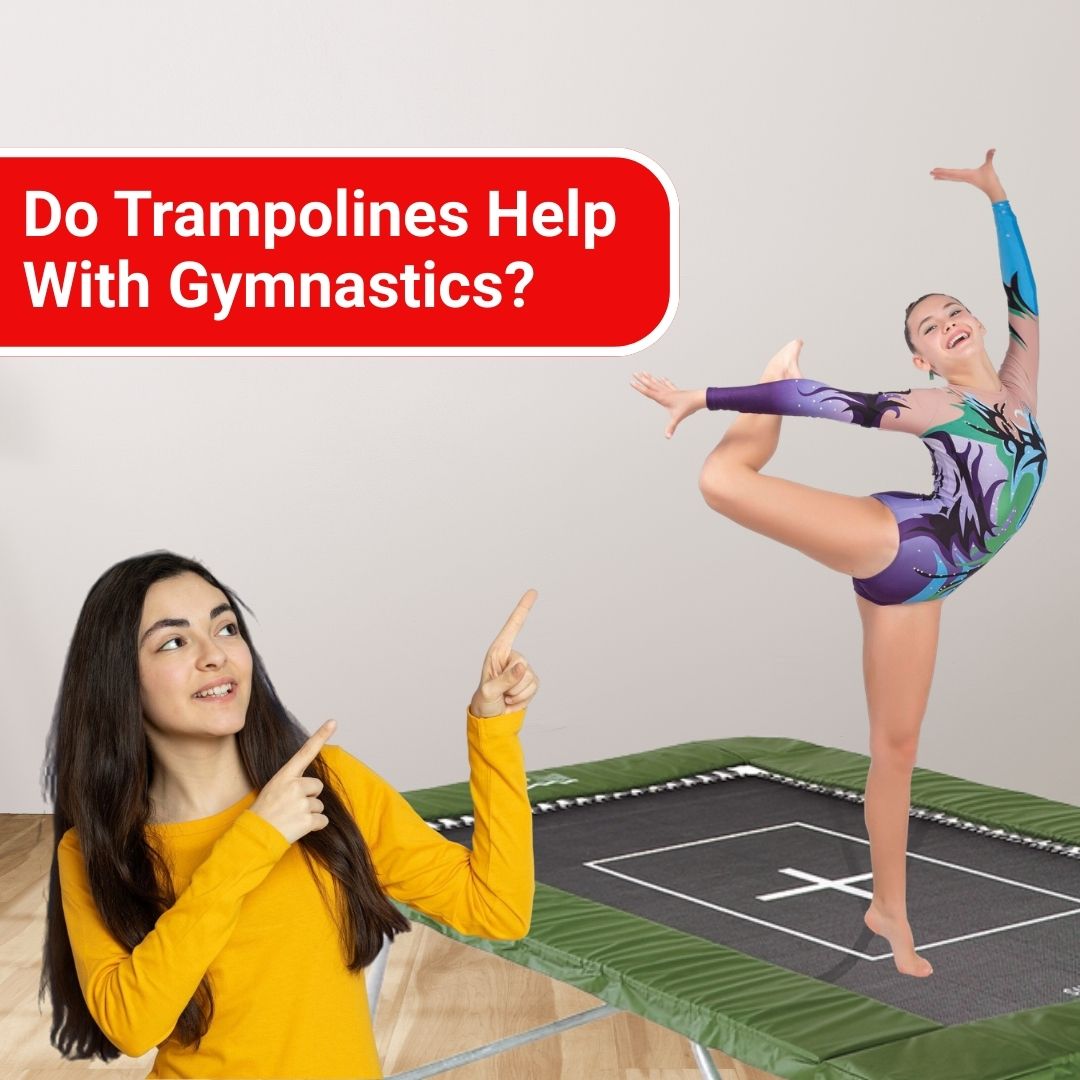
Gymnasts often use rectangle trampolines because they help the body learn control in the air without the hard impact of the floor. The steady bounce allows beginners to repeat movements safely while improving balance, timing, and body awareness.
Why Trampolines Are Used in Gymnastics Training
- Lower impact on joints: The trampoline mat absorbs force when you land. This allows athletes to practise jumps and rotations without placing heavy stress on knees and ankles.
- Better body positioning in the air: The bounce gives learners extra time to adjust their posture. For example, when practising a tuck jump, a beginner can focus on lifting the knees and keeping the core tight before landing.
- Skill preparation for floor routines: Many gymnastics programmes include trampoline gymnastics drills before teaching twists or flips on solid ground.
However, learning trampoline gymnastics at home always begins with proper safety and strong fundamentals.
Start Safe: The Fundamentals of Trampoline Gymnastics
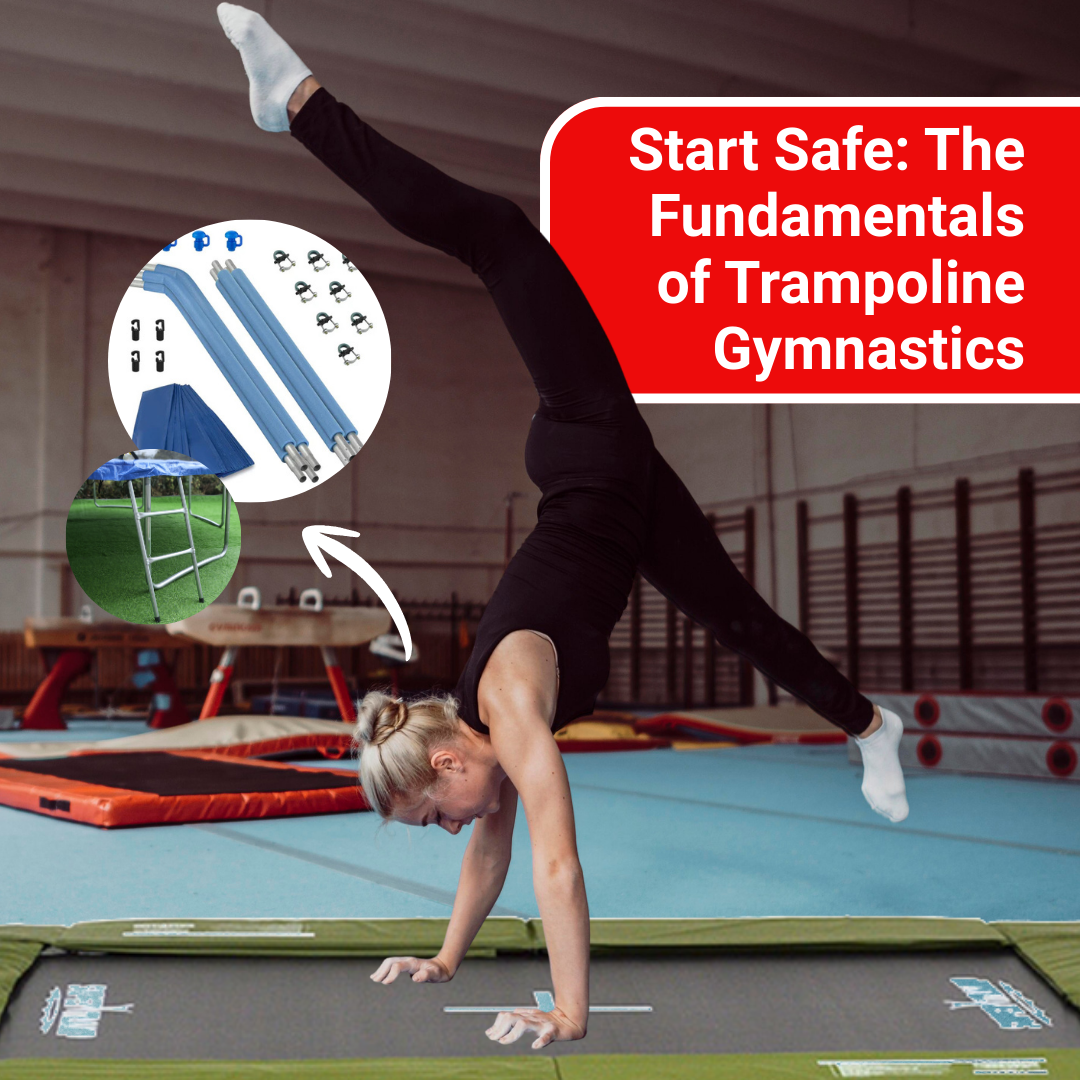
Before practising any trampoline gymnastics skills, build a strong safety routine first. Good habits protect the body and help beginners learn control much faster.
1. Safety First
Start with the basics every gymnast follows. A few small checks prevent most accidents.
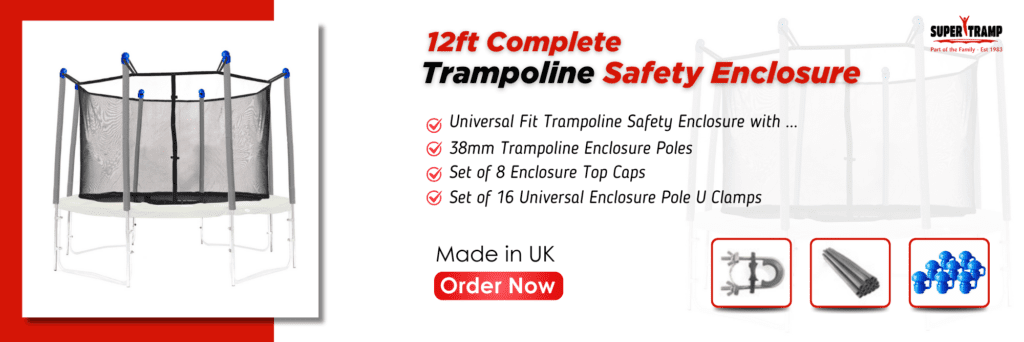
- Cover trampoline springs and frame with safety pads to avoid contact injuries.
- Never practise alone, especially when trying new trampoline gymnastics skills.
- Always use trampoline socks to avoid injuries.
- Children should always have adult supervision during practice.

5. Control Over Height
Beginners often jump too high, too soon. Instead, maintain a steady rhythm of small controlled bounces, which improves technique and landing accuracy.
6. Core Strength Matters
Keep the stomach muscles tight while bouncing. A strong core stabilises the body and protects the lower back during trampoline gymnastics movements.
7. Build Aerial Awareness
Practise turning slightly while bouncing. Facing forward, sideways, and backwards helps the body understand direction while in the air.
8. Weather and Seasonal Care
Avoid using the trampoline when the mat is wet, icy, or windy. Slippery surfaces quickly reduce control and increase risk.
Once these fundamentals become routine, beginners can safely move on to learning simple trampoline gymnastics skills and jumps.
Trampoline Gymnastics Tricks to Practise at Home
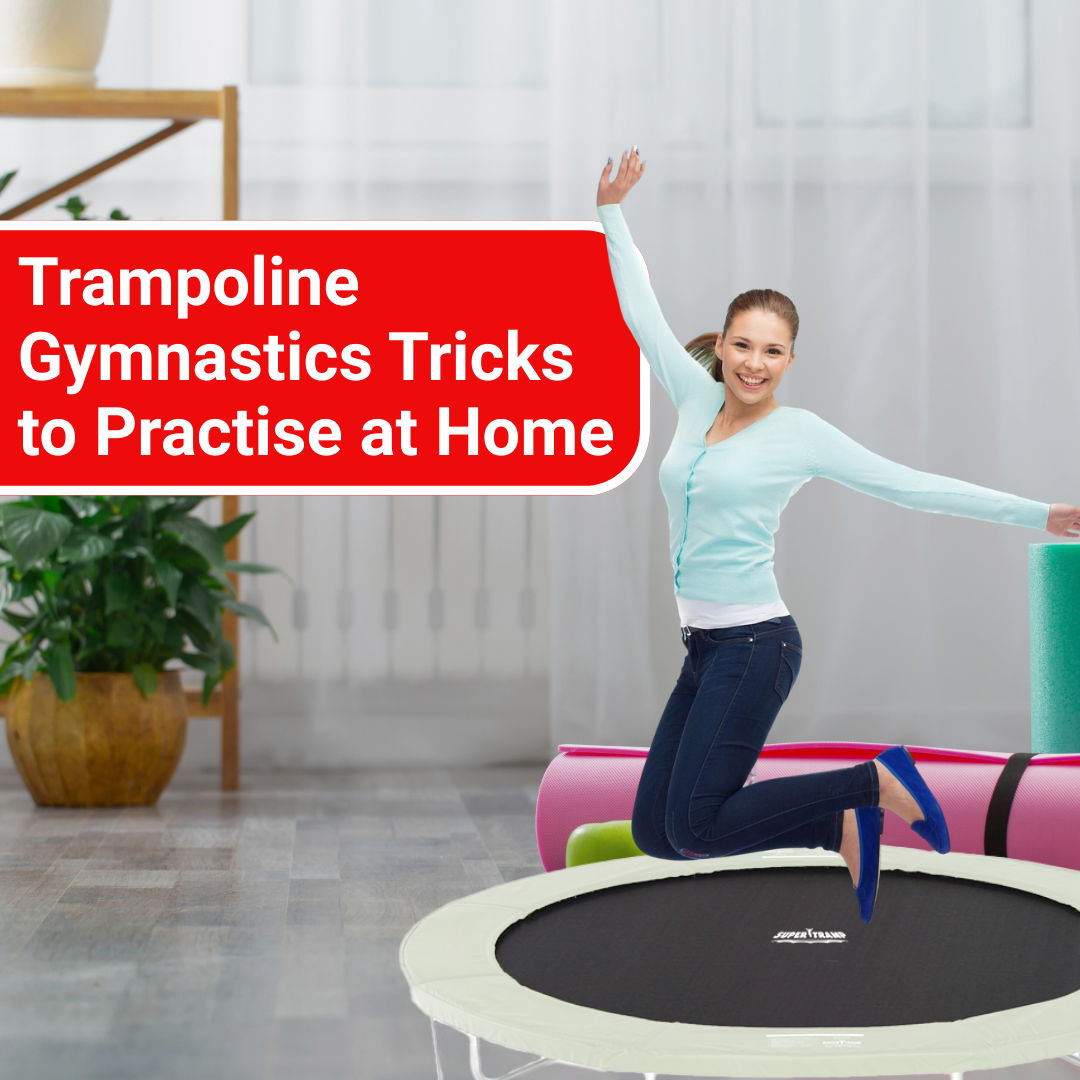
Once safety habits feel natural, you can begin practising trampoline gymnastics skills that build real control in the air. Start with simple movements, repeat them often, and only progress when your landings stay balanced.
Master the Basics (Safety and Control)
Before attempting tricks, learn how to control the bounce. Gymnastics coaches often stress this step because control keeps every movement safe and accurate.
1. Freeze or Stop Bounce
Stopping correctly prevents loss of balance.
- Bend the knees deeply as you land.
- Let the legs absorb the bounce until the garden trampoline mat becomes still.
This simple habit keeps trampoline gymnastics sessions safe, especially when learning new skills.
2. Straight Jumps
This is the foundation of almost every trampoline movement.
- Leap from the mat’s centre.
- Keep the chest lifted and the body straight.
A steady, straight jump helps beginners maintain rhythm and improves landing accuracy.
3. Core Strength Training
A strong core stabilises the body while airborne.
- Hollow holds strengthen abdominal control.
- Crunches support balanced posture.
- V-sits improve body tension for jumps and rotations.
These exercises directly support better trampoline gymnastics form.
Beginner Gymnastics Skills
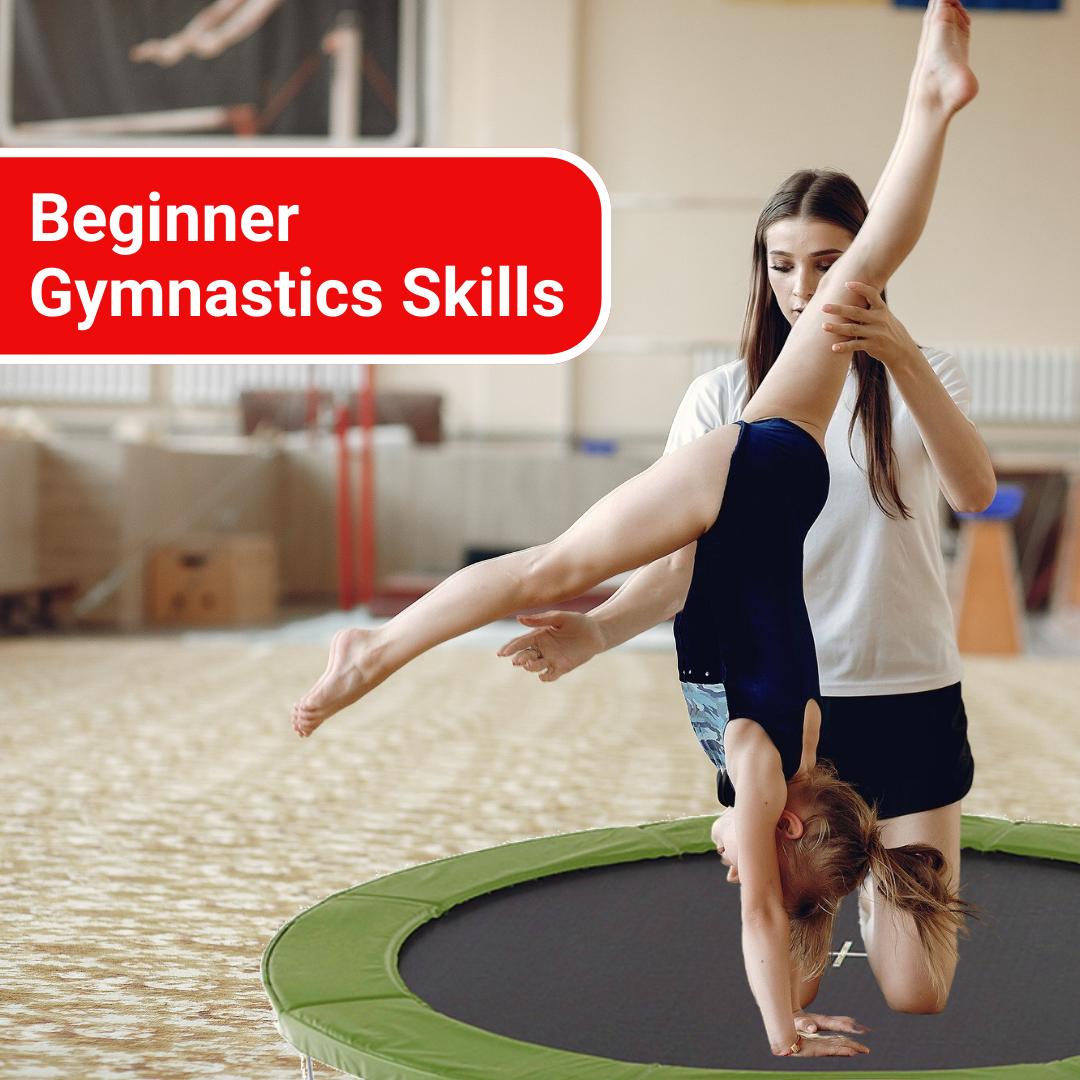
Once bounce control improves, you can practise basic jump shapes used in trampoline gymnastics routines.
1. Tuck Jump
Lift both knees toward the chest while in the air. Extend the legs again before landing to keep balance.
2. Pike Jump
Keep both legs straight and raise them forward while reaching toward the toes. This movement improves flexibility and control.
3. Straddle Jump
Open the legs sideways into a wide “V”. Maintain a straight back and return the legs together before landing.
4. Seat Drop
Land in a seated position with legs straight and hands beside the hips. Use the rebound to return smoothly to standing.
These skills train balance and body awareness without complex rotations.
Intermediate Rotations
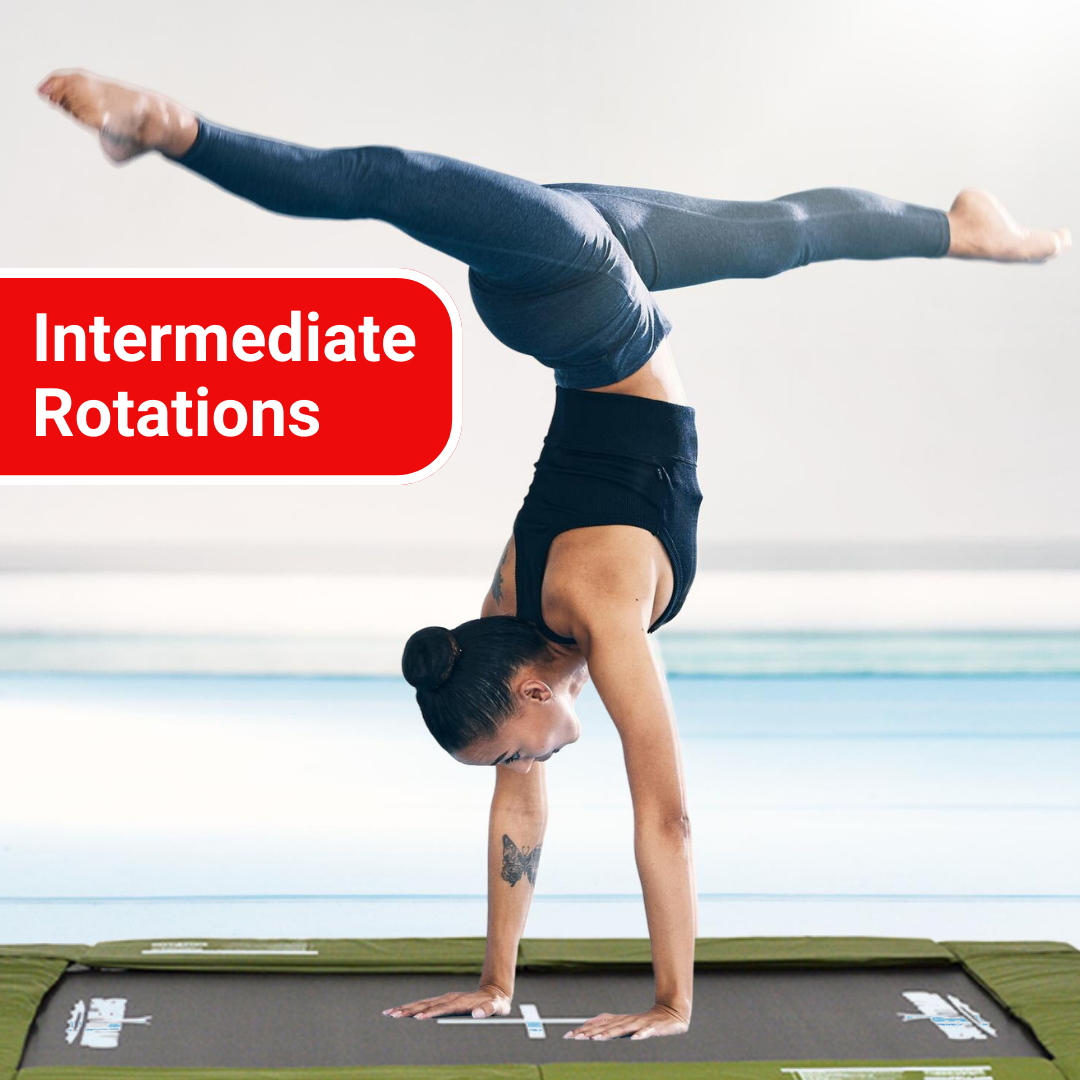
After mastering upright jumps, you can gradually add controlled turns.
1. Half and Full Twists
Start with a 180-degree turn. When this feels comfortable, progress to a 360-degree twist while keeping the body straight.
2. Swivel Hips
A seat drop should be performed, followed by an upward bounce, a half-twist, and a second seat drop facing the opposite direction.
3. Front and Back Drops
Lie flat on the stomach or back with the body firm. The mat’s rebound helps you return safely to standing.
These movements help develop timing and aerial awareness in trampoline gymnastics.
Advanced Acrobatics (Only With Coaching)
Some trampoline gymnastics skills require professional instruction and safety equipment.
Examples include:
- Front somersaults
- Back somersaults
- Barani (front flip with half twist)
- Back handspring
Never attempt these movements without trained supervision. Coaches use spotting techniques and proper progression to reduce injury risk.
Once these skill levels become clear, it is equally important to understand common mistakes beginners often make while practising trampoline gymnastics.
Common Mistakes Beginners Should Avoid
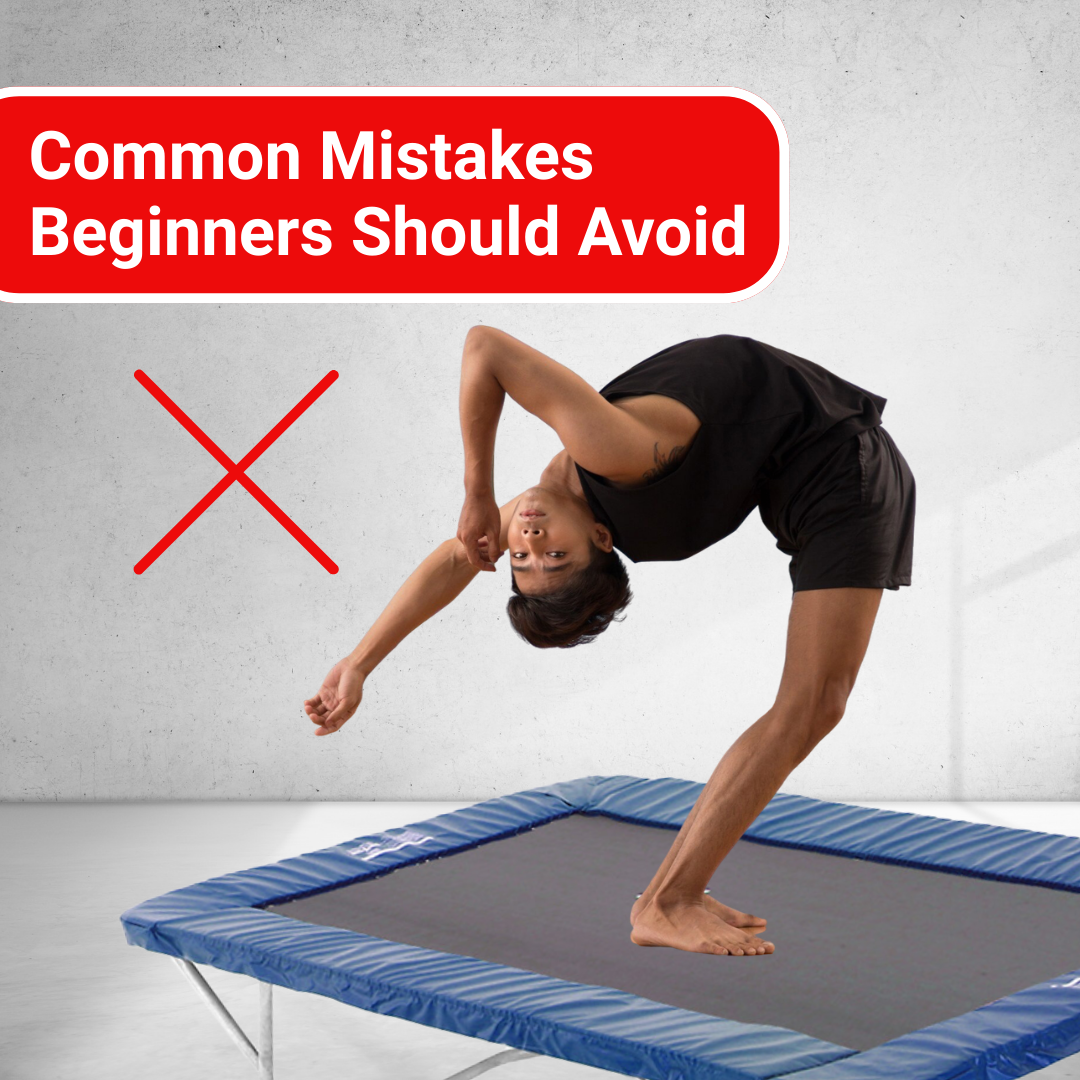
Learning trampoline gymnastics takes practice, but small mistakes often slow progress or increase the risk of injury. Many beginners focus on height or tricks too early, while experienced coaches always prioritise body control first.
Below are some common issues beginners face and how to correct them.
1. Arching the Back Instead of Keeping the Core Tight
A loose core allows the lower back to curve during jumps or drops. This weak position reduces control and can strain the spine.
- Keep the stomach muscles engaged while bouncing.
- Maintain a straight body line from shoulders to hips.
A strong core helps stabilise every trampoline gymnastics movement.
2. Dropping the Head Backwards During Drops
Many beginners pull their head backwards when landing on their back or stomach. This disrupts balance and makes the body rotate unexpectedly.
- Keep the head in a neutral position.
- Focus the eyes forward or slightly upward.
This simple adjustment improves alignment and safer landings.
3. Over-Rotating Twists or Flips
Too much rotation usually happens when the bounce is too powerful.
- Start with small, controlled turns.
- Practise half twists before attempting full rotations.
Controlled movement always leads to better trampoline gymnastics technique.
4. Jumping Too Close to the Edge
The safest bounce always happens near the centre of the mat.
- Reset your position after every jump.
- Keep your landing area within the centre circle.
Maintaining centre control protects balance and prevents falls.
Once these mistakes are understood, the next step is choosing a reliable trampoline that supports safe gymnastics practice at home.
Best Trampolines for Gymnast Training at Home
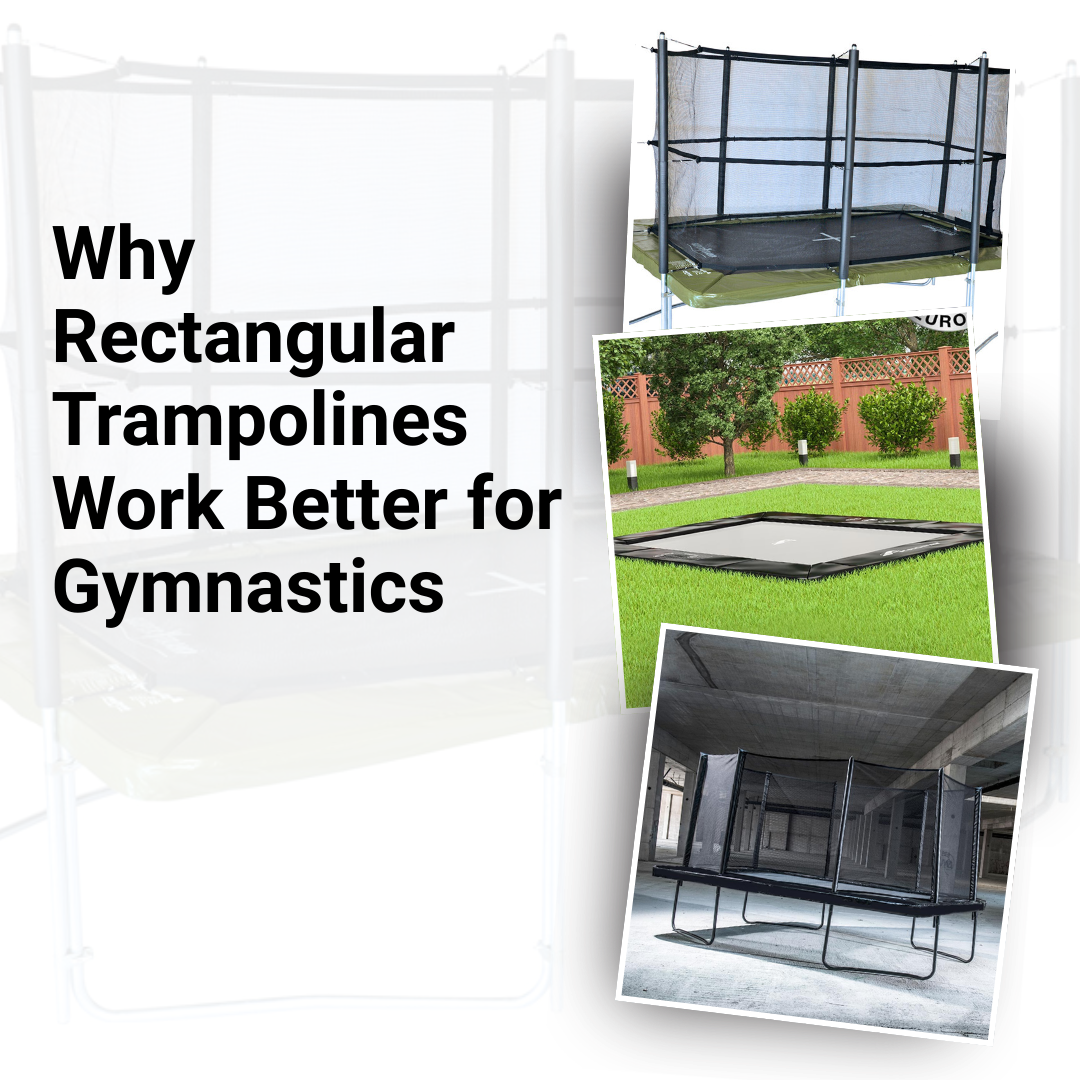
A reliable trampoline plays a major role when learning trampoline gymnastics at home. A stable frame, balanced bounce, and strong safety features help beginners practise skills with better control and confidence.
Why Rectangular Trampolines Work Better for Gymnastics
Many gymnastics coaches prefer rectangular trampolines because they create a more even bounce across the mat. This shape allows users to maintain better control when practising trampoline gymnastics jumps, twists, and drops.
XR Series 360 Rectangular Trampoline & Enclosure
This trampoline offers a solid frame and a responsive jumping surface designed for skill practice.
- Durable construction keeps the frame steady during repeated jumps.
- The enclosure adds extra protection while learning trampoline gymnastics techniques.
- The rectangular mat supports controlled movement across the centre of the trampoline.
This model works well for beginners who want to practise structured jumps safely.
11 x 8 ft Primus Flat Rectangular Trampoline
A wider jumping space helps learners maintain balance during training.
- The flat design keeps the jumping surface level with the safety padding.
- Strong springs provide a smooth and predictable bounce.
- The size offers enough space to practise basic trampoline gymnastics skills without crowding the centre.
This design supports steady progression from basic jumps to controlled rotations.
Primus Challenger 14 x 10 ft
This larger trampoline suits families or growing gymnasts who need extra practice space.
- The extended surface area allows safer movement during jumps and drops.
- The frame design keeps the bounce balanced across the mat.
- It supports regular trampoline gymnastics training for both beginners and advanced athletes.
Choosing a stable trampoline helps build confidence while practising skills at home.
Now that the right equipment is clear, the final step is understanding how to practise trampoline gymnastics safely and consistently over time.
Conclusion
Learning trampoline gymnastics at home becomes both safe and rewarding when you follow the right steps. In this guide, we explored why trampolines help develop gymnastics skills, how safety and strong fundamentals protect beginners, and which basic jumps build real control in the air. We also looked at common mistakes that learners should avoid and the importance of choosing a stable trampoline for practice.
The key is simple: start small and stay consistent. Check your equipment before each session, keep your movements controlled, and focus on balance before attempting more advanced skills. Regular practice of basic jumps gradually improves coordination, body awareness, and confidence on the trampoline.
With patience and the right setup, trampoline gymnastics can become a fun activity for families, beginners, and fitness enthusiasts alike. If you plan to practise at home, choose a safe, well-built trampoline that supports proper movement and stability. The right equipment and steady practice will help you enjoy trampoline gymnastics while continuing to build skill and confidence over time.