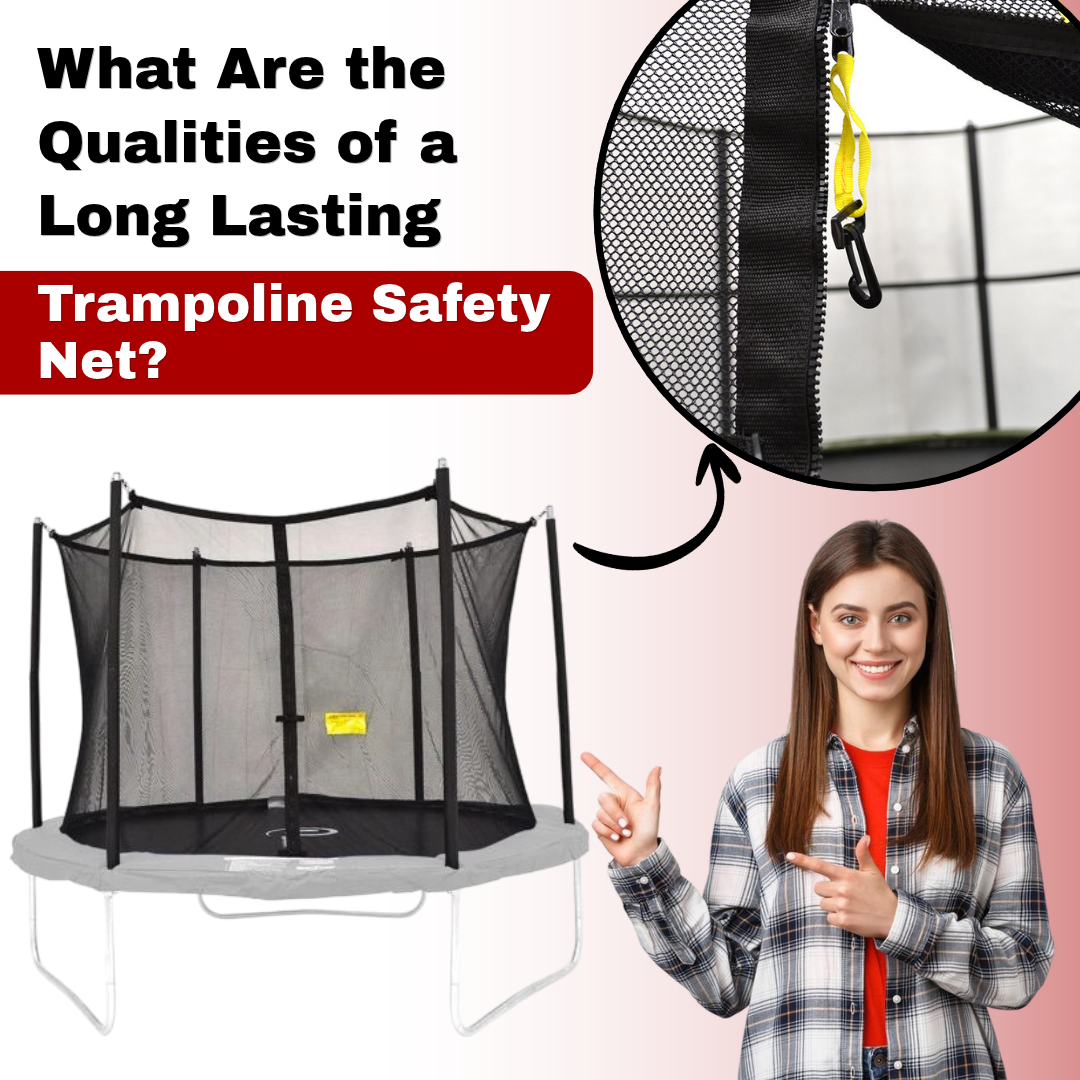
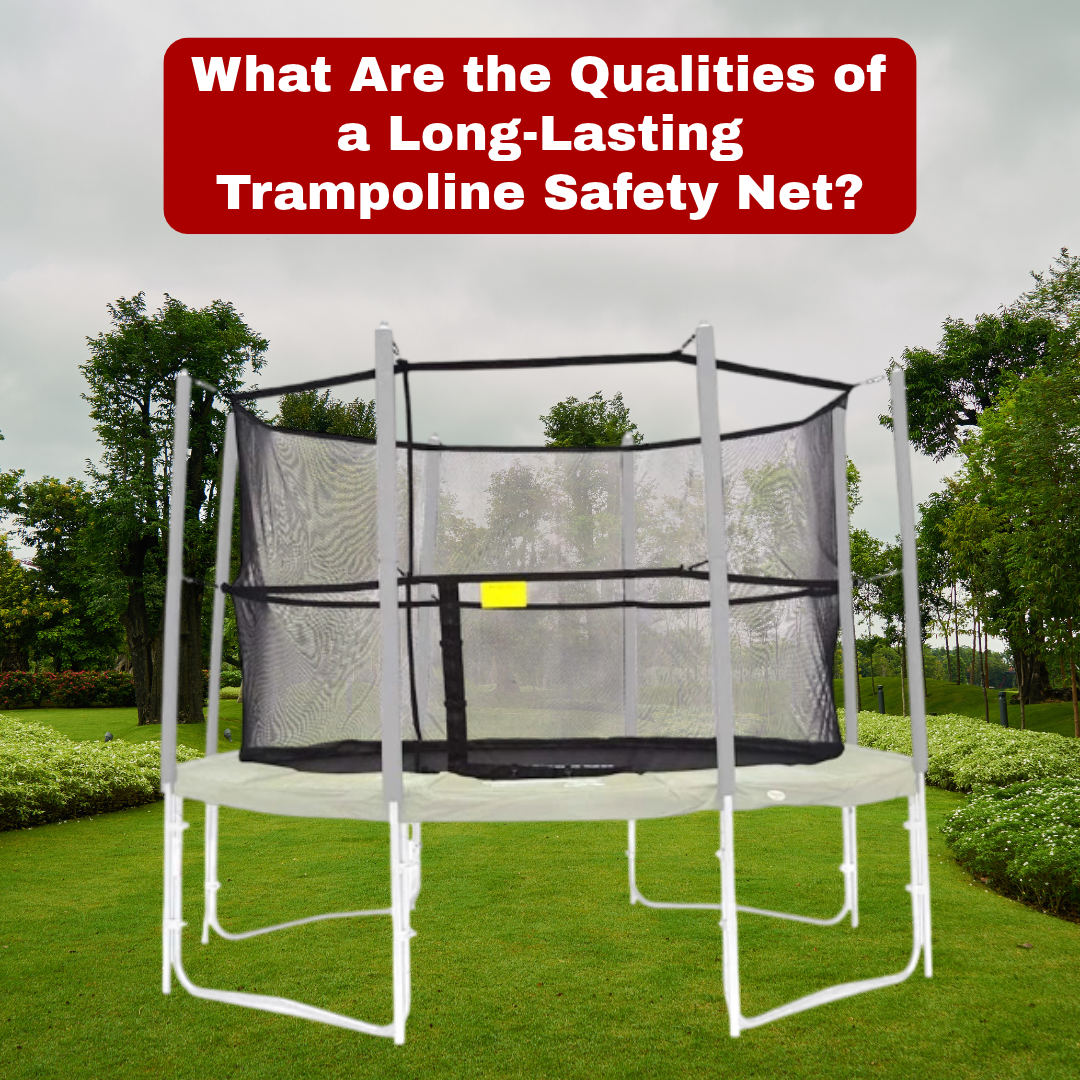
A trampoline safety net often fades into the background, quietly doing its job week after week. Its silent protection works only if the net stays in top shape. Paired with safe jumping habits and watchful adults, it becomes a true guardian, keeping children safely on the trampoline.
The trouble is that nets don’t all age the same way. Some wear out fast in British weather. Rain, frost, wind and strong summer sun all take their toll. Others hold up well for much longer with a little care. So what sets a long-lasting trampoline safety net apart from one that gives up after a season or two?

The answer isn’t only about price or thickness. Strong mesh matters. So do firm stitching, secure fastenings and a proper fit for your trampoline. Even a well-made net can let you down if it’s the wrong size or hasn’t been checked in a while.
This guide shows you what to look for, how to spot trouble early and how to care for your net day to day. You’ll also learn when it’s time to replace it and how to choose a replacement trampoline net that fits. By the end, you’ll feel confident about keeping your garden trampoline safer for play.
What Makes a Trampoline Safety Net Last Longer?
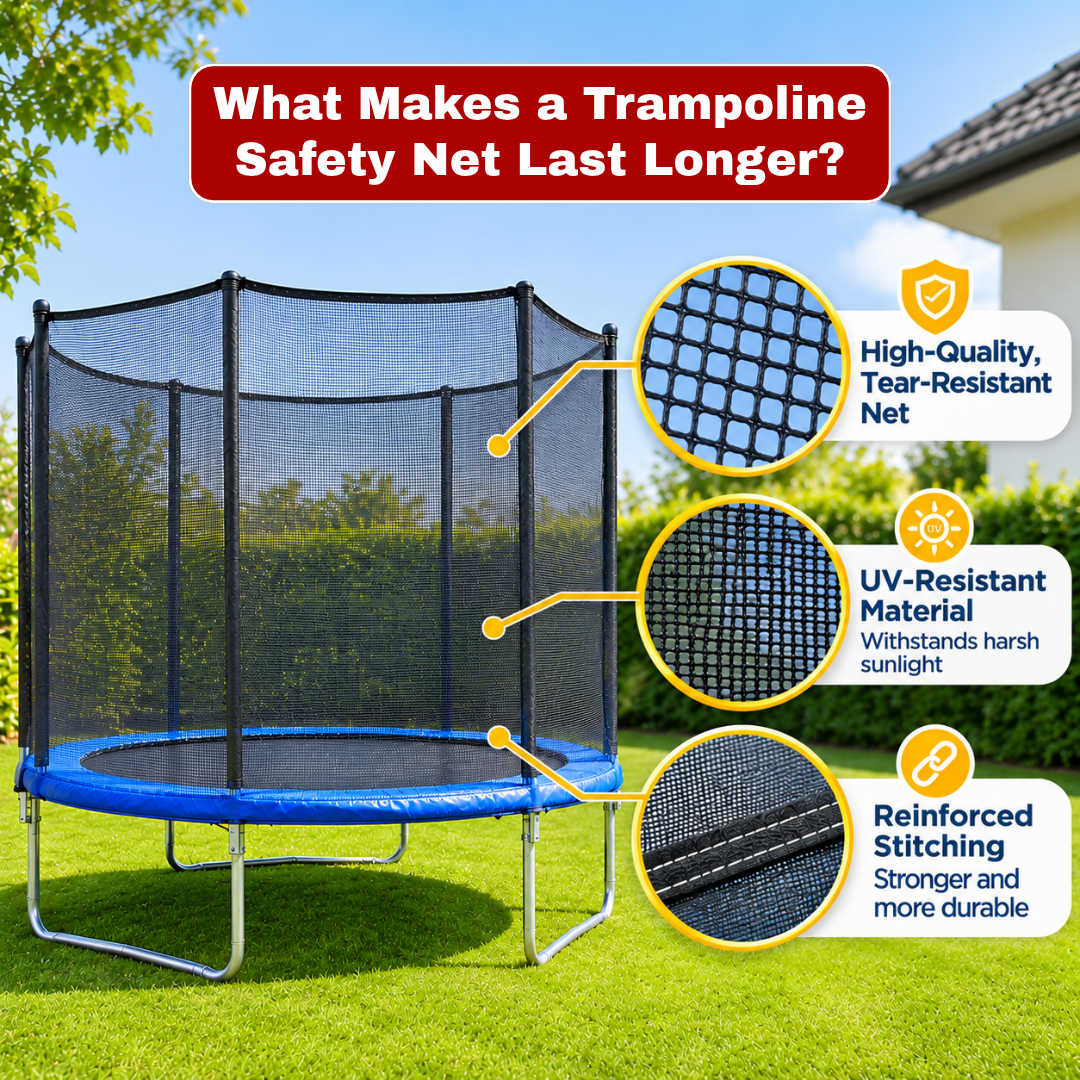
A long-lasting trampoline safety enclosure has strong, weather-resistant mesh, reinforced stitching and secure fastenings. It also fits your garden trampoline properly. Regular checks and careful use help it last. Even a good net must be replaced once the mesh, seams or attachment points become damaged.
Let’s look at each quality in turn.
Strong Mesh That Stands Up to Daily Use
Your children lean on nets. They bump them, kick them and sometimes grab them. Good mesh copes with all that without tearing, stretching or fraying.
Be careful. Thick-looking mesh isn’t always strong mesh. The material, weave and quality of manufacture all count. Check product details for the material used and any information about outdoor use. If a listing says little, ask the supplier.
Reinforced Stitching Where the Stress Builds Up
Mesh rarely fails in the middle. It fails at the edges, around the entrance and where the net meets its fixings. These spots take the most strain.
Look for neat, firm stitching along seams and edges. Check that it’s even and well finished. Loose threads and split seams are early warnings. They tend to grow, not shrink.
Weather Resistance for British Gardens
Our weather is hard on garden gear. Rain, damp, frost, wind and bright summer sun all take a toll over time.
Choose a net made for outdoor use. Many are described as weather-resistant. That’s helpful, but it’s not the same as weatherproof. Even the best net still benefits from care, especially after storms.
Strong mesh, reinforced stitching and weather resistance all help keep your trampoline secure. However, strong winds can also move a trampoline if it’s not properly secured. That’s why choosing the right ground anchors is just as important for keeping it stable in your garden.
Why Do Fastenings and Fit Matter Just as Much?
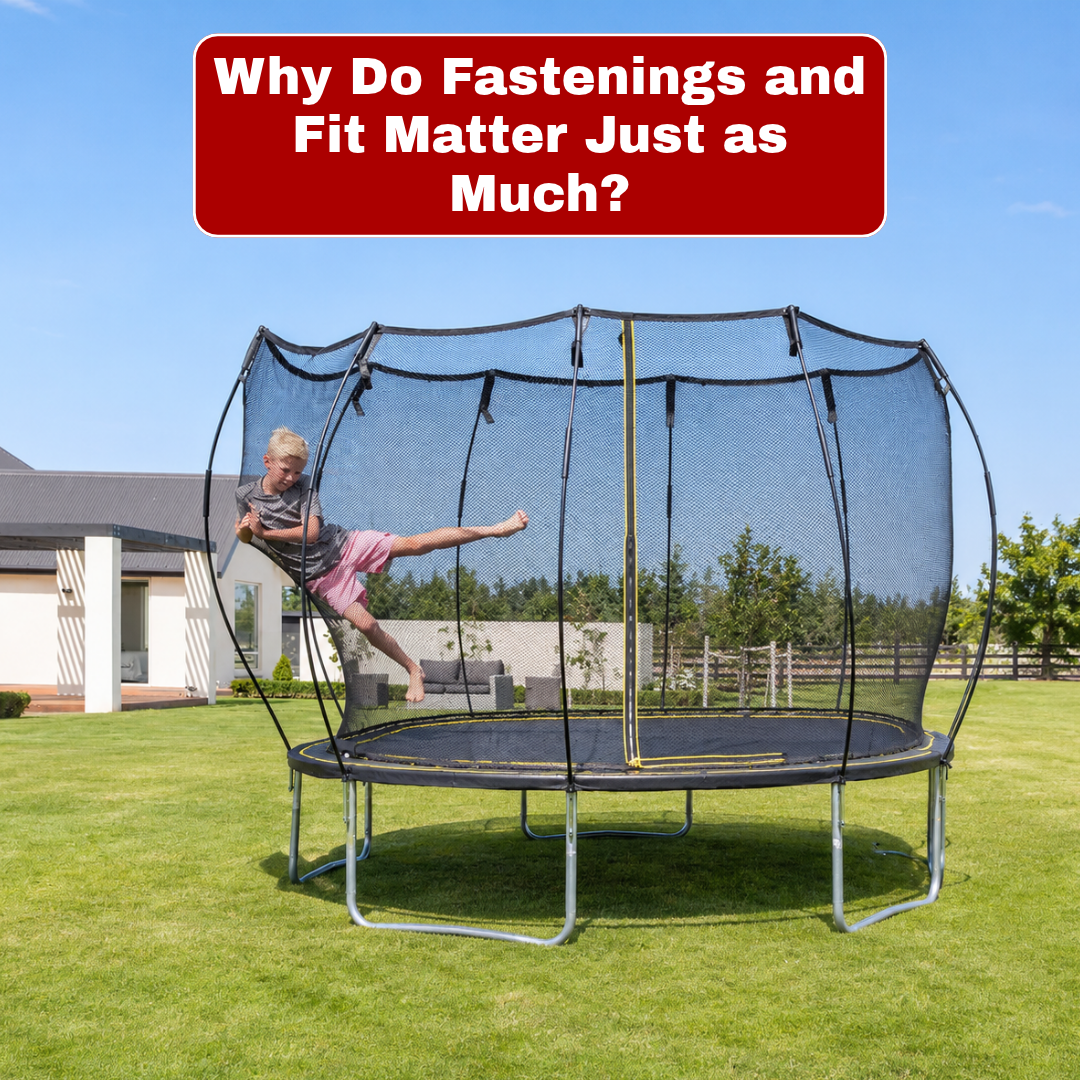
Strong mesh won’t help if the net can’t stay in place. Fastenings and fit are the parts people most often miss. They’re also where a lot of problems start.
Secure Fastenings and a Closure That Works
Fastenings include straps, clips, ties and other fixings that hold the net to the poles and frame. They should be firm and undamaged. A missing or loose fastening puts extra strain on the rest of the net.
The entrance matters too. The zip or closure must shut fully every time. Watch for a stiff or broken zip, torn edges, or a gap that opens up when someone leans on the net. If the entrance won’t close securely, don’t use the inground trampoline until you’ve fixed it.
The Right Fit for Your Trampoline
Here’s something many owners learn too late. A net can be well made and still be wrong for your rectangular trampoline.
Don’t rely on diameter alone. Check these details:
- Your trampoline’s stated size
- The model and the manufacturer’s advice
- How many poles it has and how they’re arranged
- How the net attaches
Two trampolines of the same size may use different enclosure systems. Don’t assume nets are interchangeable.
That said, size is still your starting point. These are the usual options:
- Replacement Net for 8ft: for compatible 8ft trampolines
- Replacement Net for 10ft: for compatible 10ft trampolines
- Replacement Net for 12ft: for compatible 12ft trampolines
- Replacement Net for 14ft: for compatible 14ft trampolines
Before you order, check the pole setup and the fitting instructions for your model.
Is It Better to Repair a Damaged Net or Replace It?
For most real damage, replacing is the safer choice. Home fixes like patches, glue or makeshift stitching may not restore the net’s original strength. Only repair if the manufacturer offers an approved method.
Replace the whole net when:
- The mesh is torn or weakened
- The seams have split
- The entrance can’t close securely
- Attachment points are damaged, or the net no longer fits well
The good news is that you may not need a whole new trampoline. If the frame, poles, mat and springs are still in good shape, a compatible replacement net can be a practical fix. Just don’t treat it as a cure for other damaged parts.
What to Check Before You Buy
Use this quick list:
- Does it suit your exact trampoline model?
- Does it match your size and pole layout?
- Is the mesh made for outdoor use?
- Are the seams and attachment points well made?
- Does the entrance close securely?
- Are fitting instructions and compatibility details clear?
- Is the rest of your trampoline in sound condition?
Choosing a net isn’t only about matching the size on the box. It’s about finding one that fits properly and can be installed and cared for as intended.
Some Essential Accessories to Keep Your Trampoline Safe and Secure
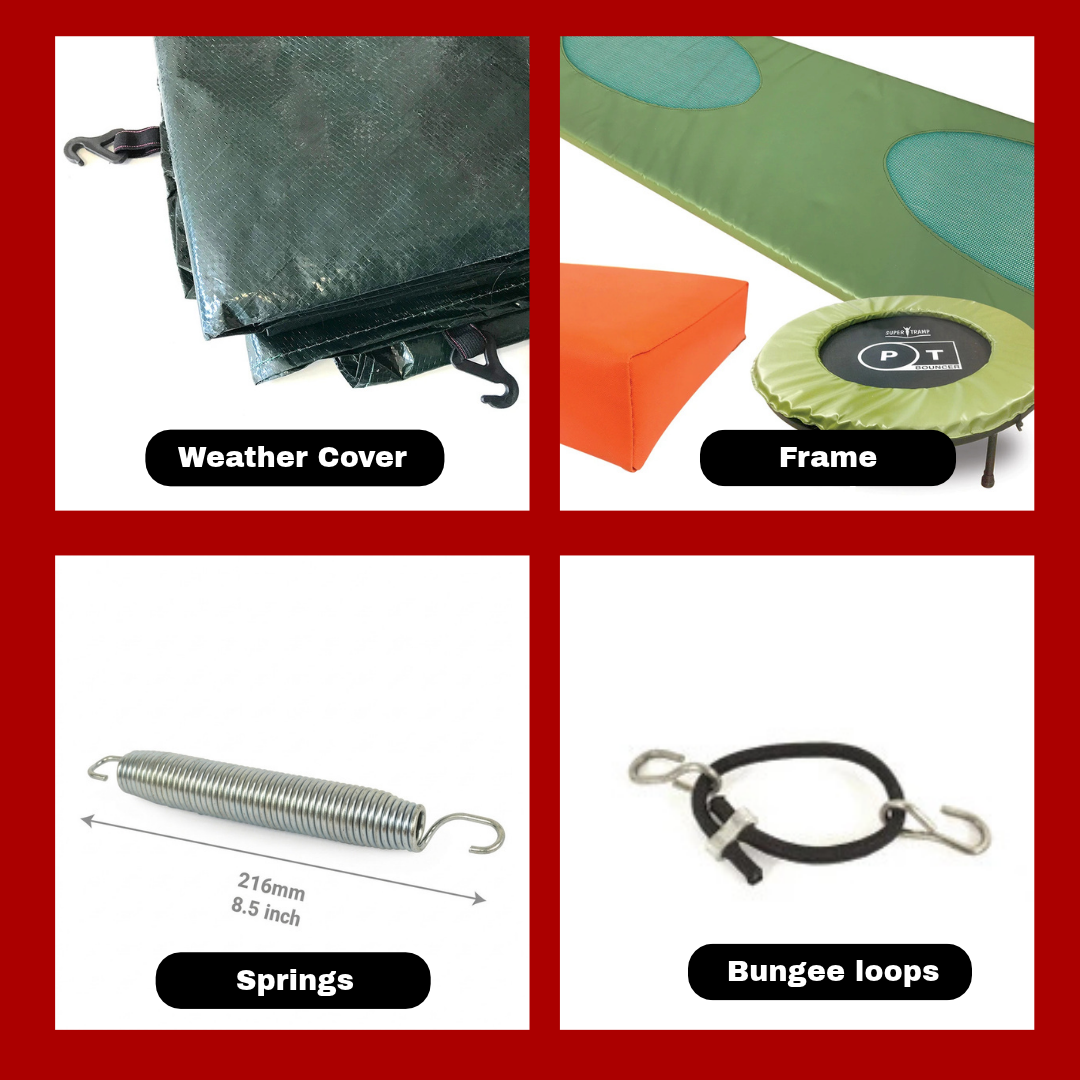
A strong net is only one part of a safe trampoline. The frame, springs, pads and fixings all work together, and a weak link anywhere can undo good work elsewhere. A few well-chosen trampoline accessories can protect your trampoline, hold it steady and keep it in good order year after year.
Weather Cover
Rain, sunshine, falling leaves and, near the coast, salt spray all wear down garden equipment. A weather cover shields the mat, springs and frame while the trampoline isn’t in use. Supertramp lists covers for 8ft, 10ft, 12ft and 14ft round trampolines, plus rectangular models. Check that the cover suits your exact trampoline before you order.
Frame Pad
The frame pad covers the springs and the metal edge, so a stray foot doesn’t land on hard metal. Over time, pads fade, crack or lose their padding. Replace them if they look worn or no longer cover the springs fully. Small fixings count too. Toggle loops are what hold a pad in place, and they’re cheap to swap when they stretch or snap.
Lorem ipsum dolor sit amet, consectetur adipiscing elit. Ut elit tellus, luctus nec ullamcorper mattis, pulvinar dapibus leo.