Your trampoline used to launch the kids high into the air. Now there’s a flat patch near the edge, and one spring hangs slack like a tired elastic band. Getting the right trampoline spring size sounds simple until you’re standing in the garden holding a rusty coil, with no idea what to order. Guess wrong, and you’ll pay for a second delivery or fit a spring that never sits properly.
This guide shows you how to measure a spring, read your trampoline’s specifications and check that a replacement will fit before you spend a penny. All you need is a tape measure and about five minutes.
Steps to Find the Correct Trampoline Spring Size
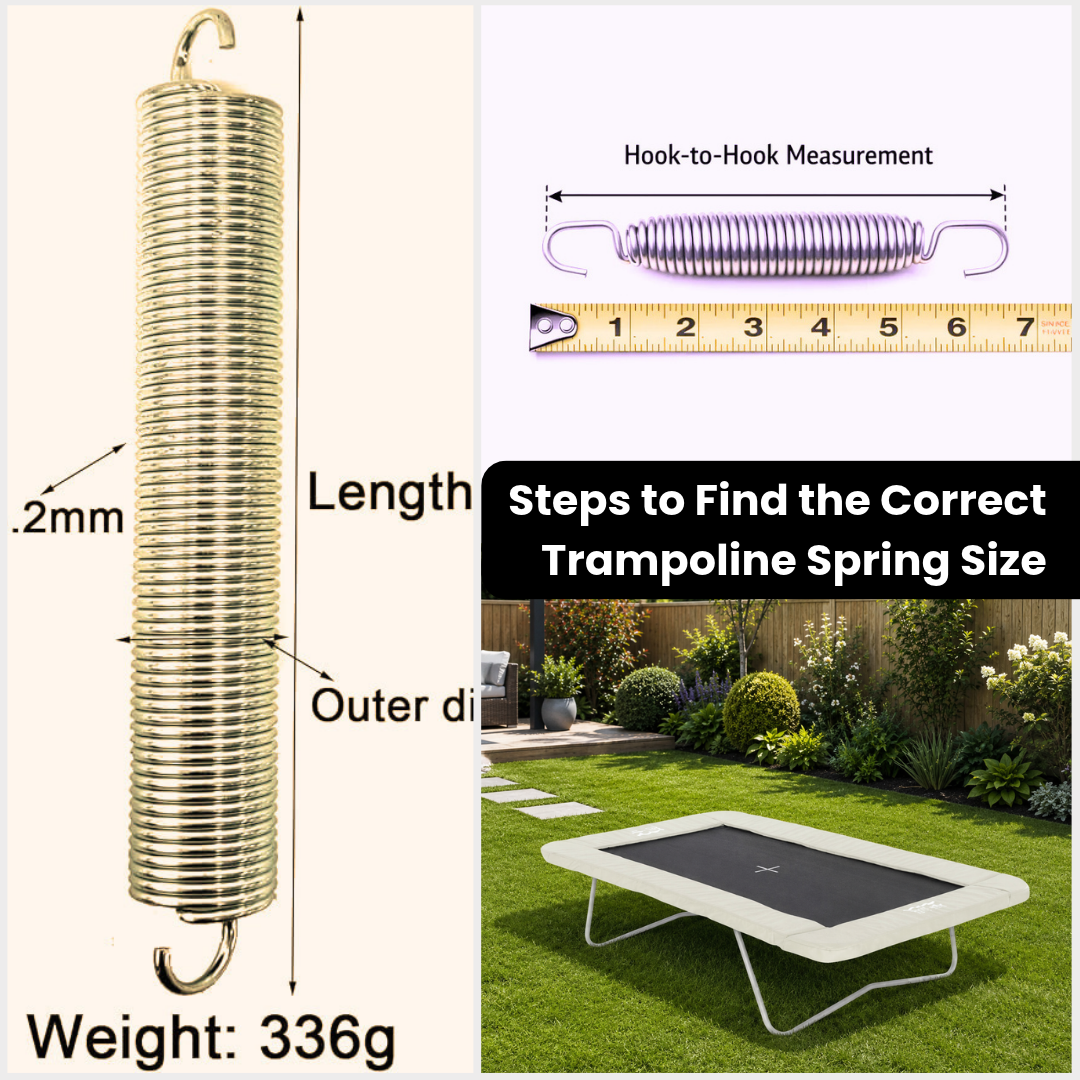
Choosing the right trampoline spring size is one of the most important parts of trampoline maintenance, and a small mistake can affect your bounce, safety, and the life of the trampoline mat. Springs that are too short won’t fit, and springs that are too long will leave the mat loose and uneven. Measure carefully, because even a few millimetres of error can cause trouble. Below are the correct steps to find the right size:
Step 3: Check Your Trampoline’s Brand and Model
Look for a label on the frame, a model number in the manual or details on the original packaging. With that, you can check the manufacturer’s replacement-parts guide and see exactly which spring was designed for your trampoline.
What if the original spring has vanished? Don’t copy the other springs by eye, as they may have stretched. Rely on the model’s specifications instead.
Here’s the catch. Overall trampoline diameter alone can’t tell you the spring size. A 10ft trampoline from one maker may use a different spring from another maker’s 10ft model.
Once your springs are sorted, it is worth checking the rest of the trampoline too. A worn mat can put extra strain on new springs, so learn how to fix a hole in your trampoline mat safely before the damage spreads.
Best Trampoline Springs for Different Types of Trampolines
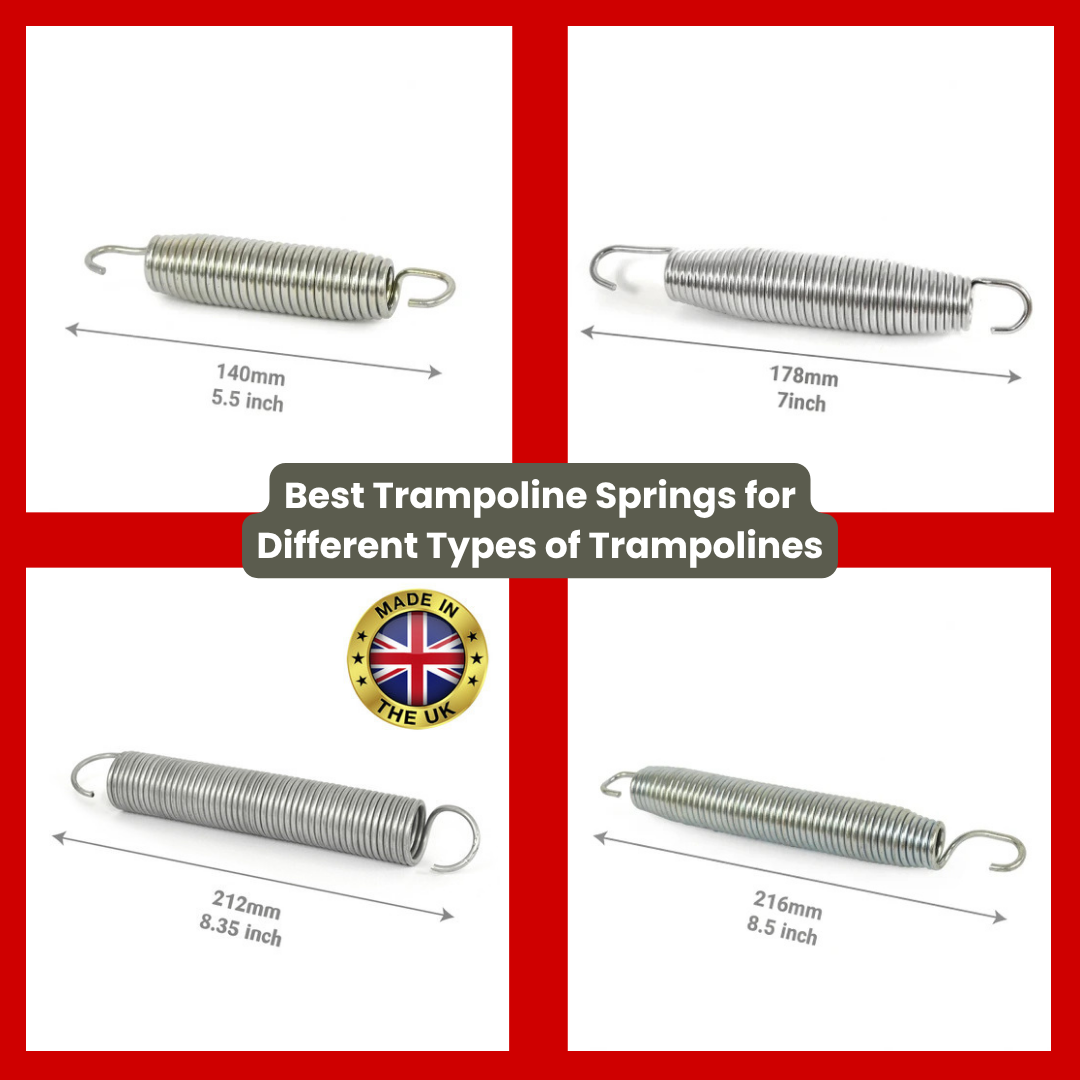
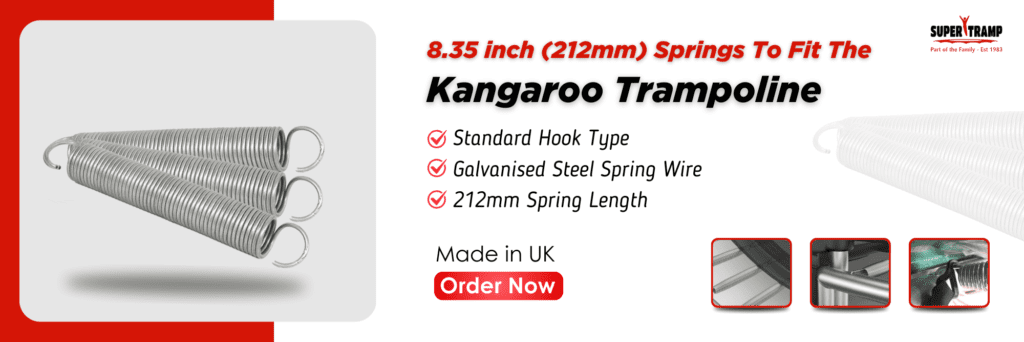
Springs decide how your trampoline feels, how safe it is and how long the mat lasts. The wrong size means a weak bounce, uneven tension and early wear. Here is the right replacement spring for each popular Super Tramp model and a universal option for other brands.
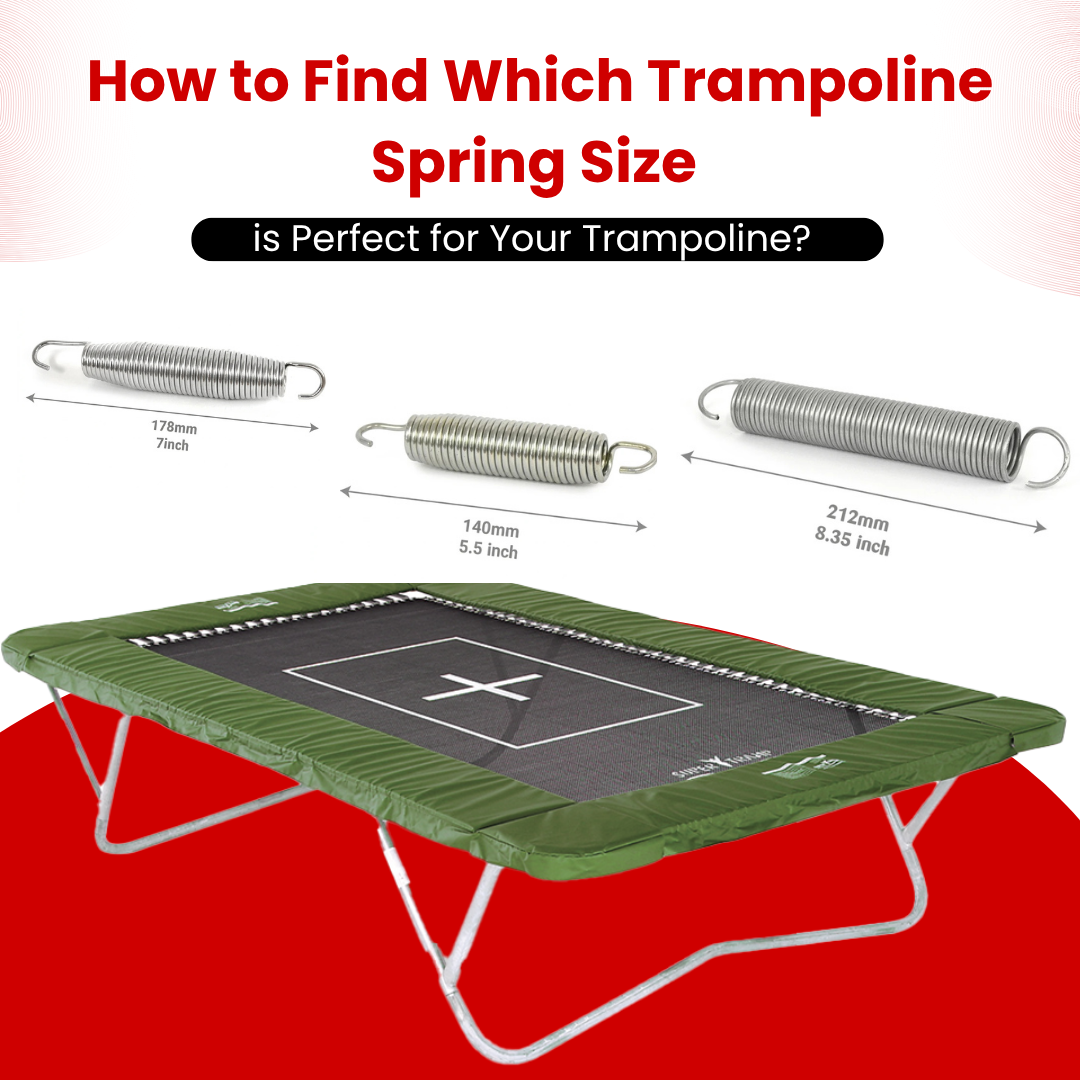
5.5 Inch Trampoline Springs
Built for smaller domestic trampolines, these tapered, fully galvanised springs resist rust and fit Super Tramp and any other brand that uses a 5.5″ spring. They suit the Frog rectangular, Super Flyer 8ft & 10ft, Springtime 8ft & 10ft and Eclipse 10ft.
7 Inch Trampoline Springs
Super Tramp’s patented tapered springs respond to each jumper’s weight, which improves performance and extends spring life. The elongated hook makes fitting easy. They fit the Senior 15, Prince 18, Action 13 & 17, XR300, and the Super Flyer, Eclipse, and Springtime in 12ft and 14ft. XR300 owners should count their springs first: current models use 68 with no corner springs, older ones use 72.

Which Measurements Matter When Choosing Replacement Trampoline Springs?
Length gets the attention, but it’s only one part of the picture. Hook shape, tension, material and spring count all decide whether a replacement works as the original did. Overlook one, and the mat can sit unevenly or feel wrong underfoot.
Spring Length and Hook Design
Length sets how far the mat sits from the frame. Hook design decides how the spring grips the frame and the mat loops. A spring that looks right on the shelf might not seat properly once you pull it into place. Match the original specification, and you avoid the problem.
Spring Tension and Material Quality
Tension controls how the trampoline feels. A stiffer spring isn’t automatically better. It can make the bounce harsh and change how the mat behaves for lighter jumpers.
Material counts too. Garden trampolines live outside through British rain, frost and damp, so corrosion resistance is worth checking.
Number of Springs and Attachment Points
Count the springs and the attachment points around the frame. The replacement has to suit the original layout. Don’t add or remove springs to tweak the bounce unless the manufacturer says that configuration is approved.
How Can You Know if Your Trampoline Springs Need Replacing?
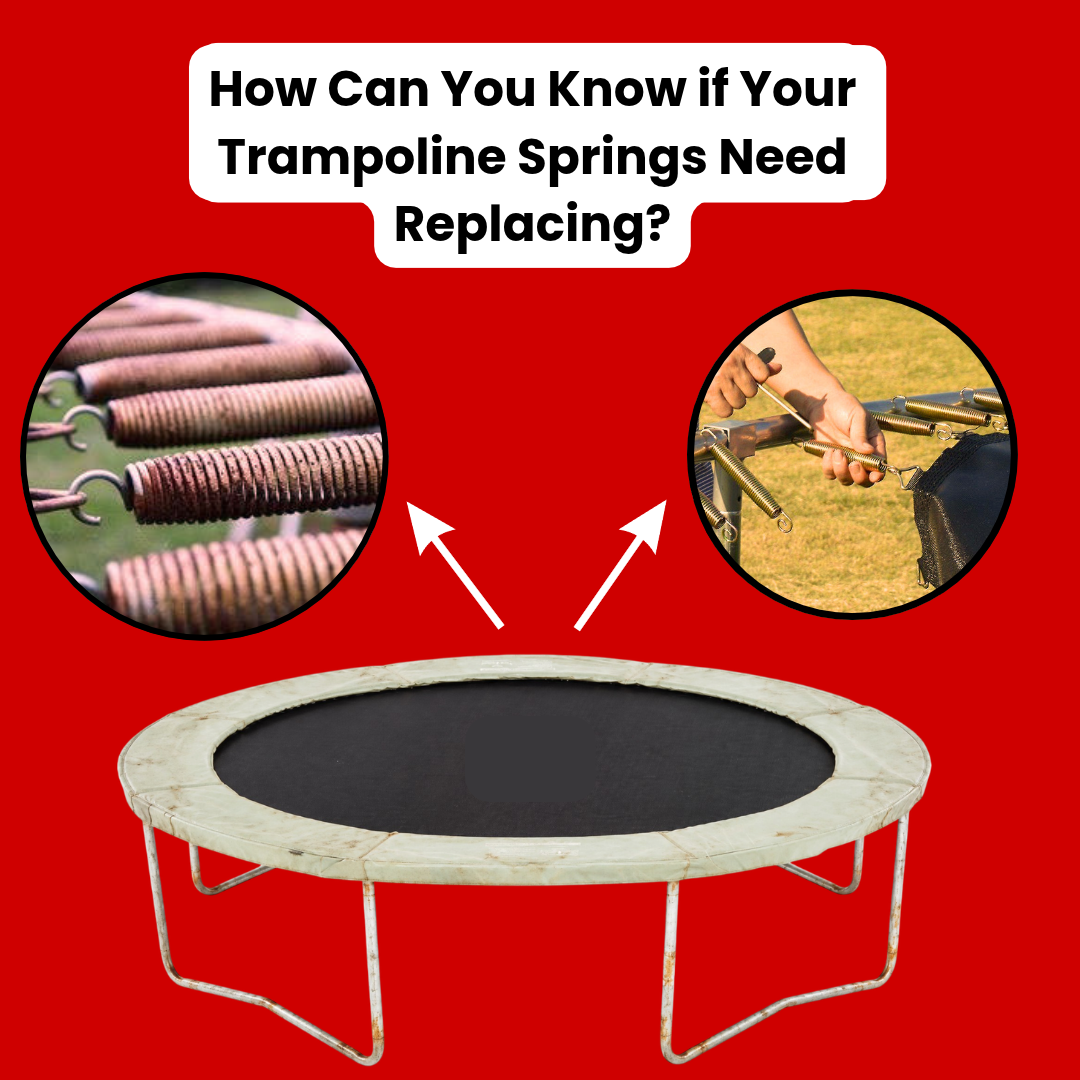
Not every dull bounce points to a spring problem. Sometimes it’s rust. Sometimes it’s the mat. Spend a few minutes inspecting the whole in-ground trampoline before you order anything.
Look for Rust, Stretching or Broken Hooks
Red-brown rust, coils that look pulled out of shape and hooks that have opened up or cracked are all warning signs. A spring that’s visibly longer than its neighbours has stretched.
If springs for trampoline are broken, badly corroded or clearly deformed, stop using the trampoline until it’s sorted.
Check for Uneven Bounce or Loose Springs
Uneven bounce can come from damaged springs, a worn jumping mat or even frame damage. Jump test by eye only. Press gently on the mat and see whether one area sags more than the rest. Check the full trampoline before blaming spring size.
Should You Replace One Spring or the Entire Set?
Replacing a single spring can work if the new one is fully compatible. Check every remaining spring for rust and stretching while you’re at it. If they’re all tired, a full set may be the sensible choice, and your manufacturer’s guidance should have the final say. Don’t mix unsuitable spring types just to save a few pounds.
How Do You Choose the Right Replacement Springs for Your Trampoline?
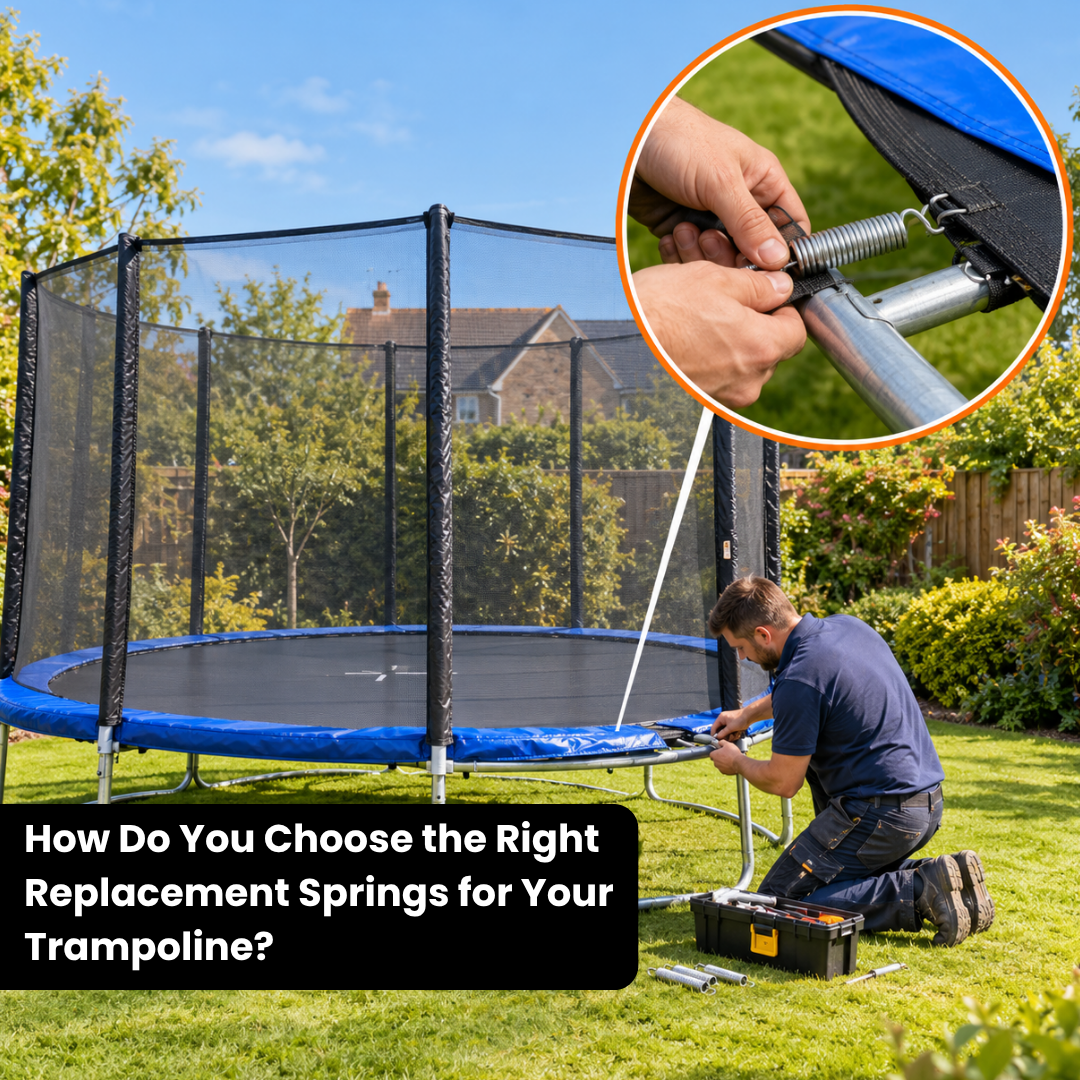
By now you’ve got your measurements and your model details. The next step is matching them to a replacement that was actually designed for your rectangular trampoline.
Match the Replacement to Your Trampoline Type
Round garden trampolines, rectangular models, in-ground trampolines and rebounders all use different spring set-ups. Shape alone won’t give you the answer, though. The model and original specifications still matter most.
If You Have a Round Trampoline
Use the frame diameter, spring length and number of spring attachments to find the matching trampoline specification.
Frame Diameter | Spring Length | No. Of Spring Attachments |
8 ft | 5.5 inches | 48 |
8 ft | 7 inches | 48 |
10 ft | 5.5 inches | 54 |
9 ft 8 in | 7 inches | 72 |
10 ft | 5.5 inches | 60 |
10 ft | 7 inches | 54 |
10 ft | 7 inches | 64 |
10 ft | 7 inches | 72 |
11 ft 9 in | 8.5 inches | 80 |
12 ft | 7 inches | 72 |
12 ft | 8.5 inches | 80 |
12 ft | 8.5 inches | 88 |
14 ft | 7 inches | 80 |
14 ft | 7 inches | 88 |
14 ft | 8.5 inches | 96 |
If You Have a Rectangular Trampoline
For rectangular models, measure both the frame’s length and width. Then check the spring length and the number of spring attachments.
Frame Dimensions (Length × Width) | Spring Length | No. Of Spring Attachments |
10 ft × 6 ft | 7 inches | 52 (17 × 9) |
16 ft 11 in × 9 ft 10 in | 9.25 inches | 118 (39 × 20) |
7 ft 7 in × 5 ft 3 in | 5.5 inches | 36 (11 × 7) |
14 ft 5 in × 8 ft 3 in | 8.35 inches | 100 (33 × 17) |
10 ft 11 in × 8 ft 4 in | 8.5 inches | 74 (22 × 15) |
11 ft 8 in × 10 ft | 7 inches | 56 (17 × 11) |
10 ft 1 in × 5 ft 9 in | 7 inches | 50 (17 × 8) |
12 ft 5 in × 8 ft 3 in | 8.57 inches | 74 (23 × 14) |
12 ft 5 in × 8 ft 3 in | 8.57 inches | 86 (27 × 16) |
10 ft × 7 ft | 7 inches | 68 (21 × 13) |
12 ft × 8 ft | 8.5 inches | 84 (25 × 17), plus 4 corner springs |
Important note: These tables help match frame measurements to the specifications listed in the guide. Before ordering replacement springs, measure a spring and check the trampoline model where possible, as springs may stretch with use.
Check Compatibility Before Buying
Run through this list before you click “buy”:
- Spring length and hook design match your measurements
- The replacement matches the manufacturer’s specification
- Material and construction suit outdoor use
- The spring count is correct
- It fits your existing frame and jumping mat
What Should You Do If You Cannot Find the Original Spring Size?
Contact the manufacturer or supplier with your model number and measurements. They may ask for photos of the spring, the frame attachment and the mat attachment, so take clear ones in daylight. Don’t choose by price, looks or a generic size chart. That’s how wrong parts end up in the post.