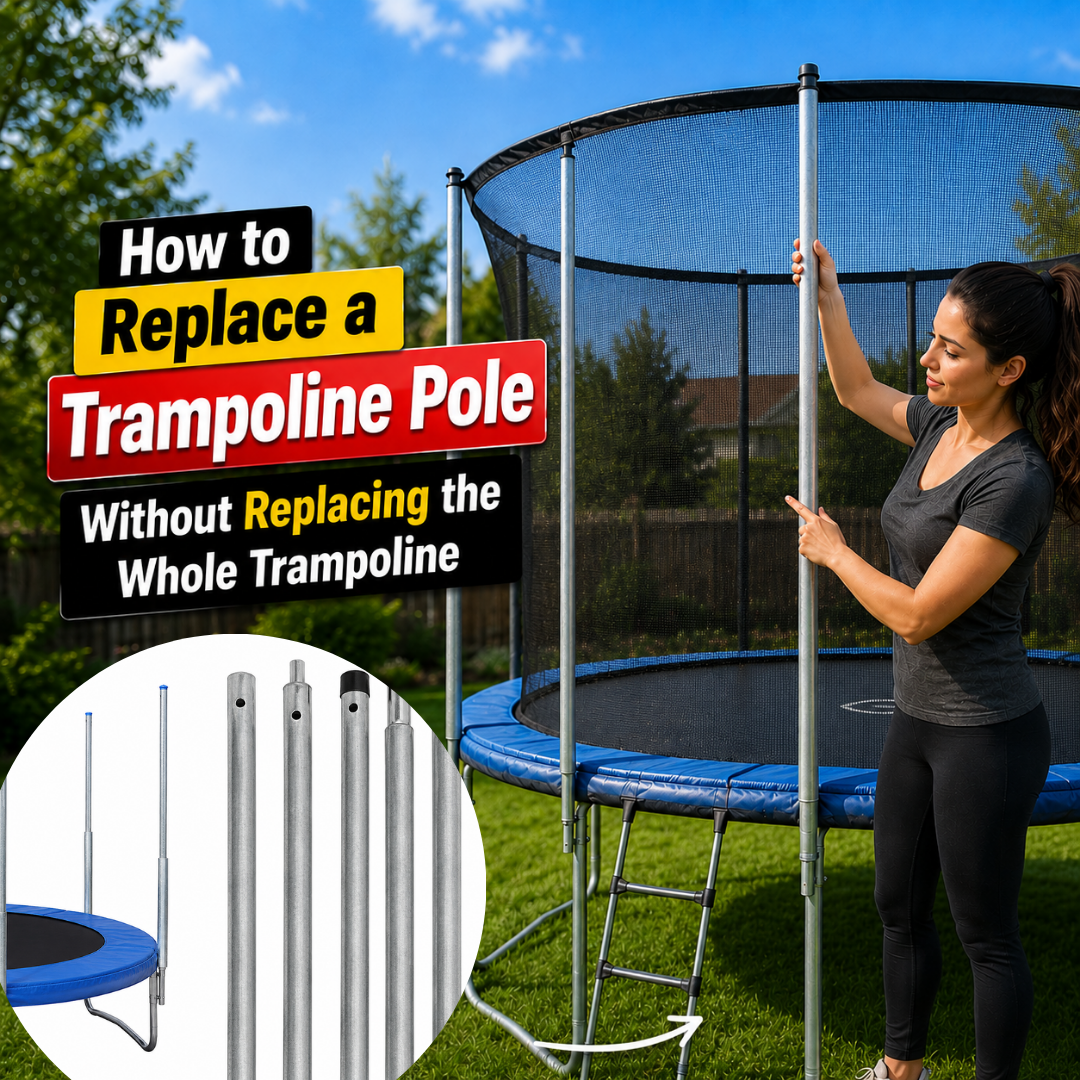
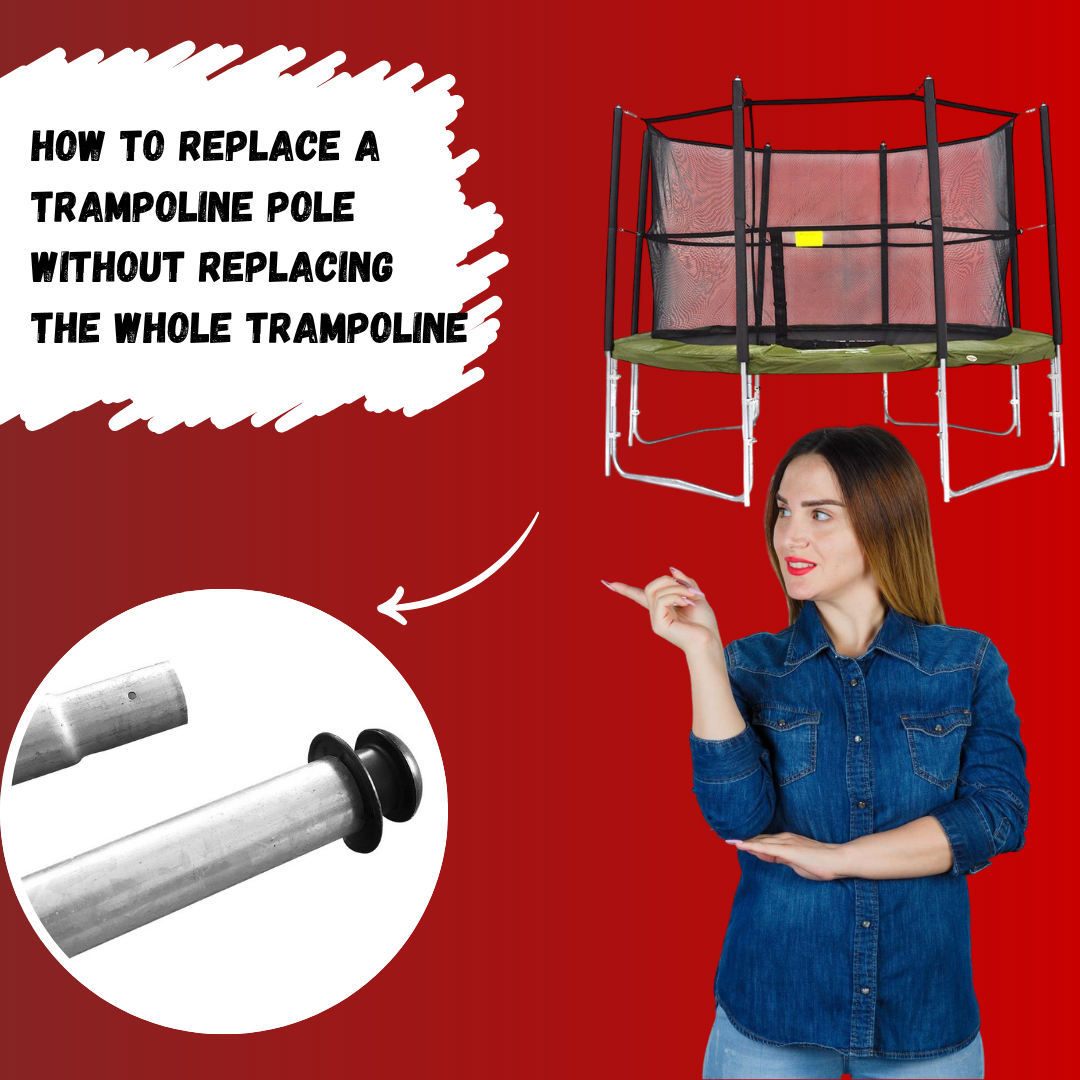
After months of wind, rain, and garden wear, spotting a bent trampoline pole or loose safety net can quickly turn family fun into a safety worry. Many UK parents face the same question every spring: do you need to replace the entire trampoline, or is a specific 10ft trampoline pole replacement, or a simple replacement part, enough to fix the problem? In most cases, replacing a damaged pole is the smarter and more affordable solution. A strong replacement pole can restore stability, improve safety, and help your trampoline feel secure again without the cost of buying a brand-new setup.
In this guide, you’ll learn how to identify different trampoline poles, recognise signs of damage, replace poles safely, and choose the right replacement parts for your trampoline. Whether you’re maintaining an older trampoline after winter or trying to keep your children bouncing safely, this blog will help you make the right decision with confidence.
What Are Trampoline Poles, and Why Do They Matter?
Every garden trampoline pole plays an important role in keeping the entire setup safe, balanced, and stable. These poles support the safety net, help the frame stay upright during movement, and reduce excessive swaying while people jump. Without strong poles, even a high-quality trampoline can quickly become unstable.
In many UK gardens, trampoline poles face constant exposure to rain, cold weather, and heavy use. Over time, this can weaken the structure and affect bounce performance. A leaning safety net, loose enclosure, or wobbling frame during jumping usually points to a damaged pole or worn brackets. This is why regular checks and timely trampoline pole replacement matter for both safety and long-term trampoline use.
Trampoline Poles Need Immediate Replacement If You Notice:
- Visible Bending or Warping: Trampoline poles should always remain straight. If a pole bends or develops a curve after strong winds or heavy impact, the metal loses its original strength and can no longer support safe jumping properly.
- Rust and Corrosion: Check around the lower brackets and joints regularly. Surface rust may sometimes clean off, but deep rust or flaking metal weakens the pole and usually means a replacement is needed.
- Cracking or Snapping: Never try to force a bent pole back into shape. Hollow trampoline tubing can crack internally, even if the damage looks small from the outside.
- Wobbling or Instability: If the pole rattles or sways too much when touched, the fittings or connection points may already be worn out and unsafe.
- Damaged Foam Sleeving: Torn foam padding exposes the metal underneath to rain and daily wear. Additionally, it makes it more likely that users will strike hard steel when jumping.
Checking your trampoline pole setup regularly helps prevent larger repair problems later. In the next section, we’ll look at the different types of trampoline poles and how each one supports trampoline safety and performance.
Different Types of Trampoline Poles
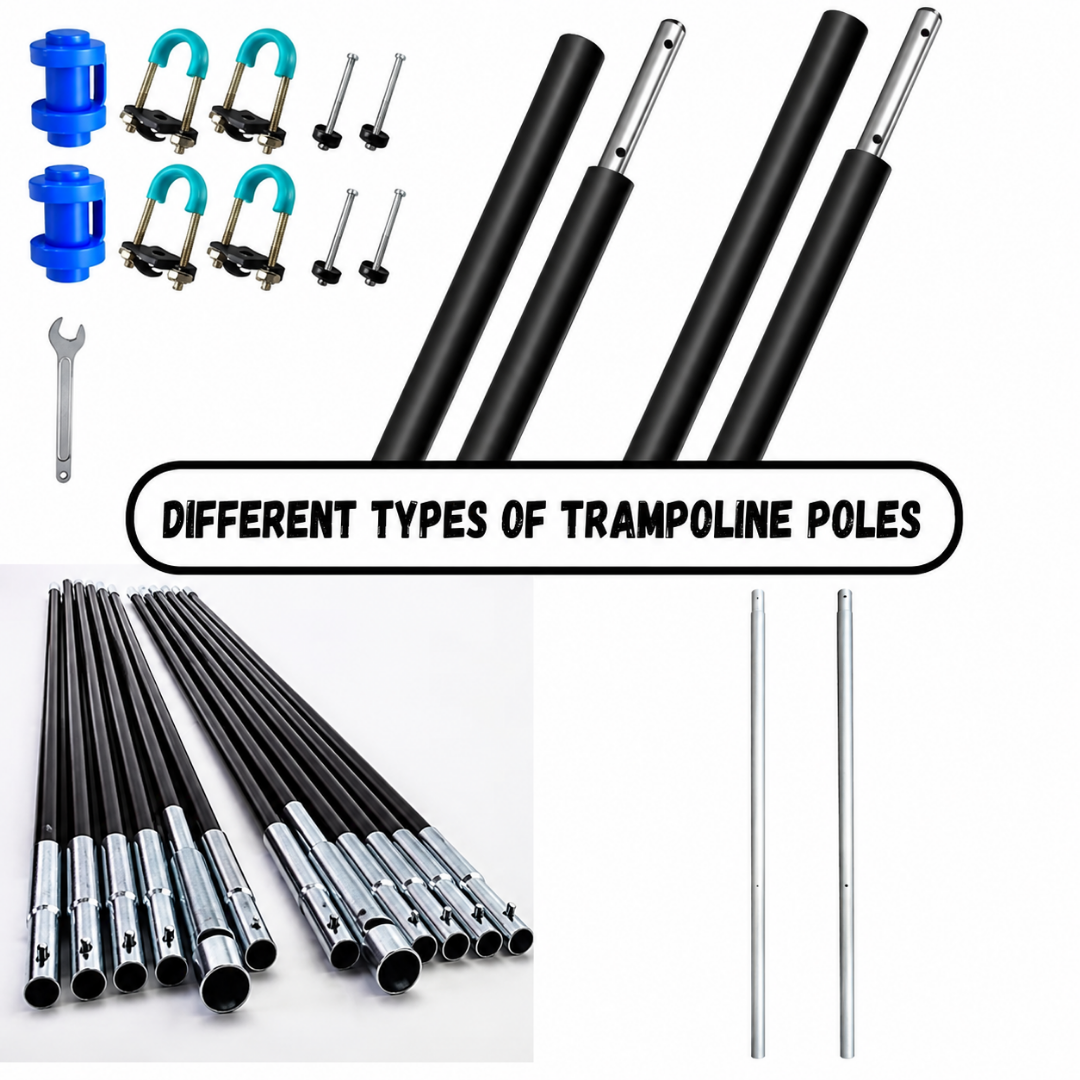
Many trampoline owners assume every pole does the same job, but each type supports a different part of the trampoline. Understanding these poles makes it much easier to spot damage early and choose the right trampoline pole replacement when repairs become necessary.

1. Enclosure Poles
The trampoline safety net is kept secure and erect around the jumping area by enclosure poles. These are frequently the most frequently replaced component of family trampolines and are typically the tallest poles affixed to the outside frame.
Over time, enclosure poles can develop the following:
- Bent metal after strong winds
- Rust from regular rain exposure
- Worn foam padding
- Loose net hooks or straps
If the safety net starts leaning or sagging to one side, damaged enclosure poles are often the cause. Many parents searching for a 10ft trampoline pole replacement are usually dealing with this exact issue. Checking the pole brackets and foam sleeves regularly can help prevent larger repair problems later.
2. Frame Poles
Trampoline frame poles support the main trampoline structure and help distribute weight evenly during jumping. These poles absorb constant pressure every time someone bounces, which means they need to remain strong and stable at all times.
A damaged frame pole can affect:
- Bounce performance
- Frame balance
- Overall trampoline stability
- User safety
Unlike worn foam or netting, damaged frame poles should never be ignored. Even small cracks or weak joints can place stress on the surrounding frame sections. If the trampoline feels uneven during use, inspecting the frame poles should be one of the first checks.
3. Trampoline Leg Poles
Leg poles keep the trampoline level against the ground and stop excessive movement during use. In many UK gardens, soft ground, uneven paving, and wet weather slowly weaken these lower support sections over time.
Common signs of damaged leg poles include the following:
- Uneven trampoline positioning
- Shaking while bouncing
- Legs sinking into the ground
- Movement around the base frame
A weak leg pole can make the whole trampoline feel unstable, even if the upper frame still looks fine. Regularly checking the lower frame after winter helps identify early wear before it becomes a larger safety concern.
Now that you know the different types of trampoline poles and what each one does, the next step is learning how to replace a damaged pole affecting the rest of the trampoline structure.
How to Replace a Trampoline Pole Step by Step?
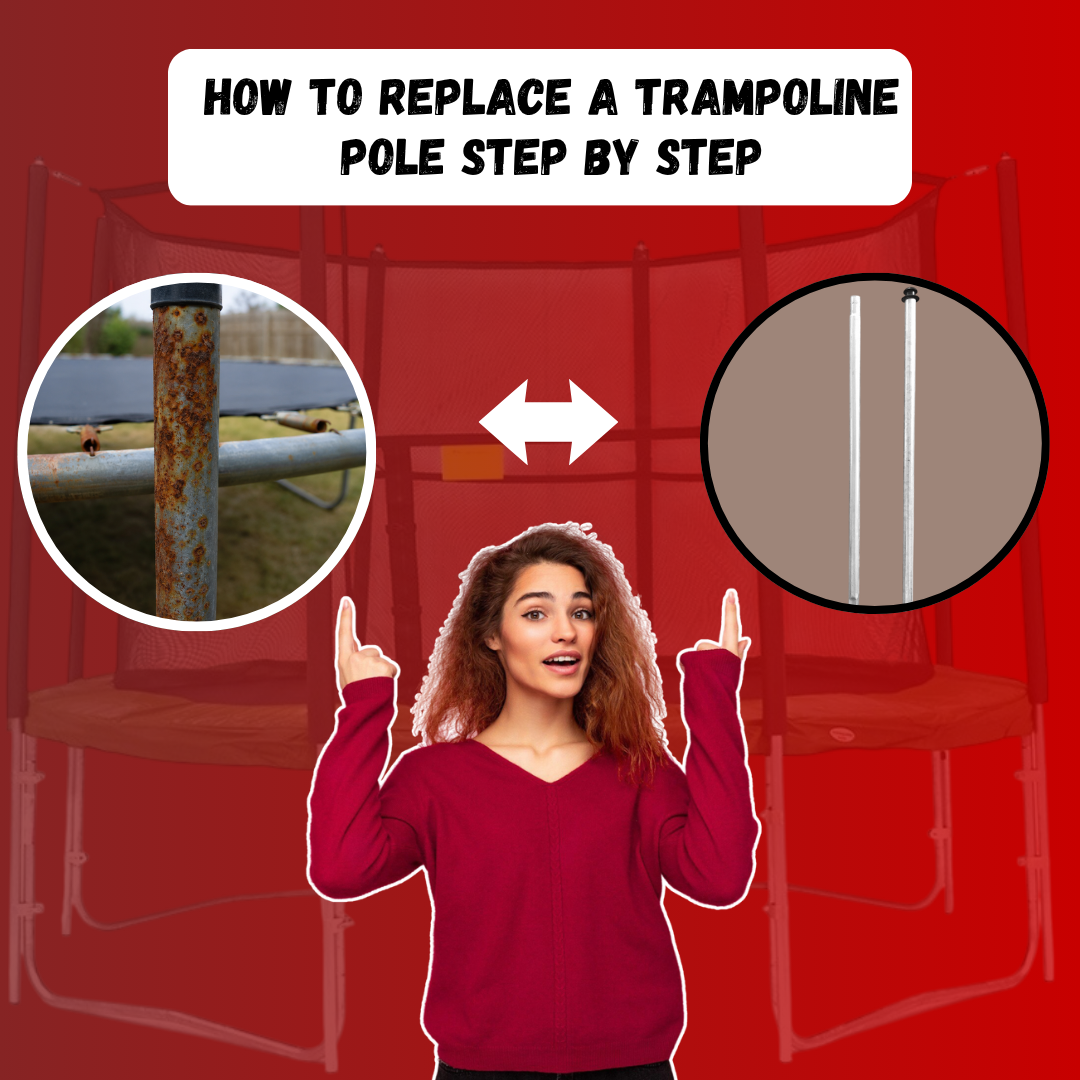
Replacing a damaged trampoline pole is usually a straightforward DIY job if you use the correct parts and follow the right steps. Most families can complete a basic trampoline pole replacement at home using simple tools and careful handling. The key is taking accurate measurements and fitting the new pole securely before the trampoline goes back into use.
Step 1: Identify the Correct Pole
Before ordering a replacement, check the exact size and shape of the damaged pole. Even small measurement differences can affect how safely the pole fits onto the trampoline frame.
Measure the following:
- Pole length
- Pole diameter
- Straight or curved design
- Bracket positioning
Most trampoline poles are commonly available in sizes like 25mm or 28mm. For a safe trampoline pole replacement, matching the original measurements matters more than choosing a pole that “looks close enough”. A poorly fitted pole can loosen over time and affect the safety net alignment.
Step 2: Remove the Old Pole
Start by disconnecting the safety net from the damaged pole. Next, slide the foam sleeve upward to expose the metal brackets or fixing points underneath.
Follow these steps carefully:
- Unscrew the mounting brackets
- Remove any U-bolts if fitted
- Lift the damaged pole away slowly
- Check nearby fittings for rust or wear
If the pole has rusted heavily, wear gloves while handling it. Old metal edges can become sharp after long exposure to outdoor weather, especially during wet UK winters.
Step 3: Install the New Pole
Position the replacement trampoline pole carefully against the frame and tighten all brackets evenly. Avoid overtightening one side first, as this can pull the pole out of alignment.
Once fitted:
- Reattach brackets or U-bolts securely
- Slide the foam sleeve back into place
- Reconnect the safety net properly
- Check that the pole stands straight
Before using the trampoline again, gently test the stability by shaking the enclosure frame lightly. A correctly fitted trampoline pole replacement should feel firm, balanced, and secure without wobbling.
Now that the replacement process is clear, the next step is understanding what to look for before buying new trampoline poles so you avoid poor-quality or incompatible parts.
Where to Find Trampoline Pole Replacements?
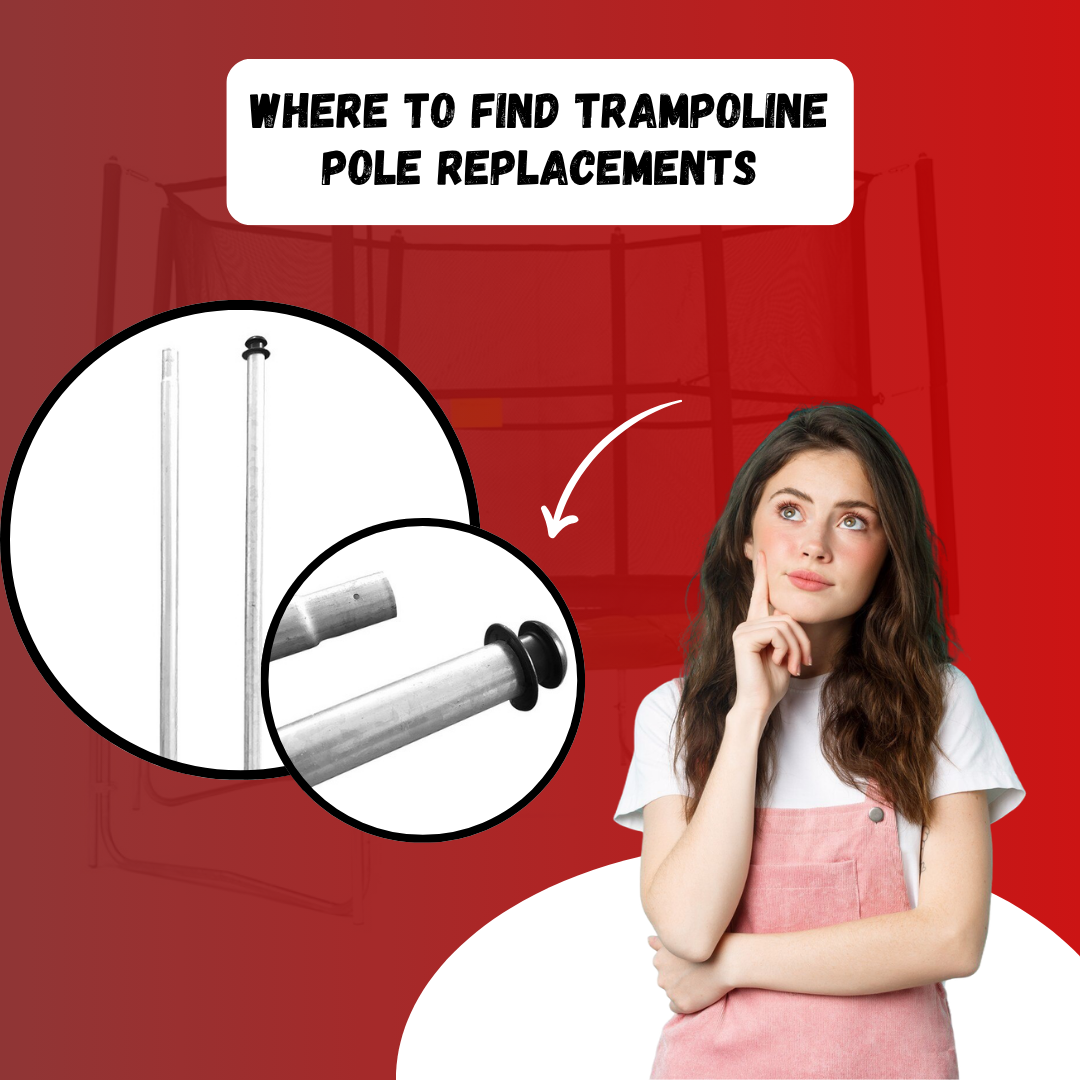
Finding the right trampoline pole replacement becomes much easier when you focus on compatibility, safety, and long-term durability. Whether you need a full 10ft trampoline pole replacement or a single enclosure pole, choosing the correct part helps keep your trampoline stable and secure.
Brand-Specific Replacement Parts
Original manufacturer parts are usually the safest option because they are made to fit the trampoline frame correctly.
Benefits include:
- Better fitting and alignment
- Easier installation
- Reliable long-term durability
- Improved safety and stability
You can explore replacement parts through Super Tramp Spares for compatible trampoline accessories and pole replacements.
Universal Replacement Poles
Universal poles may work if the measurements match properly. Always check:
- Pole length
- Diameter size
- Curved or straight design
- Bracket compatibility
Some homeowners use metal conduit tubing from local hardware shops as a temporary fix. However, these repairs should only be short-term and must still meet proper trampoline safety standards before use.