When did a workday last leave your team smiling instead of staring at the clock? In many workplaces, the pressure to deliver never really stops, yet more companies now recognise a simple truth. Productivity does not thrive on targets alone. It grows when people feel energised, connected, and genuinely valued. That is why activities for fun day at work have moved from being a nice extra to a meaningful part of workplace culture.

We have seen teams loosen up, communicate better, and work smarter after sharing a few well-chosen moments of play. Laughter breaks barriers. Movement lifts mood. Shared experiences turn colleagues into collaborators. However, not every idea delivers the same result. Some activities spark energy, while others fall flat. This guide helps you choose options that actually work, feel inclusive, and suit real teams with real schedules. Read on, because the right choices can change how your team shows up the very next day.
Is There a Dedicated Fun Day at Work in the UK?
Yes, there is. Many UK organisations recognise National Fun at Work Day, a day created to remind employers that morale, wellbeing, and connection deserve space alongside performance.
Here is how it works in practice and how companies actually use it:
- When it happens: National Fun at Work Day is usually marked on the last Friday of January. Companies adopt it because it offers a natural pause in the year to reset energy, lift mood, and reconnect teams.
- Why it matters: Leaders use this day to step away from routine, encourage interaction, and show that well-being is not just a policy document but a lived experience.
- One day is not a rule: most workplaces do not limit fun to a single date. Teams plan events quarterly, monthly, or around key milestones, depending on workload and culture.
With the timing clear, the next step is choosing activities that feel natural, inclusive, and genuinely enjoyable for your team.
What Makes Activities for Fun Day at Work Successful
If you have ever watched a room go quiet the moment an activity is announced, you already know why forced fun fails. When people feel pushed to participate, enjoyment drops, and the idea backfires. Successful activities respect choice, energy levels, and comfort, especially in UK workplaces where teams often include different ages, roles, and working styles.
Use this simple checklist before finalising your plan:
- Easy to join: no special skills, no long explanations, and no awkward spotlight moments.
- Safe and supervised: Clear guidance and basic safety checks build confidence quickly.
- Encourages teamwork: People interact naturally, not competitively, unless they choose to.
- Leaves people smiling: energy lifts without draining focus for the rest of the day.
When you get this balance right, activities for fun day at work stop feeling like an obligation and start feeling worthwhile. Next, let’s look at ideas that fit neatly into real office settings without disrupting the workday.
Quick and Easy In-Office Activities That Always Work
Not every workplace has the space or time for big setups, and that is completely fine. When planned well, simple in-office ideas often deliver the best results. These activities for a fun day at work fit into normal office hours, need minimal planning, and still bring people together without disrupting the flow of the day.
Theme-Based Days
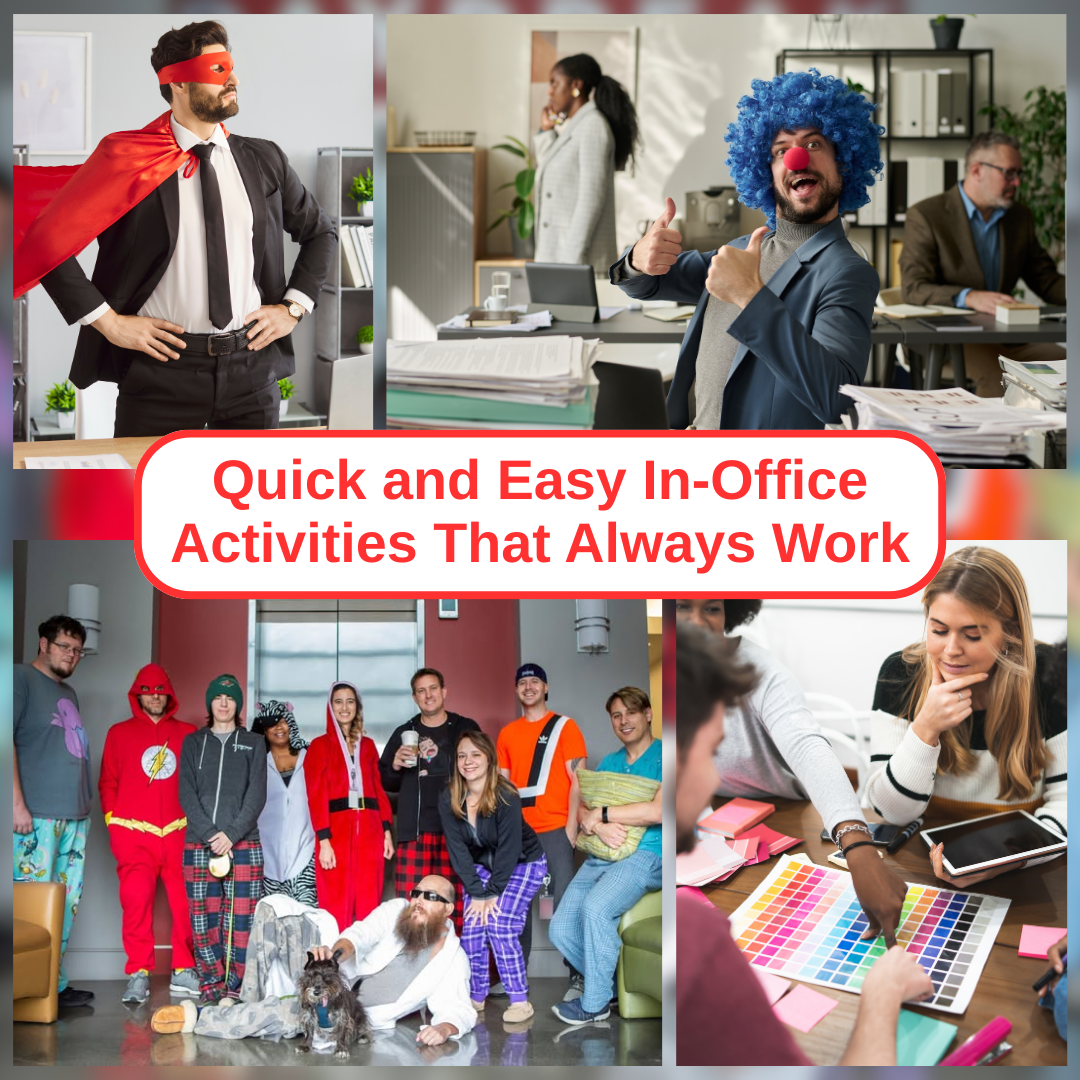
Theme days work because they feel light and optional, yet they spark conversation from the moment people walk in.
- Crazy Hat Day: Easy to join and always good for a laugh during meetings.
- Pyjama or Sweatpants Day: Comfortable, relaxed, and perfect for long desk hours.
- Team Colour Day: Builds unity without effort and looks great in group photos.
- Superhero or Throwback Day: A simple way to show personality without going overboard.
Tip: Announce themes a week in advance so people can join without stress.
2. Light Office Games
These games suit mixed teams and short breaks, keeping energy high without noise overload.
- Office Olympics: Small challenges like chair races or paper tosses keep it playful.
- Charades and Pictionary: Breaks the ice fast and gets everyone talking.
- Two Truths and a Lie: Encourages storytelling and helps teams learn about each other.
Tip: Keep rounds short and let people opt in and out freely.
3. Food and Comfort Activities
Food has a natural way of bringing people together, especially in busy UK offices.
- Potluck lunches: Everyone contributes at their own pace.
- Ice cream breaks: A simple mid-afternoon lift that works every time.
- Mystery lunch swaps: Adds curiosity without forcing social pressure.
Tip: Always check dietary needs and label dishes clearly.
4. Creative and Wellness Breaks
These activities suit quieter teams and help people reset mentally.
- Desk decorating: Personal, low effort, and easy to judge fairly.
- Photo booth corners: Captures relaxed moments teams remember.
- Chair massage or guided mindfulness: Offers calm in the middle of a busy day.
With in-office ideas covered, the next section explores active games for teams ready to step away from their desks and move together safely.
Active Team Games That Create Real Excitement

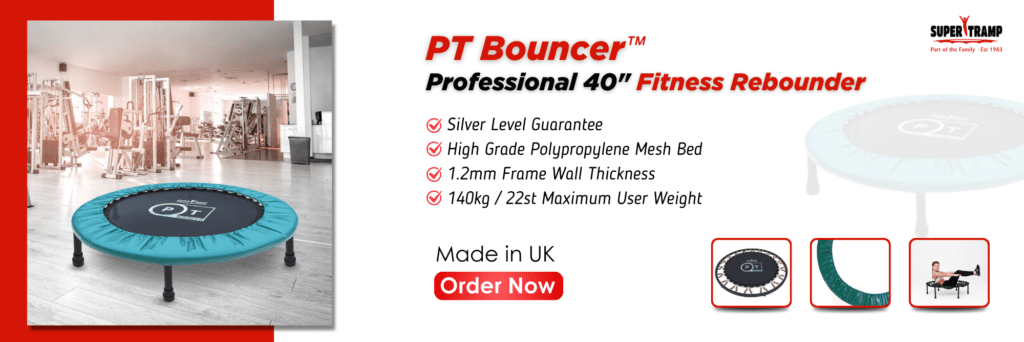
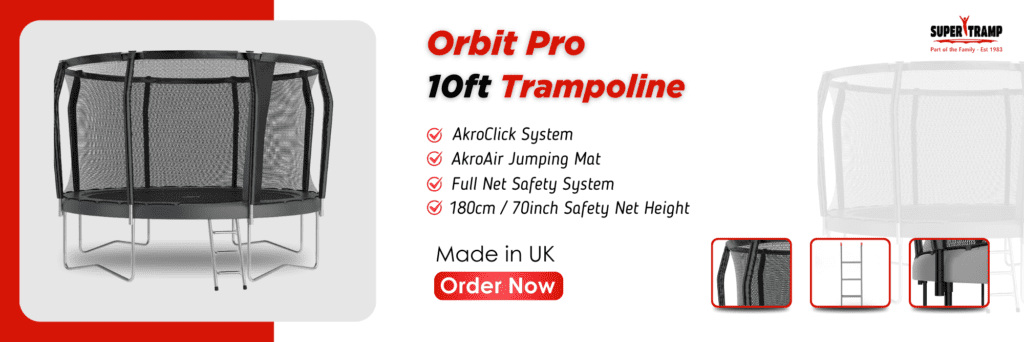
When teams want something beyond desks and meeting rooms, fitness trampolines change the energy instantly. They turn movement into shared moments, lower barriers between roles, and create laughter that feels natural, not forced. Used well, trampoline sessions stand out as some of the most engaging activities for a fun day at work, especially for teams craving something fresh yet structured.

7. Interactive and Social Games
These games bring out personality and humour, which teams remember long after.
- Bum Wars: Simple rules, instant laughs, and quick rounds.
- Trampoline Simon Says: This game tests listening skills while keeping it fun and bouncy with a 10ft trampoline.
- Trampoline Charades: Encourages creativity and team support.
Expert note: Trampolines suit different fitness levels because the bounce supports joints and movement. Clear safety briefings at the start remove hesitation and help everyone relax. And last but not least, never forget to keep grip trampoline socks for the employees’ safety.
Next, we’ll look at team activities that focus more on thinking and collaboration for groups that prefer lighter movement.
Group Activities to Strengthen Team Thinking
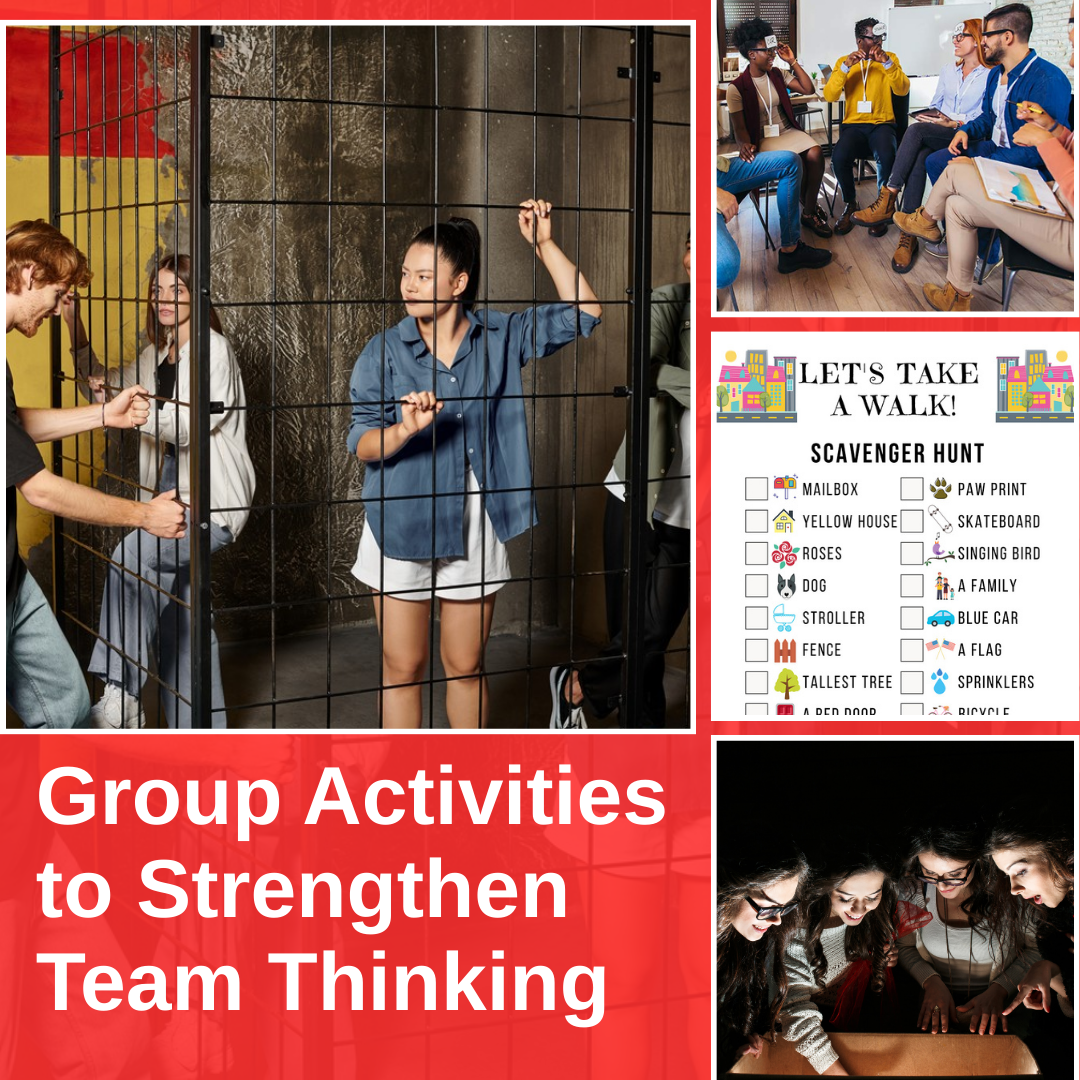
Not every team enjoys physical games, and that choice deserves respect. Many organisations prefer activities that stretch the mind, encourage discussion, and allow people to contribute in quieter ways. These group activities build connections without movement and fit smoothly into structured workdays.
23. Scavenger Hunts
Scavenger hunts work well because they blend problem-solving with teamwork. Teams follow clues, divide tasks, and share responsibility, which naturally improves communication.
Tip: Keep clues simple and time-bound so no one feels rushed or lost.
24. Escape Room Challenges
Escape rooms place teams in a shared challenge where listening matters more than talking. People spot patterns, suggest ideas, and step into leadership without titles.
Tip: Choose beginner-level rooms to keep the experience enjoyable for everyone.
25. Trivia and Quiz Events
Quizzes suit mixed teams and encourage friendly debate. Knowledge from different backgrounds levels the field and draws quieter voices into the conversation.
Tip: Mix work-related and general topics to keep it balanced and engaging.
26. Mystery Games
These games reward observation, patience, and collaboration. Teams piece together clues and discuss theories, which builds trust and shared focus.
Tip: Assign light roles so participation feels easy, not performative.
Why these activities work:
- Communication improves through shared thinking.
- Leadership emerges naturally in small moments.
- Quiet employees feel included and valued.
With thinking-focused options covered, the next section explores off-site and community activities for teams ready to step beyond the office together.
Offsite and Community-Based Fun Day Ideas

Stepping outside the office can shift perspective in ways desk-based activities cannot. When teams share time in a different setting, conversations flow more easily, and relationships grow without effort. These off-site ideas work well for companies looking to create memories that stay with people long after the day ends.
27. Volunteering as a Team
Volunteering connects teams through purpose. Whether it is a local clean-up or supporting a charity, people work side by side without job titles in the way.
Tip: Choose causes close to your community so the impact feels real and visible.
28. Creative Classes
Cooking, painting, or craft sessions suit teams who enjoy learning together. Everyone starts at the same level, which removes pressure and sparks relaxed conversation.
Tip: Short sessions work best and leave people feeling refreshed, not drained.
29. Bowling, Mini Golf, and Adventure Parks
These activities balance light movement with laughter. They suit mixed groups and encourage natural teamwork without overthinking rules.
Tip: Keep scores optional so the focus stays on fun.
30. Comedy Nights
Comedy breaks the routine and helps teams unwind together. Shared laughter creates bonds that carry back into daily work.
Tip: Choose inclusive shows that suit a broad audience.
Why it works: Shared memories formed outside the office feel more personal. People remember moments, not meetings, and that connection often strengthens teamwork long after the fun day ends.
Conclusion
A well-planned fun day is not about filling a calendar slot. It is about creating space for people to relax, connect, and enjoy work beyond their roles. Throughout this guide, we have seen how simple in-office ideas, thinking-based group activities, active games, and off-site experiences each serve a purpose when chosen with care. When companies focus on inclusion, safety, and genuine enjoyment, well-being improves, and teams return to work more connected and motivated.
This is where experience matters. With the right guidance and structure, activities for fun day at work stop feeling like an experiment and start delivering real value. Super Tramp supports organisations with safe, organised, and memorable activity options that suit different team sizes and comfort levels. If you are planning your next fun day, explore solutions that feel easy to run and enjoyable to join. The right choice today can shape a more positive workplace tomorrow.