Have you just finished setting the trampoline up in the garden? And the children are already lining up. And then suddenly the question hits every parent’s mind: which option is best, shoes for trampoline or jumping without shoes?
It may sound small, but it’s one of the most searched and most misunderstood trampoline questions in the UK. One wrong choice, and you risk slips, sore ankles, or a mat that wears out far sooner than it should.
Let’s clear the noise early and clearly. When it comes to shoes for trampoline use, there is a clear answer, not opinions, not guesses. Most home trampolines are designed for barefoot jumping or the right shoes for trampolines. In certain contexts, such as exercise, acrobatics, gymnastics, or particular training environments, shoes can be beneficial; however, in other contexts, such as children leaping properly, shoes should be avoided.
In this guide, we’ll walk you through what actually works, what to avoid, and why. No mixed messages. Just clear, experience-backed advice so you can let people jump safely and enjoy it without second-guessing every bounce.
Why Right Shoes Matter for Trampoline?
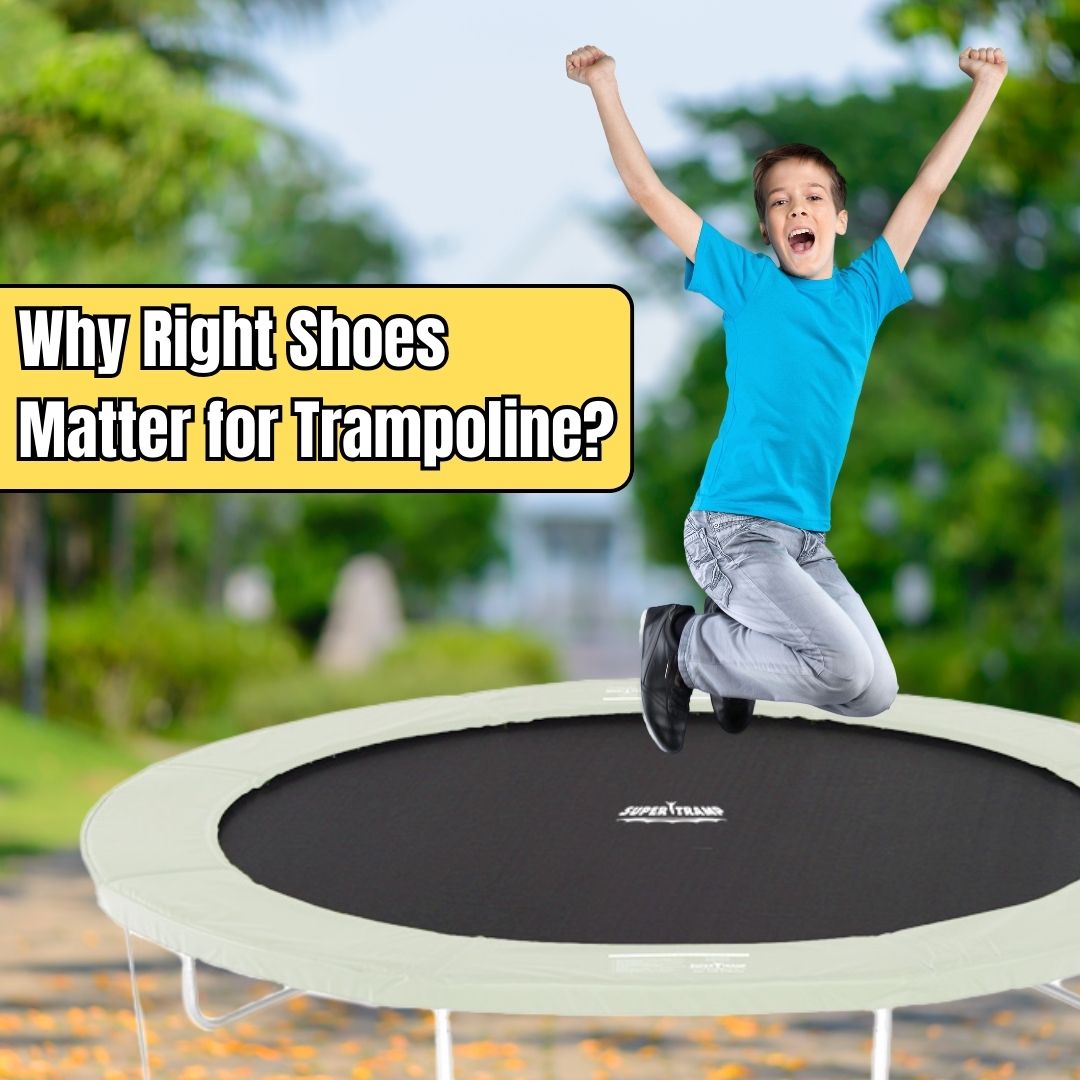
At the surface level, footwear feels like a small detail. In reality, it decides how safely you jump and how long your garden trampoline stays in good condition for long years.
What Right Shoes do to your Feet
Every bounce sends force through three points: your feet, the mat, and the springs. When the contact is clean, the mat stretches evenly, and springs return smoothly. The moment bulky or hard-soled shoes for in-ground trampoline use come in, the balance breaks. Pressure concentrates in small areas instead of spreading out.

How the wrong Shoes Damage a Trampoline
Trainers grip the mat too hard and twist it on landing. Over time, this causes:
- Early mat thinning.
- Loose stitching around stress points.
- Uneven bounce that feels “dead” in places.
We’ve seen family trampolines look worn out in under a year, simply because weekend jumping always happened in everyday trainers.
The Safety Side
Footwear controls three things that matter most:
- Grip: Too much grip jerks the foot; too little causes slips
- Balance: Heavy soles delay landing response
- Ankle control: Flexible feet adjust faster than stiff shoes
Right choices mean safer jumps and a mat that lasts longer.
In the next section, let’s get practical and look at which shoes for trampoline use actually work and why.
Best Shoes for Trampoline
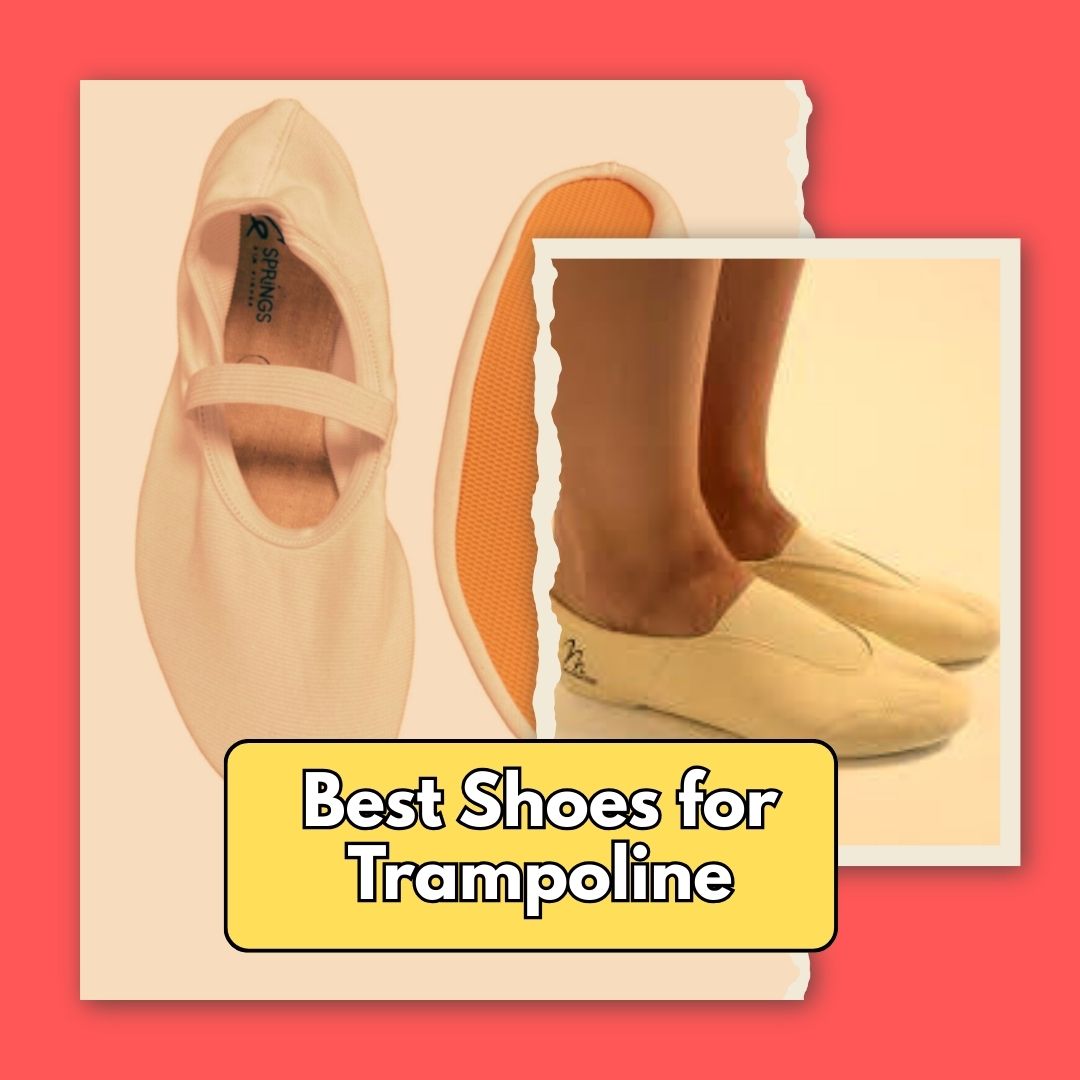
Once you understand how footwear affects safety and mat life, the next step is simple. Choose what works in real use, not what looks right in the garden.
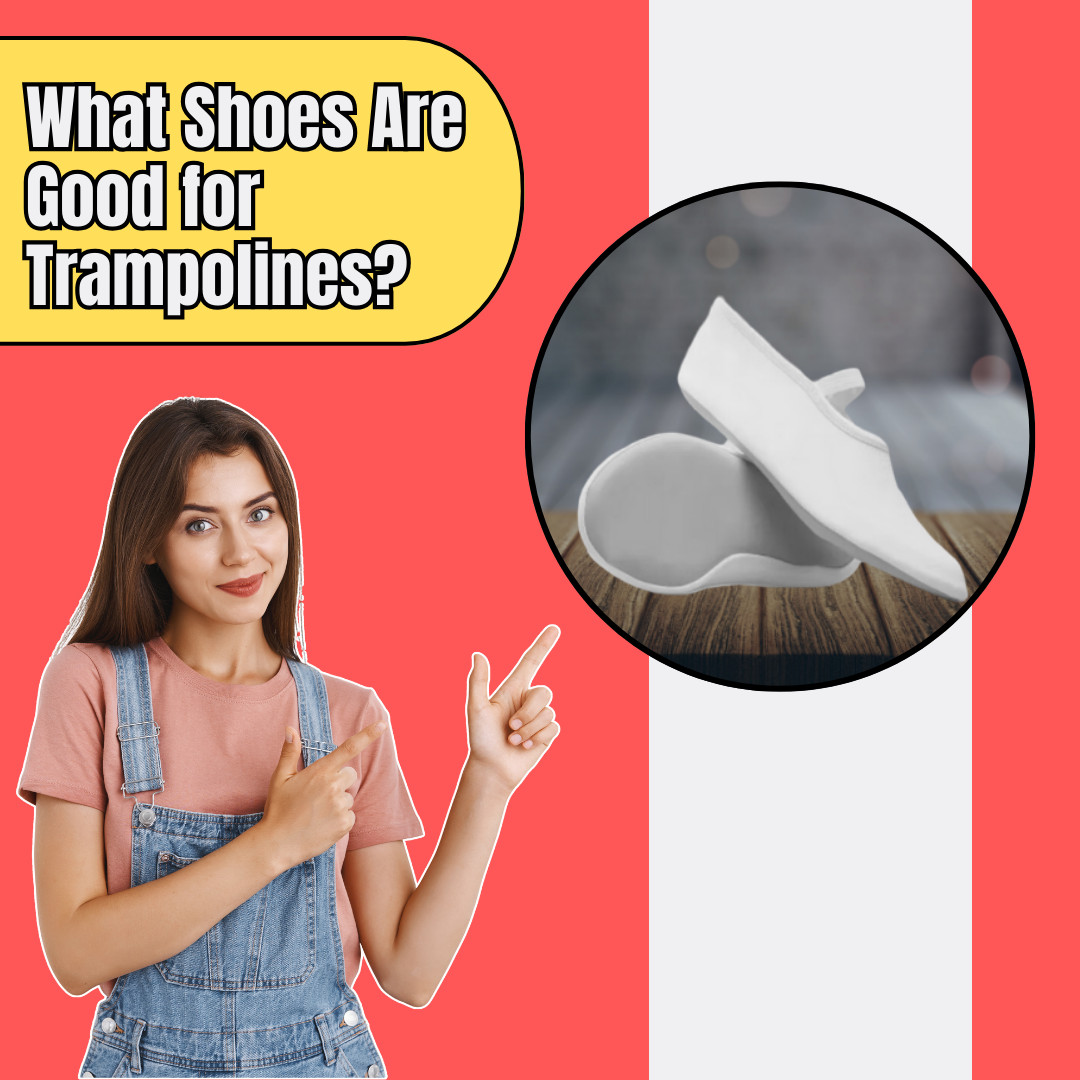
1. Gymnastic Trampoline Shoes
Professionals use these for a reason. They give control without fighting the mat.
- Soft rubber soles spread pressure evenly, so the mat stretches instead of straining.
- The lightweight feel keeps feet quick and responsive, unlike bulky trainers.
- A secure fit with elastic straps stays in place, even during repeated jumps.
- UK-trusted brands like IWA and Lico are widely used in training halls
These shoes for rectangular trampoline use suit regular jumpers, coaching sessions, and skill practice.
2. Supportive Trainers for Mini Trampolines
Trainers can work, but only in the right setting.
- Best for rebounders, not full-size garden trampolines
- Heel cushioning reduces joint load during fitness routines
- Stable soles support balance during controlled, low-height bouncing
For adults using trampolines as part of exercise, this setup makes sense.
3. Purpose-Made Trampoline Shoes
These sit between barefoot and full trainers.
- Designed for control, not walking outdoors
- Grip patterns hold without dragging the mat
- Elastic straps prevent movement during take-off and landing
Choose these shoes for trampoline use if you want structure without weight.
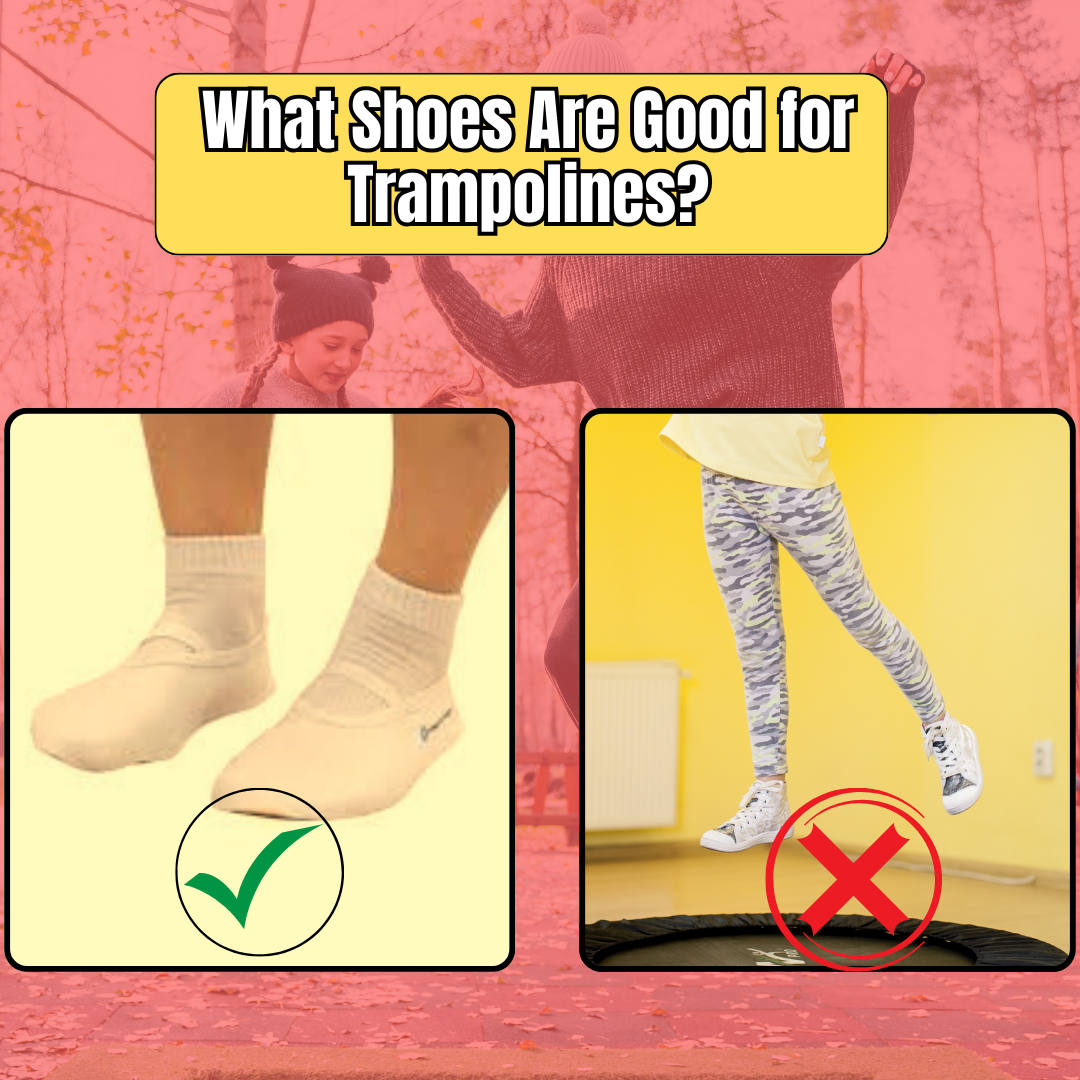
4. Barefoot
Most home trampolines expect bare feet.
- Natural grip adjusts instantly on landing
- Feet flex and spread, improving balance
- Standard socks slip and twist, increasing fall risk
- According to Rospa, children should either jump barefoot or wear grip trampoline socks when using a trampoline.
Barefoot remains the safest choice for casual home use.
Next, let’s look at what to avoid and why certain footwear causes problems faster than people expect.
What you Should Avoid?
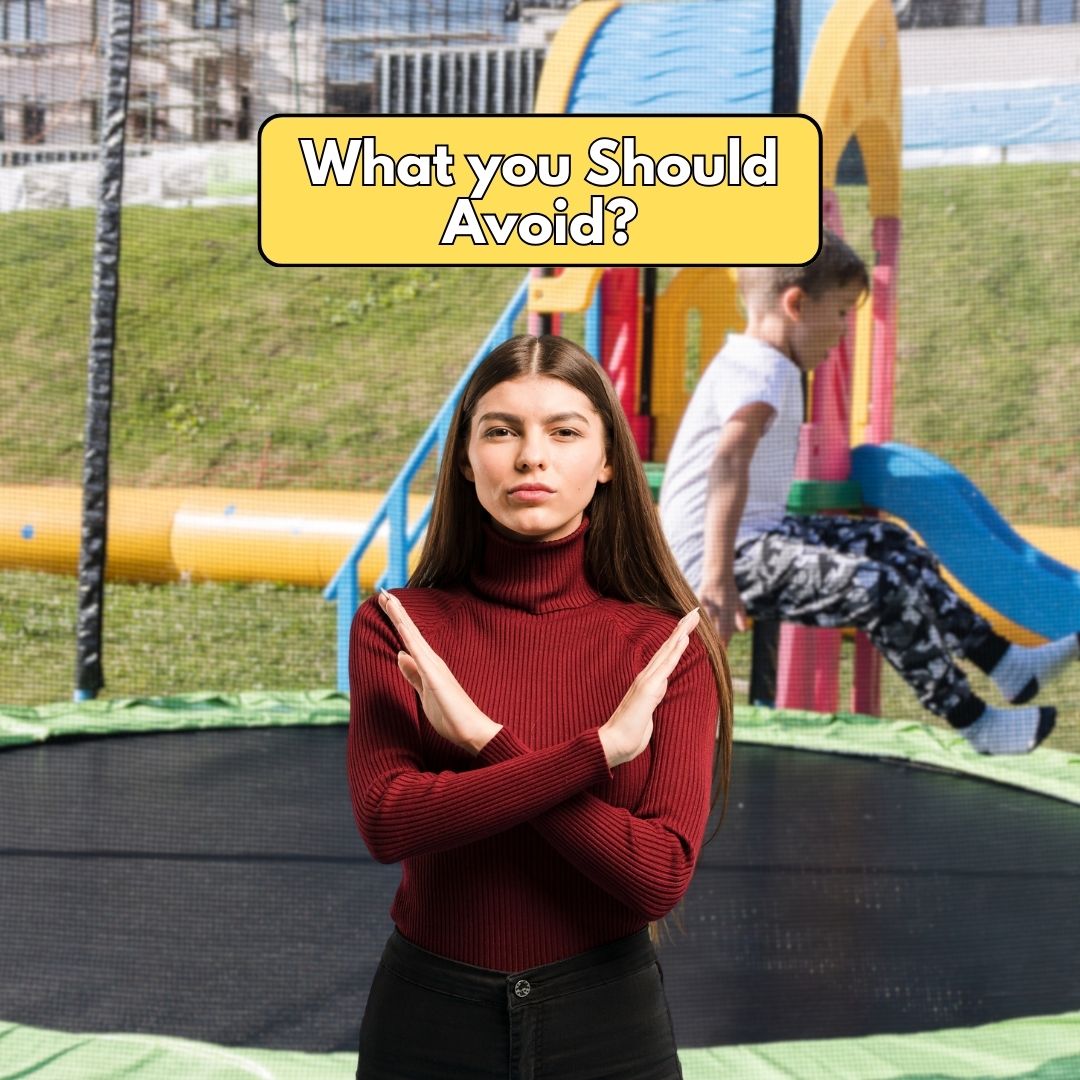
Most trampoline issues don’t come from jumping itself. They start with small footwear choices that feel harmless but create problems fast.
1. Regular Socks
- On a trampoline mat, regular socks turn the surface slick, almost like ice, which increases the risk of slips and injuries.
- Feet shift on landing, balance breaks, and ankles take the hit before you realise what went wrong.
2. Street Shoes
- Everyday shoes are built for pavements, not for 12ft trampoline bouncing.
- Hard soles dig into the mat, twist on impact, and slowly weaken the stitching. Over time, this leads to uneven bounce and early wear, even on good-quality trampolines.
3. Moon Shoes and Novelty Footwear
- These look fun but give no control when you bounce.
- They lift the foot away from the mat, delay the landing response, and make balance harder to manage.
A Quick Parent Checklist
Before anyone jumps, check this:
- No socks without grip.
- No outdoor shoes.
- No novelty or toy footwear.
- Clean feet or proper shoes for trampoline use only.
Up next, let’s break down the features that actually matter when choosing the right footwear, so you don’t have to guess again.
Key Features to Look For
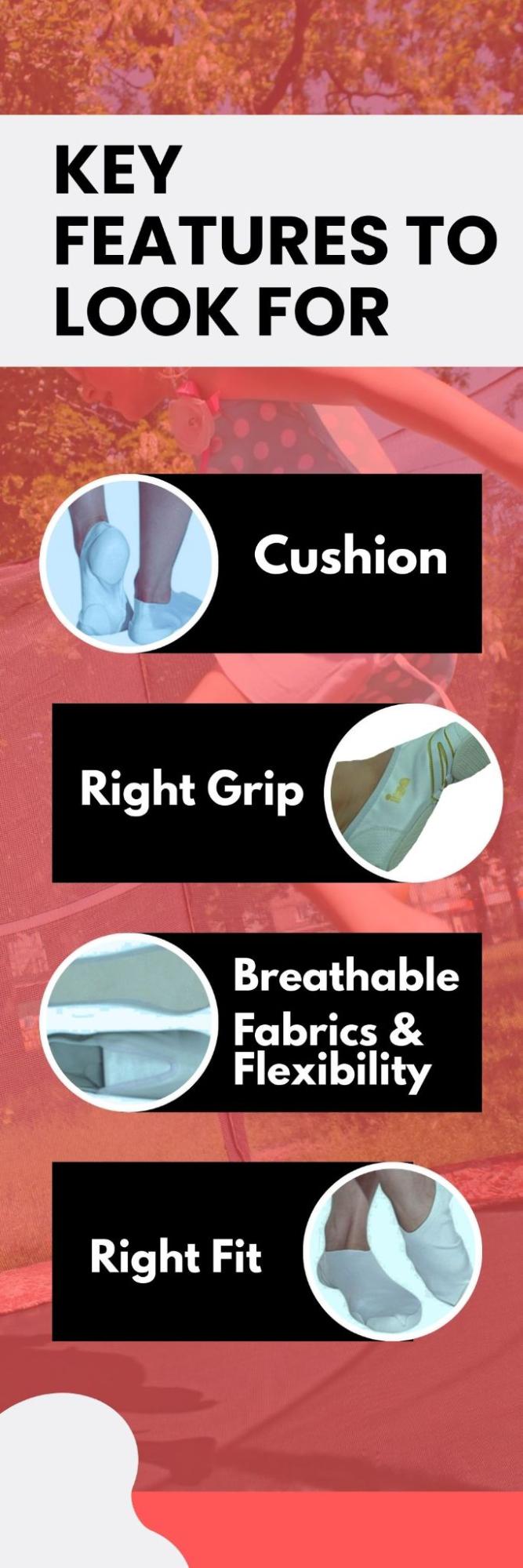
Once you know what to avoid, choosing the right pair becomes much easier. Good shoes for above-ground trampoline use follow a few simple rules, and we have listed them below:
1. Cushion
- Look for light padding, not thick soles.
- The goal is to soften impact while still letting your foot feel the mat.
- Heavy cushioning dulls balance and delays landing control.
2. Right Grip
- The sole should grip just enough to stop slips.
- If it grabs too hard, it twists the mat and jars the ankles.
- Soft rubber works best here.
3. Breathable Fabrics & Flexibility
- Feet heat up quickly when bouncing.
- Breathable fabrics keep feet dry, reduce slipping, and make longer sessions comfortable without constant breaks.
4. Right Fit
- A snug fit matters more than size labels.
- Elastic straps or close wraps stop the shoe from shifting mid-jump, which protects balance and ankle alignment.
Once you understand what to look for in shoes for trampoline use, the next question becomes more practical than technical. Do you even need shoes at all, or is barefoot the better choice? Let’s break that down clearly, without overthinking it.
Barefoot vs Shoes for Trampoline
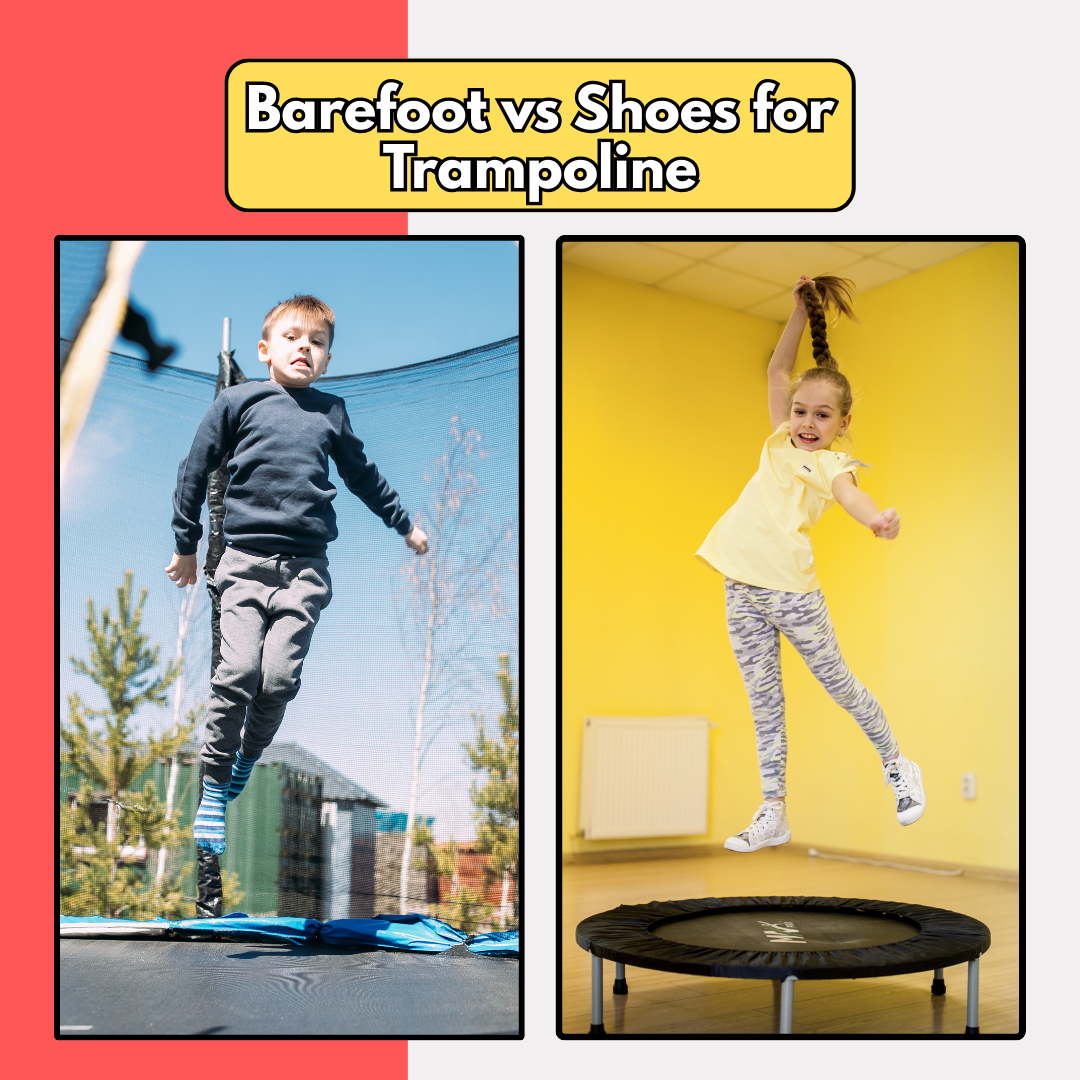
This is where most trampoline owners pause and overthink. The truth is simple. Both barefoot and shoes for trampoline use work, but only in the right situations.
When Barefoot Works Best
Most garden trampolines in the UK are designed for bare feet.
Skin grips the mat naturally, adjusts fast on landing, and keeps balance steady without extra effort.
- Feet flex and spread on impact, which improves control.
- No sole means no twisting or mat strain.
- Best for casual family use and everyday bouncing.
We’ve seen fewer slips and better confidence when kids jump barefoot at home.
When Shoes Make Sense
Shoes work when control needs support, not freedom.
This applies to training, fitness sessions, or structured practice.
- Trampoline shoes protect during longer sessions
- They add grip without damaging the mat
- Useful for adults focusing on form or stamina
Here, the right shoes for trampoline use add stability, not restriction.
What to Avoid in Both Cases
- Normal socks sit in the middle and cause trouble.
- They slide, fold, and twist on landing, which throws balance off quickly.
Simple rule to remember:
- Home trampoline = barefoot or proper trampoline shoes.
- Anything else needs a second thought.
Final Word
By now, the confusion around footwear should feel much lighter. We’ve covered why feet, mat, and bounce work as a system, what helps that system, and what quietly breaks it down. When you choose the right shoes for trampoline use or decide to go barefoot where it makes sense, you reduce slips, protect joints, and extend the life of your trampoline.
There’s no need to overcomplicate it. Match the footwear to the trampoline type, avoid everyday shoes and socks, and stick to options that support control and balance. These small choices add up to safer jumping and better use over time.
If you’re unsure what works best for your setup, getting expert guidance saves guesswork later. Explore our range, ask questions, or speak with our team for clear, experience-backed advice. The right shoes for trampoline use start with the right guidance, and we’re here to help you get it right from the first bounce.