Your body is tired, yet your mind keeps pushing for more. Harder workouts, faster results, stricter routines. Still, something feels off. Progress slows, stiffness grows, and small aches start speaking louder than motivation. So here is a question worth pausing for. Are you truly training your body or simply driving it? This is where embodied yoga steps in. Instead of chasing effort alone, it teaches you to listen, sense, and respond. Embodied yoga reshapes how your body feels, reacts, and moves in daily life, not just during exercise.

Whether you are a student glued to screens, a professional racing through deadlines, a homemaker juggling tasks, or someone simply trying to stay active with age, your body carries hidden tension. Embodied yoga enables you to identify and let go of it. Even better, supported movement, including gentle practice on a stable trampoline, can deepen awareness, improve balance, and make the experience surprisingly refreshing. Keep reading; your body may be asking for a smarter approach.
What Is Embodied Yoga?

Embodied yoga shifts attention from how a pose looks to how your body actually feels. It replaces automatic movement with awareness-led action, making practice safer and more effective for everyday bodies.
- Traditional routines often focus on shapes and repetition.
- Embodied yoga centres on sensation, control, and response.
- You move based on feedback from muscles and breath, not force.
What Does the Body Focus On During Practice?
- Internal cues such as pressure, balance, and ease.
- Breathing rhythm and natural pacing.
- Nervous system signals linked to comfort or strain.
Who Can Practise Embodied Yoga?
- Suitable for beginners, seniors, and active individuals alike.
- Adapts easily to different strengths and limits.
With this foundation clear, the next section explores how embodied yoga reshapes the body in practical, measurable ways.
How Embodied Yoga Reshapes the Body?
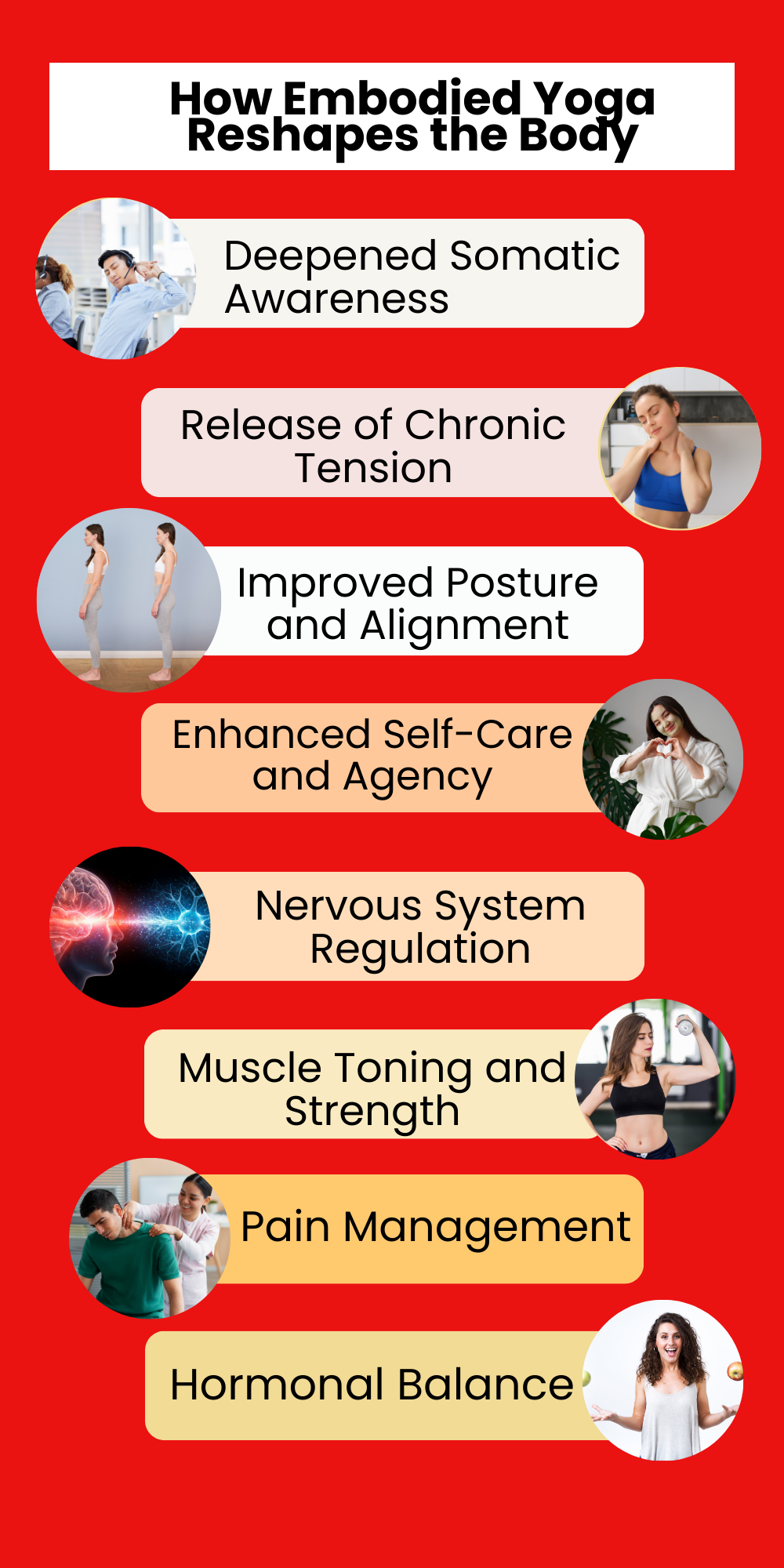
Real change rarely begins with appearance. Instead, embodied yoga first rewires how your muscles respond and how your nervous system interprets movement, which then reshapes the body in steady, noticeable ways.
1. Deepened Somatic Awareness
- Embodied yoga sharpens your ability to detect small tension and imbalance.
- For example, many desk workers begin noticing shoulder tightness long before discomfort escalates.
2. Release of Chronic Tension
- Slow, attentive movement interrupts long-held contraction patterns.
- Common stress zones, such as the neck and jaw, gradually soften as the body stops bracing.
3. Improved Posture and Alignment
- Heightened awareness naturally influences how you sit, stand, and walk.
- Subtle corrections happen without forced effort as the body favours balanced positioning.
4. Enhanced Self-Care and Agency
- Embodied yoga builds trust in your body’s signals and limits.
- This clarity often reduces hesitation around movement, particularly for seniors restarting activity.
5. Nervous System Regulation
- Mindful pacing and steady breathing can help with mental overload and physical restlessness.
- Students and professionals frequently report improved focus and calmer energy levels.
6. Muscle Toning and Strength
- Controlled engagement activates stabilising muscles often ignored in fast workouts.
- Strength develops through precision and consistency rather than strain.
7. Pain Management
- Refined awareness highlights inefficient movement habits linked to discomfort.
- Back tension, for instance, often eases when posture and muscle use improve together.
8. Hormonal Balance
- Reduced stress load supports steadier internal regulation and energy rhythms.
- Many practitioners observe better sleep and more stable daily vitality over time.
With these internal shifts in mind, it becomes easier to understand the biological mechanisms behind embodied yoga, which the next section explains through clear scientific insights.
The Science Behind Embodied Yoga
The effects of embodied yoga feel noticeable because they rest on clear biological processes. What you sense during practice directly reflects how the brain, nerves, and body communicate and adapt.
Interoception: The Inner Sense
- The brain constantly monitors internal signals like tension, breath, and pressure.
- Embodied yoga refines this sensing ability, improving movement accuracy and control.
Polyvagal Theory and Vagal Tone
- The nervous system evaluates safety and stress through automatic pathways.
- Slow, steady movement encourages calmer responses and stabilises reactions.
Neurochemical Shifts
- Attentive movement supports balanced release of mood-related chemicals.
- Many people notice clearer focus, steadier energy, and improved sleep patterns.
Embodied Cognition
- Physical states influence mental clarity and emotional tone.
- Simple posture changes often affect confidence, alertness, and overall mood.
Structural Neuroplasticity
- Repeated mindful movement strengthens neural pathways linked to coordination.
- Over time, the brain becomes more efficient at regulating effort and balance.
With these mechanisms understood, the next section explores how trampoline-supported movement can further enhance embodied yoga through amplified sensory feedback.
How Trampoline-Supported Movement Enhances Embodied Yoga?
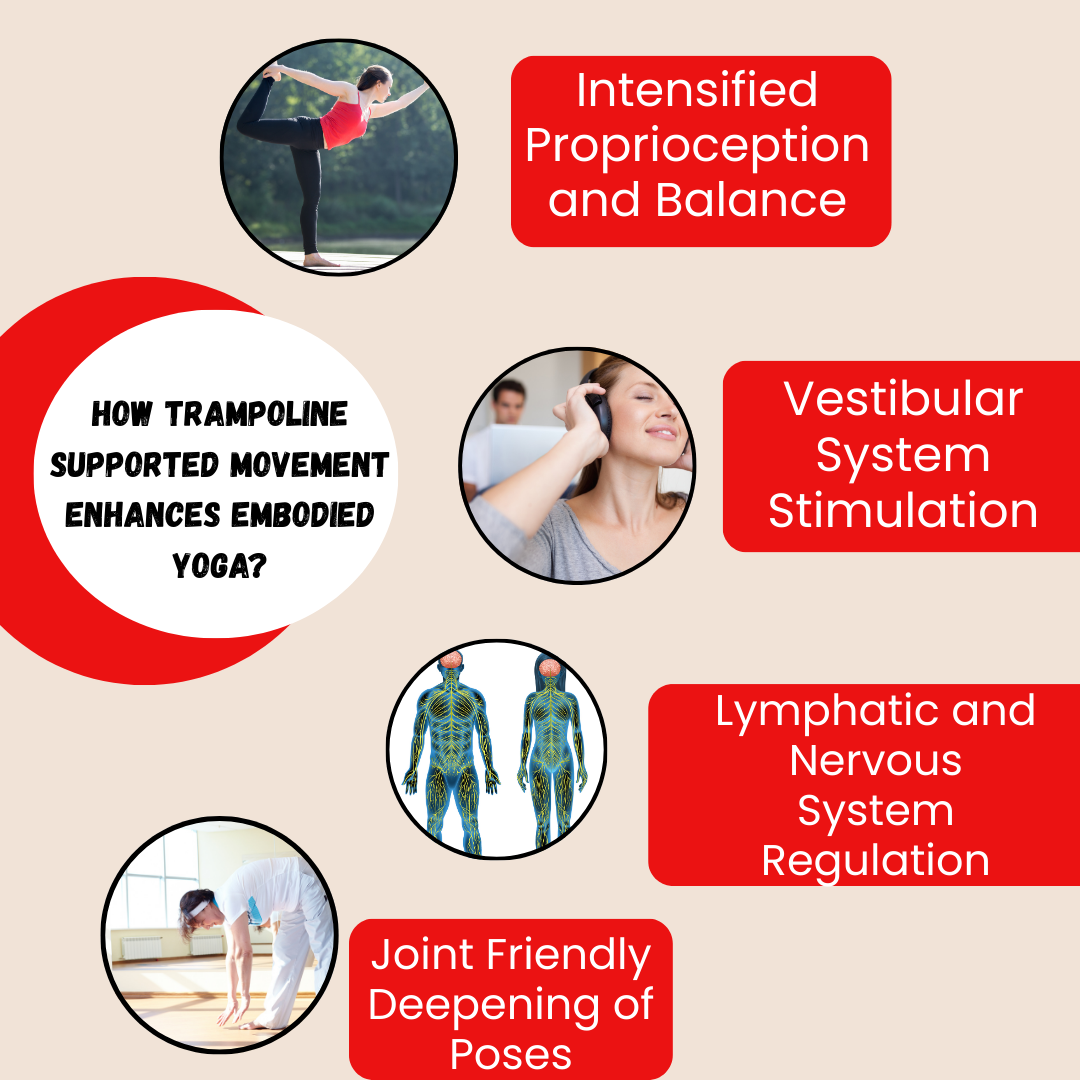
A trampoline is not just playful equipment. When used mindfully, it becomes a powerful awareness tool that strengthens the effects of embodied yoga by sharpening how the body senses, adjusts, and stabilises itself.
1. Intensified Proprioception and Balance
- Sensory Overdrive: A gently responsive trampoline bed challenges stability, prompting the body to refine coordination. Even simple standing positions demand greater attention and controlled adjustment.
- Core Engagement: Subtle instability naturally activates deep stabilising muscles. The body responds instinctively without rigid or forced effort.
Practical tip: Begin slowly with stable in-ground trampoline movements to allow safe adaptation.



4. Joint-Friendly Deepening of Poses
- Shock Absorption: The elastic surface reduces harsh impact on joints compared to rigid flooring. This allows gentler exploration of the range without unnecessary strain.
- Supportive Feedback: Constant micro adjustments guide alignment and body control. The body self-corrects through continuous sensory input.
Practical tip: Focus on stability and posture, not bounce intensity.
With the role of supported movement clear, the final section ties these insights together and highlights how embodied yoga and mindful equipment choices work hand in hand.
Practical Checklist: Making Embodied Yoga Work for Real Life
Small adjustments often create the biggest shifts. Use this simple checklist to make embodied yoga practical, safe, and effective in everyday routines.
Move With Awareness
- Start gently and observe physical sensations instead of chasing perfect shapes.
- Let comfort and control guide depth and duration.
Let Breathing Set the Pace
- Maintain a steady breathing rhythm throughout each movement.
- Smooth, unforced breaths help stabilise effort and prevent unnecessary tension.
Use Supportive Surfaces Wisely
- Explore movements with stable, well-designed trampolines from recognised, trusted manufacturers.
- A responsive surface can enhance balance and body awareness when used mindfully.
Respect Early Warning Signals
- Treat discomfort as useful feedback rather than a challenge to push through.
- Adjust posture, speed, or range to maintain ease and safety.
Value Regular Practice Over Intensity
- Short, consistent sessions often deliver better results than irregular, demanding efforts.
- Steady repetition supports safer progress and long-term adaptation.
Conclusion
True physical progress rarely depends on intensity alone. Embodied yoga steadily refines how the body coordinates, stabilises, and responds, which reshapes function long before visible change appears. Strength feels more natural, balance improves quietly, and movement begins to feel lighter and more controlled.
One of the strongest advantages of embodied yoga lies in its adaptability. Youngsters building body awareness, adults managing work fatigue, seniors preserving mobility, and fitness-focused individuals seeking smarter training can all benefit from its measured, awareness-driven approach. The practice adjusts to real bodies rather than forcing bodies to adjust.
When paired with mindful, trampoline-supported movement, these effects often deepen further. A stable, responsive surface can enhance balance, encourage gentle muscle activation, and reduce unnecessary joint strain. For long term comfort and safety, selecting a well-designed, sturdy trampoline from a trusted manufacturer becomes an important part of the experience, ensuring that supported movement remains both secure and effective over time.