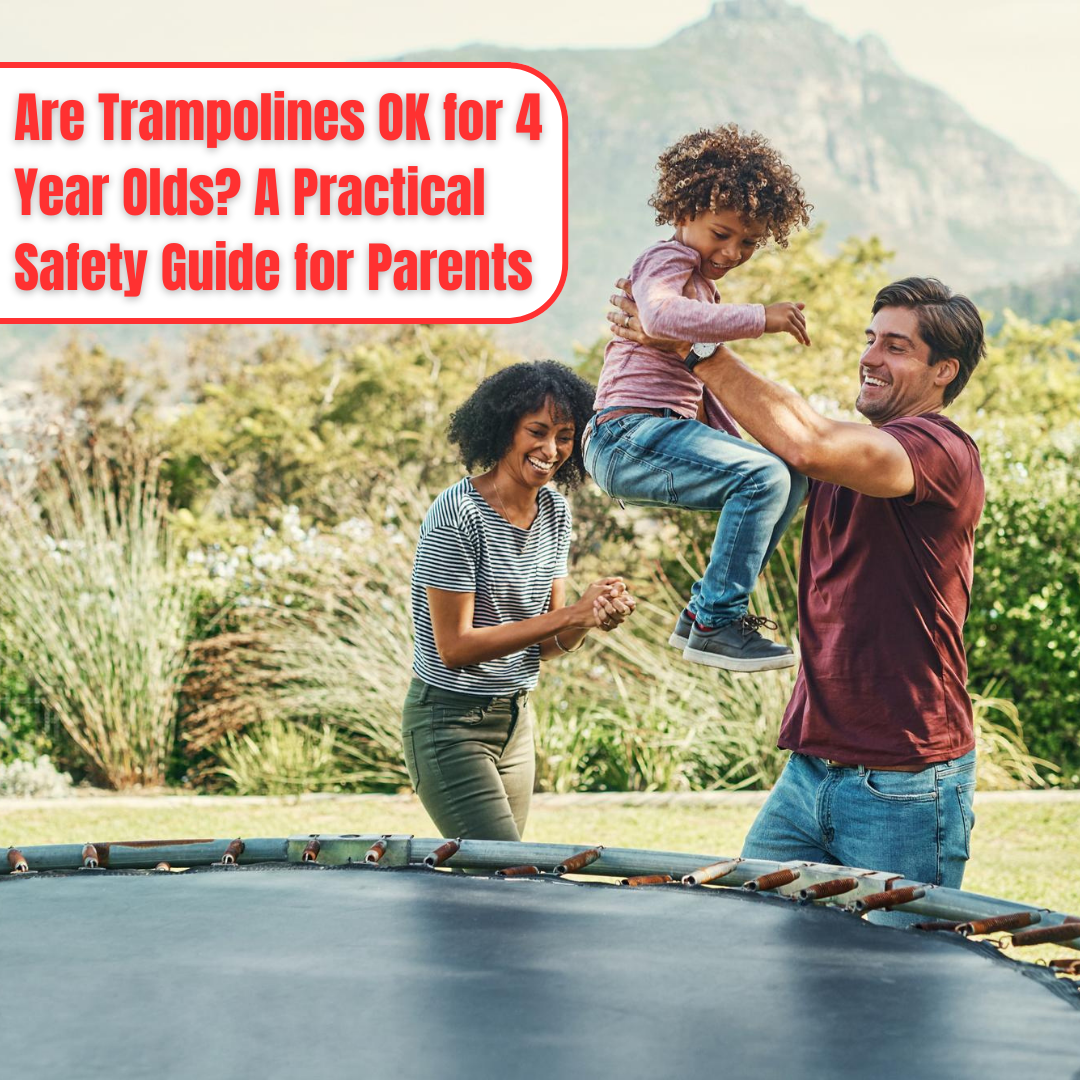
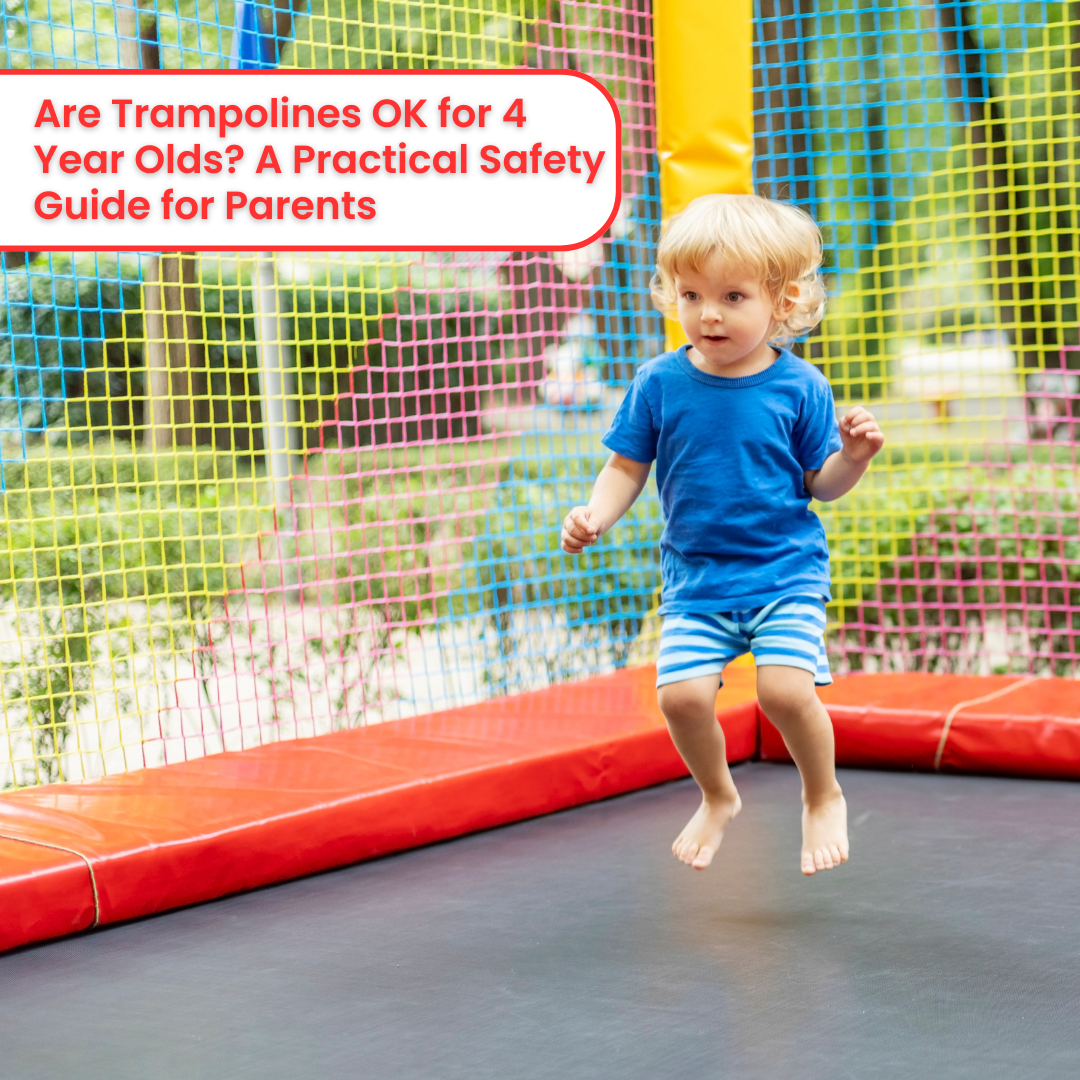
Curiosity and the urge to try new things come naturally to children, especially at four. It is how they learn, grow, and stay active. And when a trampoline appears at a play zone, a birthday party, or a neighbour’s garden, it works like a magnet. Saying no is never easy. Still, when the excitement comes from a little one, most parents pause and ask the same question: are trampolines ok for 4 year olds, and more importantly, what is the right trampoline for 4 year old children?

If that sounds familiar, you are in the right place. This blog looks at the question from an experienced, practical point of view, not to scare you, but to guide you. Drawing on real manufacturing knowledge and UK safety guidance, we will help you understand what works, what does not, and how your child can enjoy bouncing in a safer, more confident way.
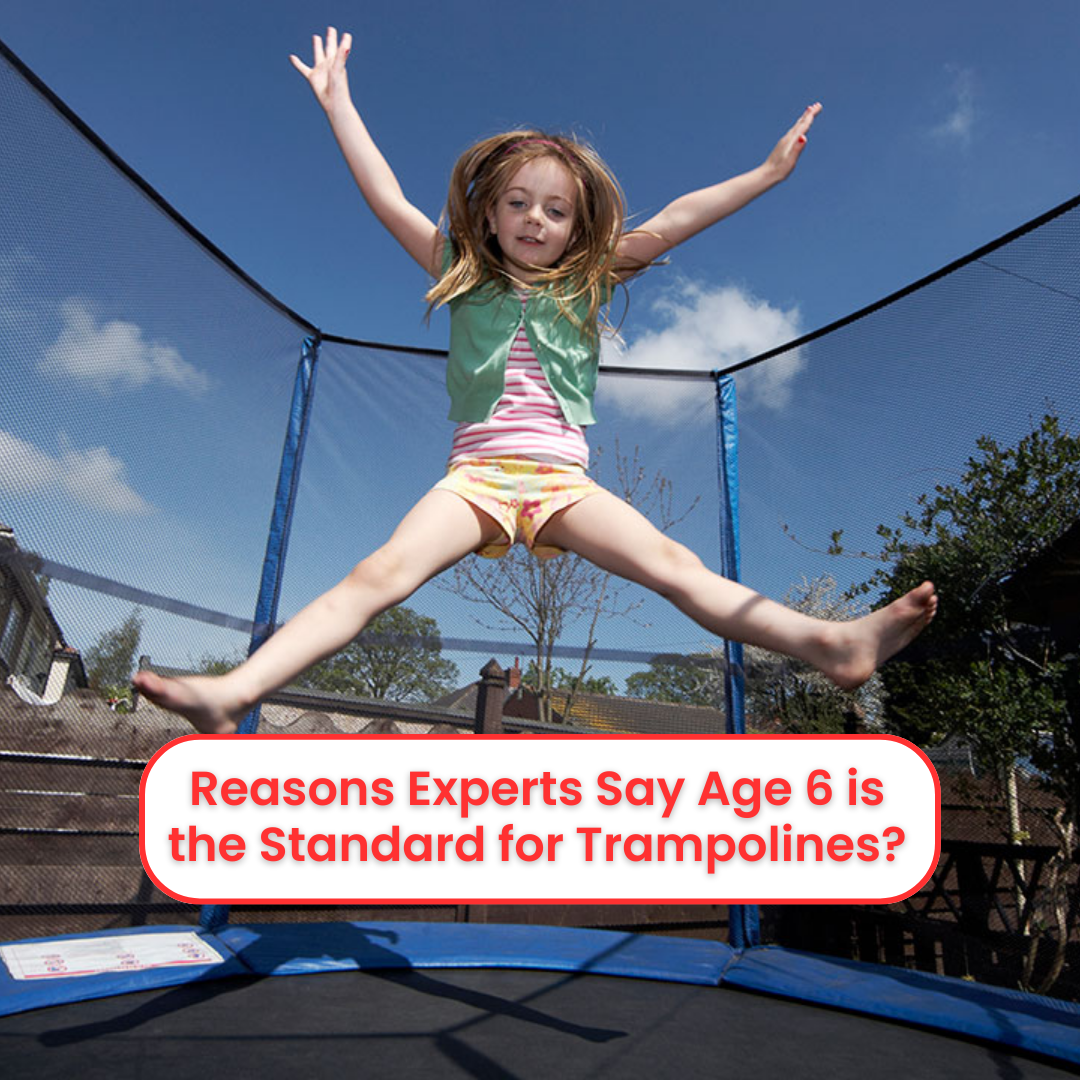
Reasons Experts Say Age 6 is the Standard for Trampolines?
Parents often notice that many trampoline guidelines mention age six, and that can feel confusing at first. The reason is not fear-based advice. It comes from how young children’s bodies develop and how they react to movement. Understanding this helps you make a calmer, more informed choice about a trampoline for 4 year old children.
Physical Development
At four, a child’s bones are still soft and growing. This is normal and healthy, but it also means they bend and break more easily than older children’s bones. Even a small, awkward landing can cause a fracture, especially in the legs or arms. This is why experts urge a bit of patience before allowing full trampoline use.
Coordination and Body Control
Four-year-olds love to move, but their balance and timing are still developing. They often struggle to judge when to stop, how to land flat, or how to recover from an unexpected bounce. Sudden rebounds or uneven landings can catch them off guard before they know how to steady themselves.
All of this does not mean trampolines are bad. It simply means age-appropriate use matters. In the next section, we look at safer ways 4 years old children to still enjoy bouncing without unnecessary risk.
So… Are Trampolines OK for a 4 Year Old?
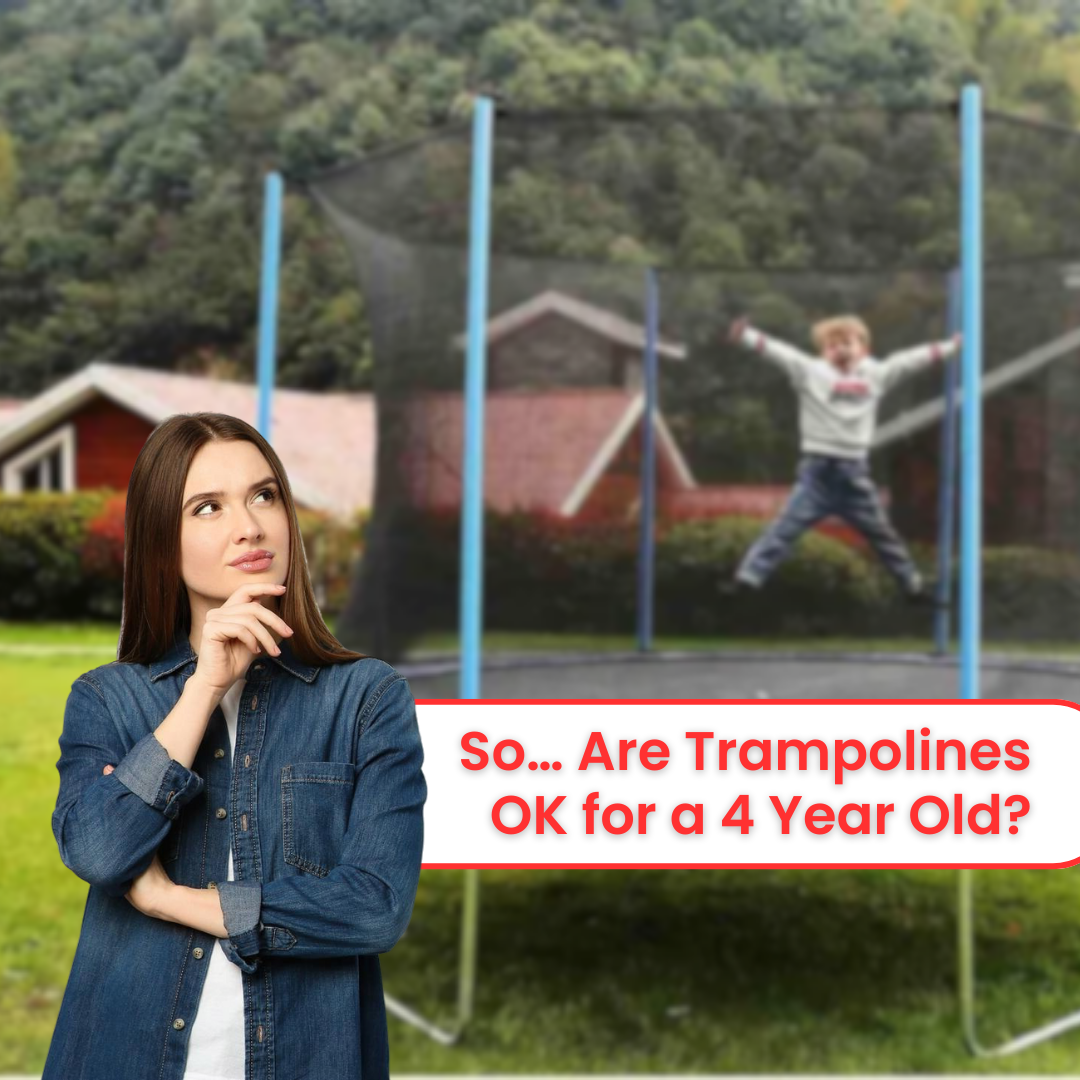
Here is the clear answer most parents look for: a full-size garden trampoline is not ideal for a four-year-old, but that does not mean bouncing is off the table altogether. Safety is not a yes-or-no decision. It sits on a scale, and where your child fits on that scale depends on the type of setup, supervision, and control in place.

From an expert point of view, the issue is not the trampoline itself. The issue is which trampoline and how it is used. A standard garden rectangle trampoline is built for older children with stronger bones, better balance, and faster reactions. For a younger child, the same bounce can feel unpredictable. That is why choosing the right trampoline for 4 year old children matters more than banning the activity completely.
A safer approach starts with control:
- Limit height and rebound so the jump stays gentle.
- Choose designs made for younger bodies, not scaled-down adult models.
- Allow one child at a time with an adult close by.
This way, children still enjoy movement and coordination without unnecessary strain. With that clarity in mind, the next section looks at safer trampoline alternatives that suit four-year-olds far better than standard garden models.
Safer Bouncing Tips for 4-Year-Olds
Once you understand that a standard garden setup may not suit younger children, the next step is choosing safer ways to keep them active. The good news is there are well-designed options that work far better as a trampoline for 4 year old use, without taking unnecessary risks.
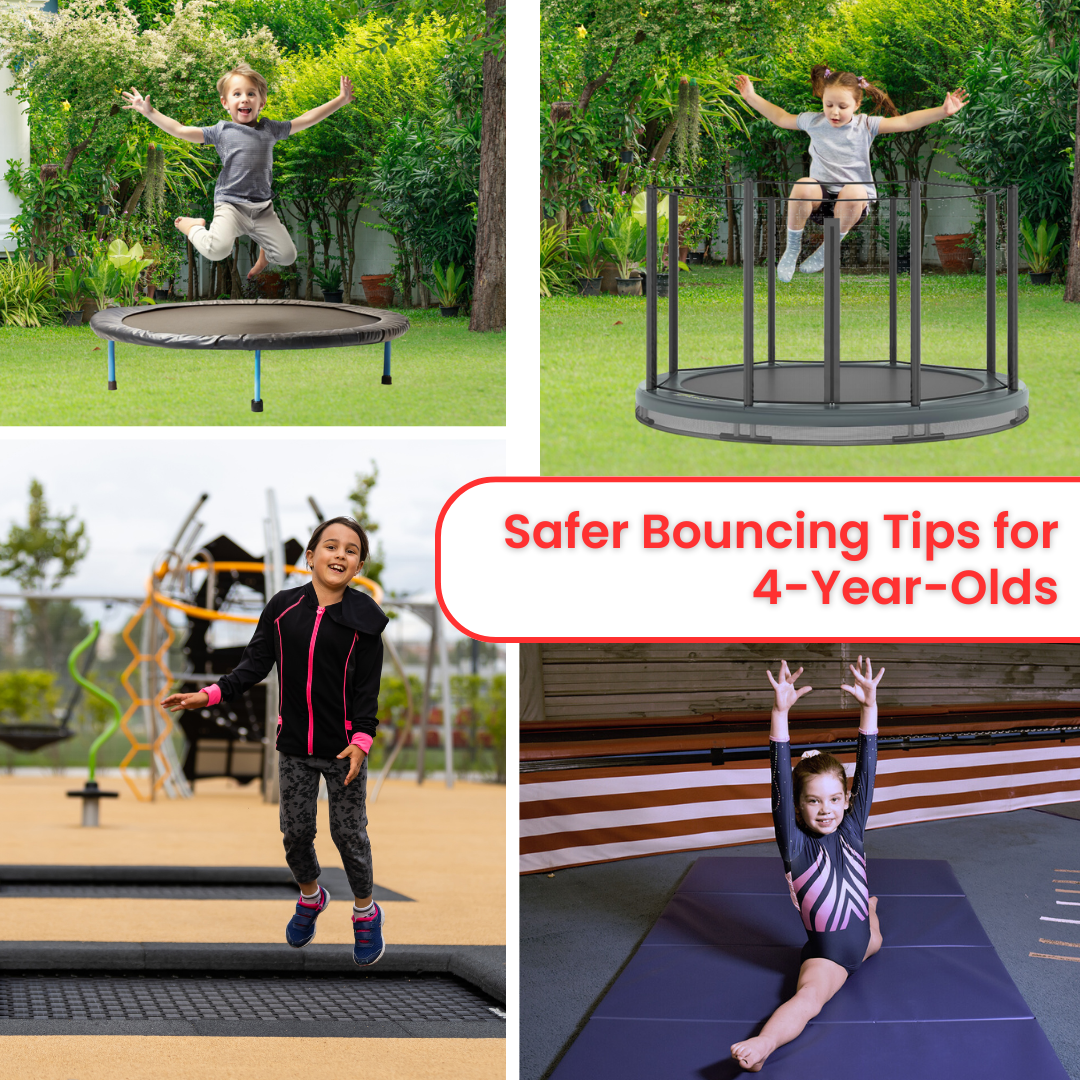
1. Mini Trampolines with Handlebars
- These rebounders sit close to the ground and work well indoors.
- The handlebar gives children something steady to hold, which helps balance and confidence.
- Parents often use them for short, supervised sessions rather than long free play.
2. Tumbling and Play Mats
- Play mats encourage jumping, rolling, and safe movement.
- They reduce impact while still letting children burn energy.
- Many parents use them daily as a simple alternative to a trampoline.
3. Playground Trampolines
- Playground trampoline are built specifically for young children.
- They come with clearer rules, softer bounce control, and trained supervision.
- This makes them a safer introduction to bouncing at an early age.
4. In-Ground Trampolines
- In-ground trampoline designs sit level with the surface, reducing fall height.
- Entry and exit feel more controlled, which suits younger users.
- Compared to raised frames, they lower the risk of awkward landings.
These options show that bouncing can stay part of playtime when chosen wisely. Next, we look at the safety rules that matter most if a four-year-old uses any trampoline setup.
If Your 4-Year-Old Uses a Trampoline, Follow These Safety Rules
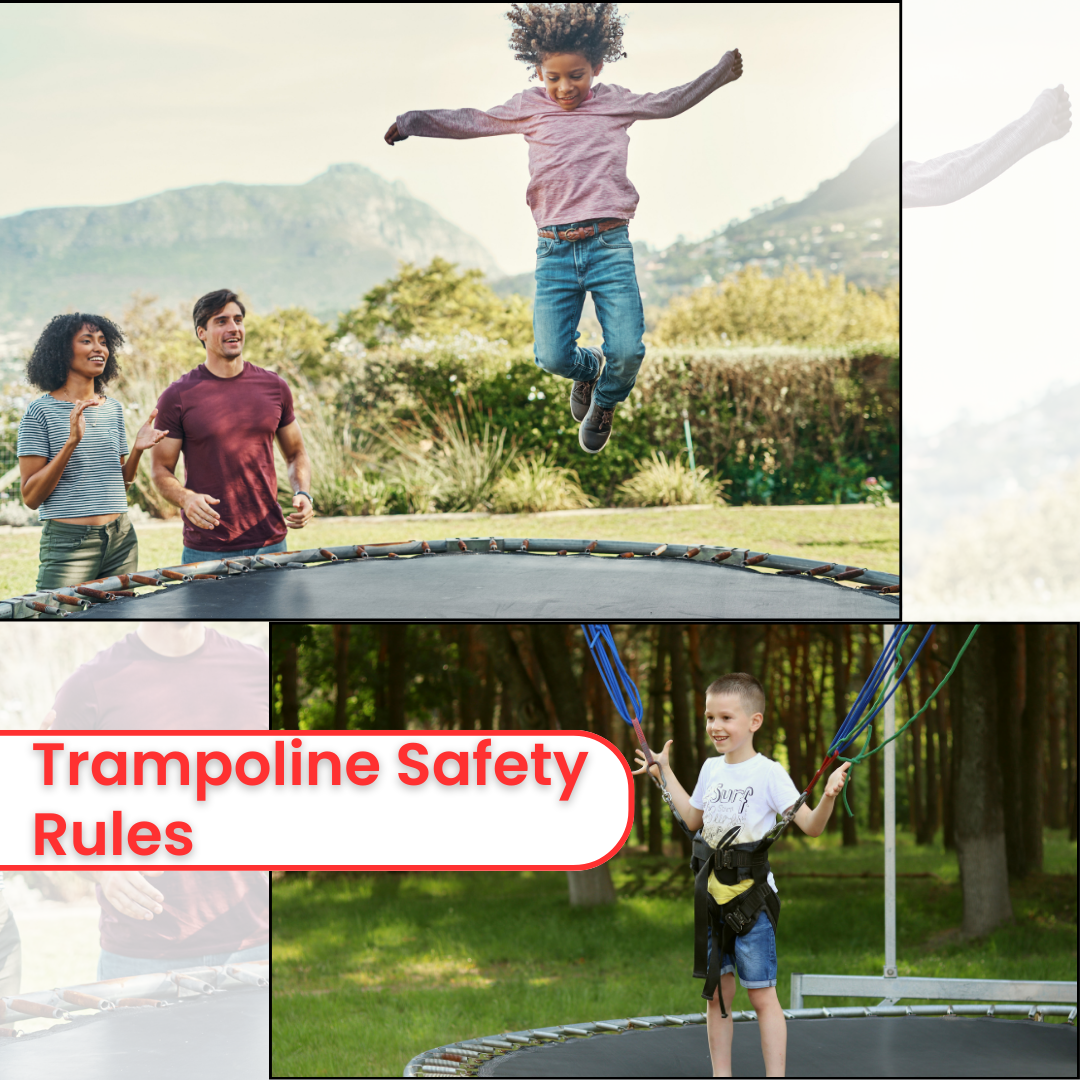
If you decide to allow a trampoline for 4 year old use, these rules are not optional. They come from years of real-world manufacturing insight, injury data, and how children actually behave when they jump. Treat this as a must-read checklist, not friendly advice you can bend.
Strict safety rules you should always follow:
- One jumper at a time: Most injuries happen when more than one person jumps. A smaller body takes the force, even during gentle play.
- Adult within arm’s reach: Supervision means staying close, not watching from a window or chair.
- Fully enclosed safety net: Use a secure, zipped enclosure so the child cannot step or fall out.
- Thick padding over springs and frame: Exposed metal causes more injuries than the mat itself.
- No flips or tricks: Keep feet on the mat, jumping only, without exceptions.
- Soft ground placement: Always set up on grass or a cushioned surface, never concrete.
These steps reduce risk without removing fun.
Expert Advice from Trampoline Manufacturers

After years of designing, testing, and improving trampolines in the UK, one lesson stands out clearly: children never use equipment the way adults expect them to. They jump sideways, stop suddenly, lose balance, and test limits without warning. That reality shapes how responsible manufacturers design trampolines, especially when considering a trampoline for 4 year old use.
From frame strength to spring tension and enclosure height, every detail matters. Super Tramp Trampoline test not just for bounce, but for stability, wear, and how products behave after repeated daily use. Real feedback from families shows that safer designs work best when they match a child’s size, weight, and natural movement. This experience-led approach builds trust, because good safety starts long before a child ever steps onto the mat.
So, Should You Allow a Trampoline for a 4 Year Old?
After looking at age guidance, body development, safer alternatives, and clear safety rules, one thing becomes clear. Trampolines are not a simple yes or no decision at this age. Choosing to wait or choosing a safer setup both count as thoughtful parenting. What matters is understanding how a four-year-old moves, reacts, and learns through play.
When you slow down and choose carefully, you protect your child without taking away their joy. Smaller, controlled options and close supervision reduce risk while still supporting active play. Rushing into a standard setup often creates problems that careful choices can prevent.
If and when you decide to invest in a trampoline for 4 year old children, focus on safety, design, and age-appropriate features. The right trampoline at the right time helps children grow strong, confident, and happy, while giving parents peace of mind.